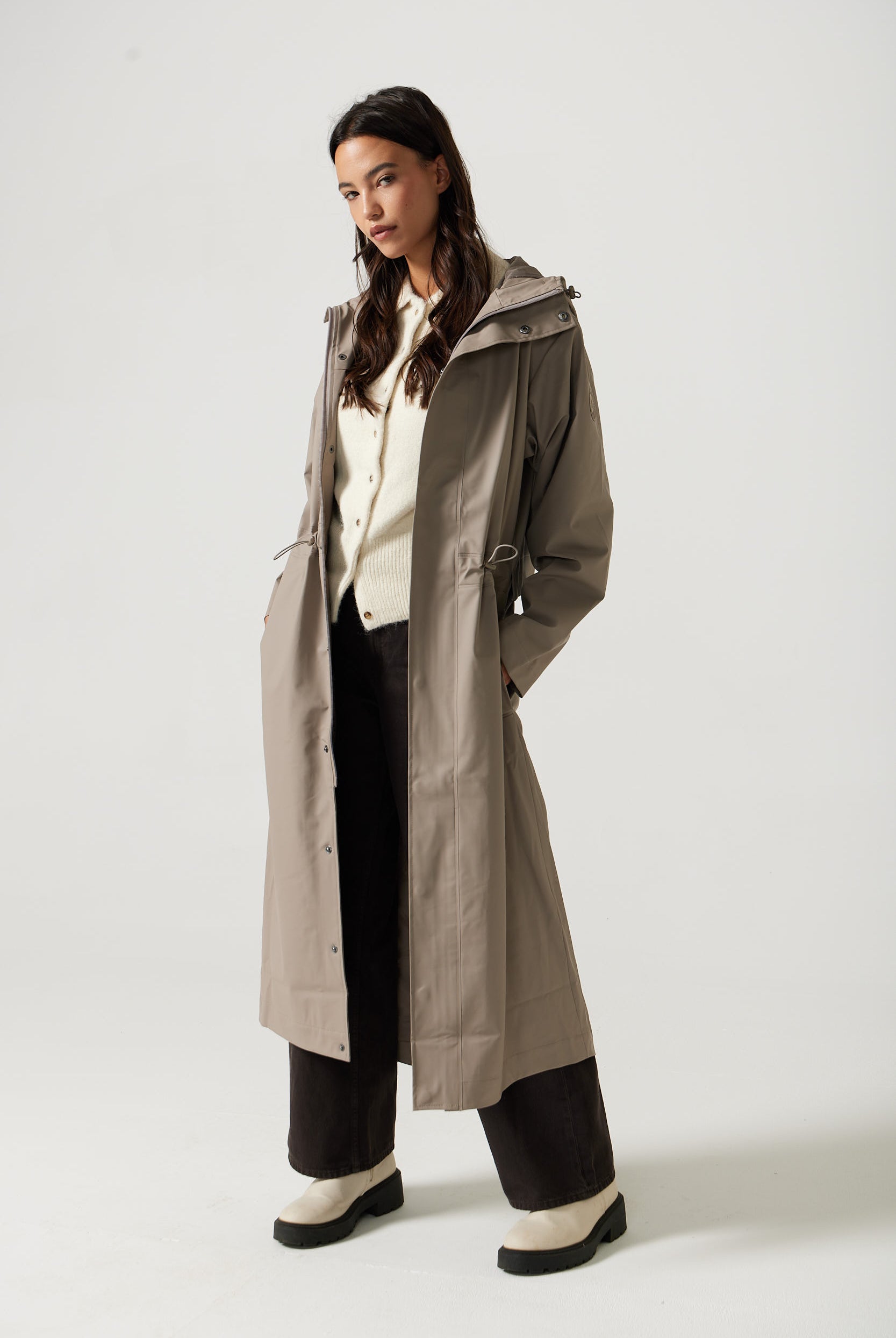
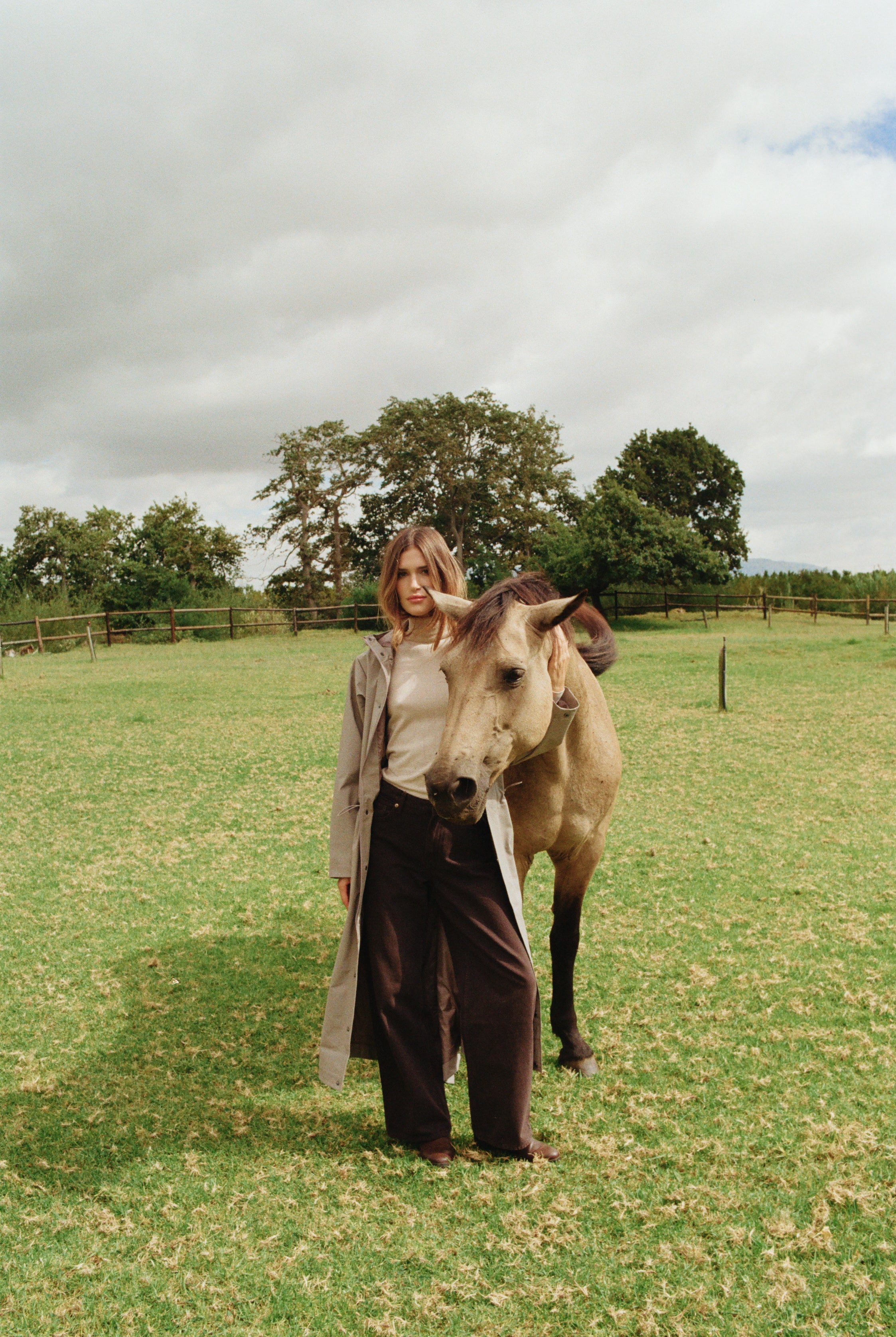
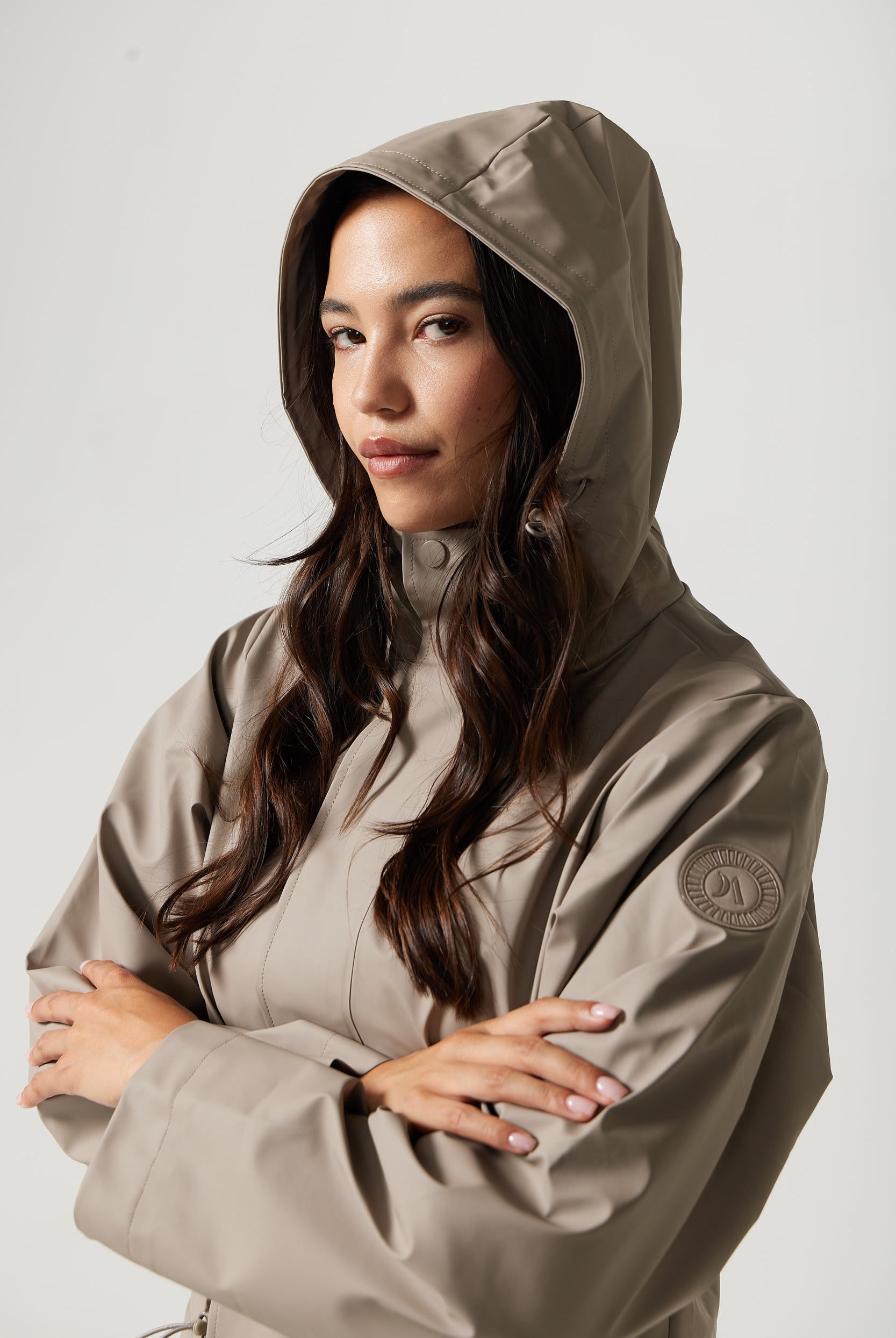
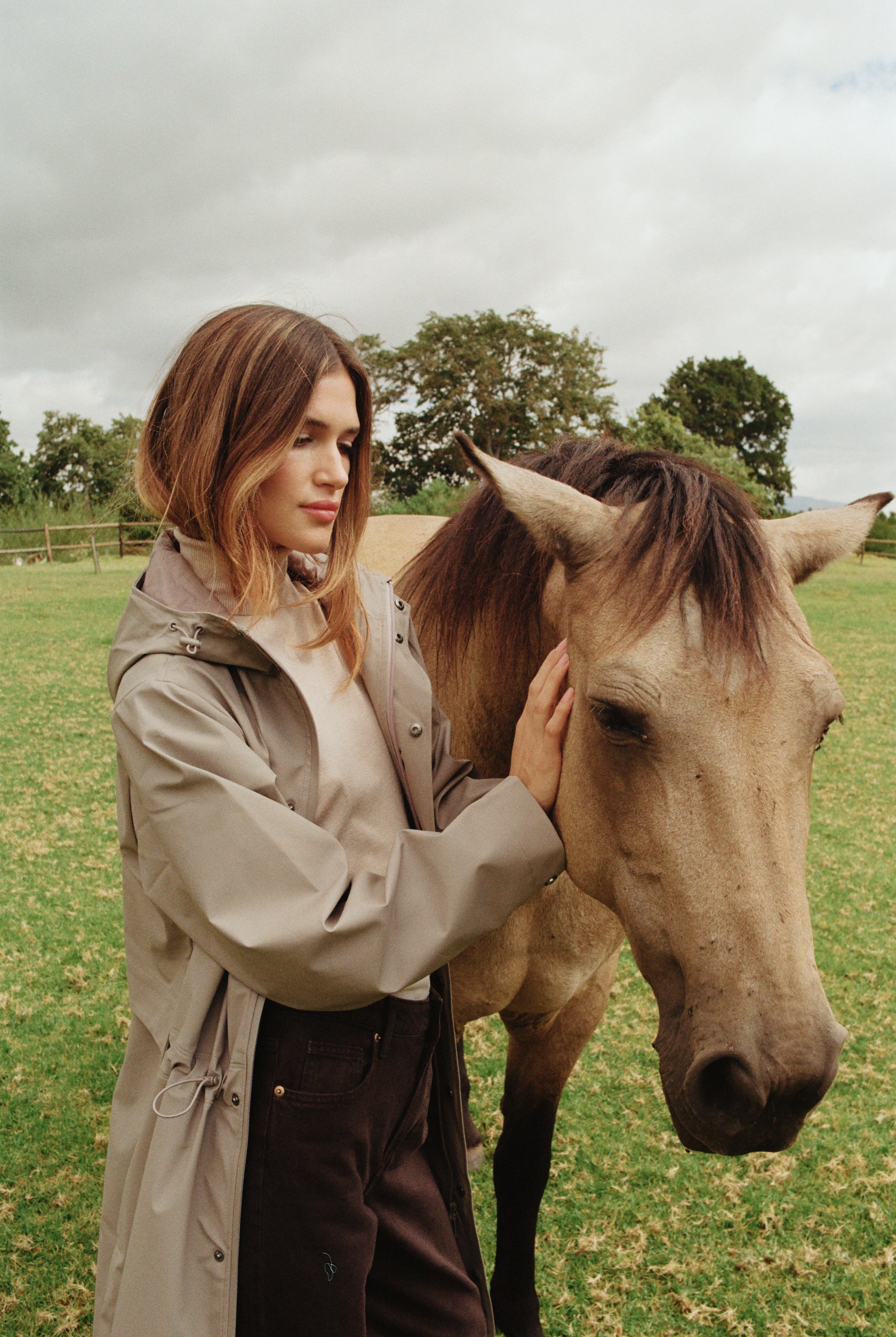
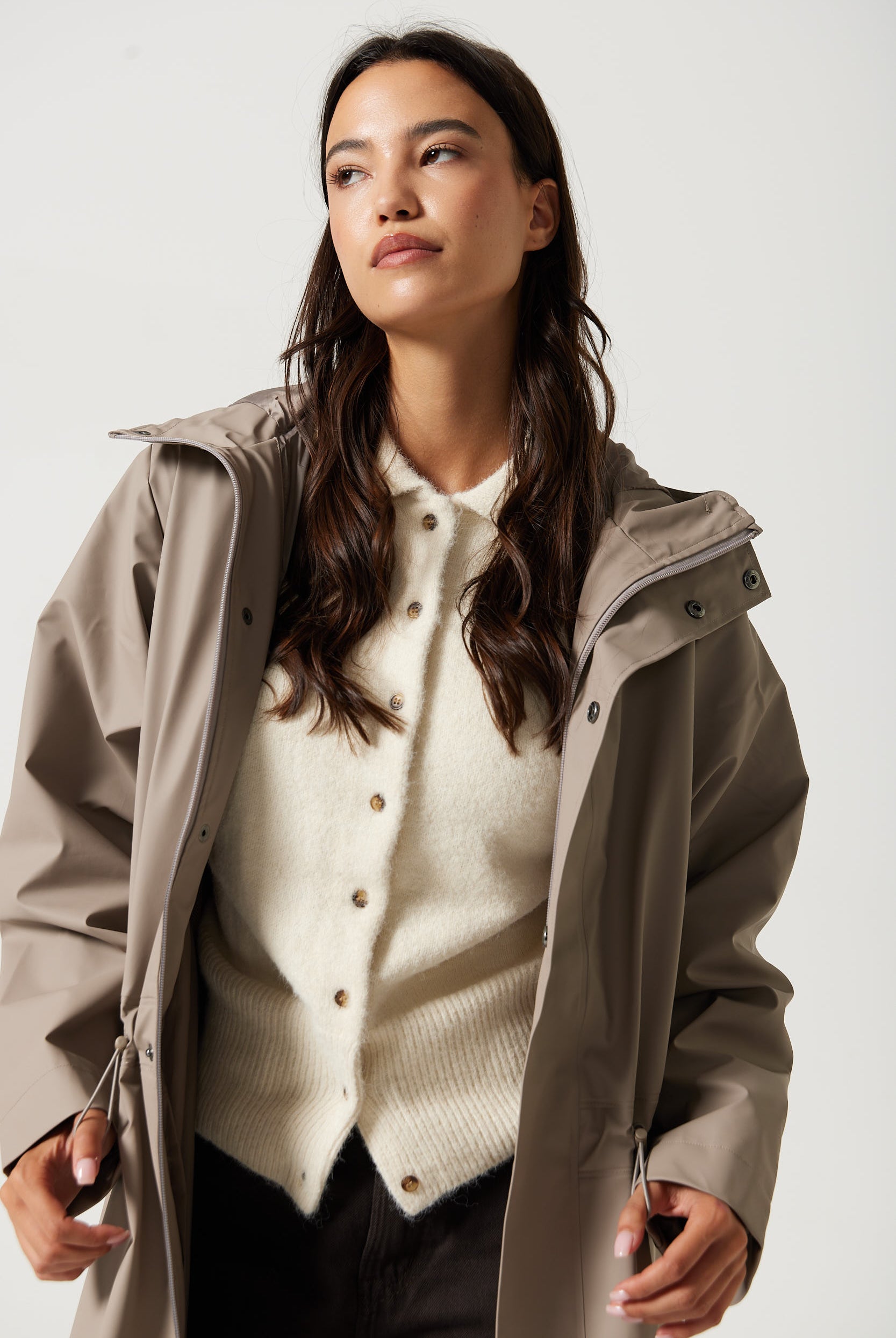
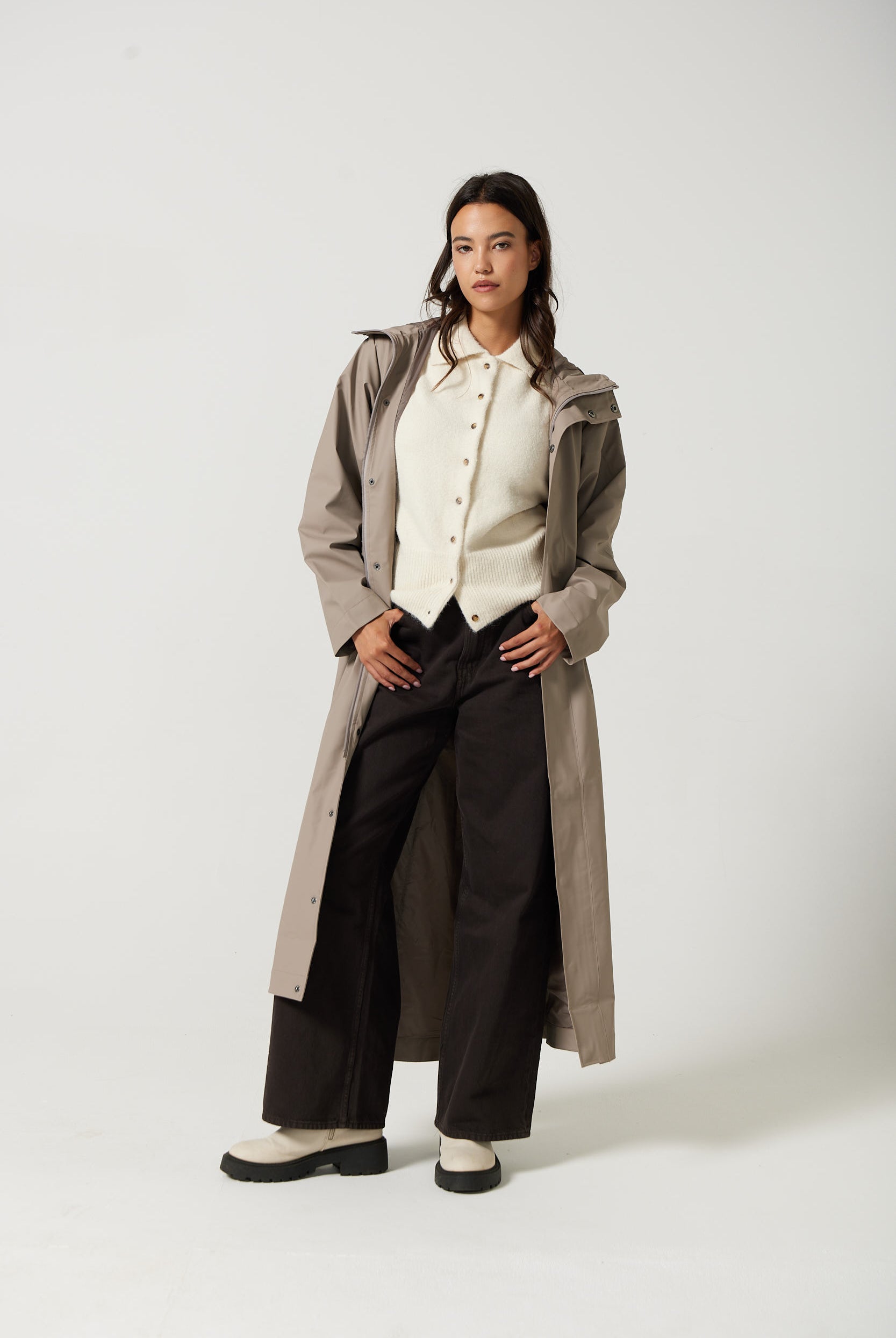
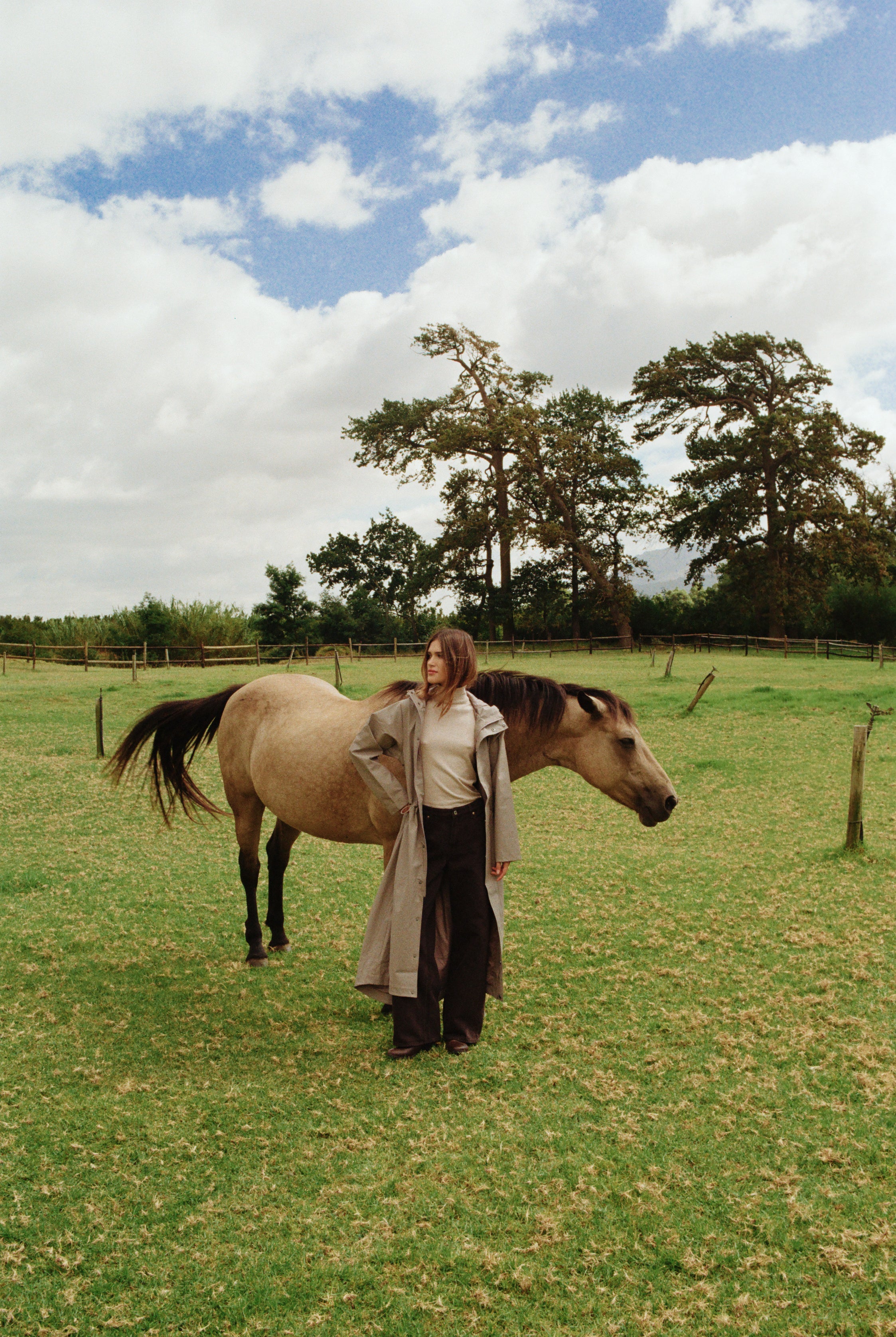
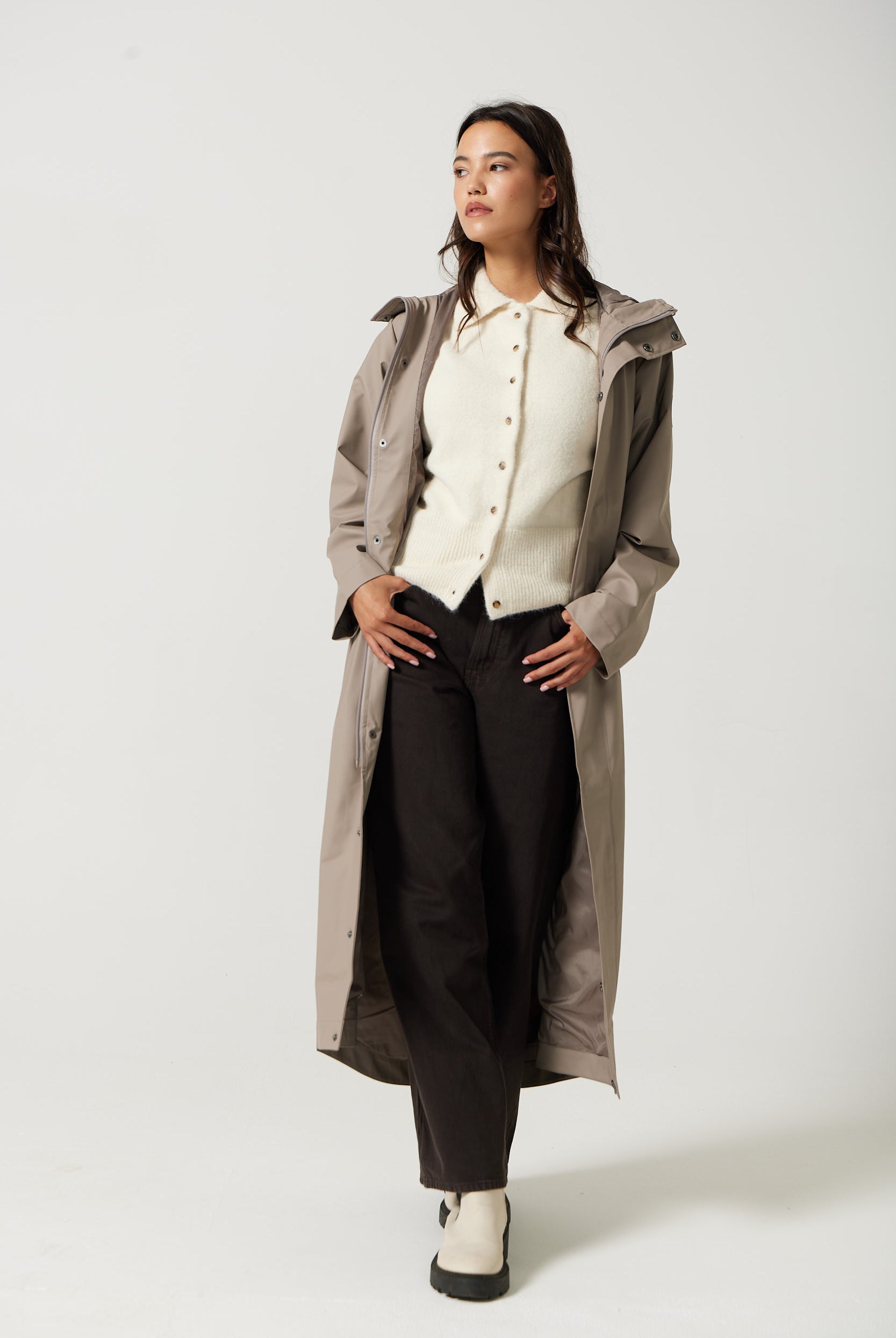
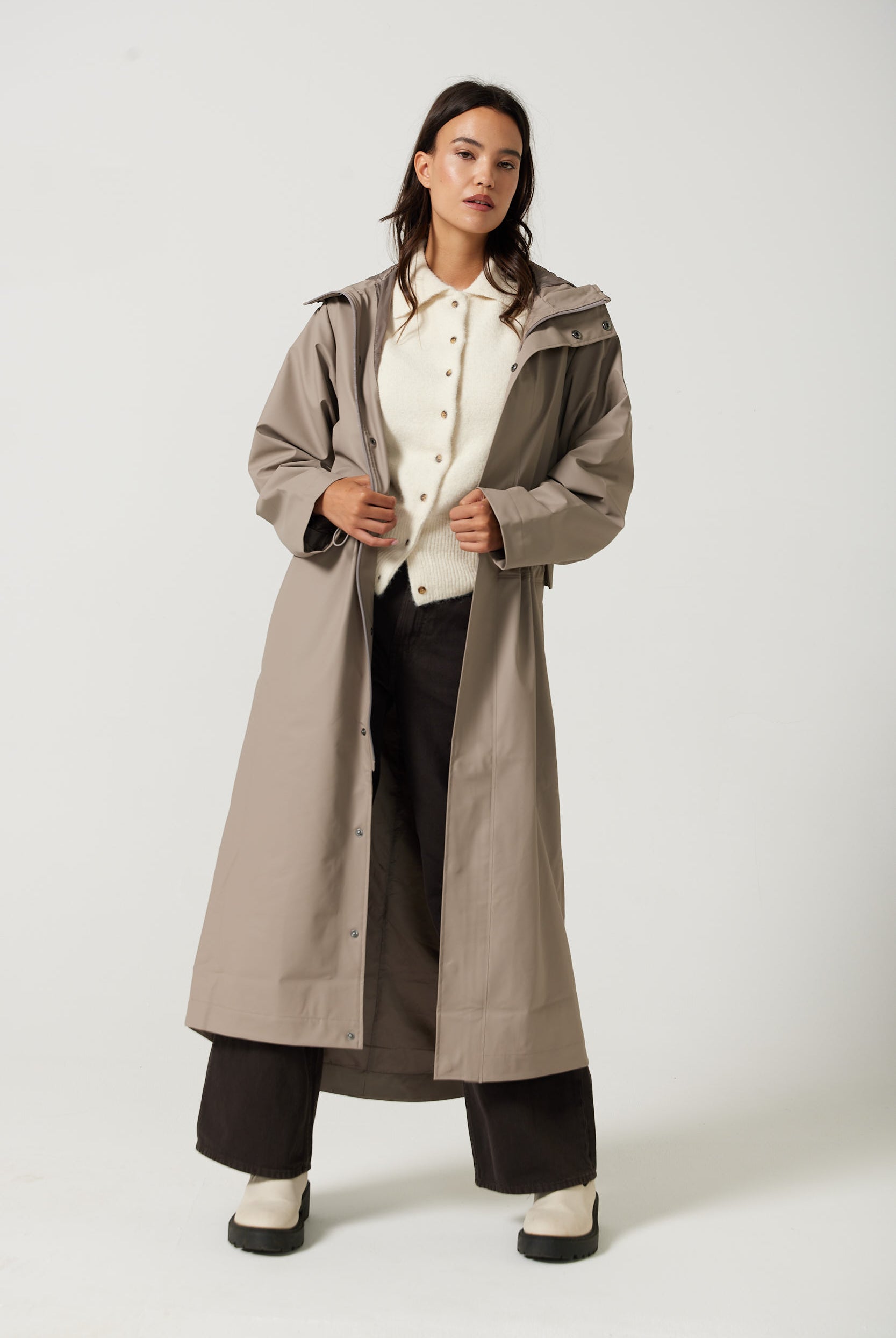
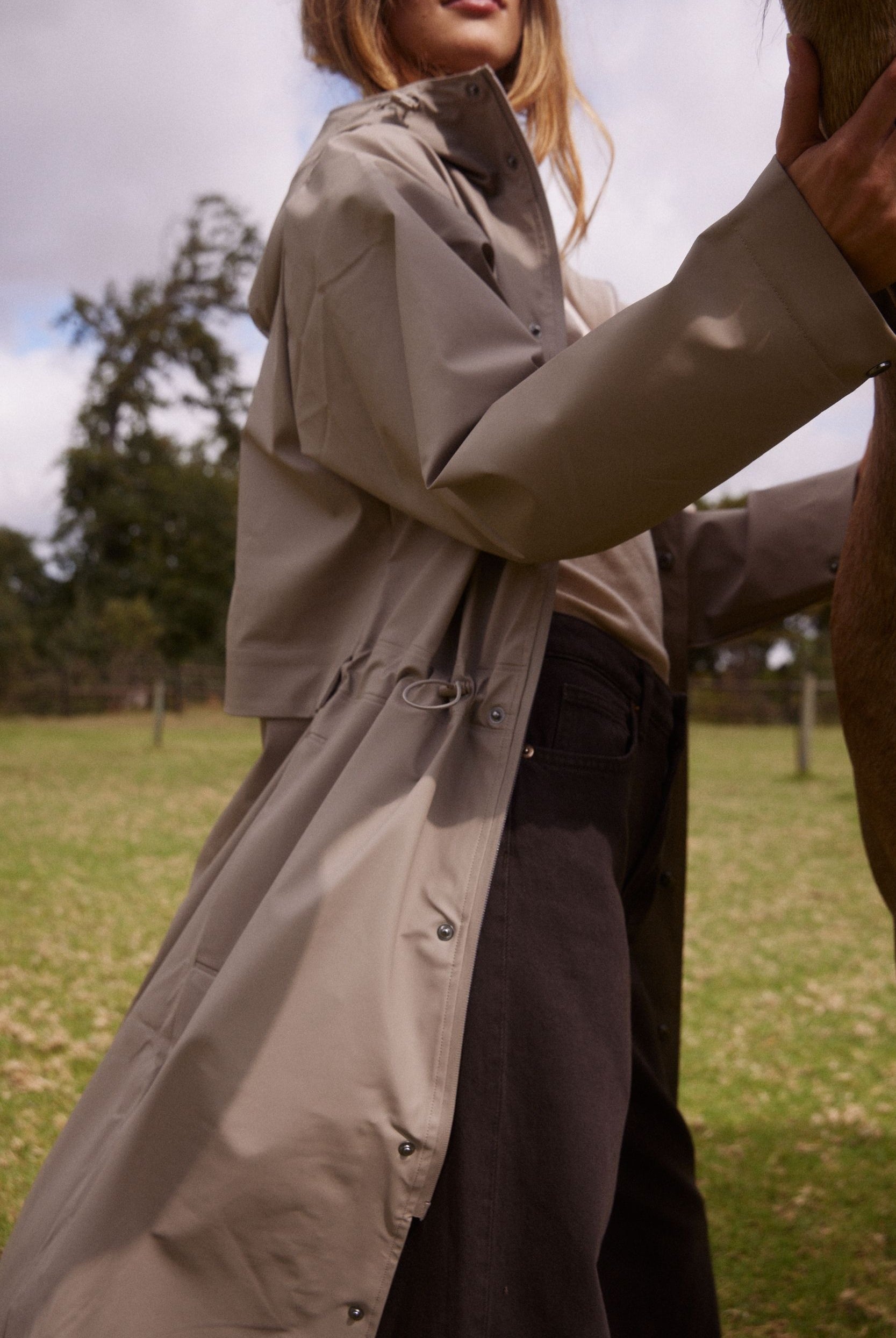
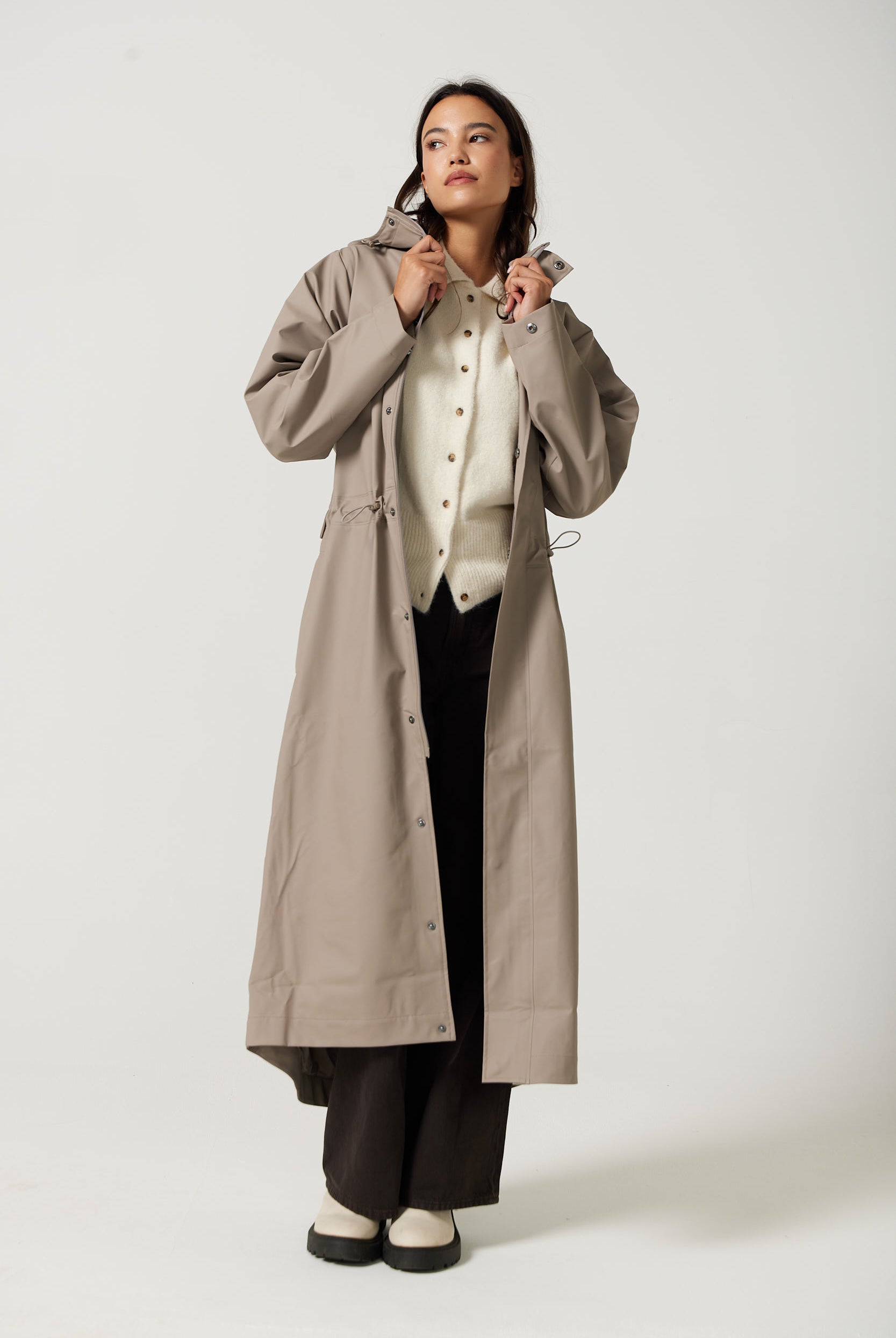
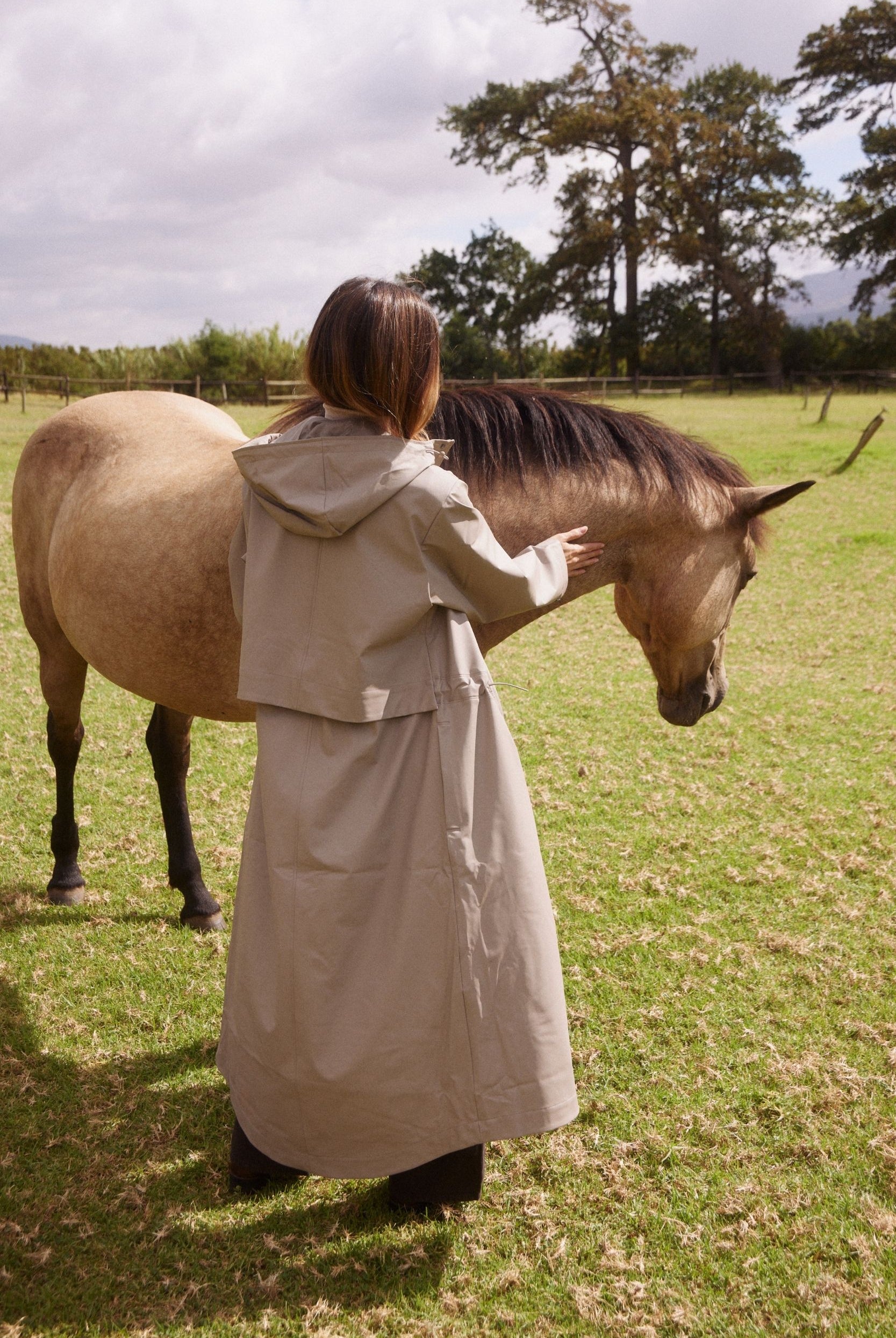
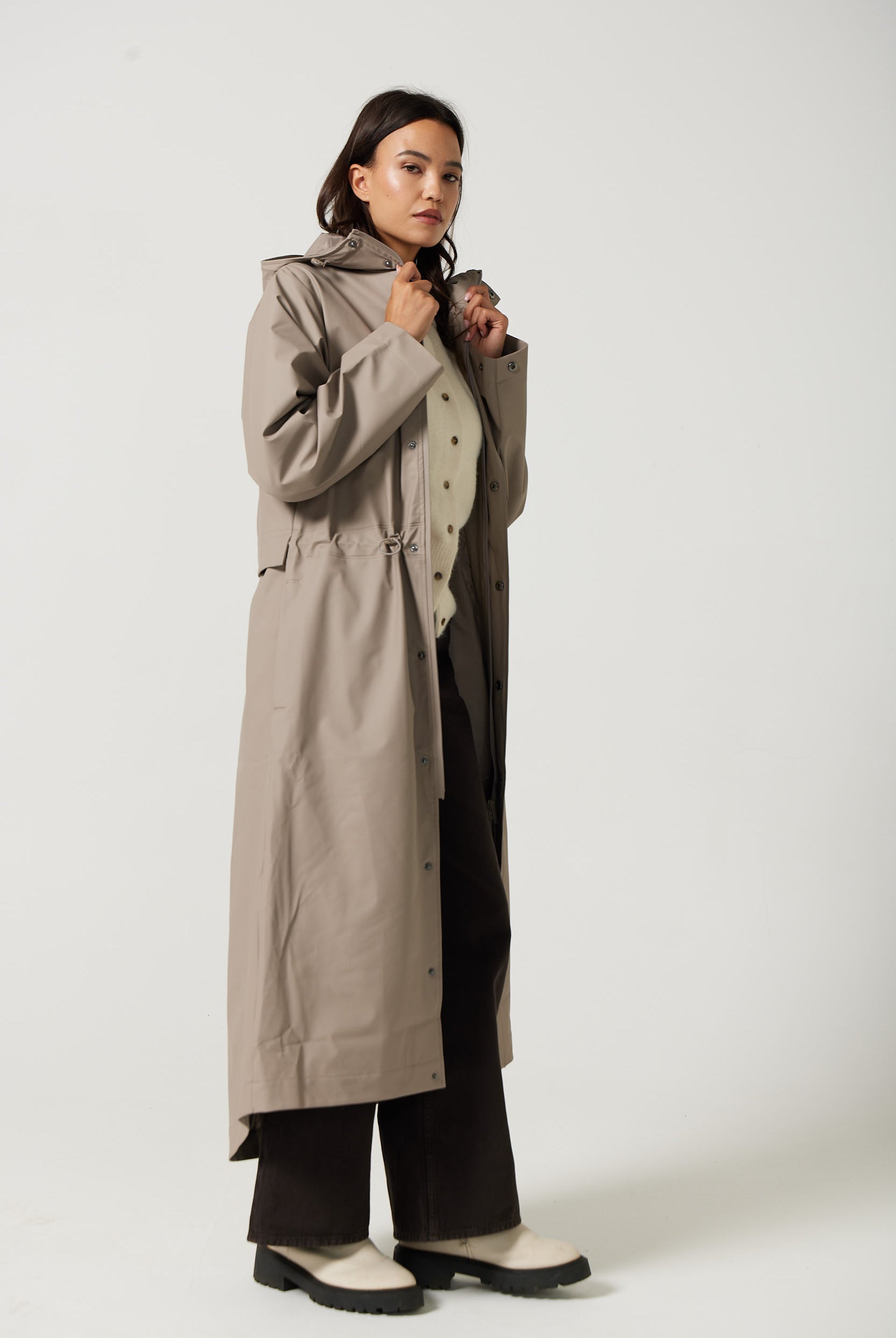
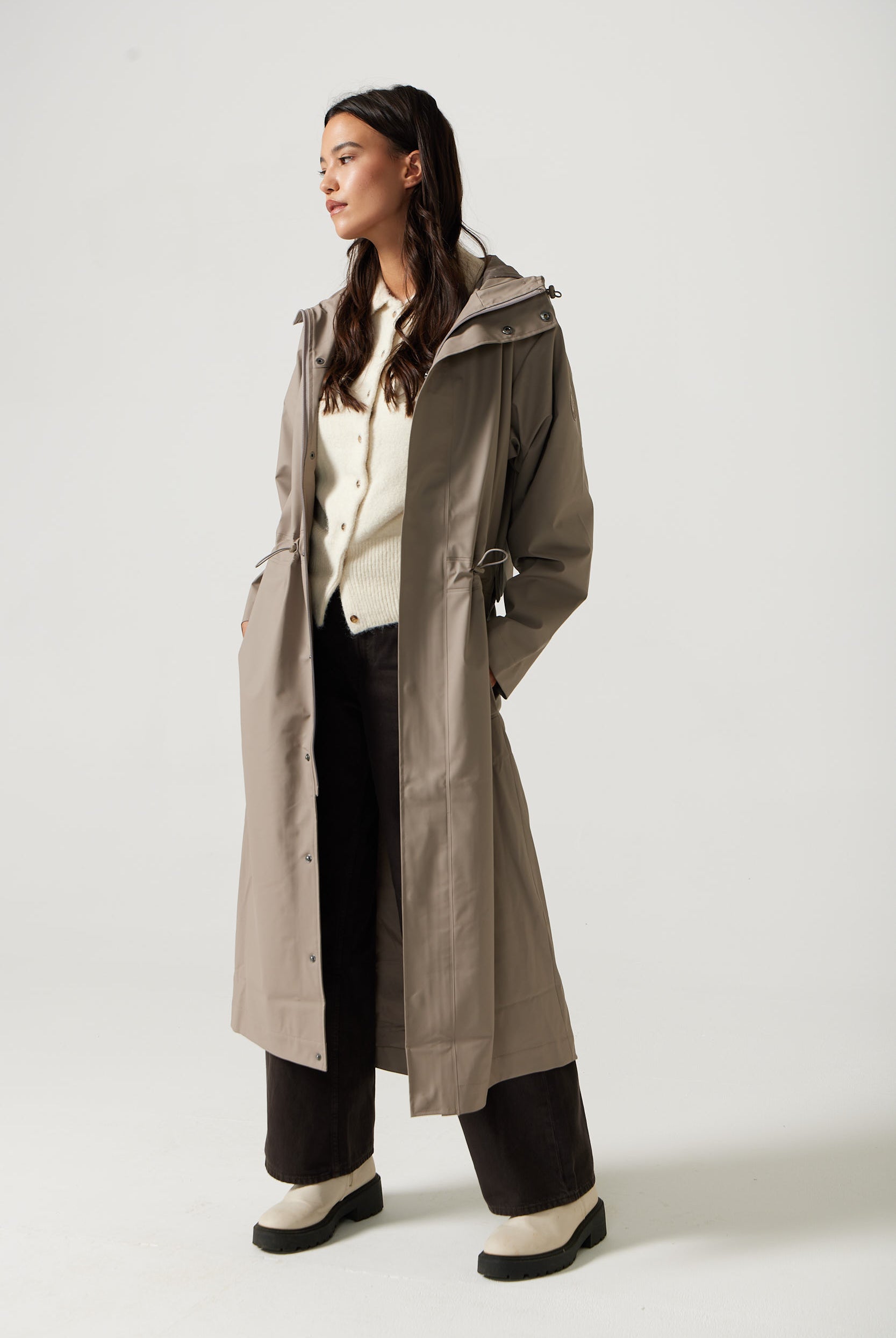
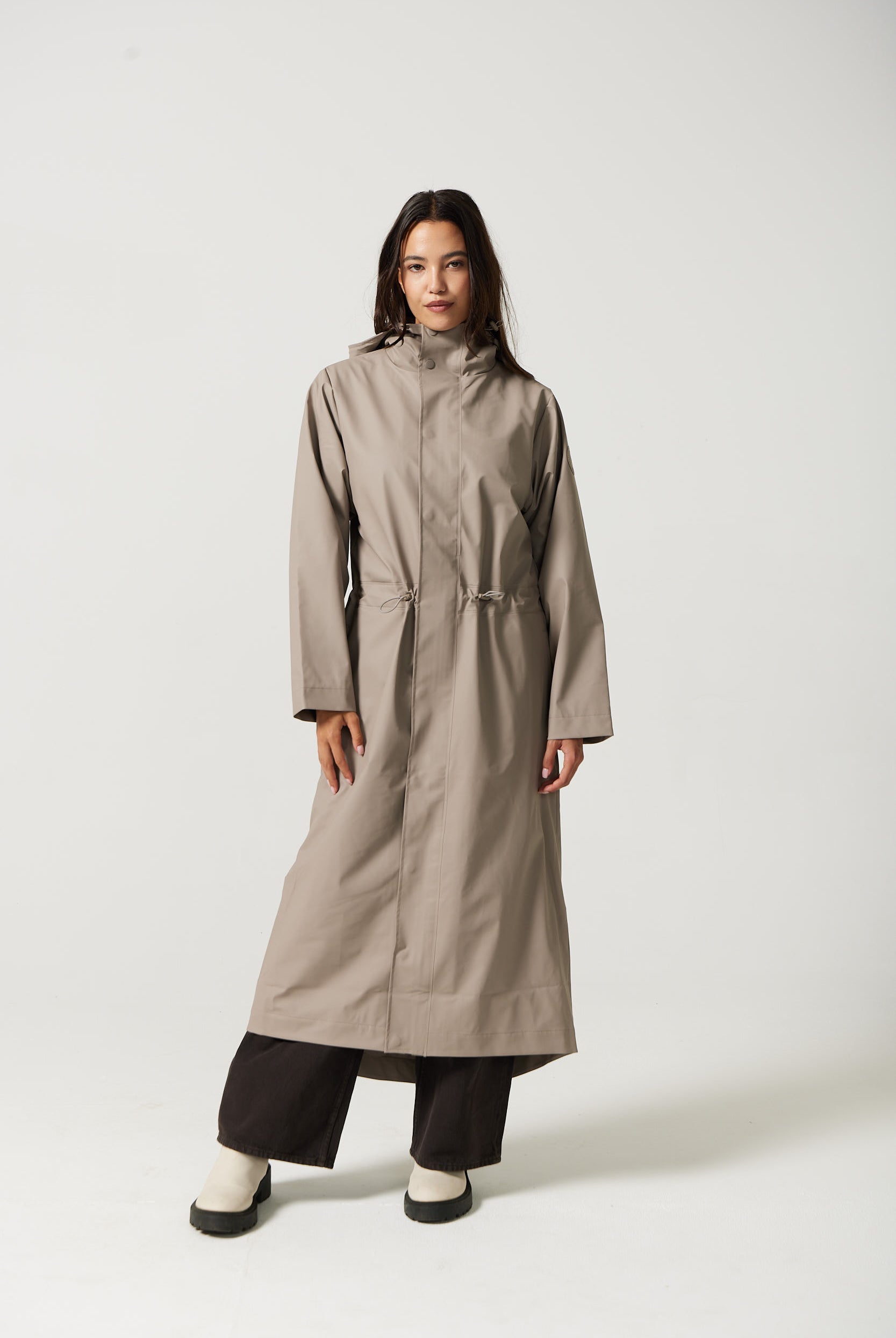
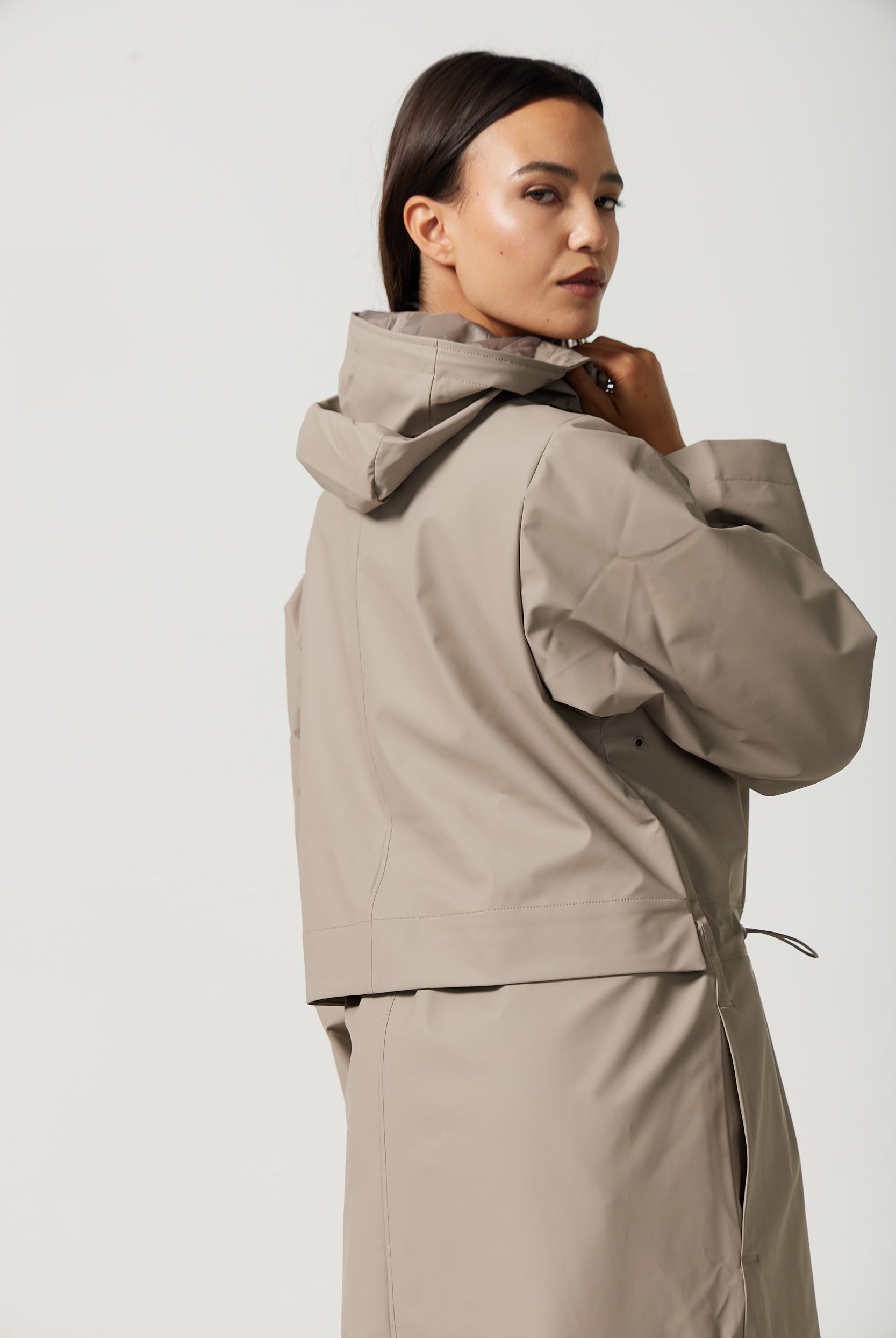
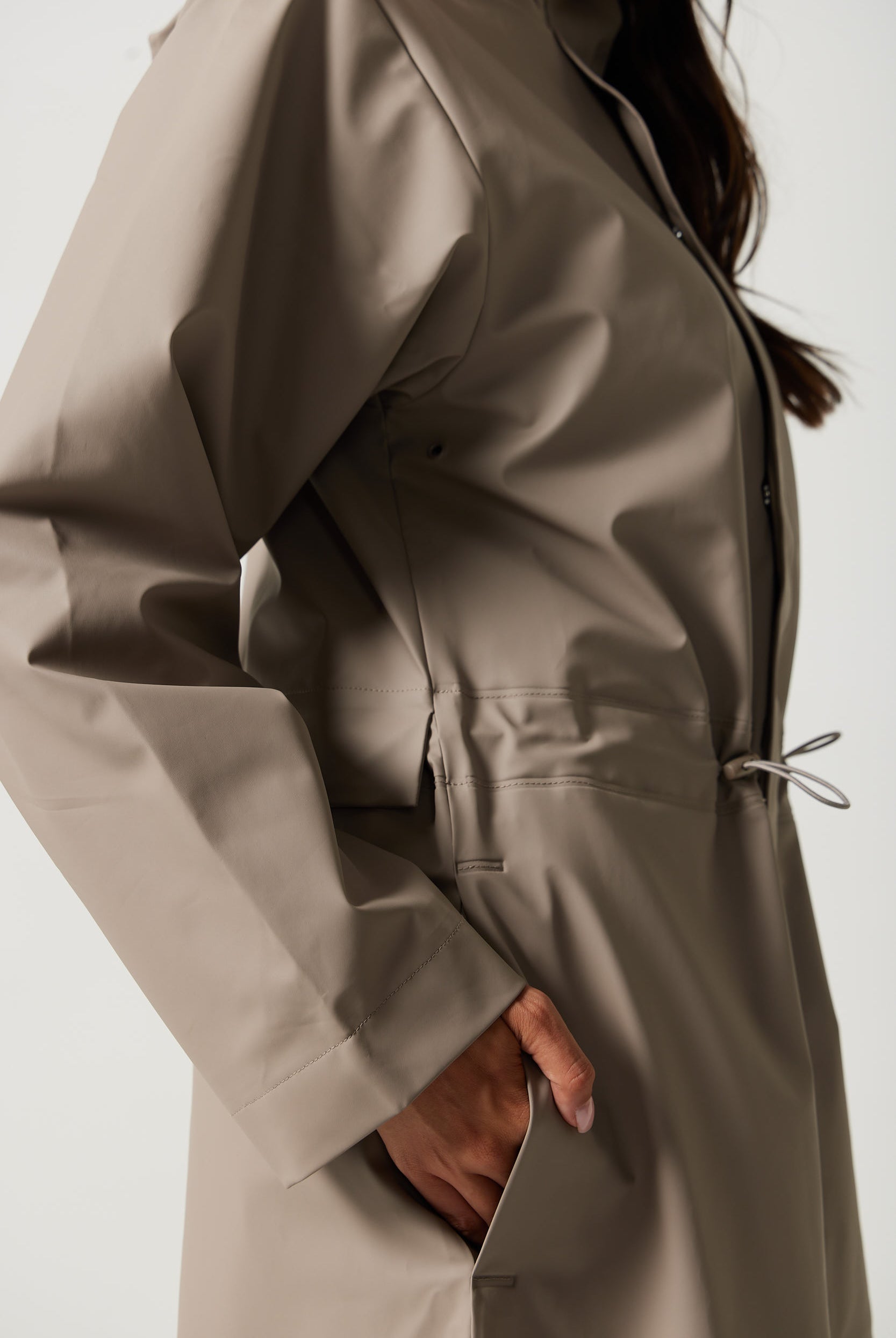
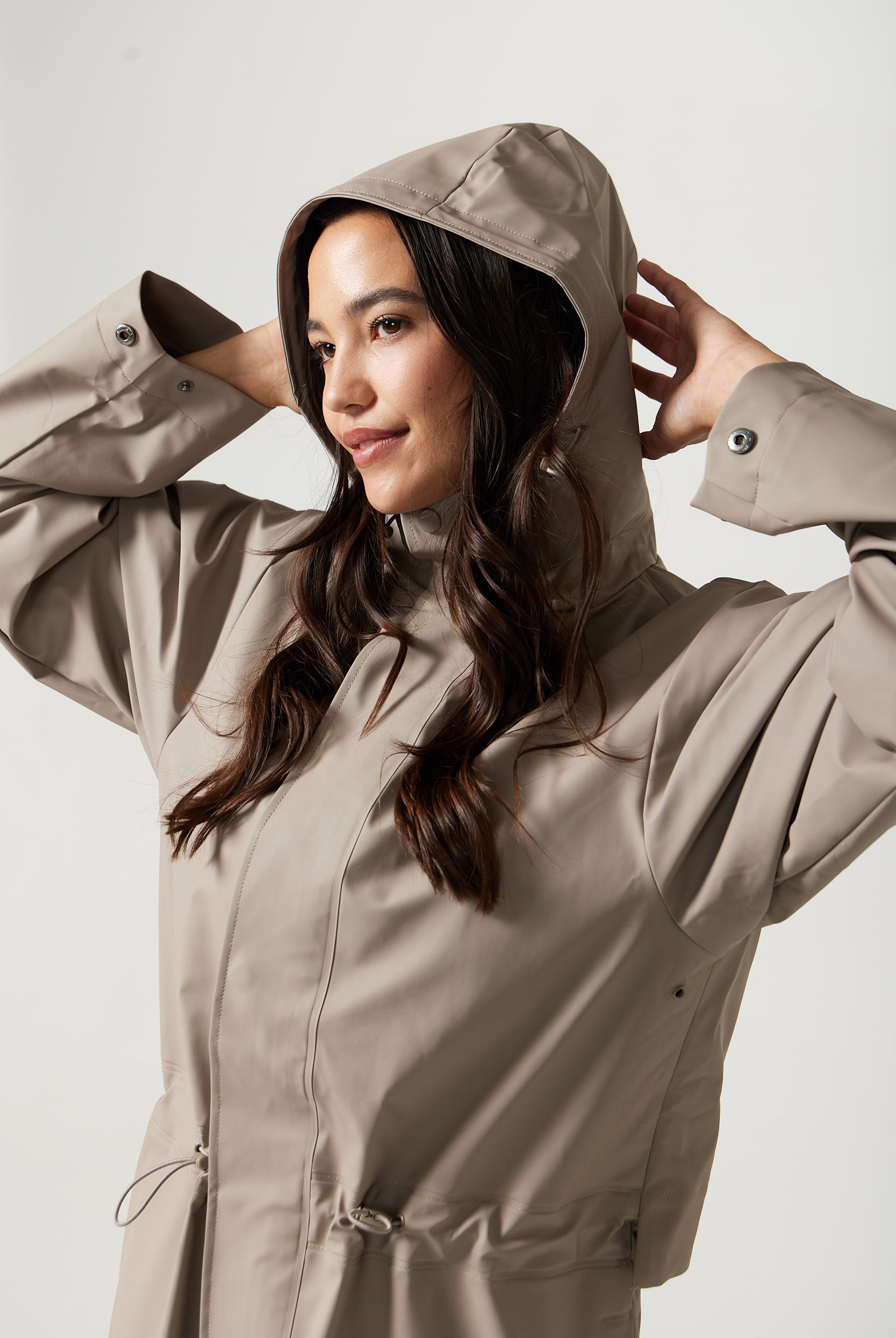
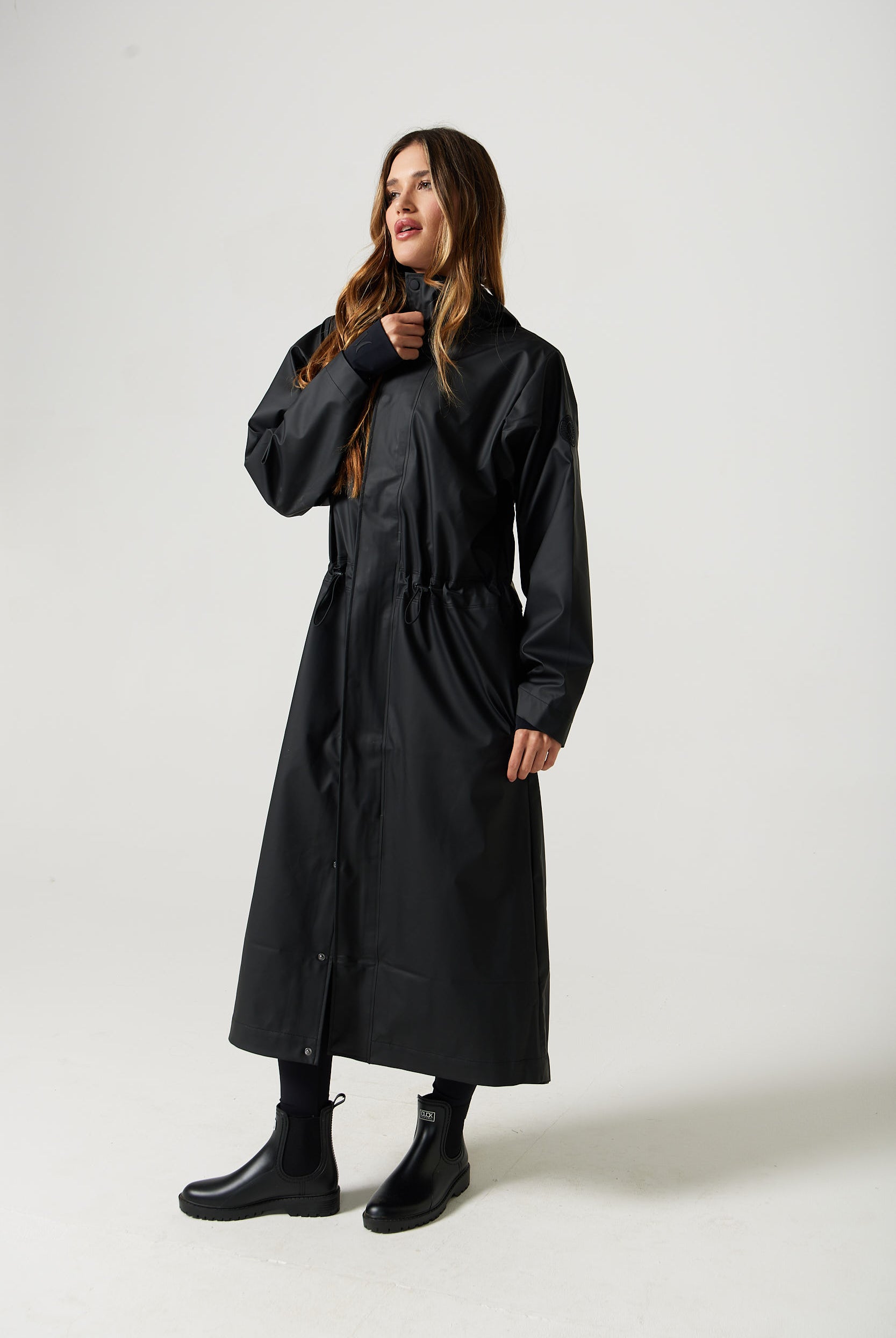
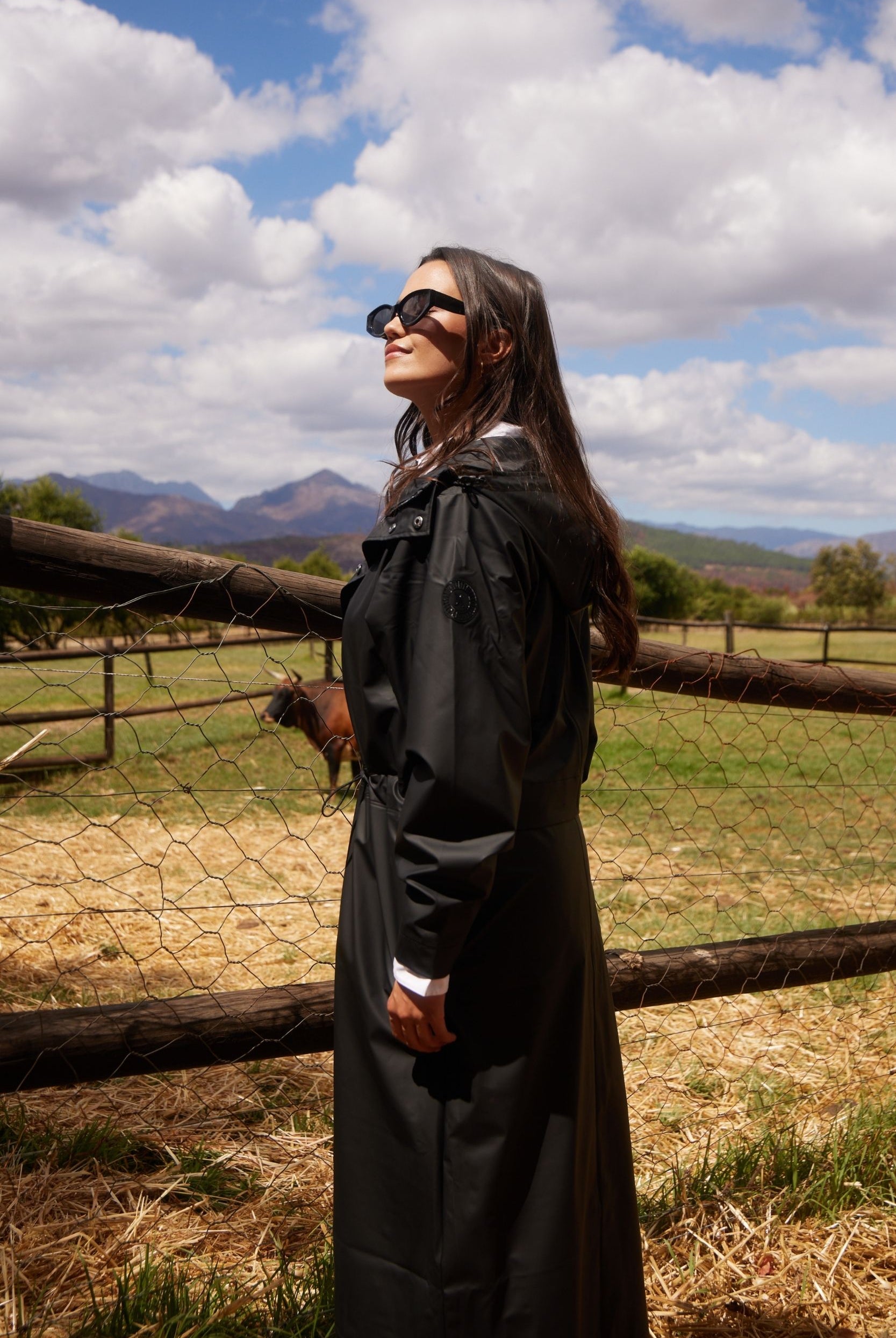
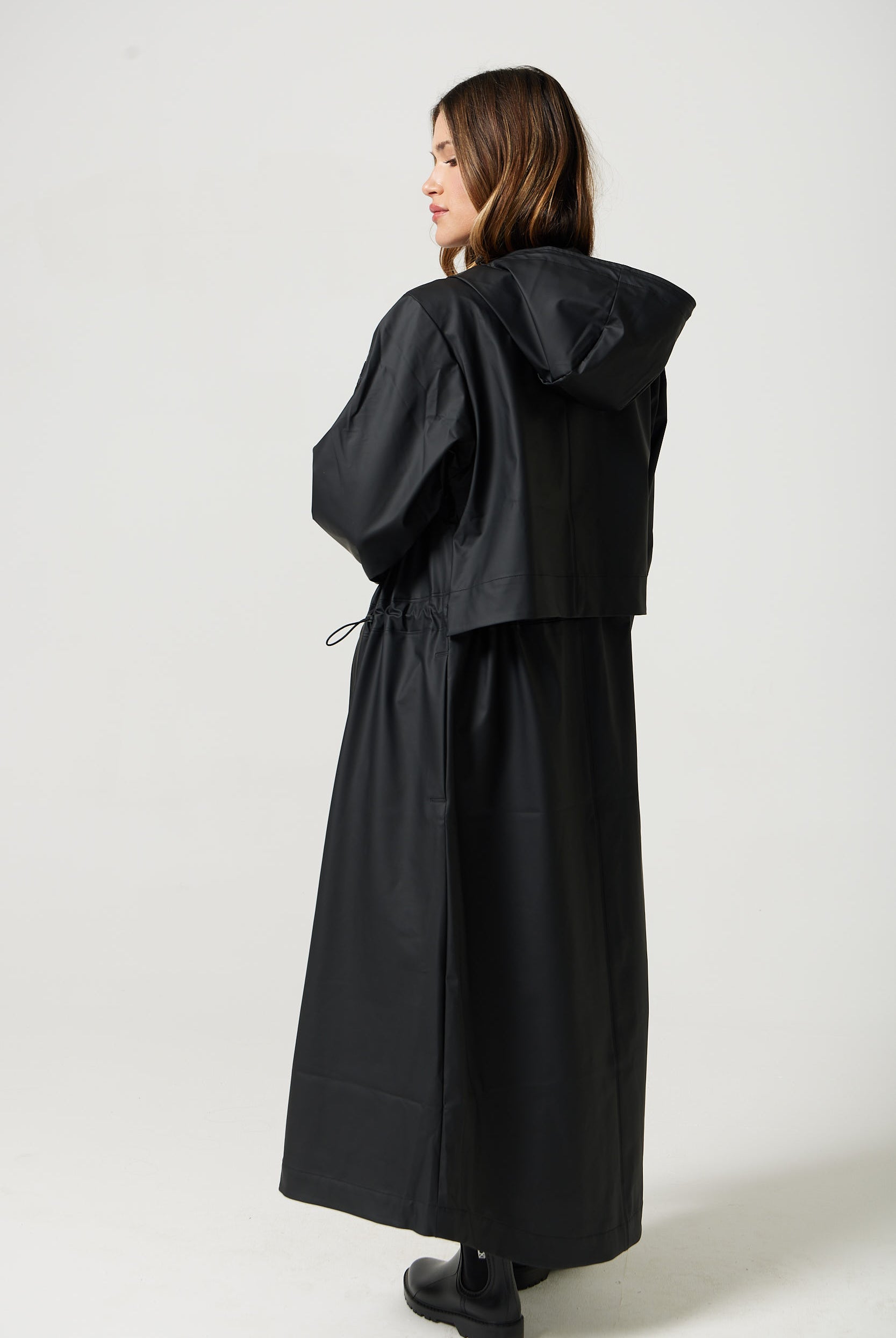
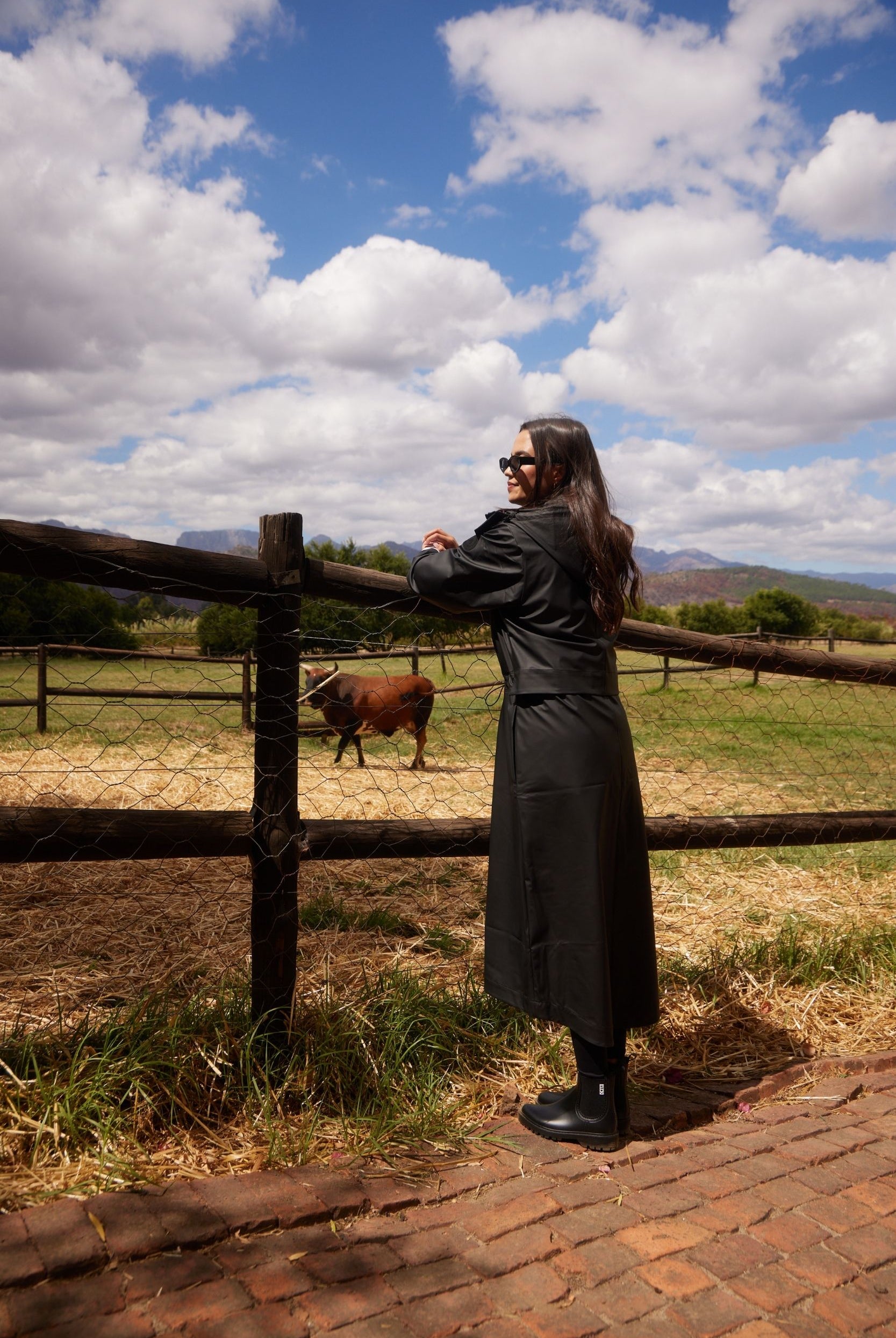
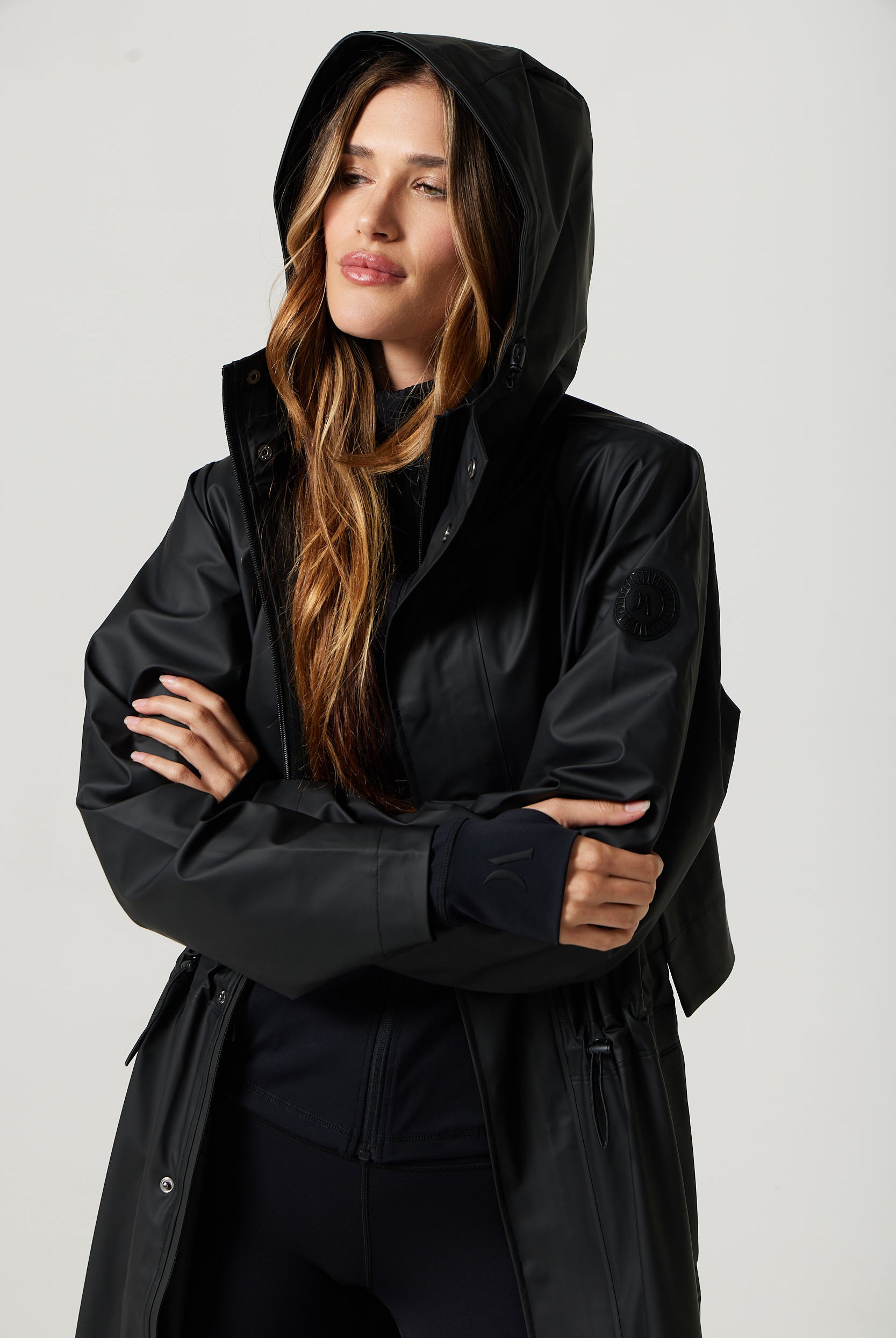
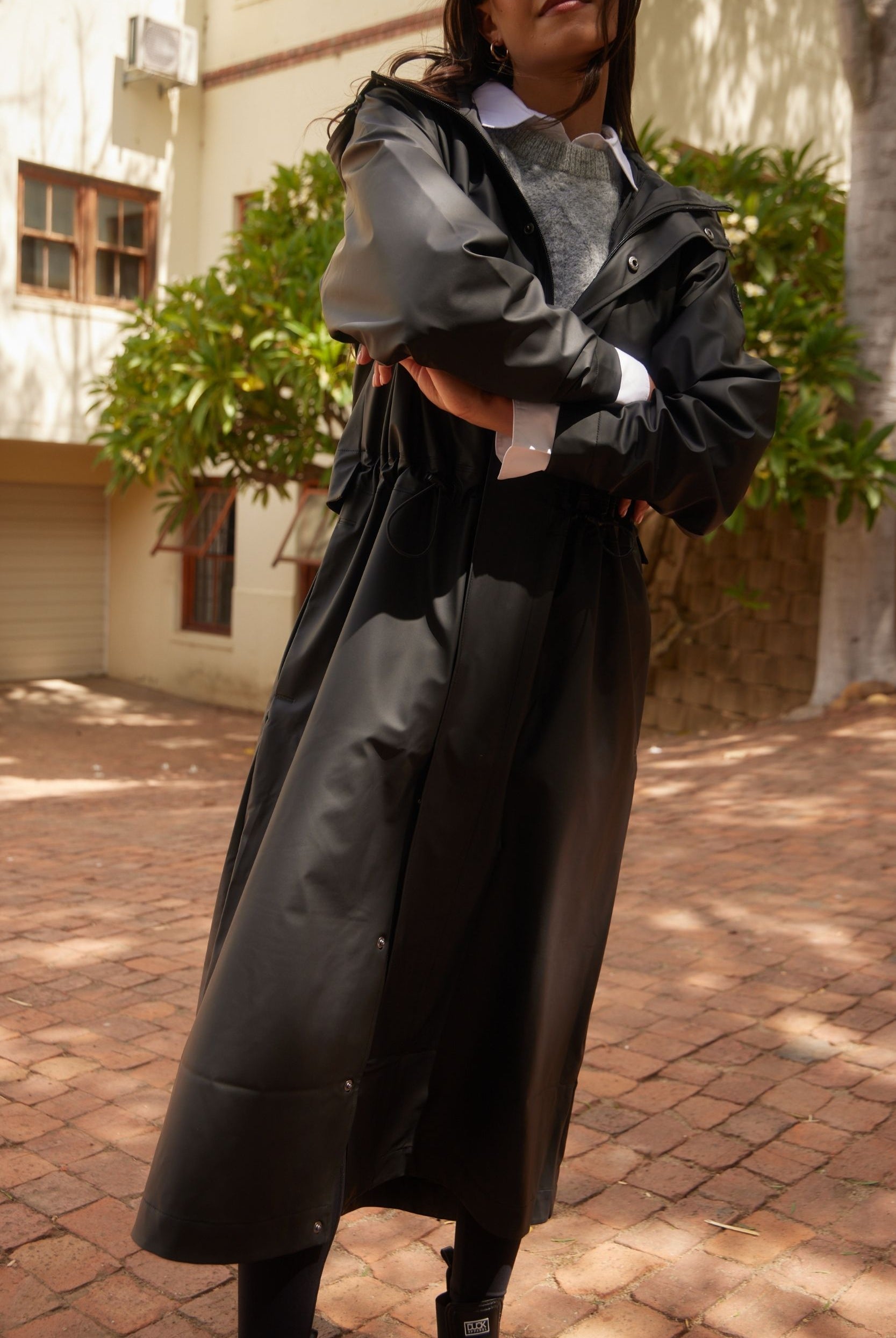
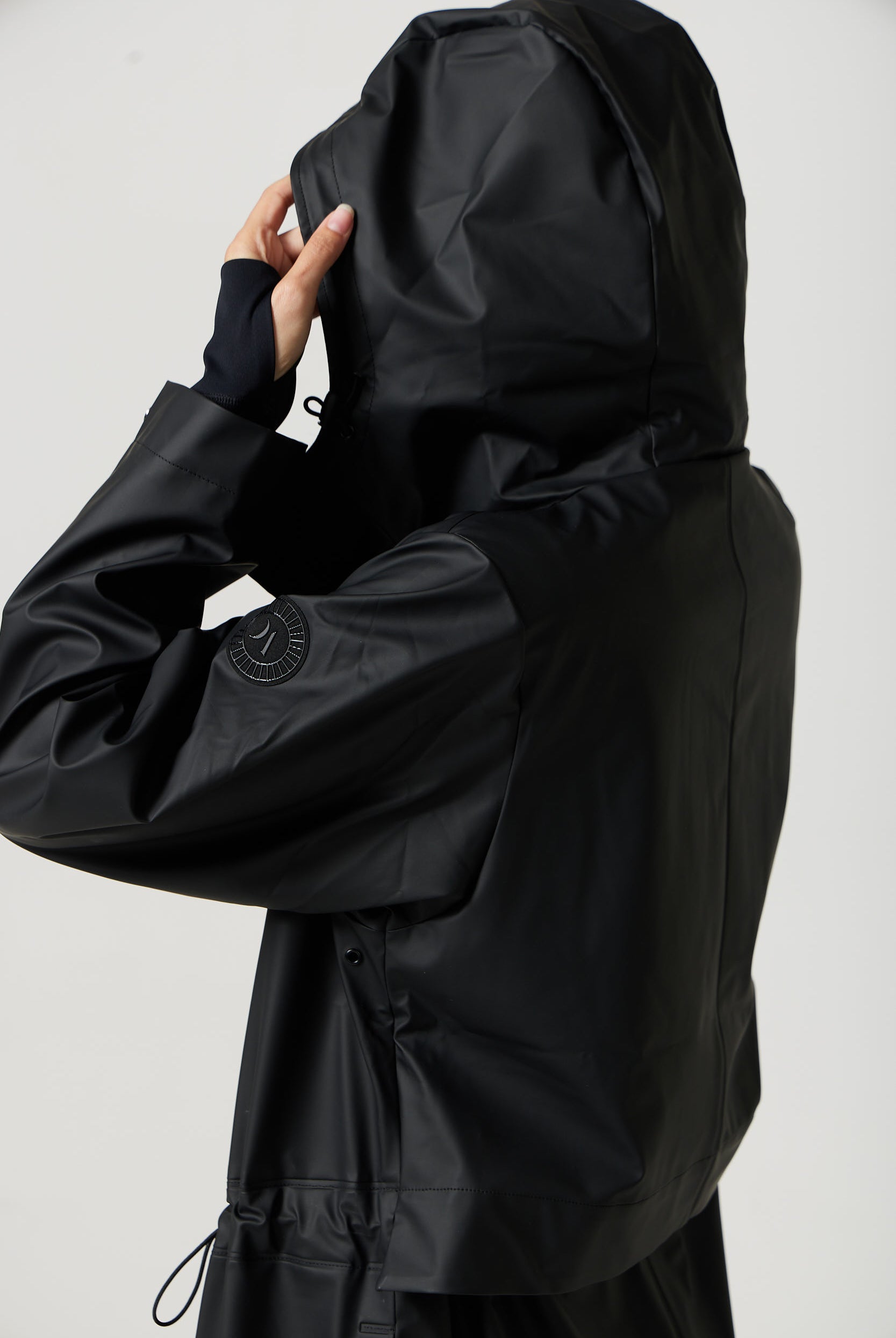
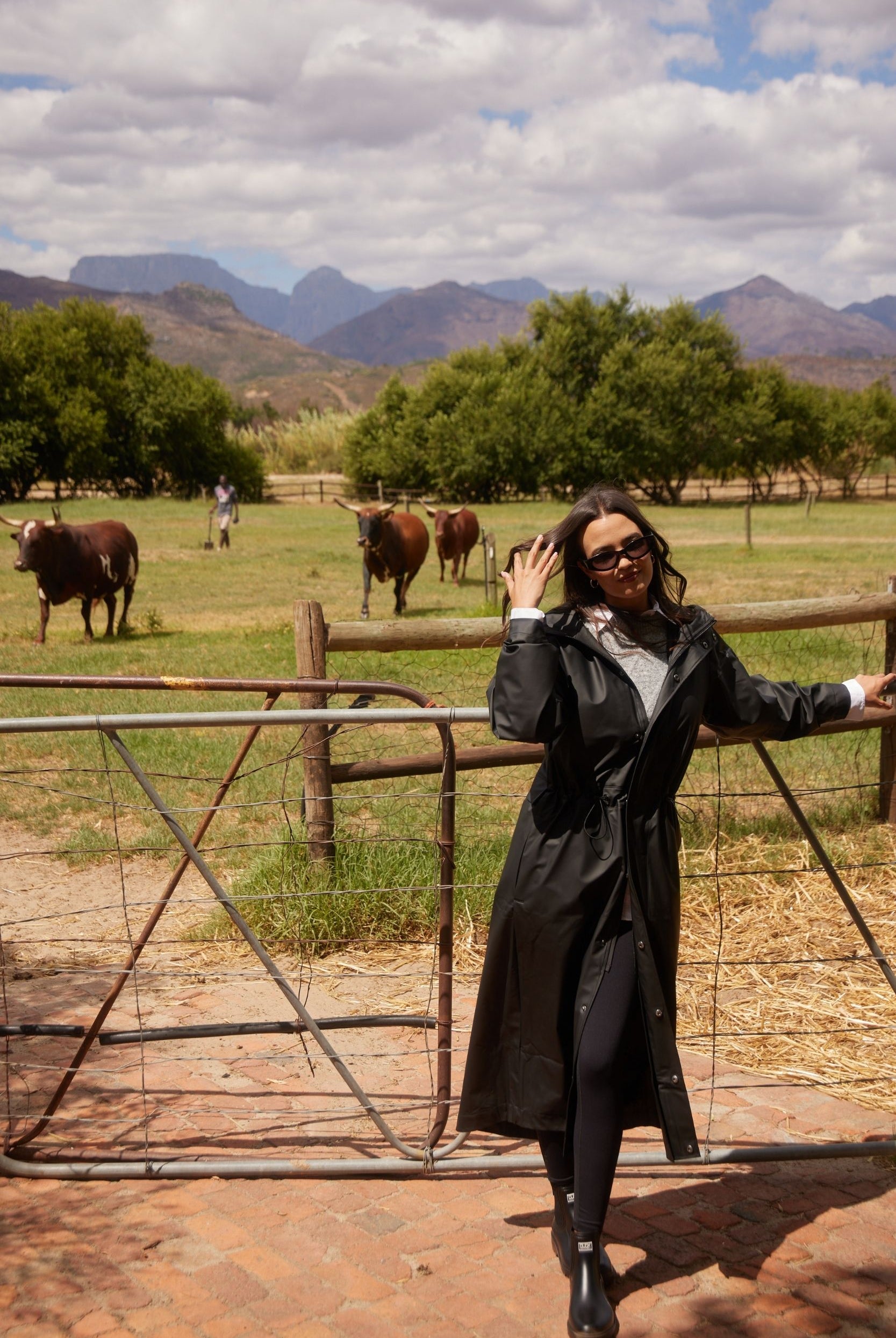
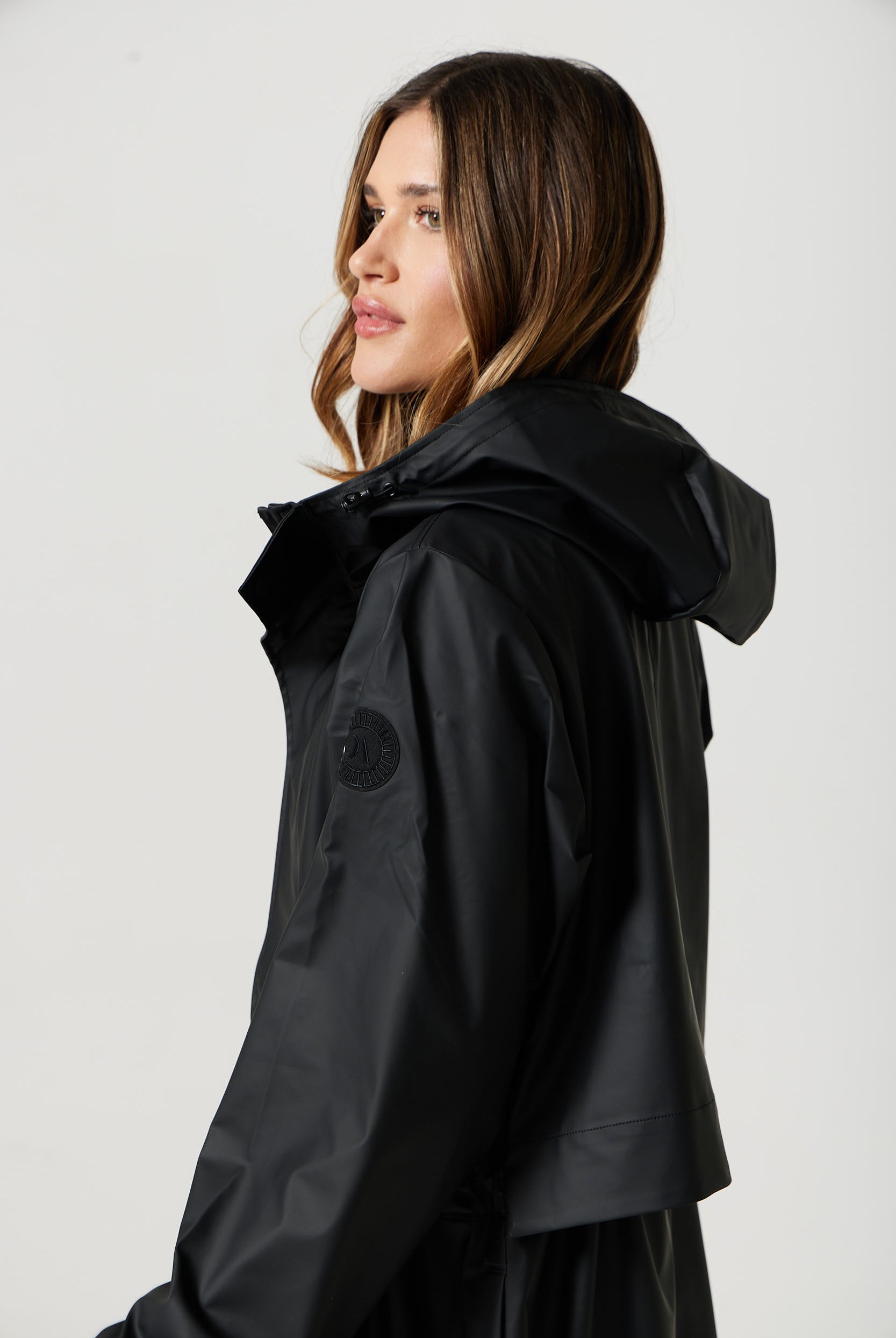
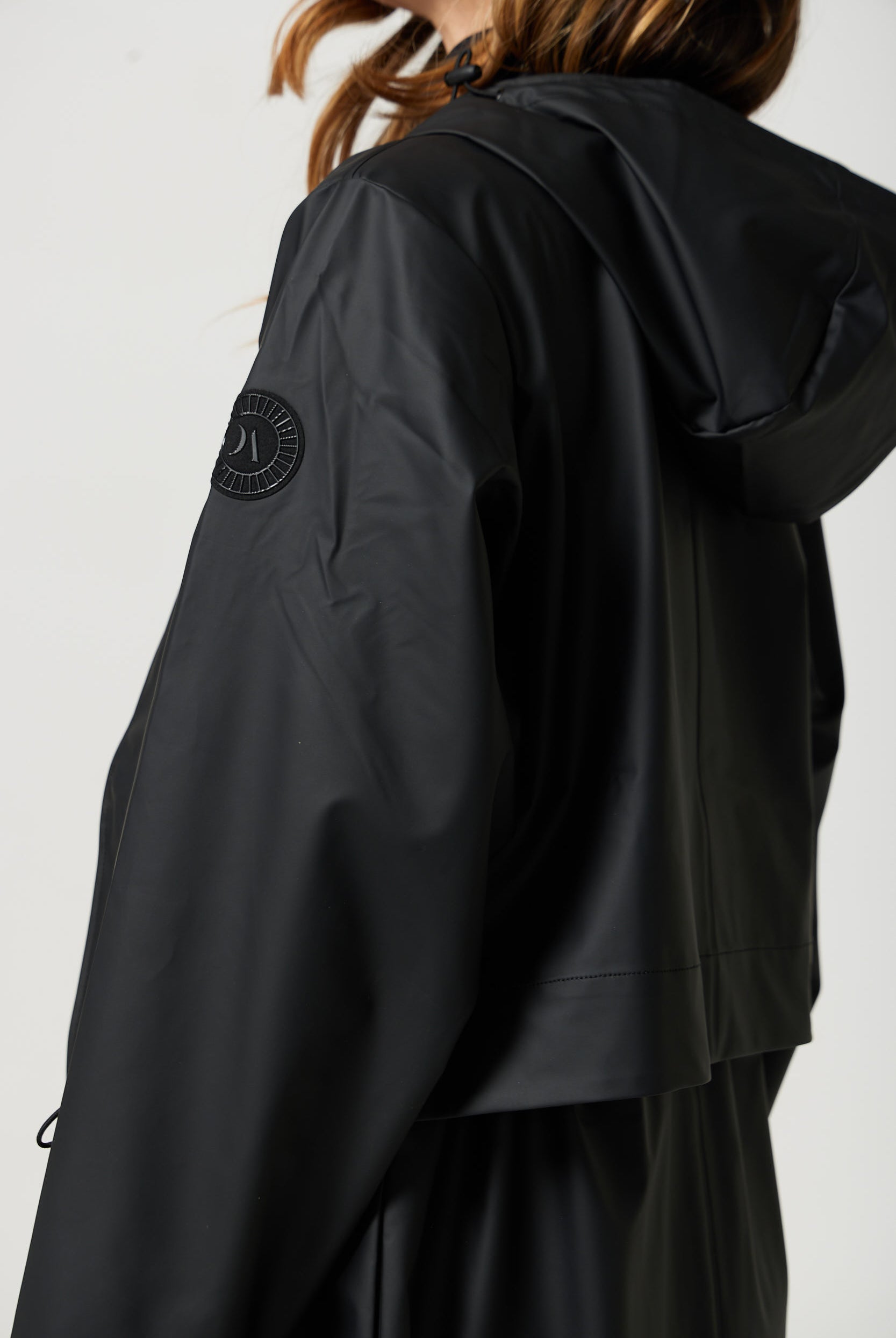
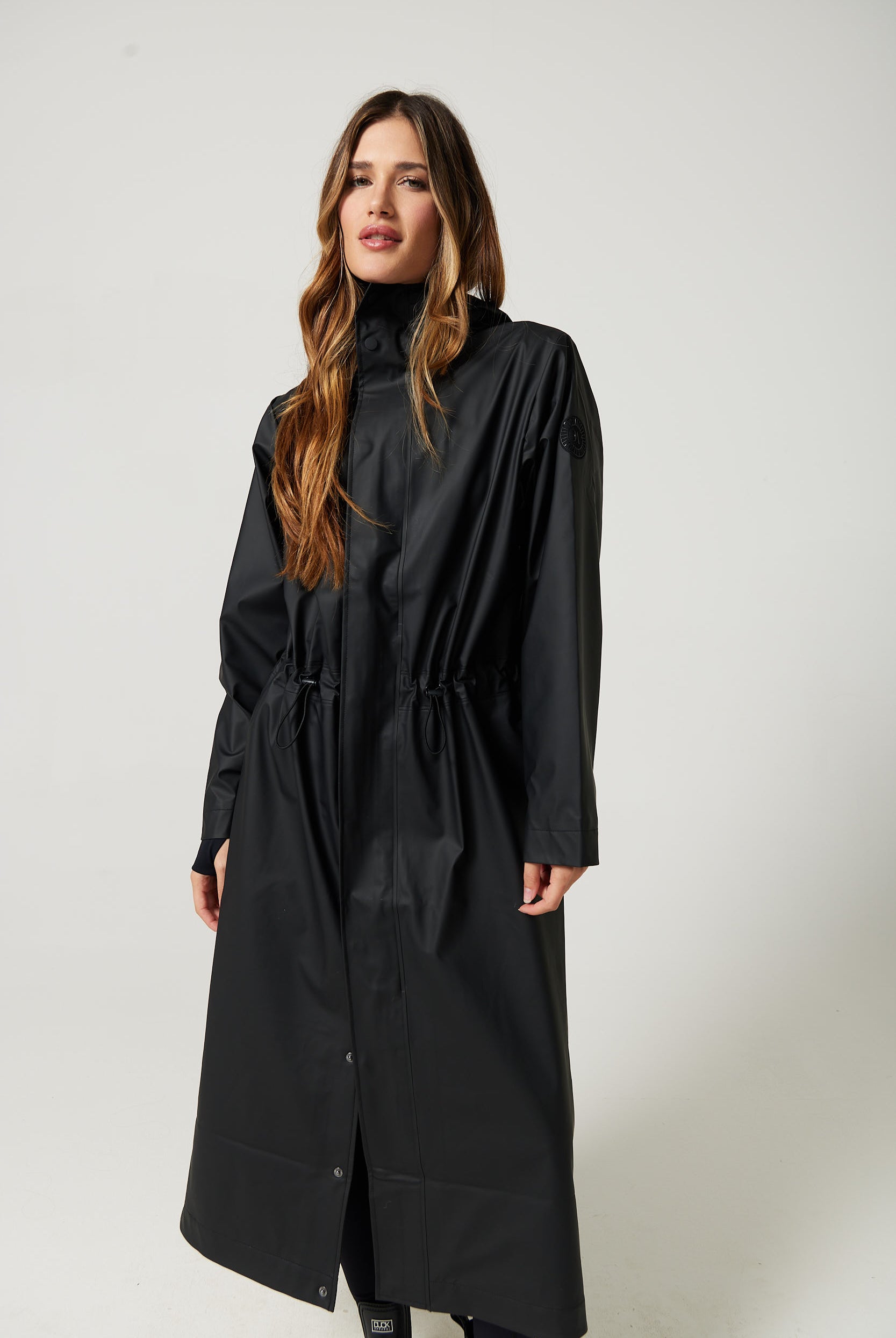
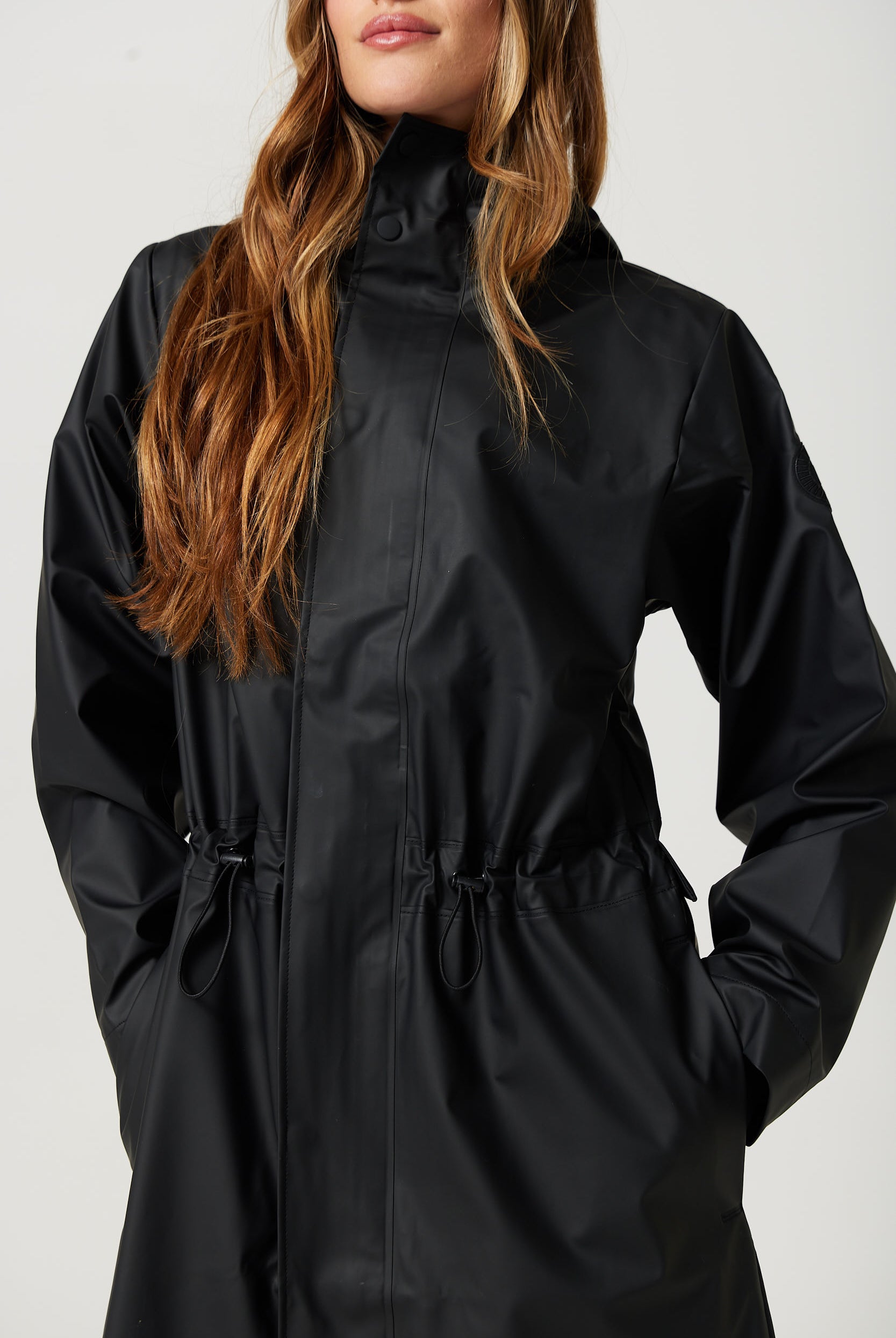
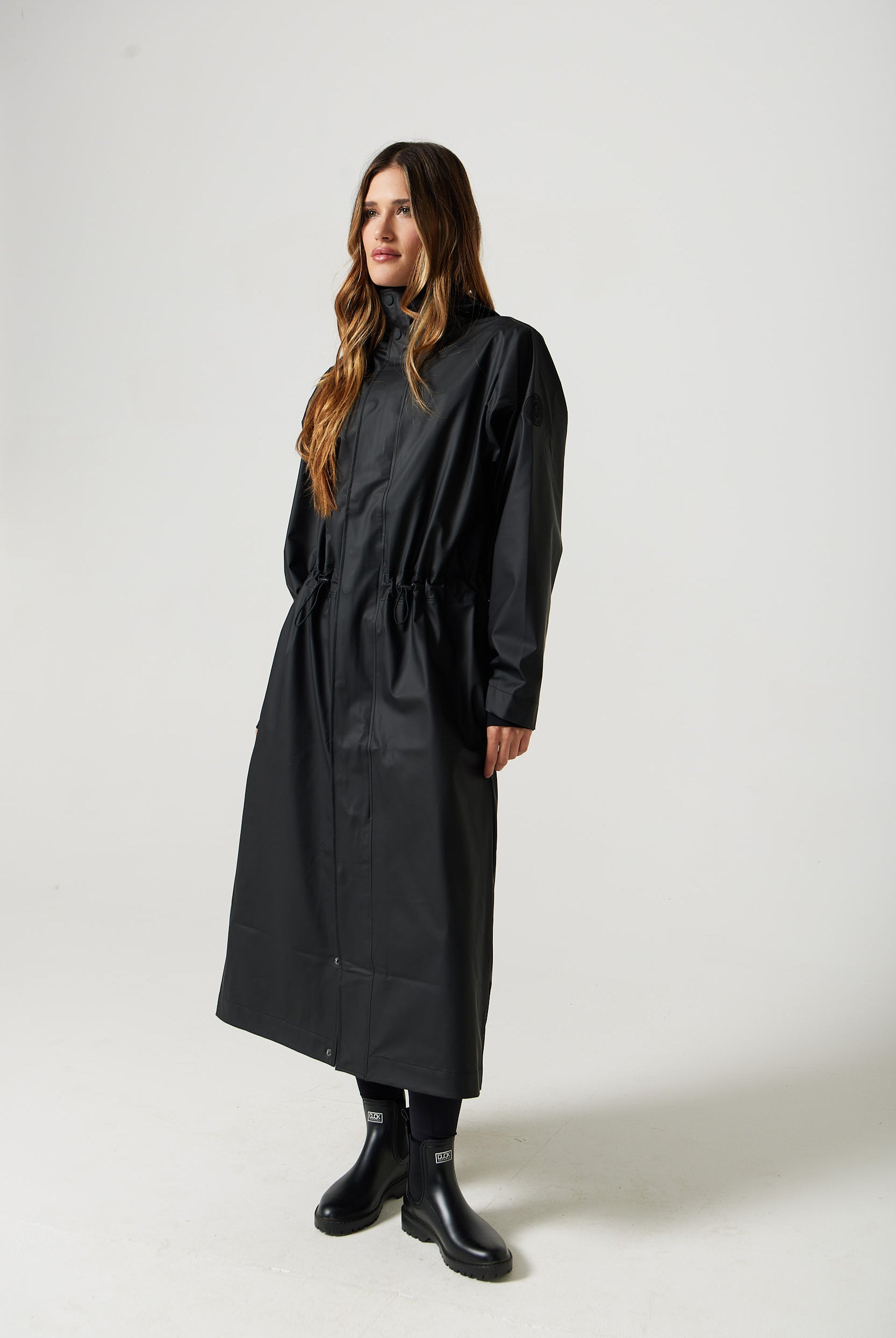
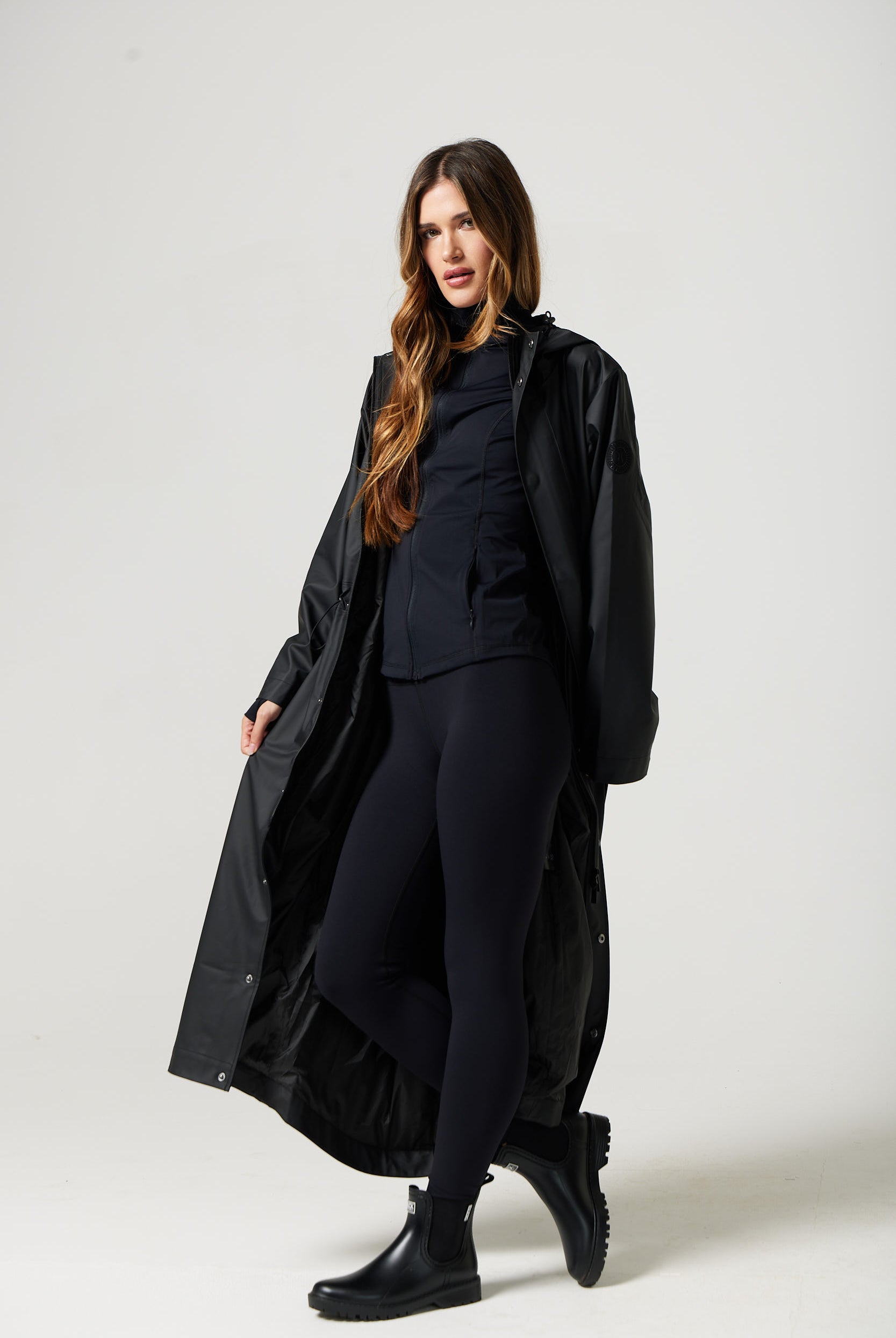
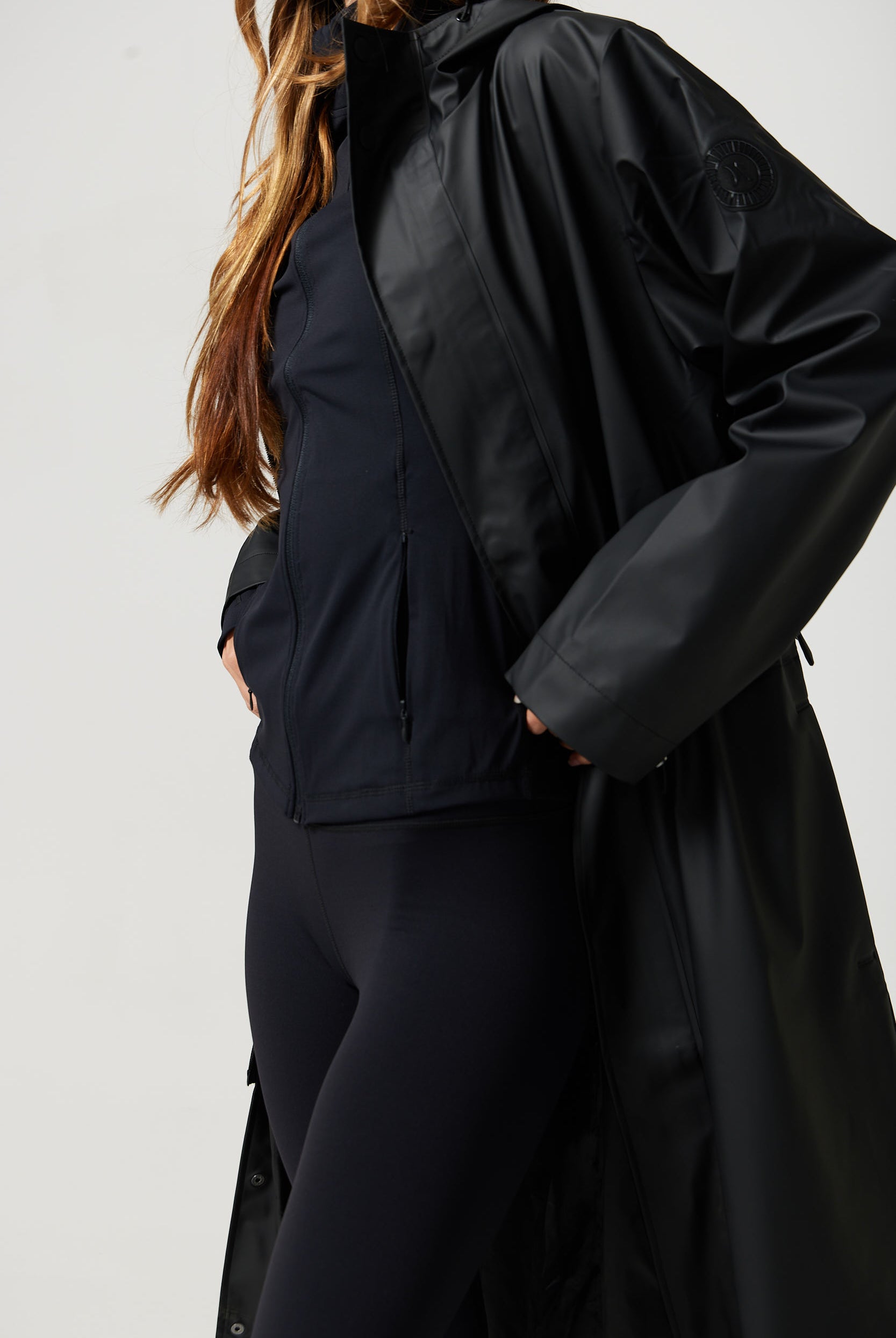
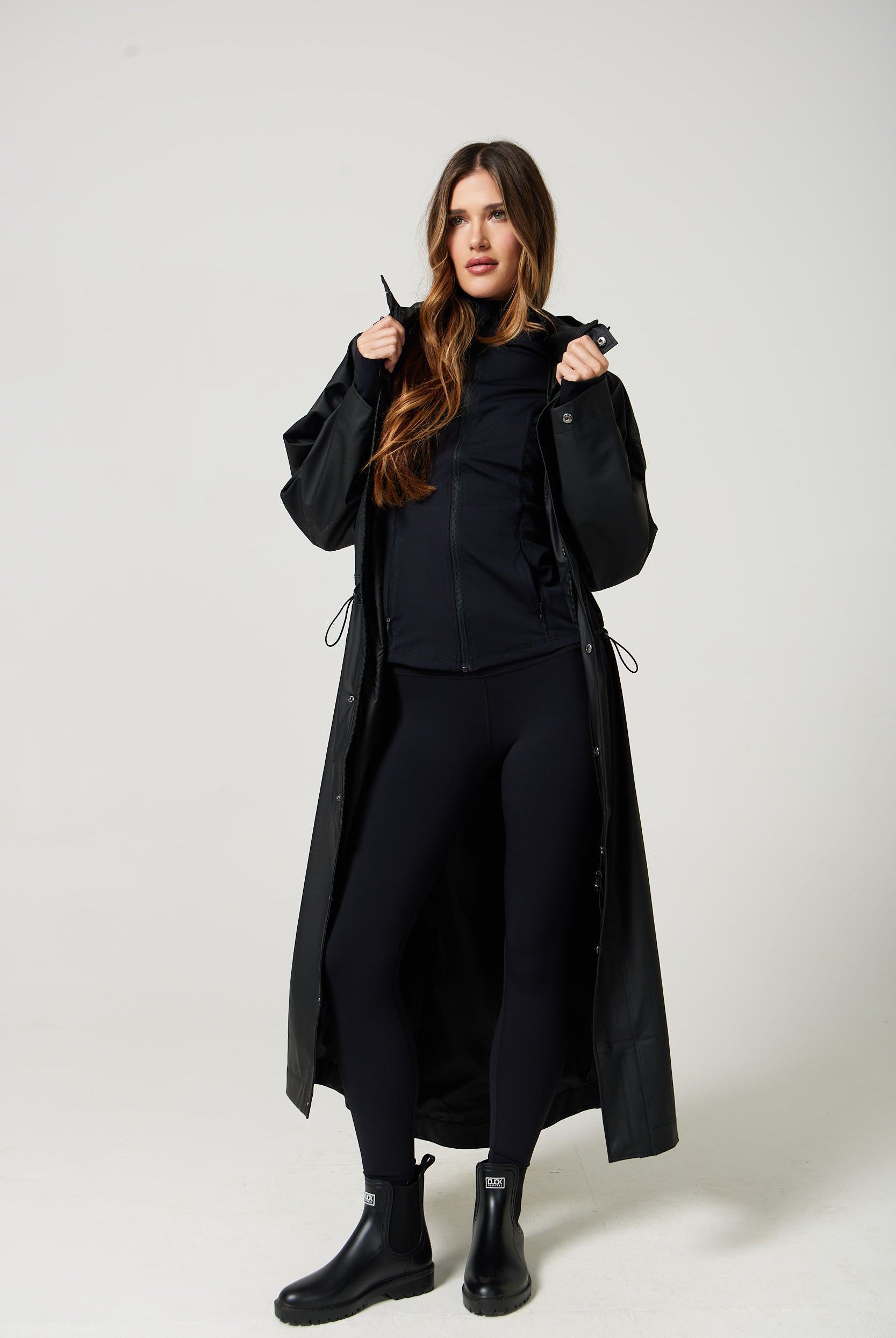
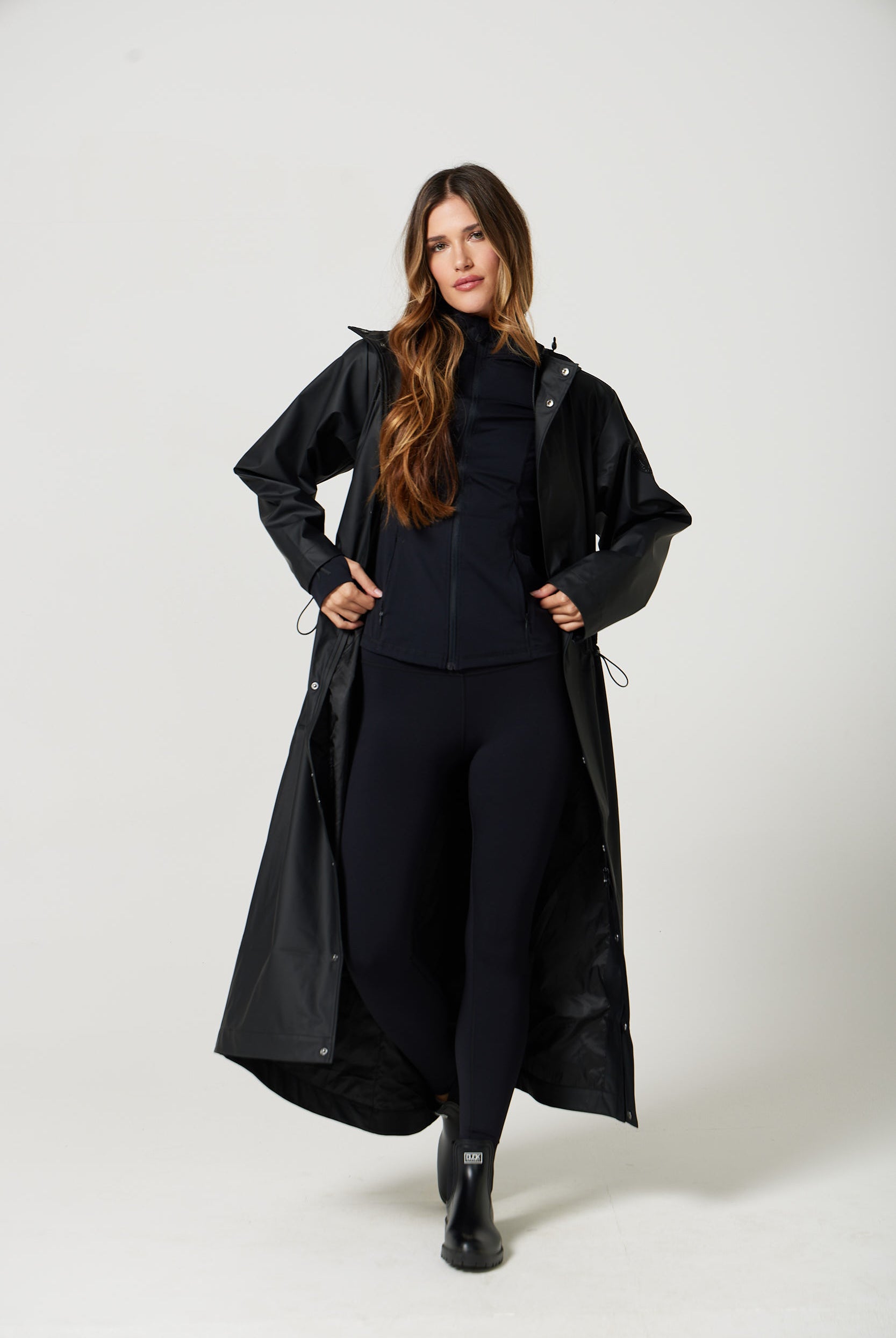
A trench raincoat is a long, water resistant coat with a belted waist, a storm flap across the chest and a collar that turns up against the wind. Duck Apparel sells trench raincoats in South Africa for the wet months, when the job is staying dry on the walk between a car, a station and an office rather than surviving deep cold. The collection covers The Regent Trench and The Landmark Trench, two coats built on the same idea in different proportions. A trench is the coat to reach for when rain is the problem and heavy insulation would leave you too warm.


How does a trench raincoat differ from a puffer?

A trench raincoat is a shell garment, so it works by keeping water and wind out rather than by trapping body heat. The insulated side of the Duck Apparel range uses duck down to hold warmth, while a trench relies on a tightly woven outer fabric and a construction that sheds water off the shoulders and down the back. The two serve different purposes rather than competing with each other. A trench is the shell layer for wet weather, which is what a Cape Town winter delivers between June and August as rain driven by wind, while a puffer is the insulating layer, which is what a Highveld winter asks for when the cold arrives dry. Many people combine the two depending on conditions. The other rain focused pieces sit in the wet weather collection, which is worth comparing if you want a shorter or more technical rain layer instead of a full length coat.
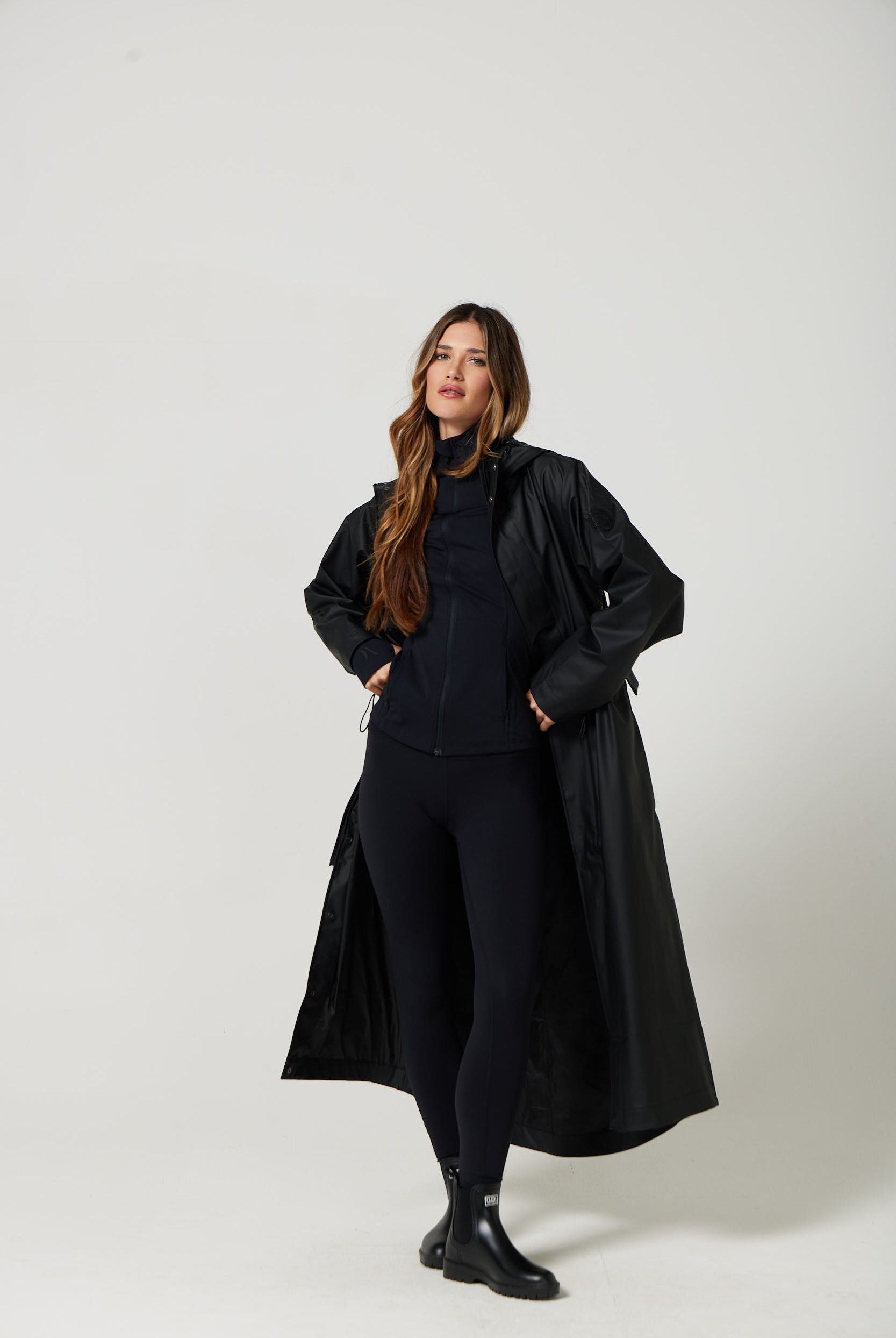
The second difference is how the two behave over time. A trench is designed to be worn open, belted or buttoned, so it doubles as a smart coat over office clothes. A puffer has one job and looks like it. If you commute in a city in South Africa and want one coat that works over a suit and over jeans, the trench is the more flexible of the two.

The Regent Trench and The Landmark Trench

The Regent Trench and The Landmark Trench are the two trench raincoats Duck Apparel makes, and both carry the classic trench signatures of a double breasted front, a waist belt and a deep collar. The practical choice between them comes down to length and how you move through your day. Someone walking short distances between doorways wants a coat that does not catch when they sit in a car. Someone standing on an exposed platform or waiting for a taxi wants coverage that goes past the knee. The knee length coats show where that cut off sits, and trying one on is the fastest way to work out whether you want more coat or less.

When should you wear a trench raincoat in South Africa?

A trench raincoat earns its keep in two separate rainy seasons in South Africa. The Western Cape gets its rain in winter, from roughly May to August, so a trench is a winter coat in Cape Town. Gauteng and KwaZulu Natal get theirs in summer, from about November to February, when heavy afternoon thunderstorms arrive without much warning and an insulated coat would be unbearable in the humidity. A trench covers both because it is a shell. In the shoulder months of March, April and September a trench also works as a windbreak on days when it never actually rains.

Frequently Asked Questions

What is a trench raincoat?

A trench raincoat is a long water resistant coat with a belted waist, a double breasted front and a storm flap over the chest and shoulders. The design comes from military coats and keeps the same features because they work, the belt seals the waist against wind, the flap sends water away from the chest, and the collar turns up to protect the neck. Duck Apparel makes the style as The Regent Trench and The Landmark Trench.

Is a trench coat actually waterproof?

A trench raincoat is built to be water resistant, which means it sheds rain rather than sealing you inside a membrane. That is enough for a walk to a car, a school gate or a station in ordinary rain. In sustained heavy rain the shoulders and the top of the sleeve wet out first, so a hood or a hat helps. Water resistance also depends on the coat staying clean, since dirt on the surface pulls water into the fabric.

Should I choose a trench or a puffer for a Cape Town winter?

A trench and a puffer do different jobs, so the answer depends on the conditions rather than on one being the wrong choice. Between June and August the Western Cape gets its heaviest rainfall of the year, so a trench works as the shell layer that handles rain and wind, while a puffer supplies the insulation that matters on a cold, dry day. Many people in South Africa own both and wear a puffer under a shell when it is cold and wet at the same time.

How long should a trench coat be?

A trench coat should end somewhere between the middle of the thigh and the middle of the calf for everyday wear. Shorter cuts are easier to walk and drive in and pair better with trousers. The ankle length coats go further down for maximum coverage and read as a more formal, more dramatic silhouette. Pick the length by how much of your legs you need to keep dry and how often you sit down in it.

What do you wear under a trench raincoat?

Wear whatever you would wear indoors, then add a jumper or a knit if the day is cold. A trench raincoat is a shell, so it holds in the warmth of your other layers rather than producing warmth itself. In a Cape winter a merino or lambswool knit under the trench is usually enough. Choose a trench cut generously enough at the chest if you plan to layer a thick jumper underneath.

Should you belt a trench coat or leave it open?

Belt a trench coat when it is raining or windy and leave it open when it is not. Belting the waist stops wind driving up under the coat and pulls the storm flap flat against the chest so water runs off. Left open, the same coat reads as a relaxed layer over office clothes. Tying the belt rather than buckling it is the usual choice when the coat is worn open.

How do you store a trench coat between seasons?

Hang a trench coat on a broad shouldered hanger in a dry, ventilated cupboard rather than folding it into a drawer. Folding sets creases into the collar and the storm flap that are difficult to remove. Make sure the coat is completely dry before it goes away, and leave the belt tied loosely through the loops so it does not go missing. Avoid sealed plastic covers, which trap moisture against the fabric.