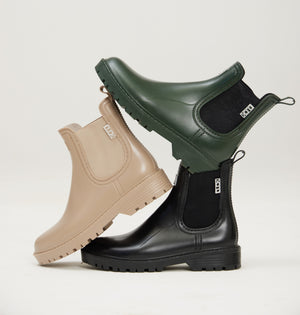
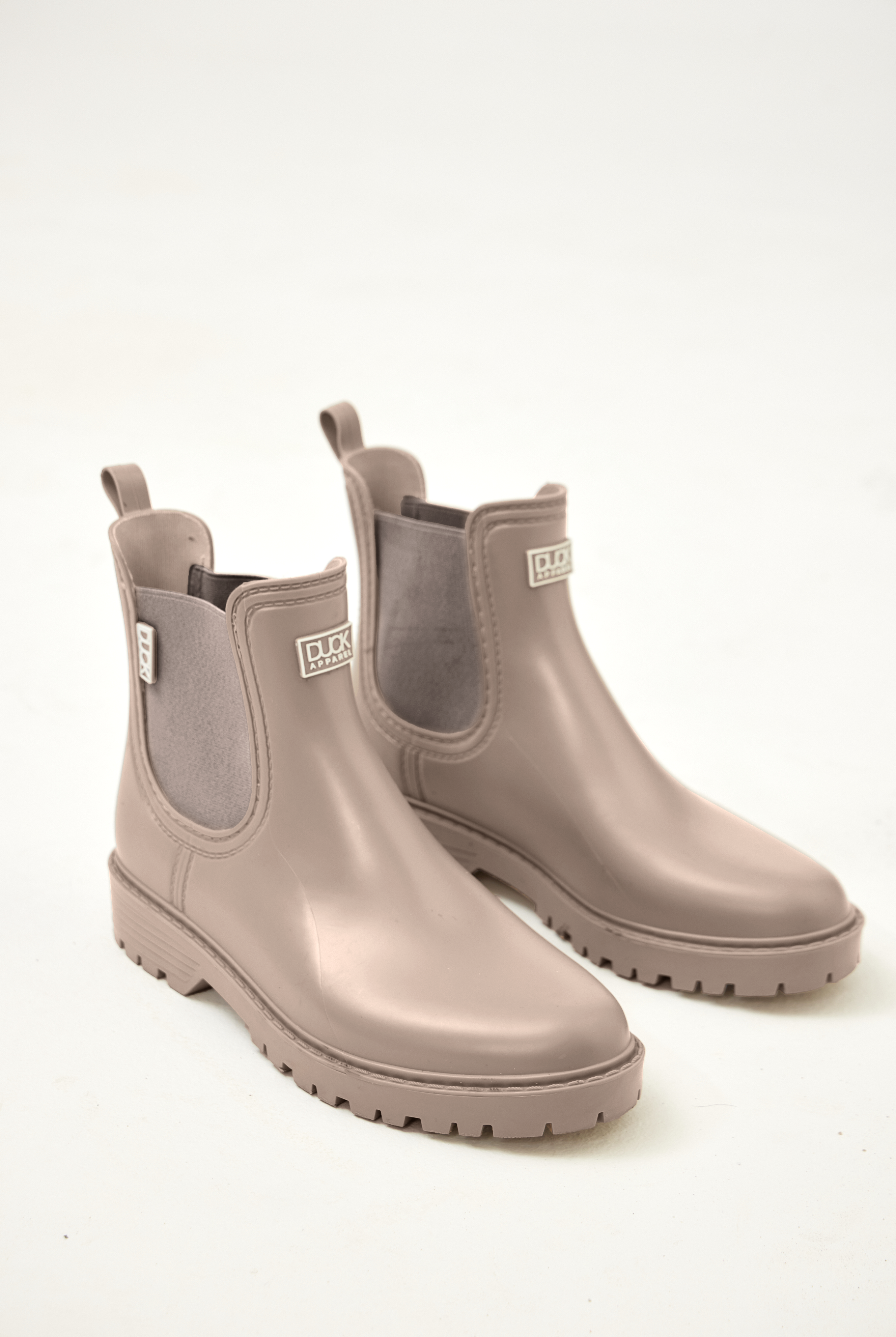
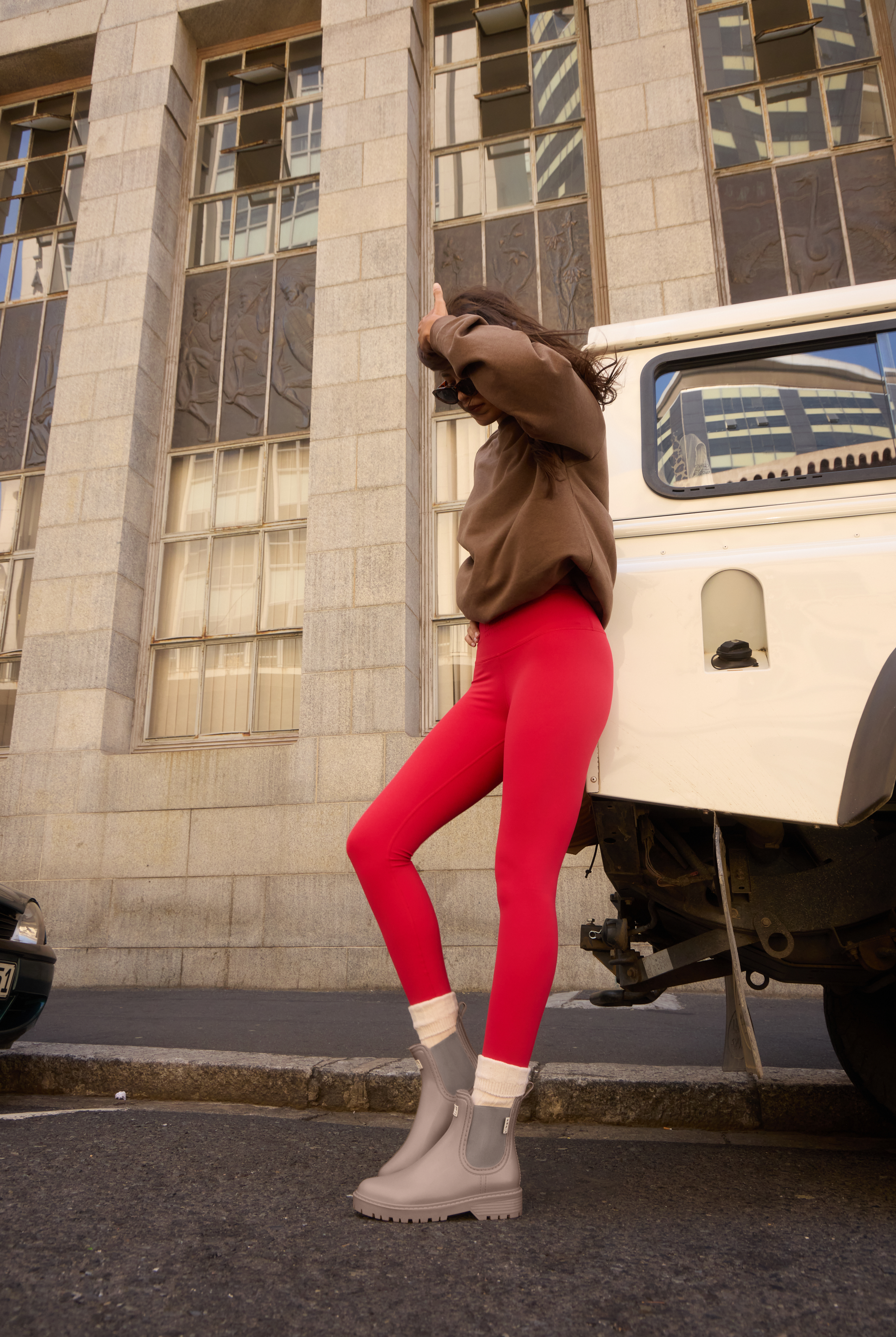
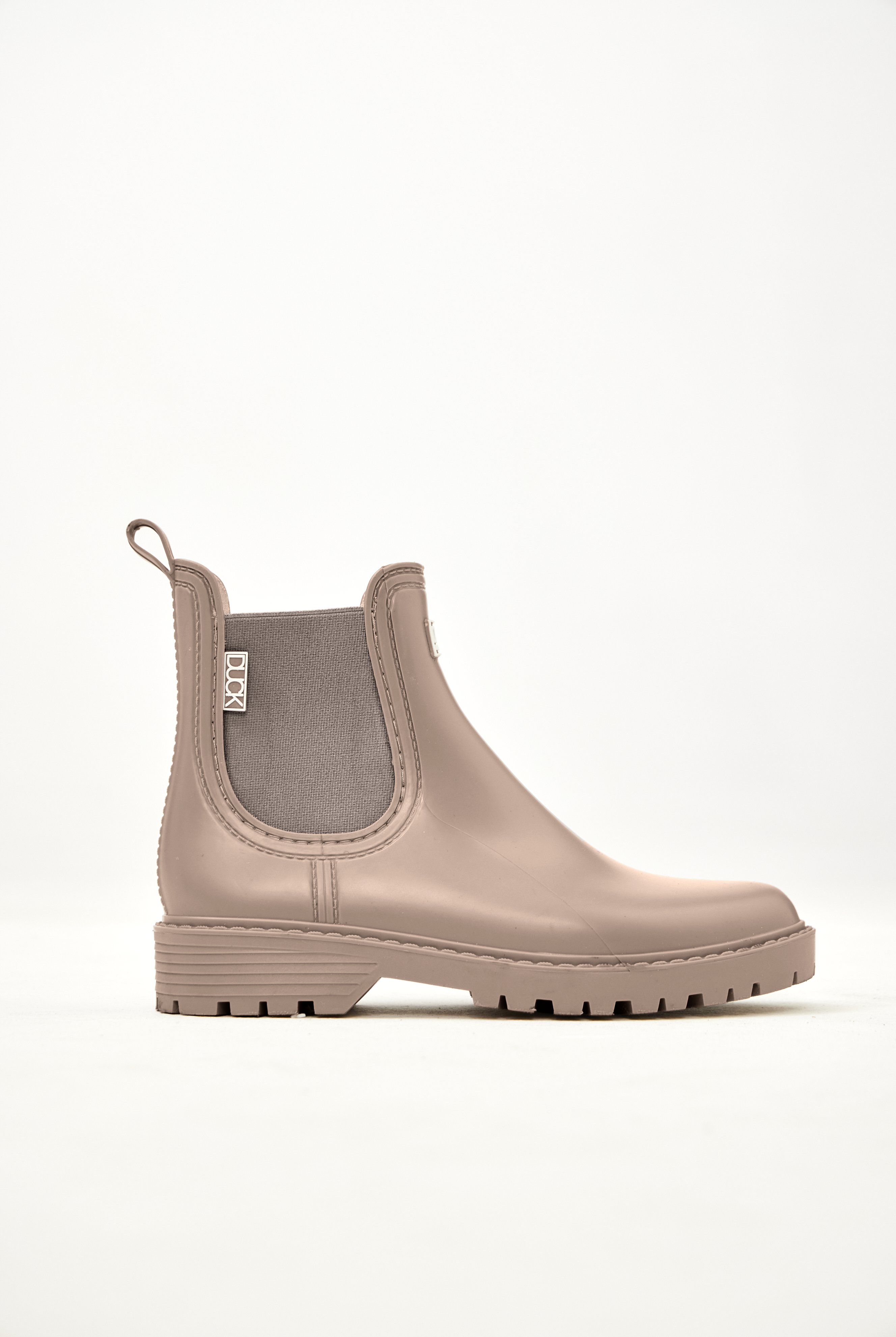
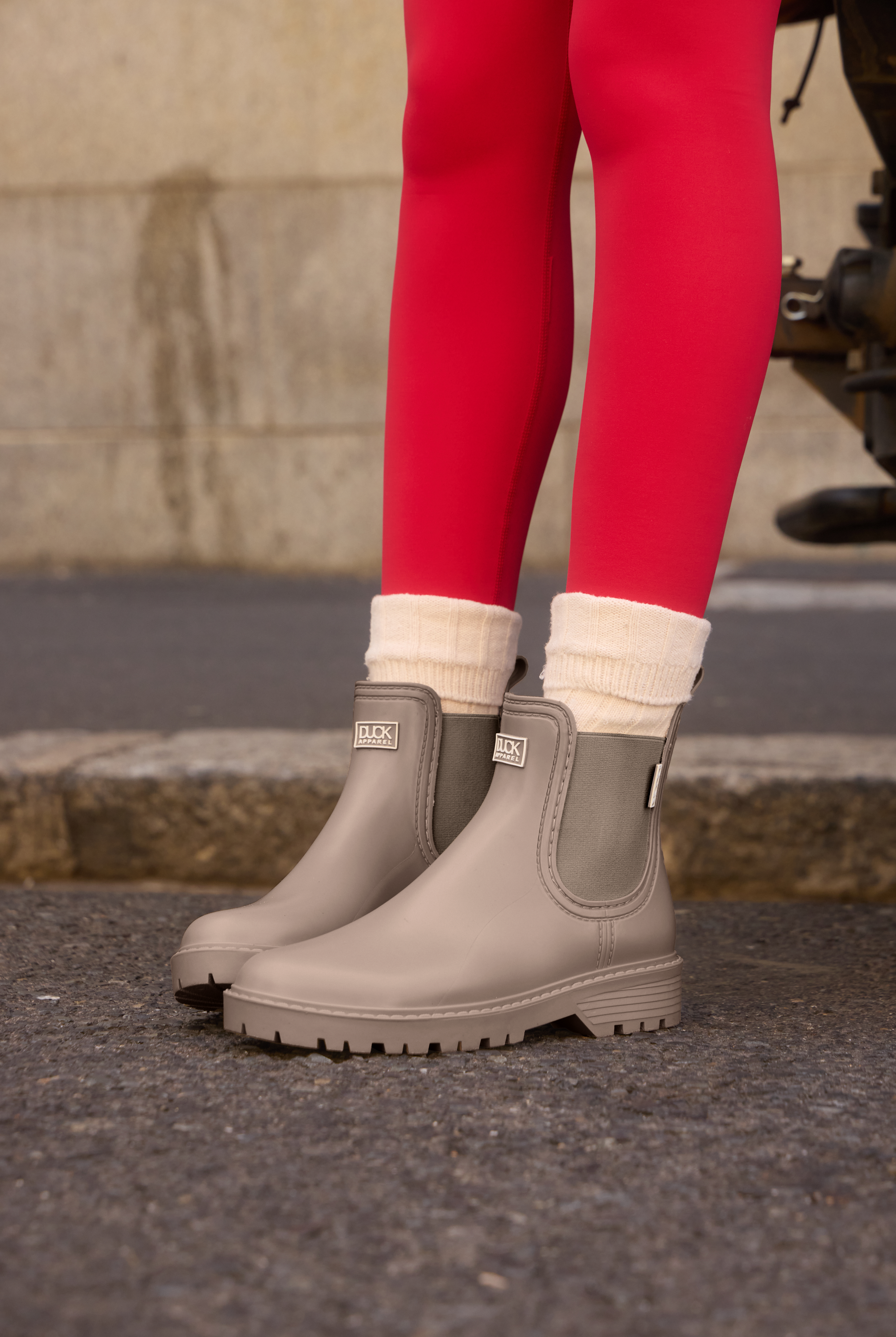
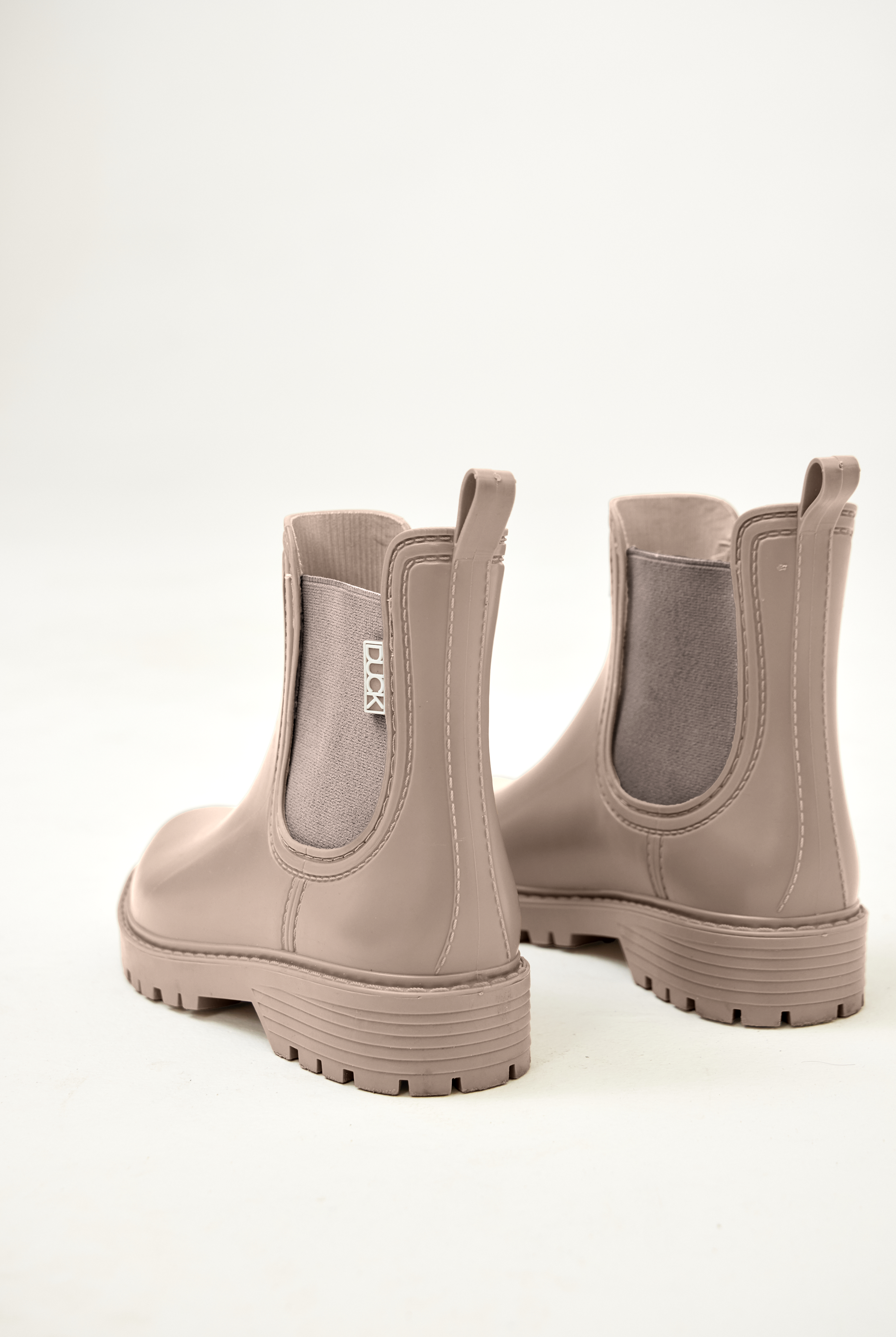
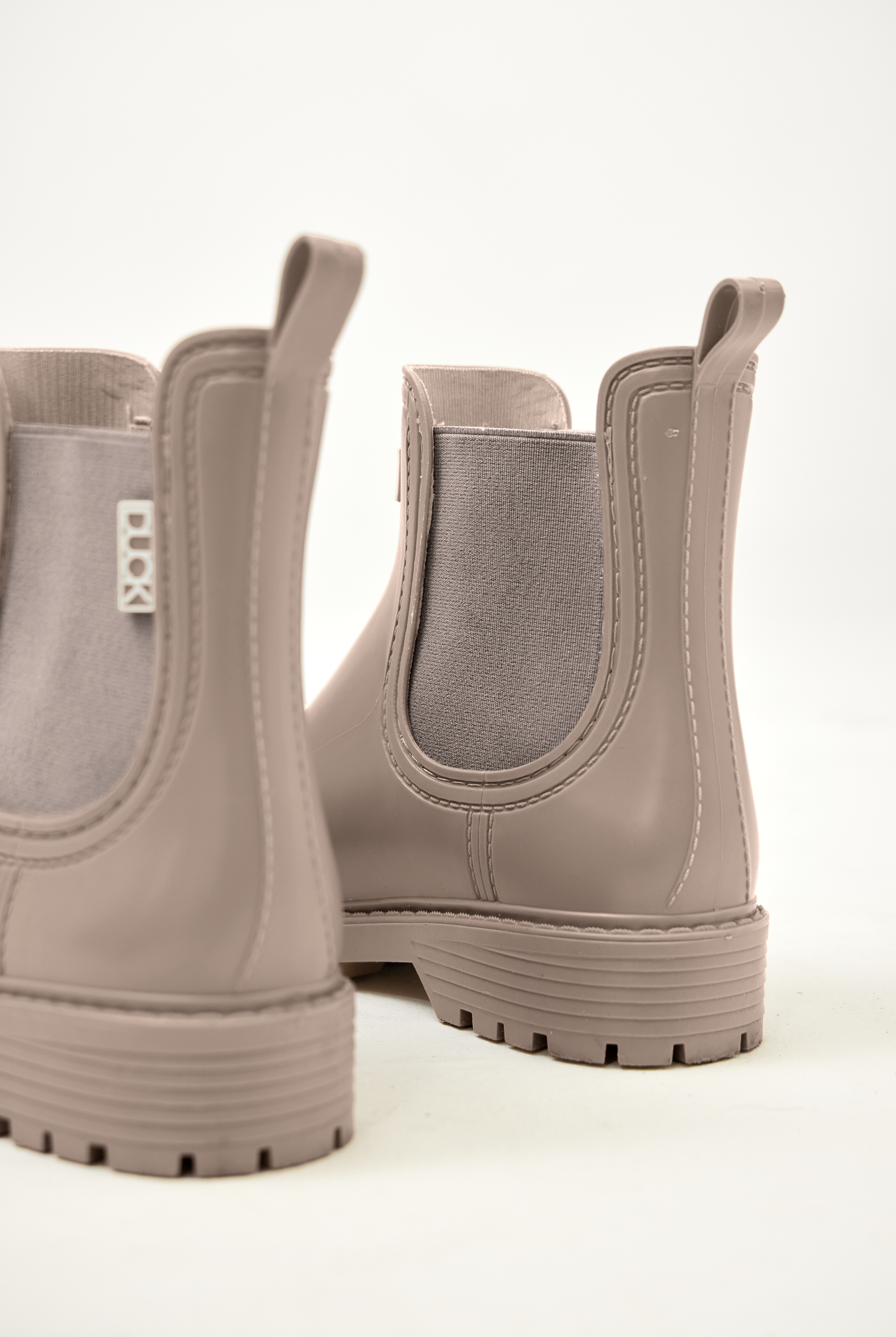
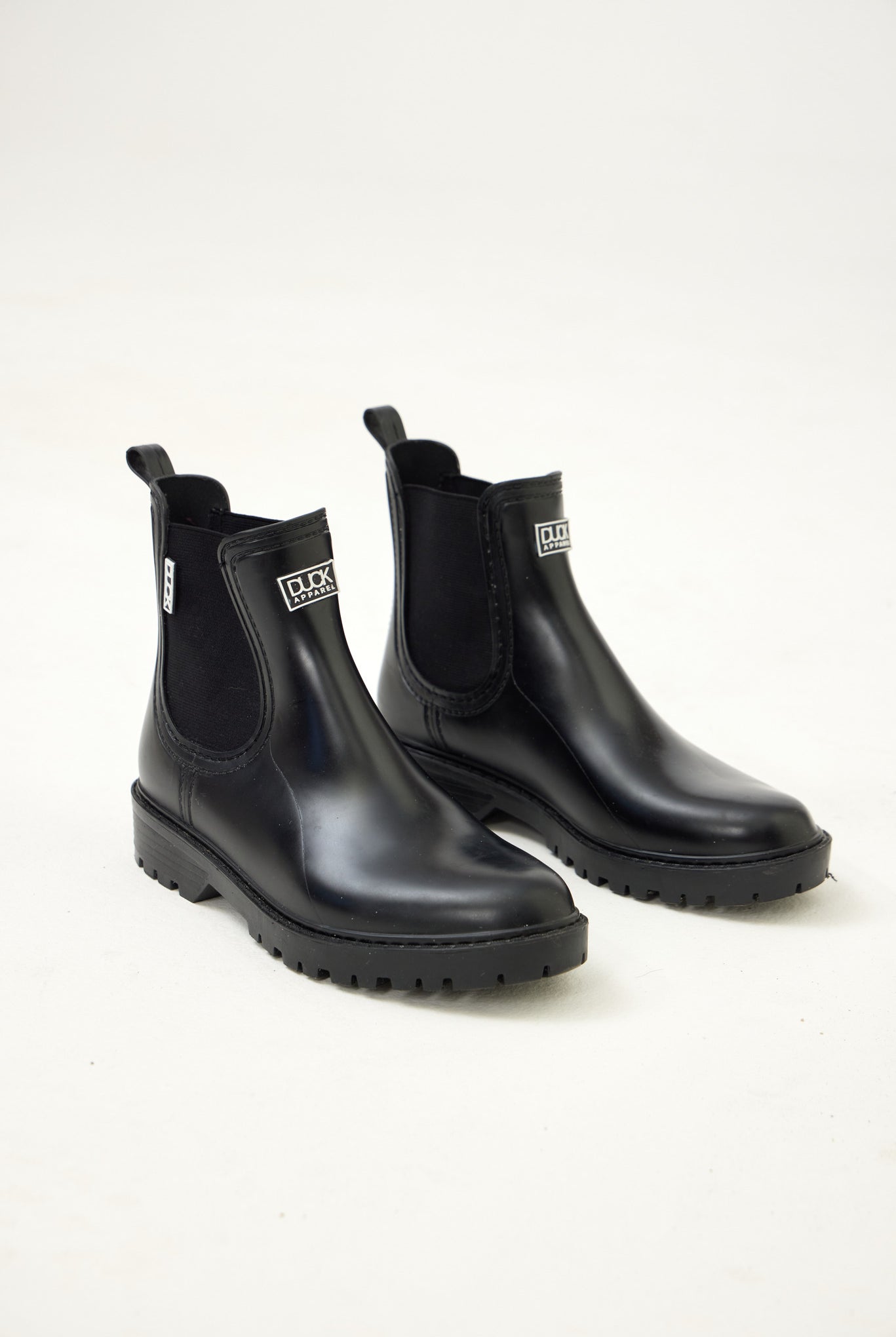
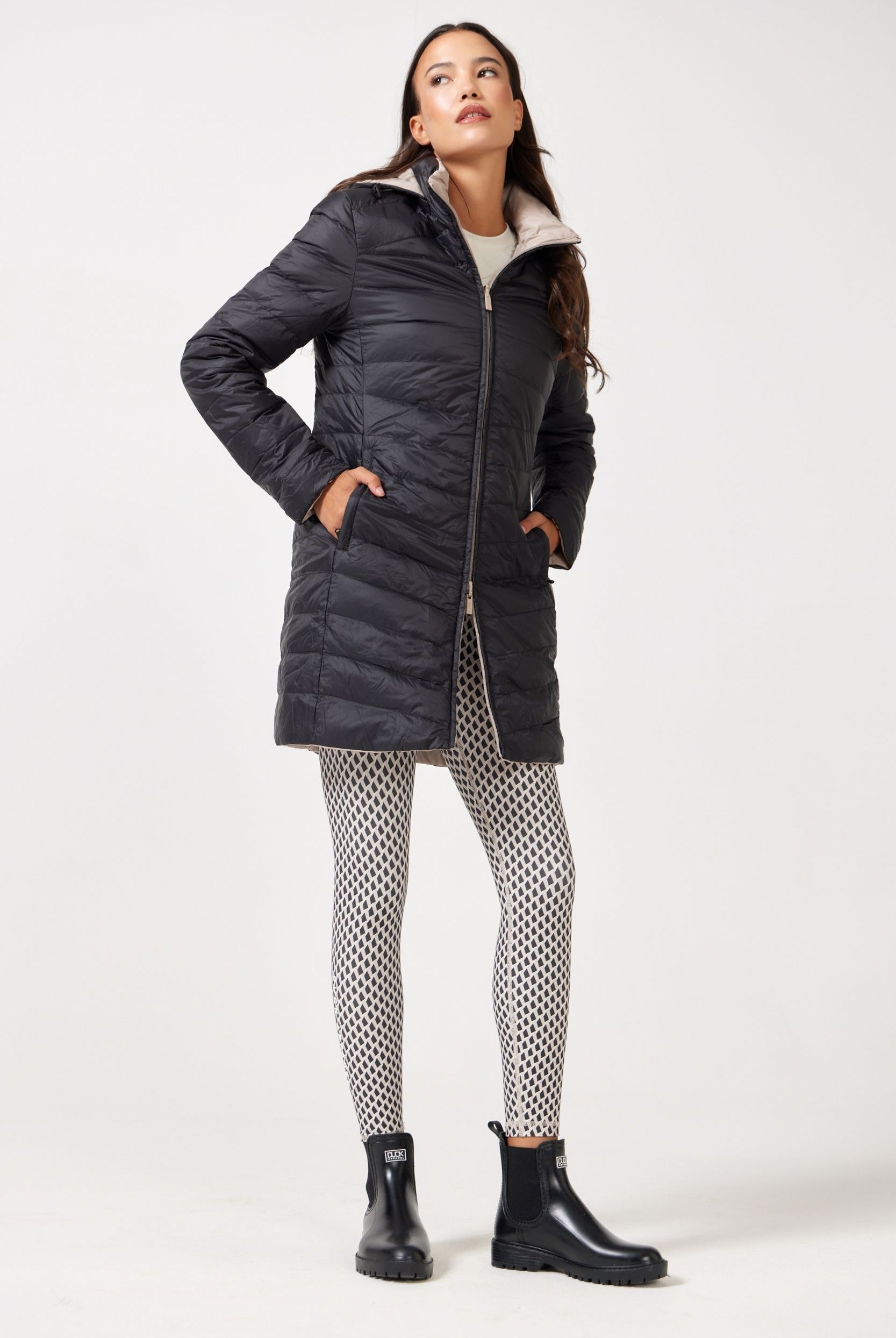
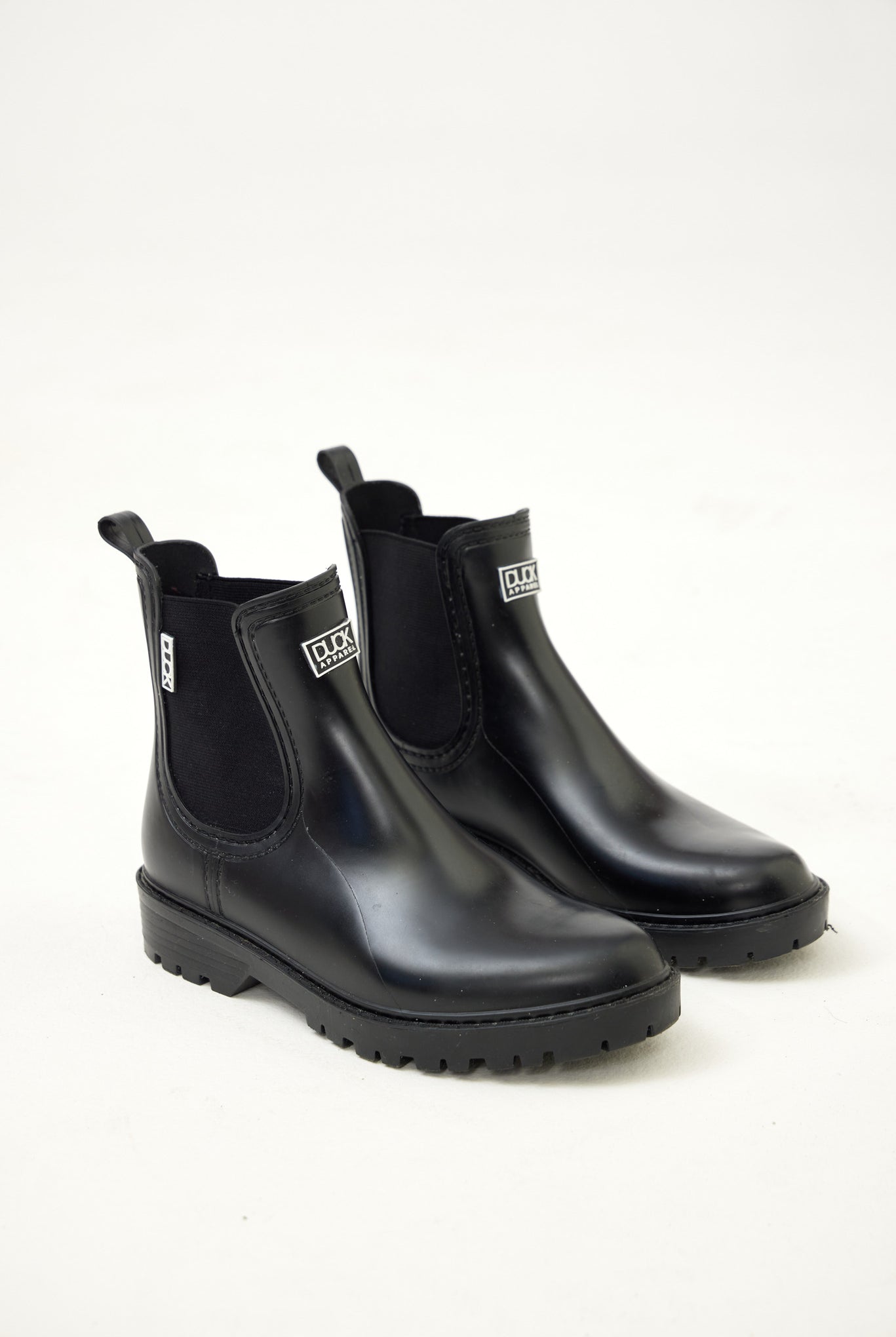
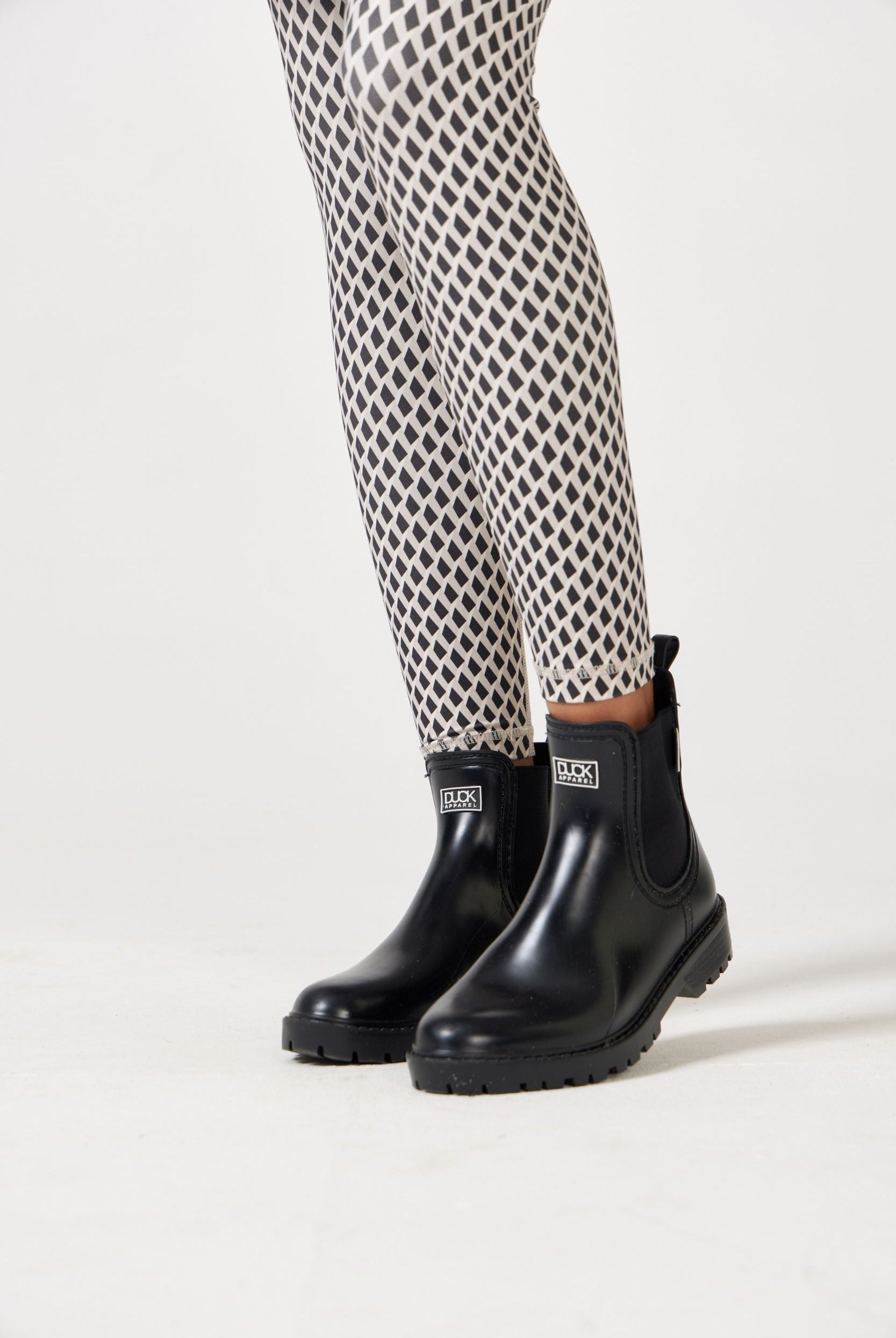
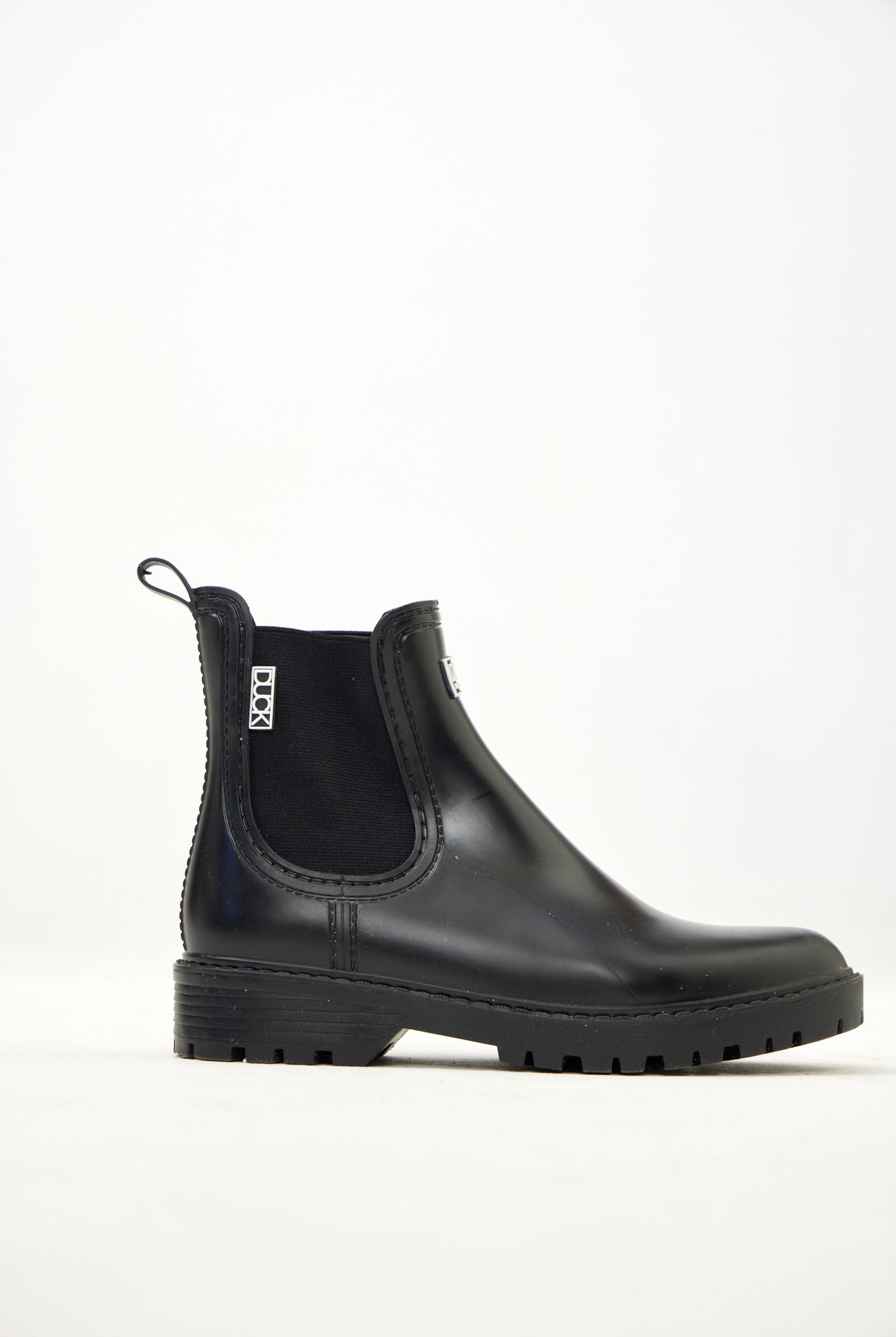
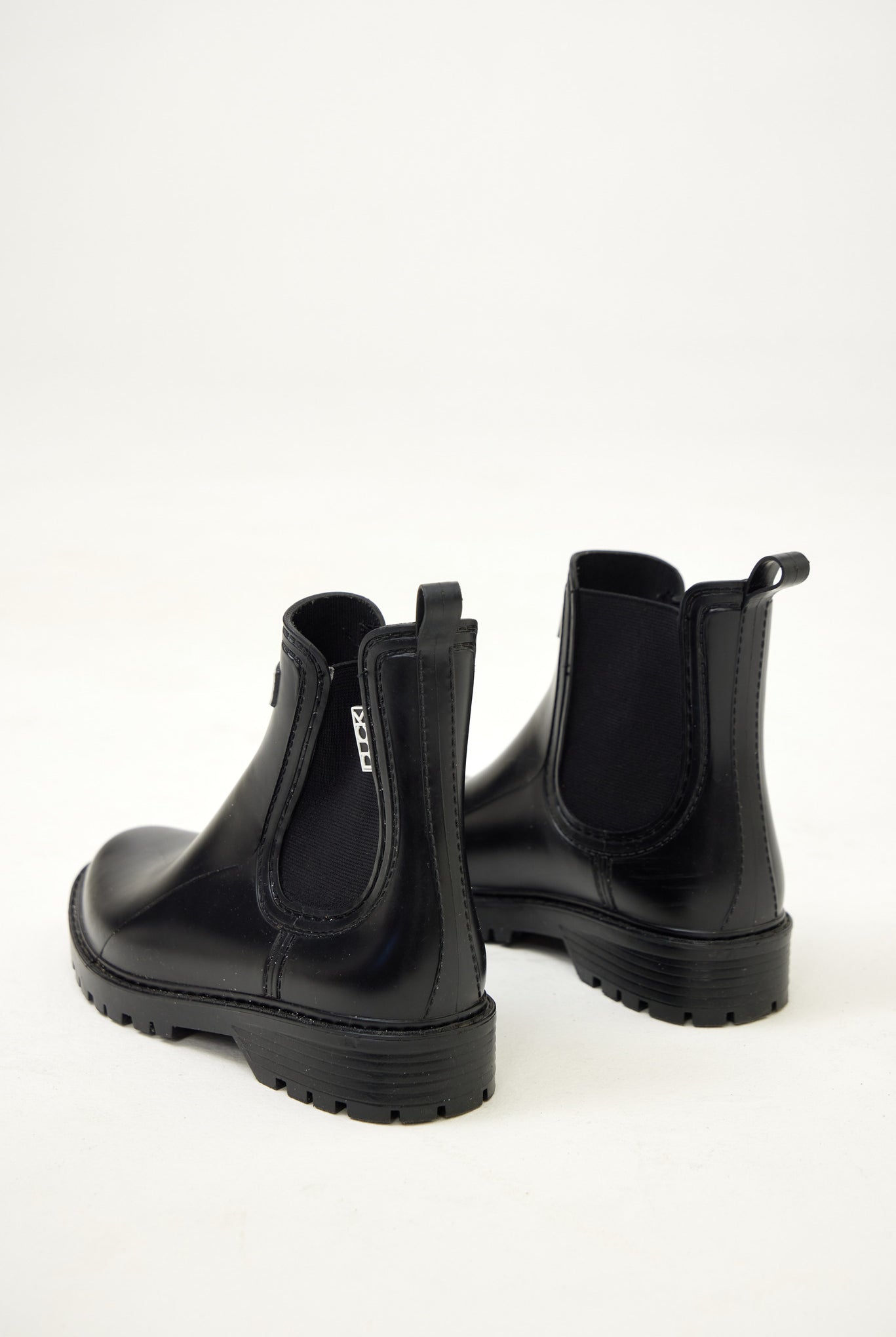
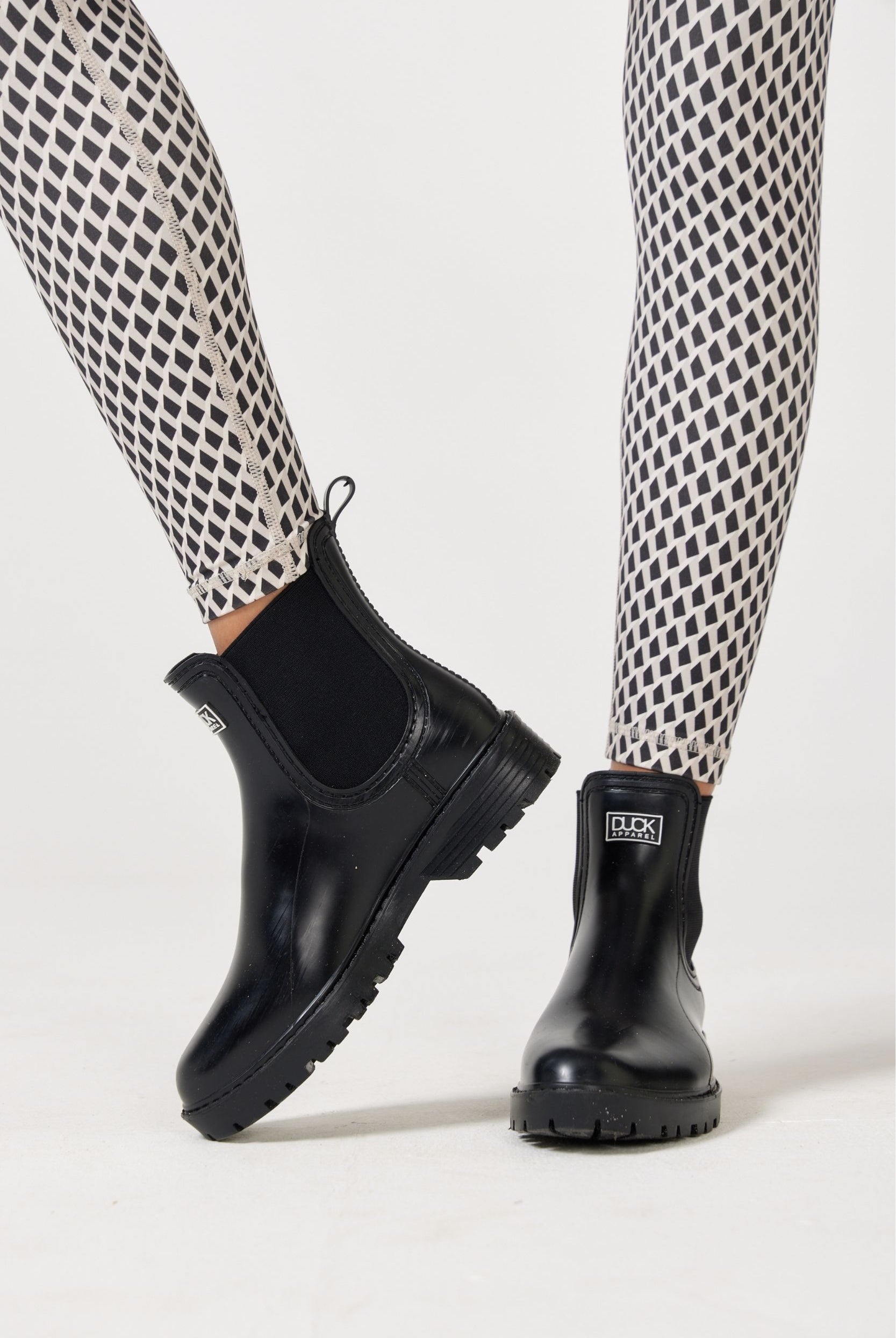
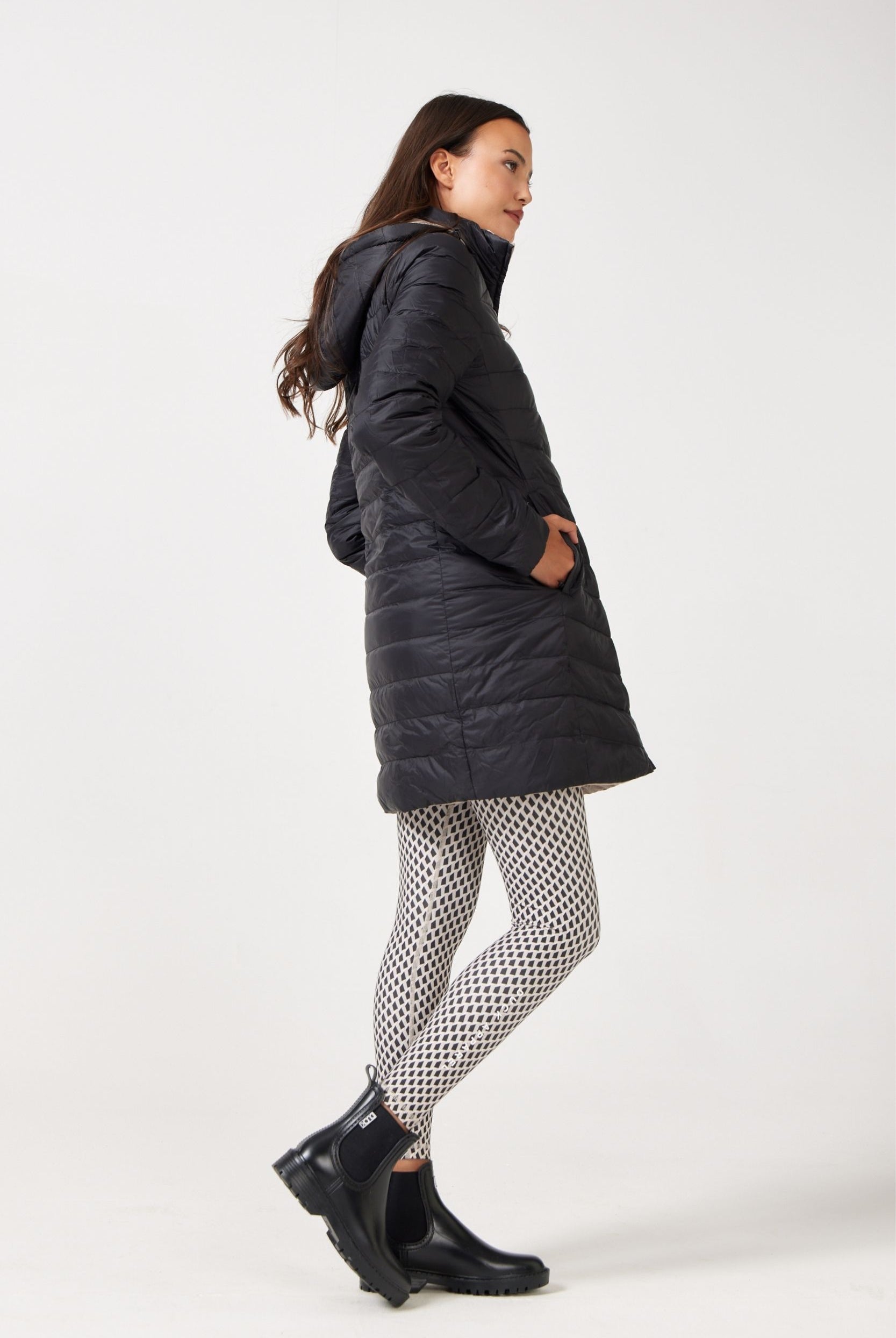
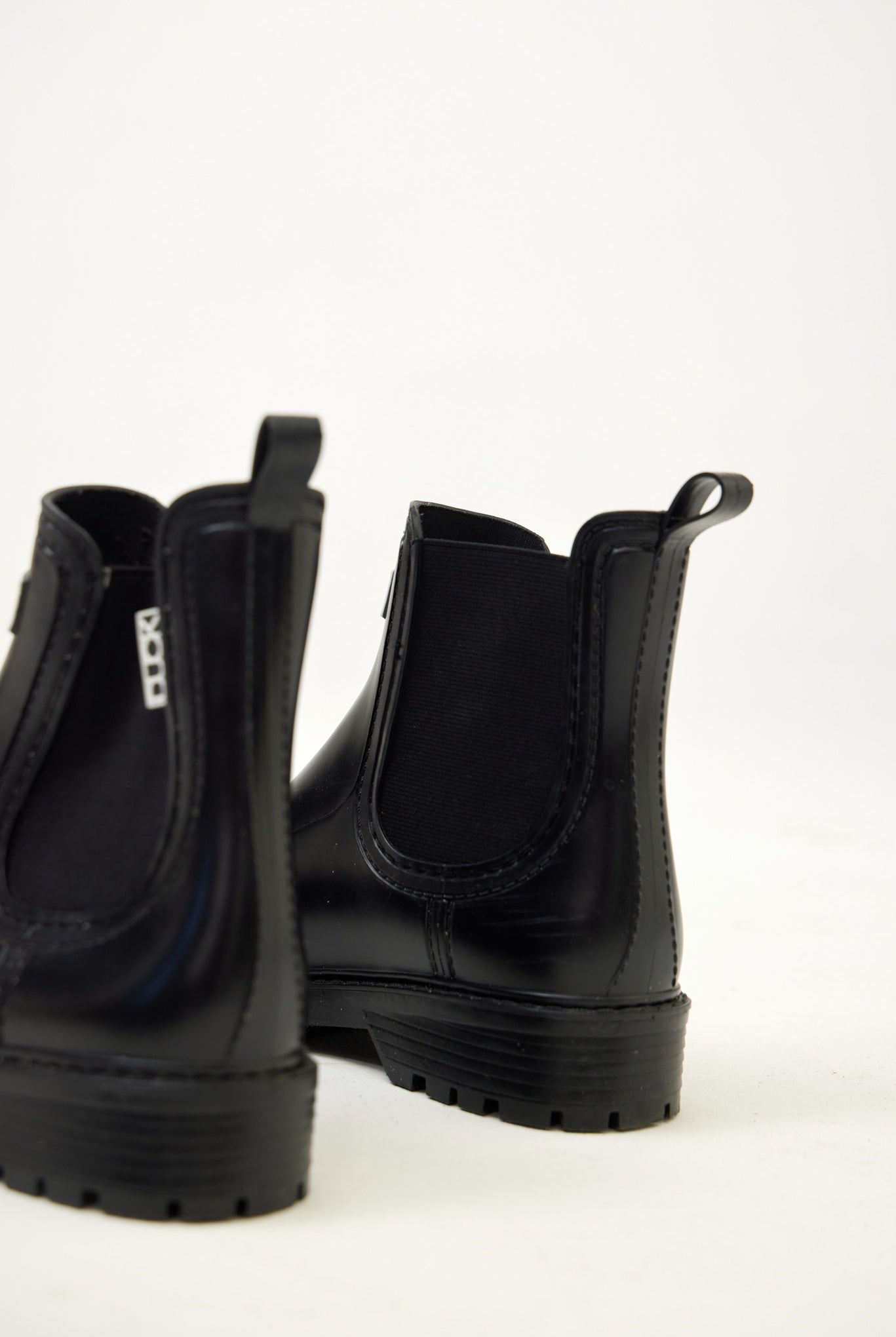
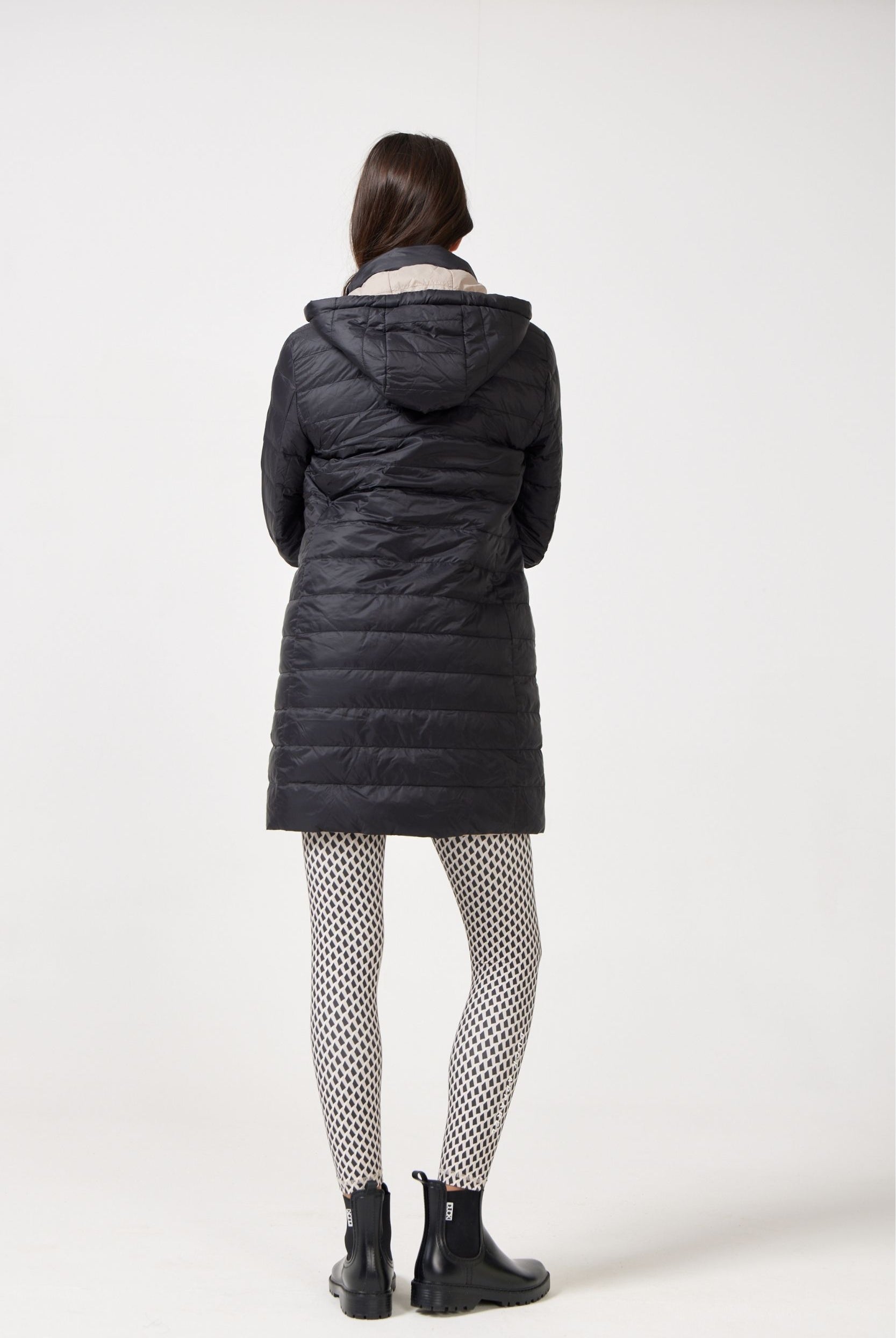
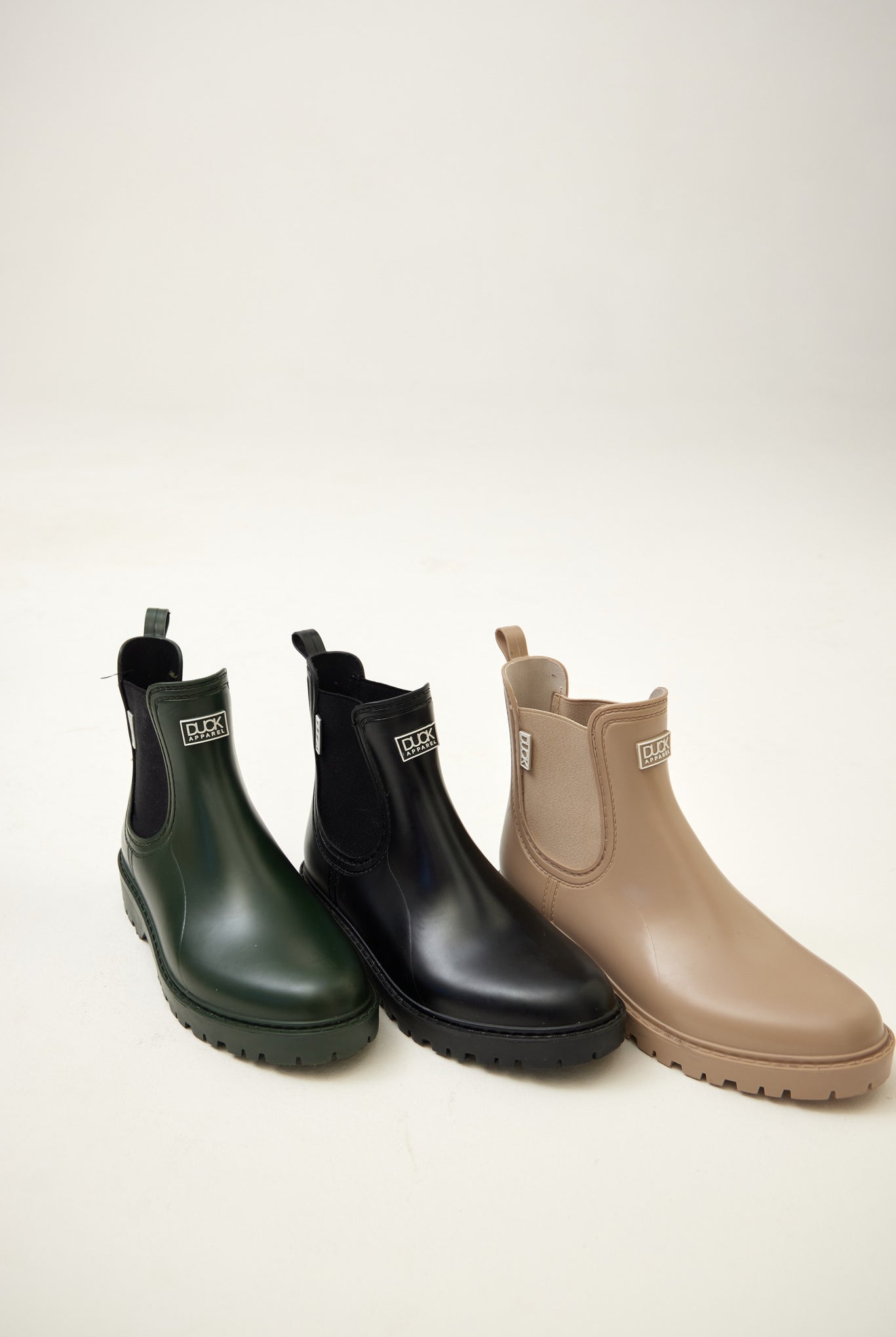
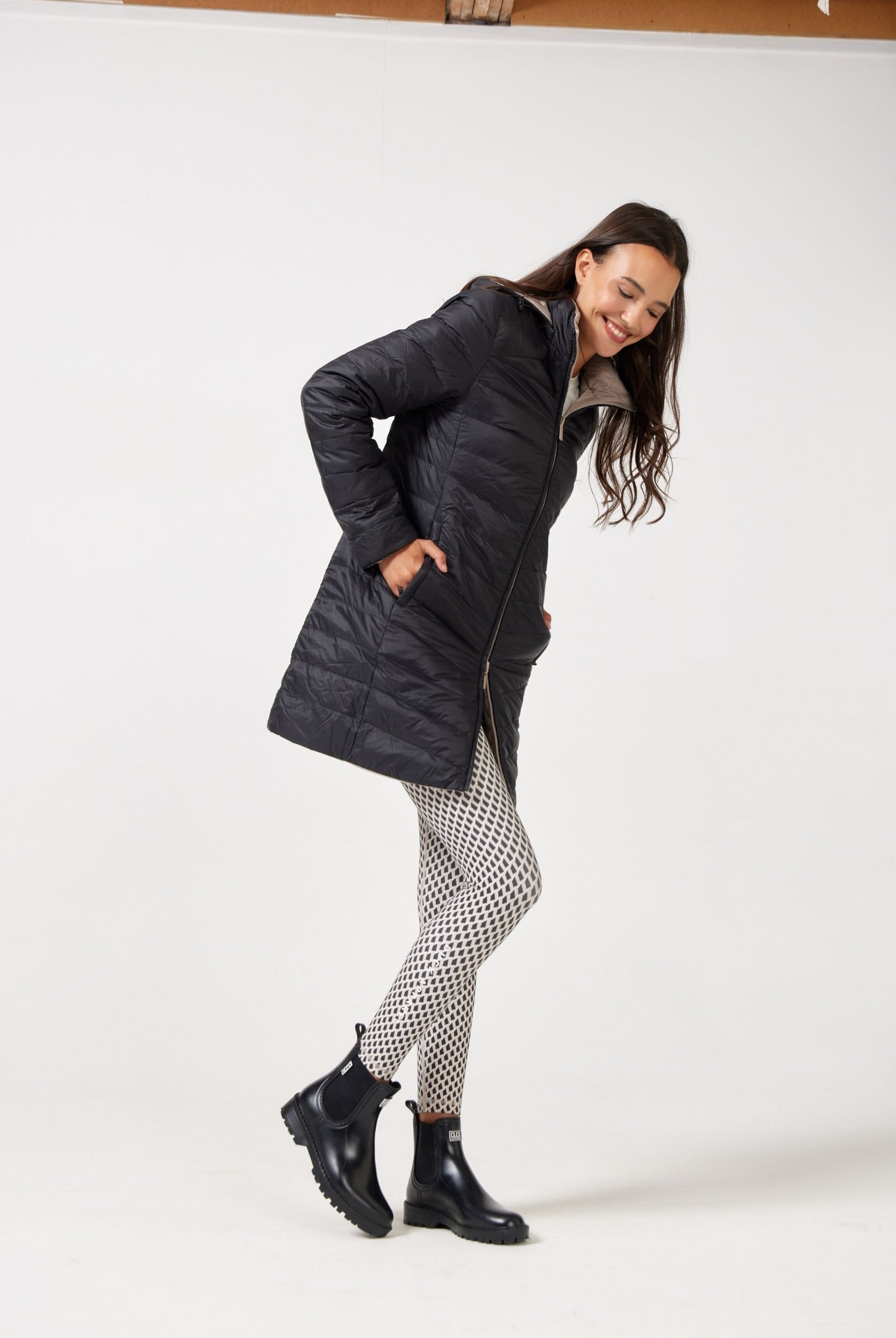
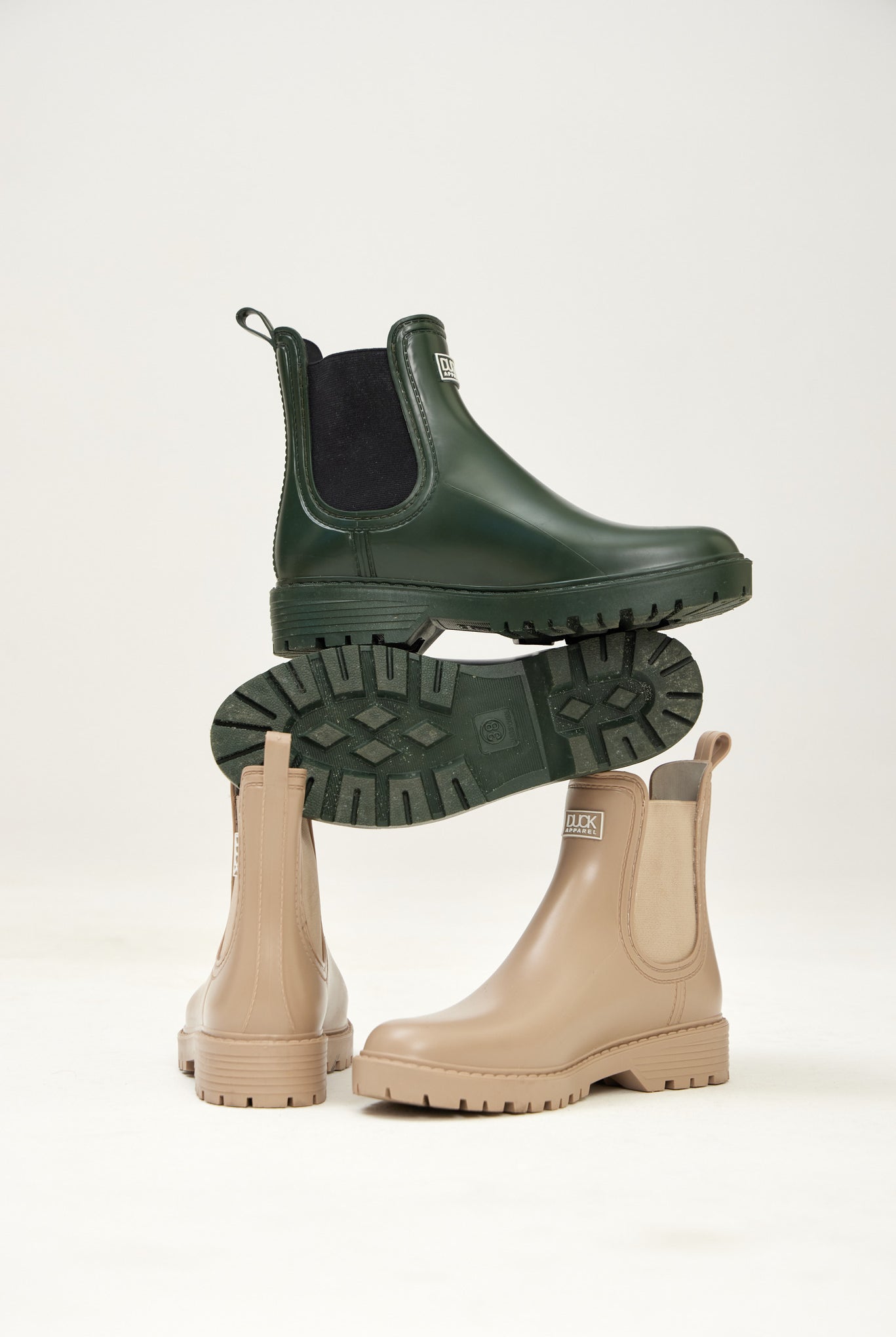
Duck Apparel's boots collection in South Africa is a rain boot collection, covering the same rain boot in three colours: Biscuit Rain Boots, Ink Rain Boots and Ivy Rain Boots. Rain boots are the footwear for wet ground, muddy sports fields, dog walks, garden work and the school run in bad weather, which makes them useful in both the winter rainfall Cape and the summer storm regions inland. Duck Apparel started in South Africa in 2017, opened its Australian store in 2021, and sells outerwear and footwear in both markets.


What are rain boots for?

A rain boot is a tall, sealed boot designed to keep feet dry when the ground is wet, which is a different job to a leather boot or a trainer. Because the upper has no seams to soak through in the way stitched footwear does, a rain boot handles puddles, mud, wet grass and hosing down at the end of the day. That makes it the practical option for anyone who walks a dog in winter, stands on the side of a wet field, works in a garden or unloads a car in the rain.

Rain boots are also easy to live with. They pull on without laces, wipe clean with water, and go straight back on the mat by the door. For anyone who has spent a winter with wet socks, that convenience is most of the appeal.

Which rain boot colour should you choose?

Ink Rain Boots are the most practical of the three, because a dark boot hides mud and splash marks between cleans and reads as the most formal, which suits a city commute or the school run. Biscuit Rain Boots are the neutral option and sit well with camel, tan, cream and denim, so they work best for anyone who wants the boots to fit a considered outfit rather than disappear into it. Ivy Rain Boots are the countryside choice, and green is the traditional colour for garden and farm boots for good reason, since it looks right in a wet field and does not show grass stains. All three are the same boot, so the choice is purely a colour and styling decision.

When should you wear rain boots in South Africa?

Rain boots are useful in almost every month of the year somewhere in South Africa, because the country has two opposing rainfall patterns. Cape Town and the Western Cape get their rain in winter, so June to August is the core rain boot season there. Most of the rest of the country, including Gauteng, the Free State and KwaZulu-Natal, gets summer rainfall, so October to March brings the afternoon thunderstorms that flood pavements and sports fields. Add farm and smallholding work, coastal winter weekends and outdoor events on wet ground, and a pair of rain boots earns its place in the cupboard year round.

Rain boots as a gift

Rain boots make a straightforward gift because sizing is forgiving and the recipient does not need to already own anything to use them. They suit gardeners, dog owners, parents on the touchline and anyone who has just moved somewhere wet. Duck Apparel sorts presents by budget in South Africa, which makes the search simpler, with gift ideas under R2000 for smaller presents and a wider selection under R3000 when the budget stretches further.

Frequently Asked Questions

Are rain boots waterproof?

Rain boots are made specifically to keep feet dry in wet conditions, which is the whole purpose of the design. The upper is built without the stitched seams that let water into ordinary boots, so puddles, mud and wet grass do not get through. Water can still come in over the top of the boot if you wade deeper than the shaft height.

What size rain boots should I order?

Order rain boots in your usual shoe size unless you plan to wear thick winter socks every time, in which case going up a size gives room without making the boot loose. A rain boot should be easy to pull on and should not grip the foot the way a laced boot does. Check the size guide on the product page before ordering.

What socks should you wear with rain boots?

Wear a thick cotton or wool sock with rain boots, because the boot itself provides no cushioning and very little warmth. A tall sock that reaches above the top of the boot shaft also stops the inside of the boot rubbing against your calf. Thin ankle socks are the main cause of discomfort in an otherwise well fitting rain boot.

Which Duck Apparel rain boot colour is the most practical?

Ink Rain Boots are the most practical colour because dark boots hide mud and water marks between cleans. Ivy Rain Boots are the better choice for garden, farm and countryside use, where green is the traditional colour. Biscuit Rain Boots are the most fashion led of the three and pair easily with neutral winter outfits.

Can you wear rain boots in summer?

Yes, rain boots are worn in summer across most of South Africa, because Gauteng, the Free State and KwaZulu-Natal get their rain between October and March. Summer thunderstorms flood pavements, driveways and sports fields quickly, and a rain boot handles that better than any trainer. In the Western Cape the pattern is reversed and rain boots see most use in winter.

Are rain boots suitable for hiking?

Rain boots are not the right footwear for hiking, and a proper hiking boot is the better choice for any real distance. Rain boots have a loose fit and a flat structure, which is fine for short walks on wet, level ground but poor for ankle support on rocky or steep terrain. Keep them for the garden, the field, the dog walk and the school run.

How do you clean and store rain boots?

Clean rain boots by rinsing mud off with water and wiping them dry rather than putting them near a heater, since direct heat can damage the material over time. Store them upright and out of strong sunlight, because long periods in the sun degrade the finish. Shoppers browsing Duck Apparel footwear and outerwear together often also look through the Rare Blend.