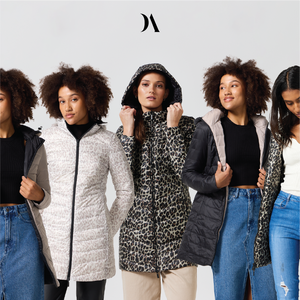
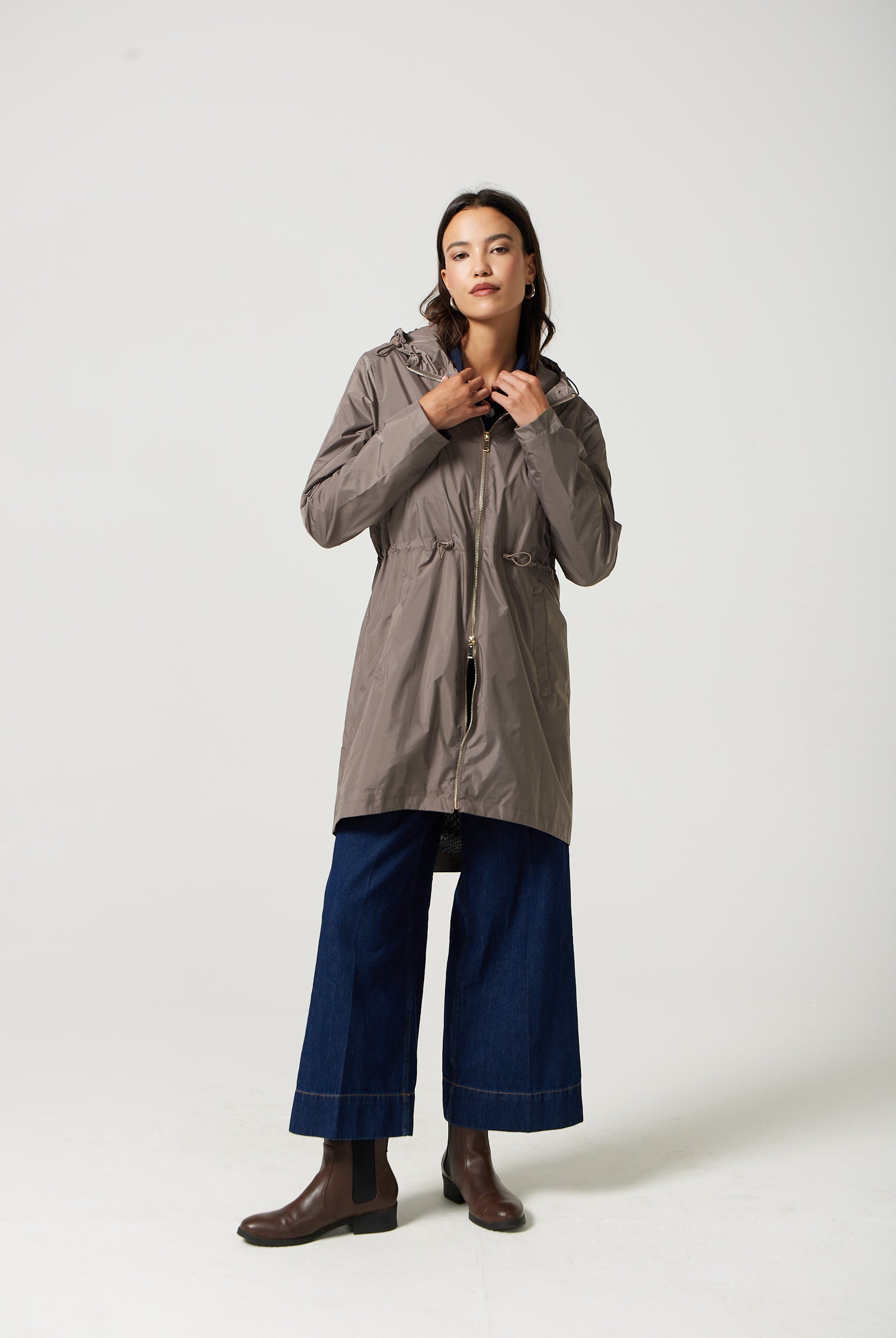
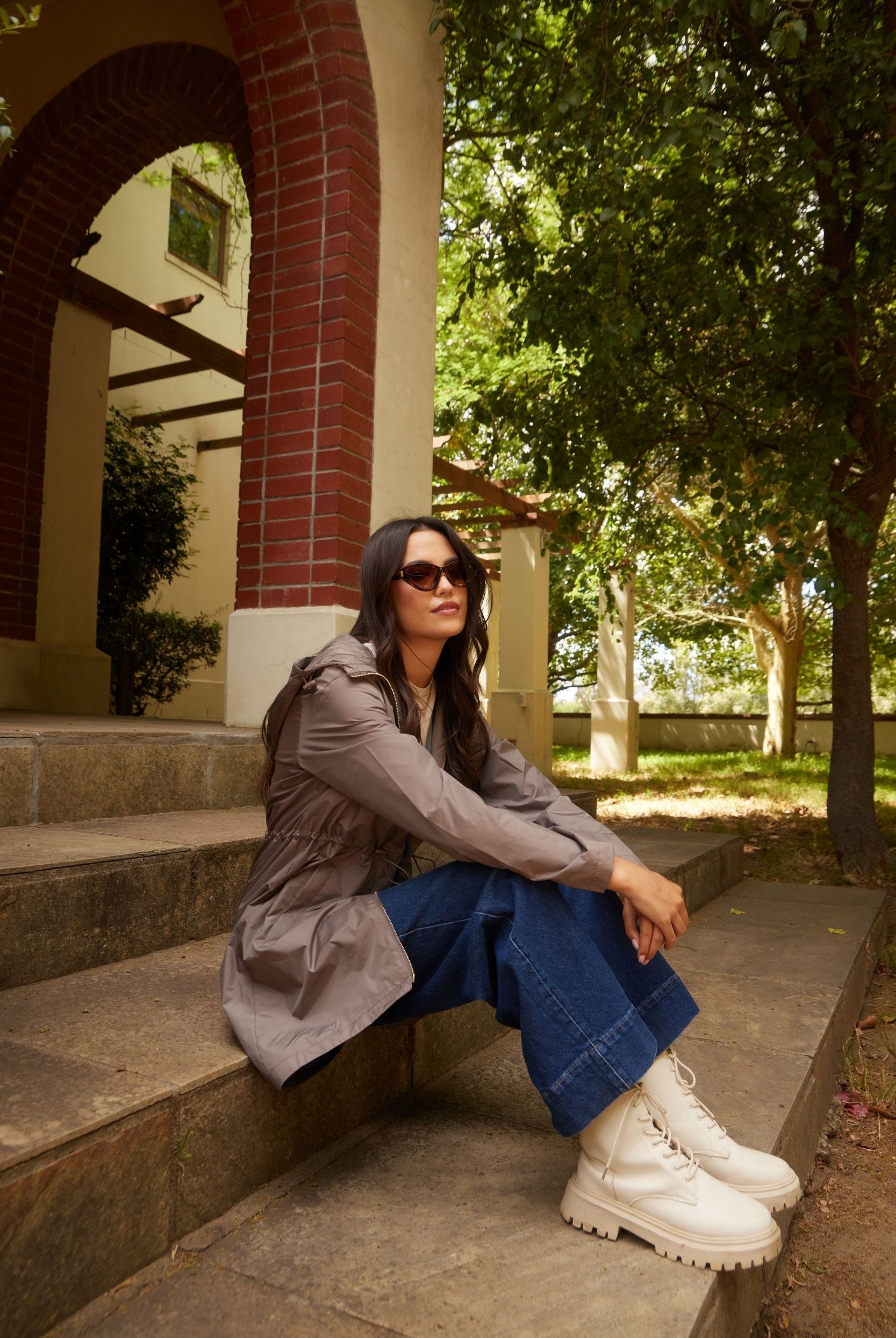
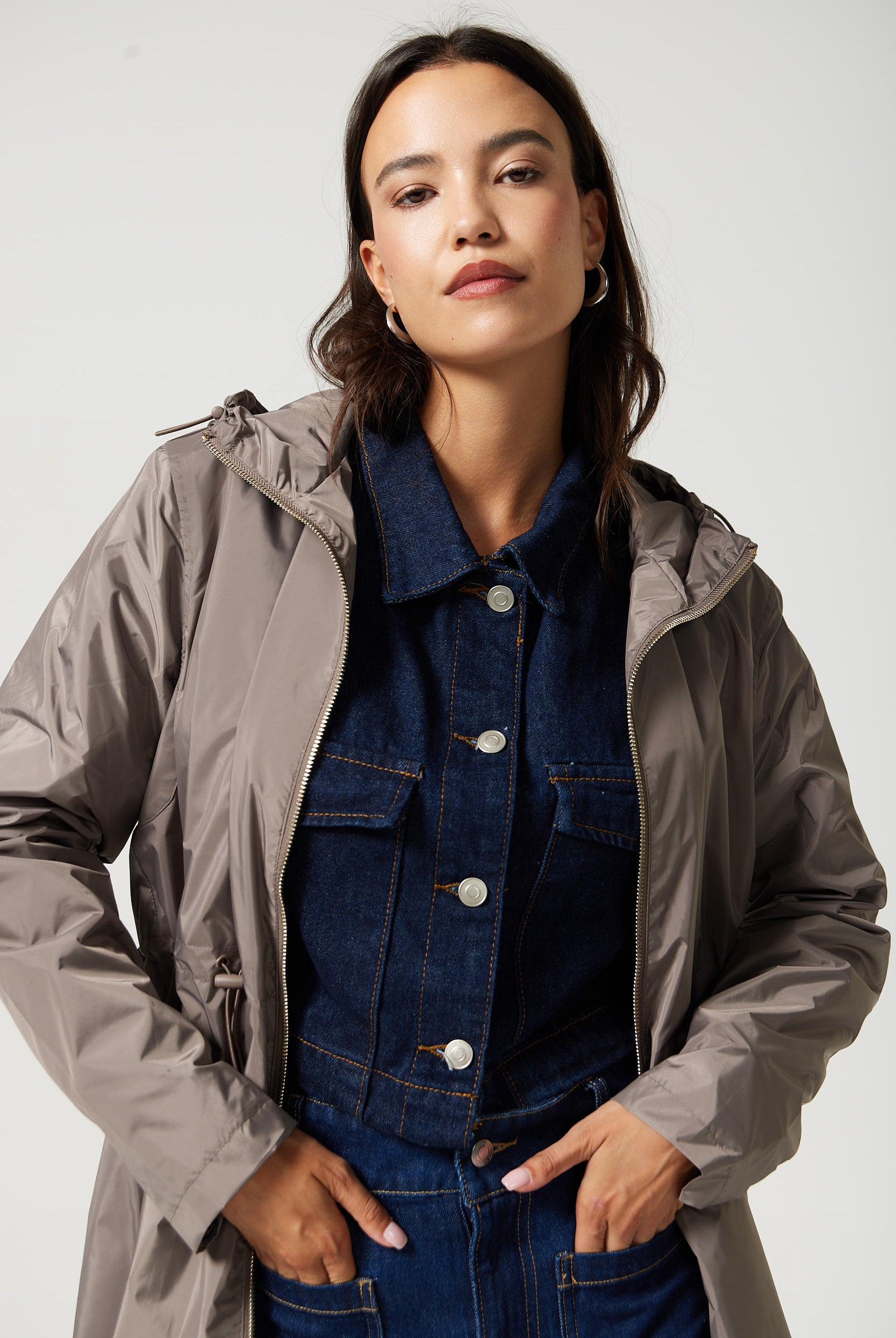
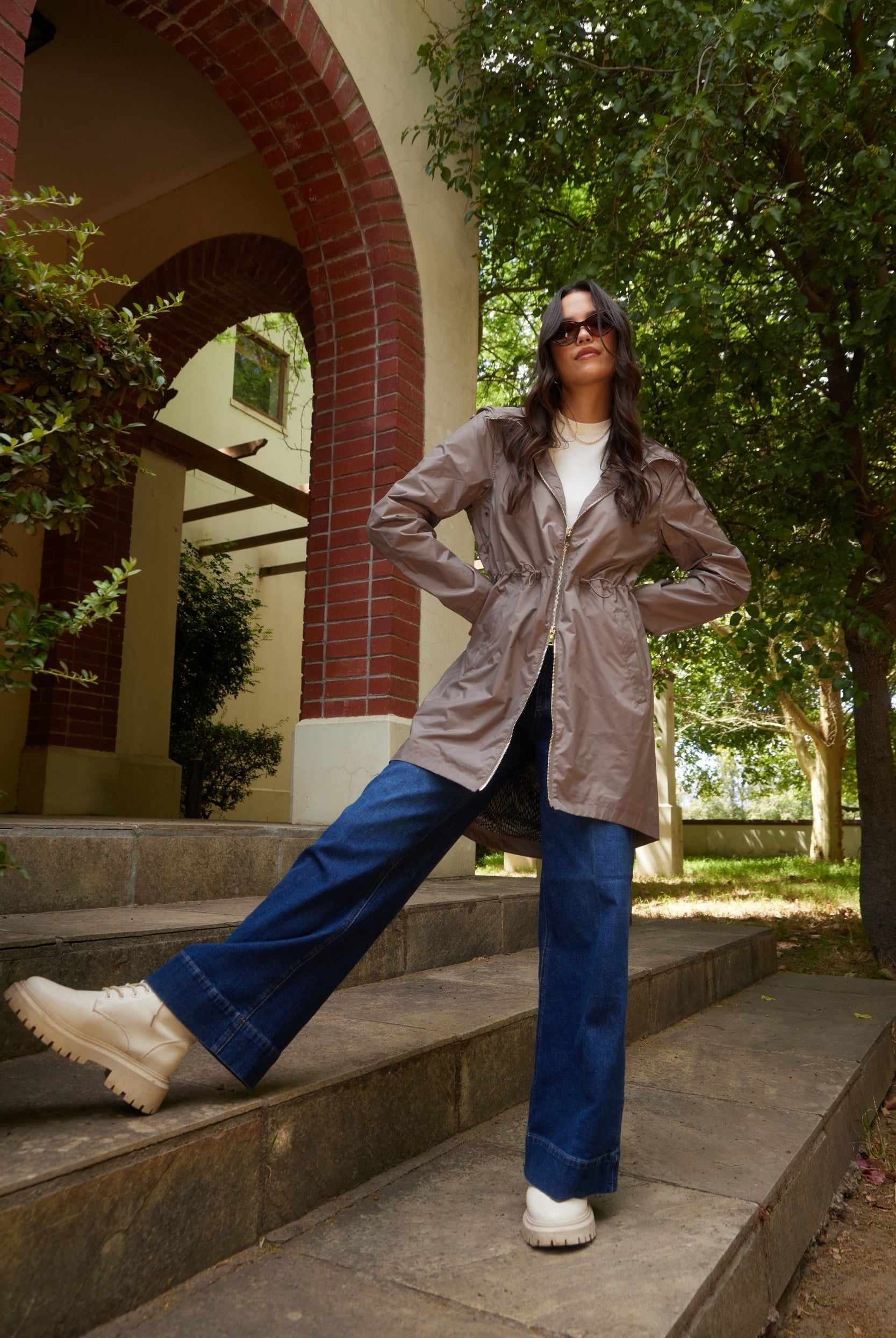
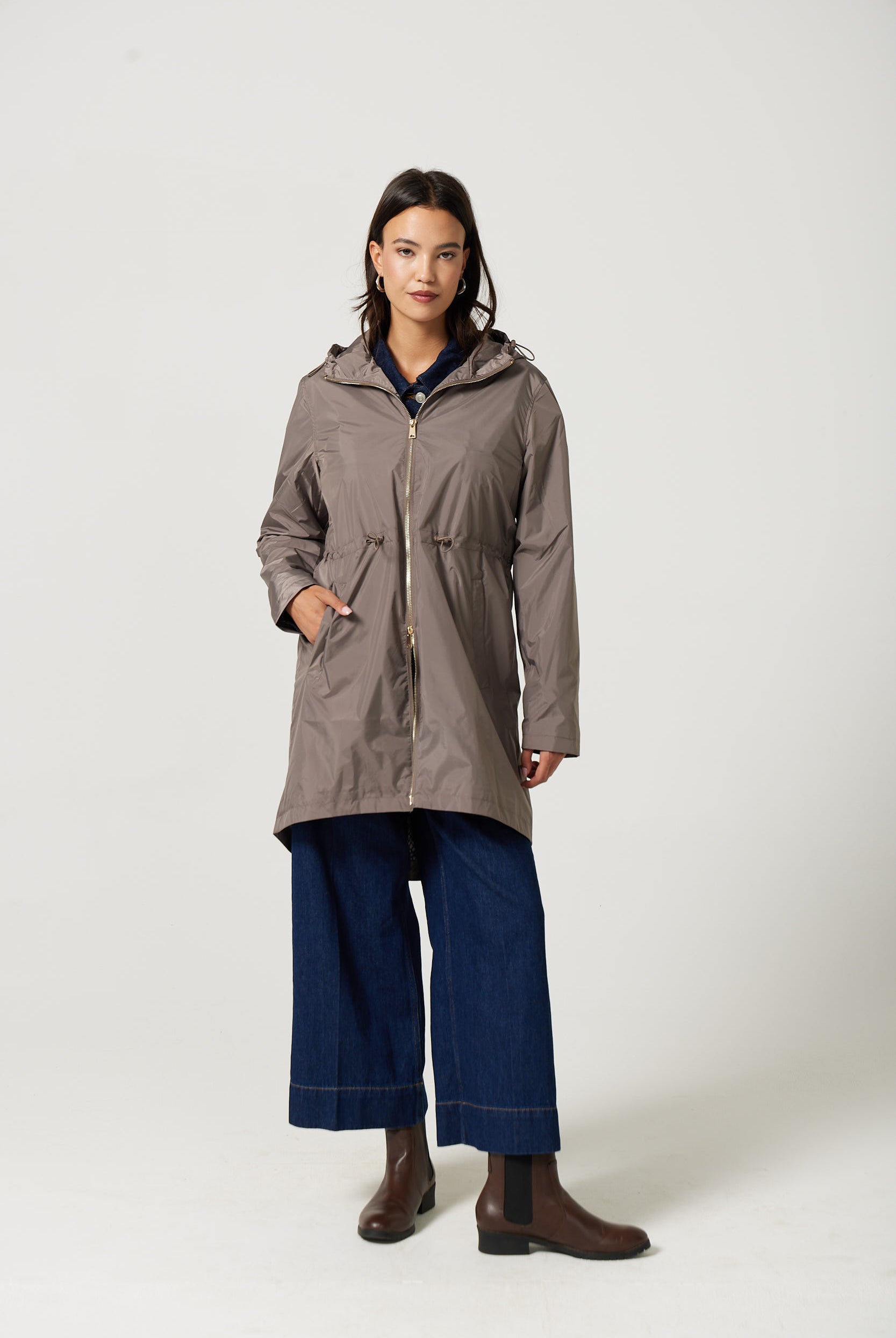
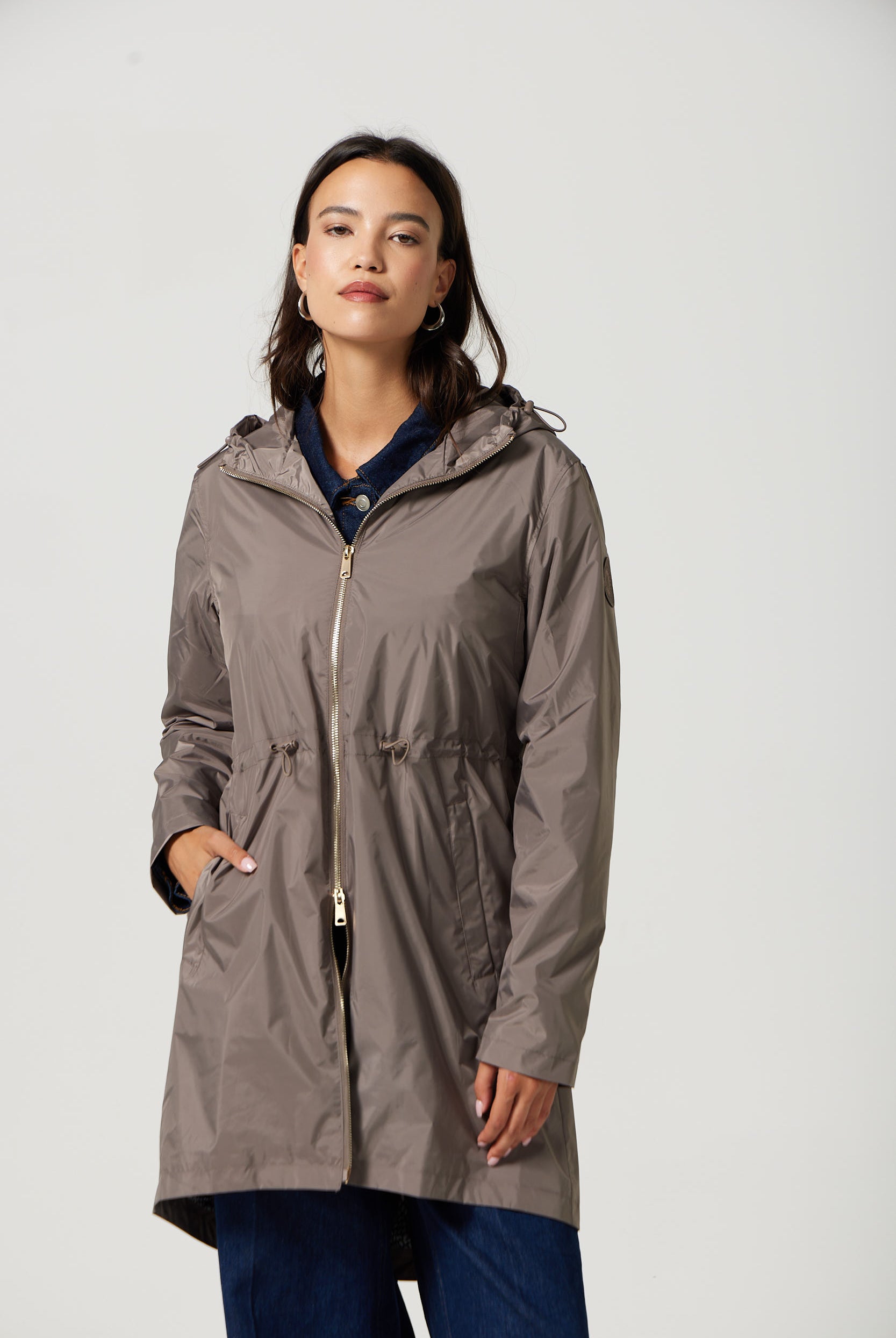
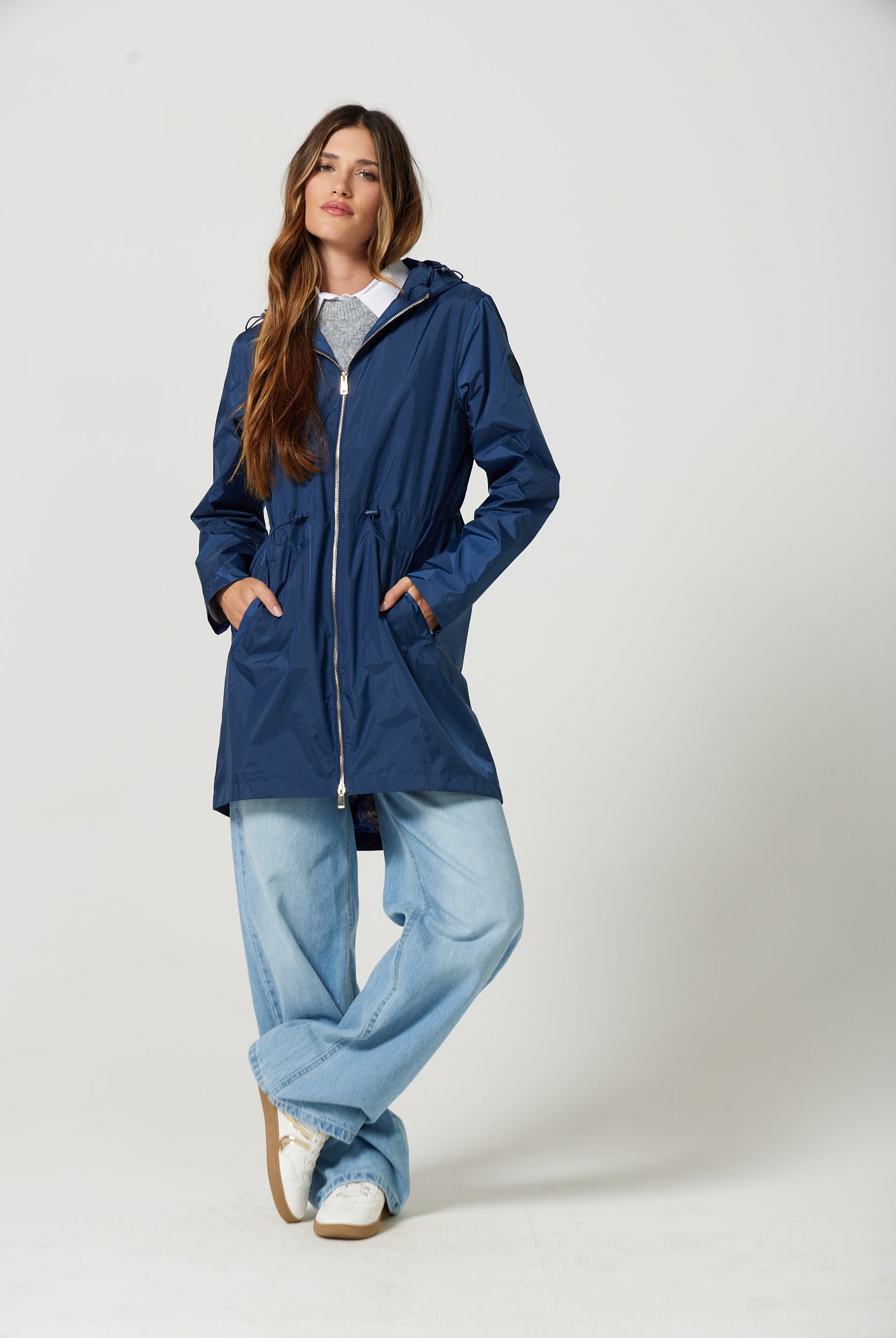
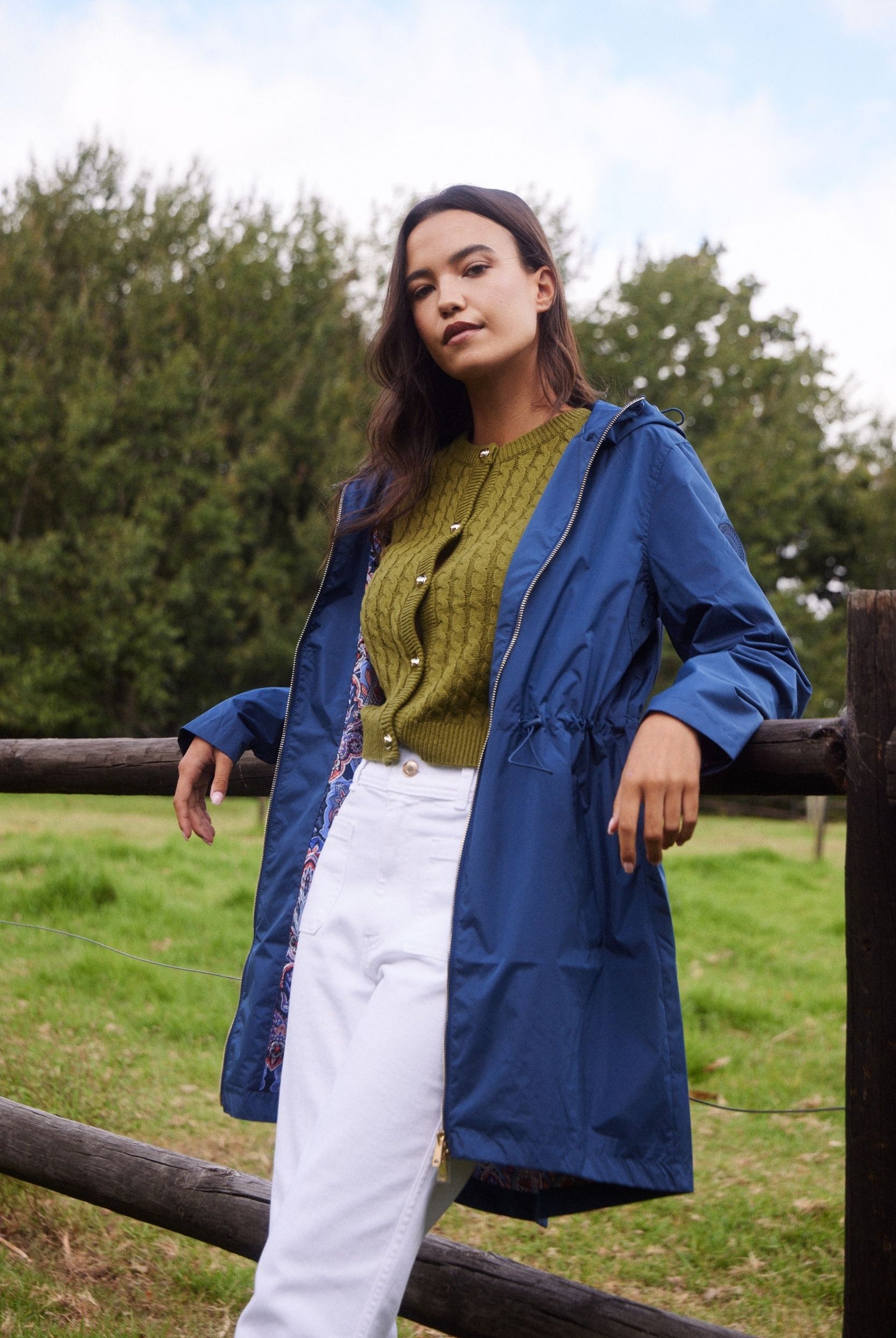
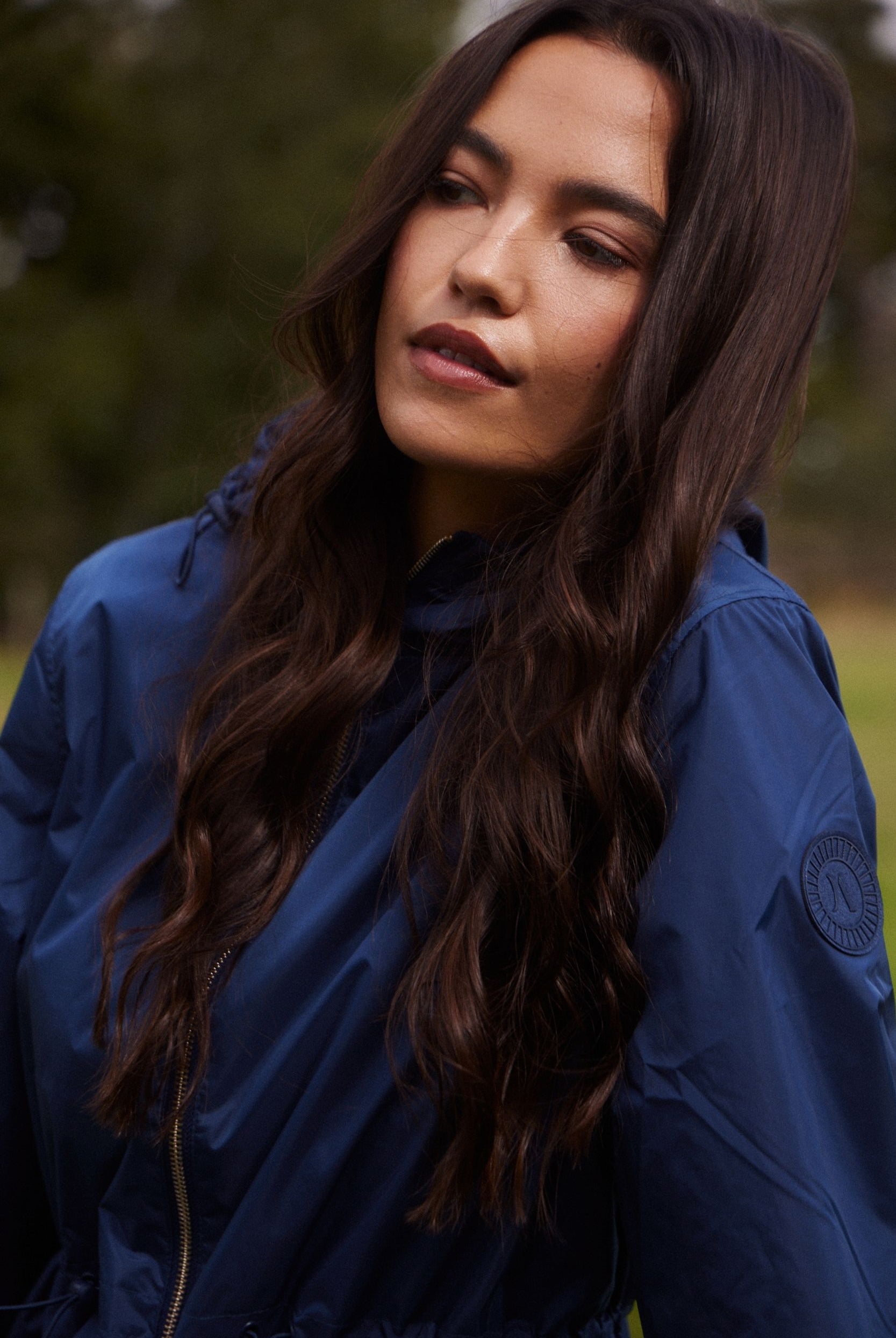
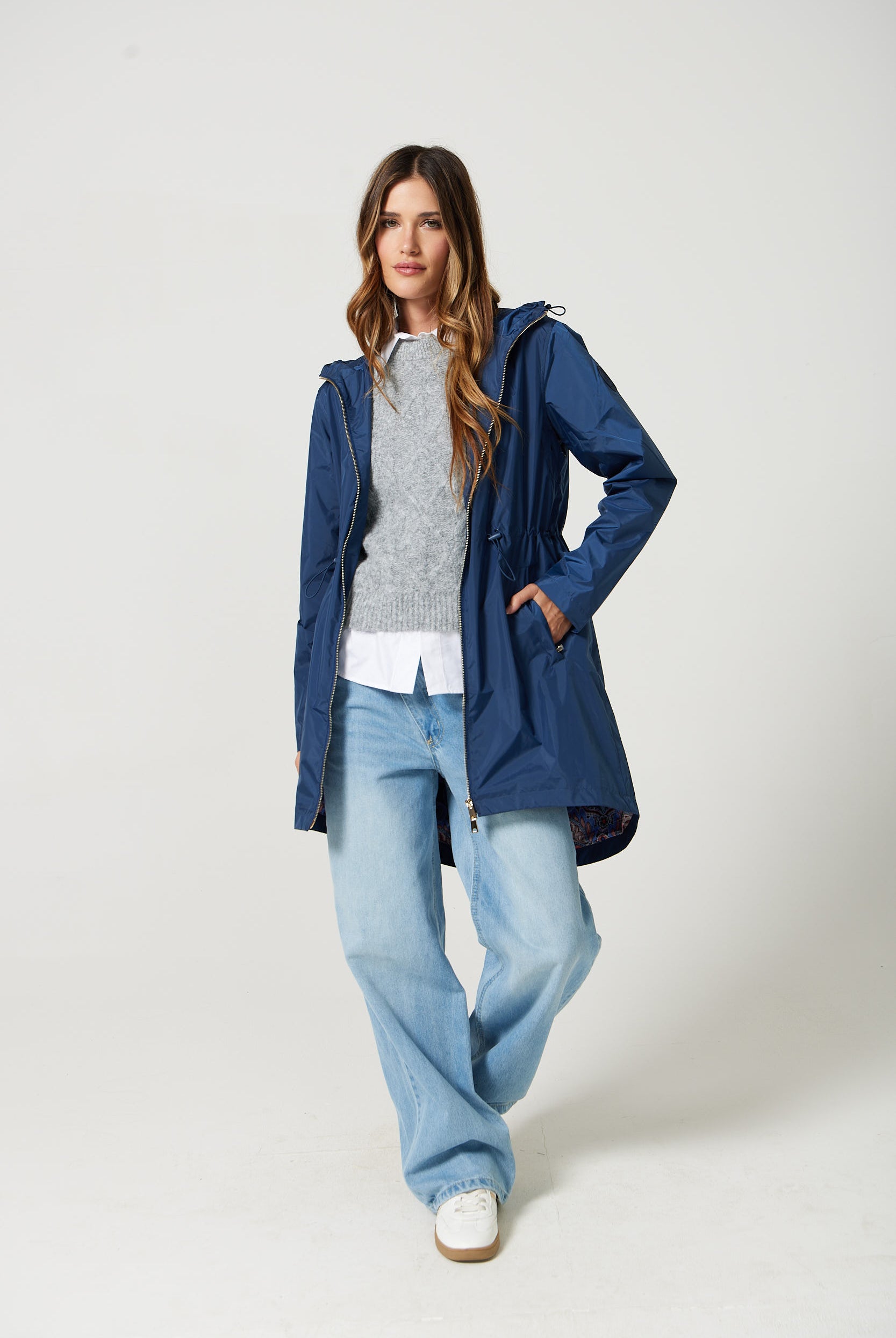
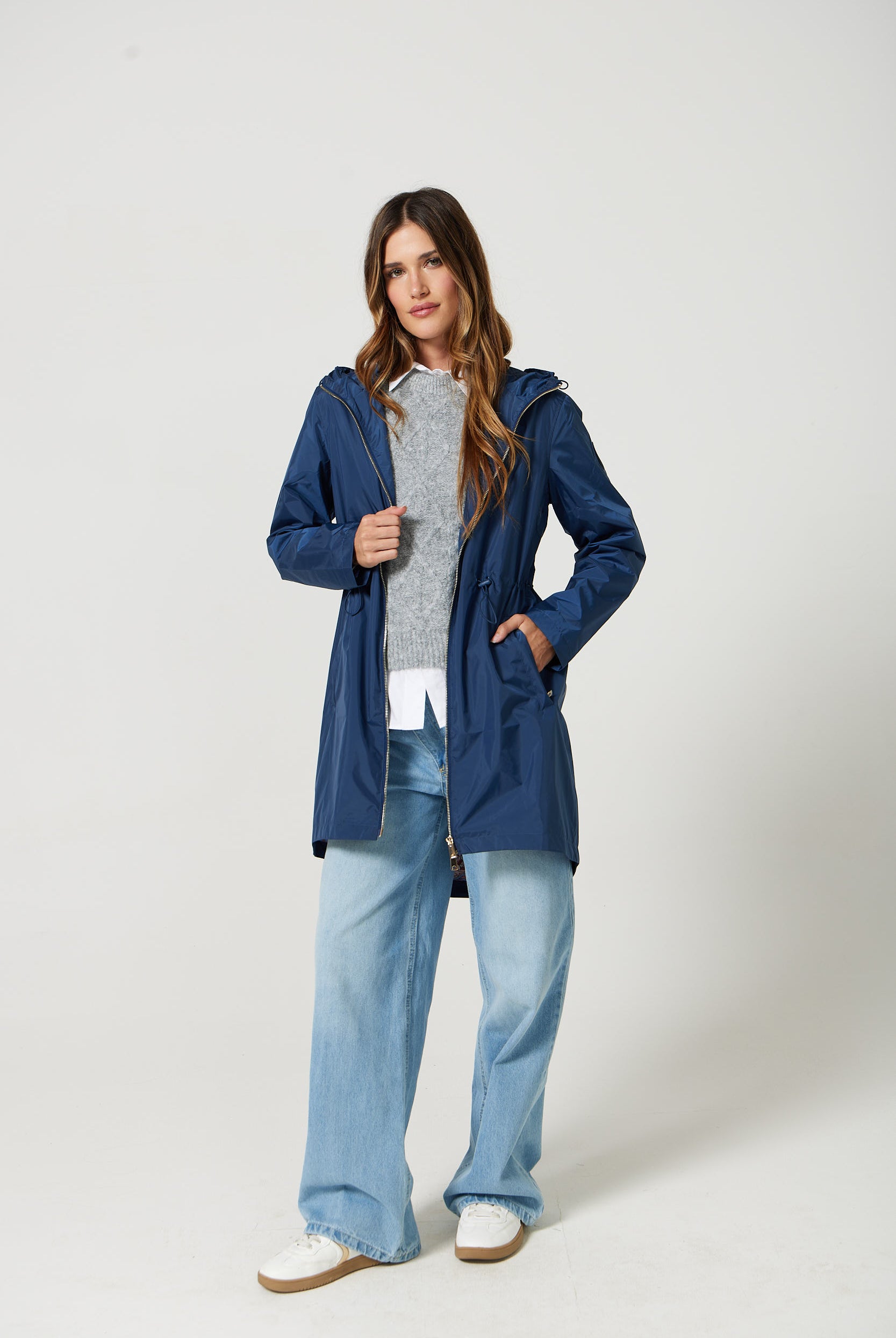
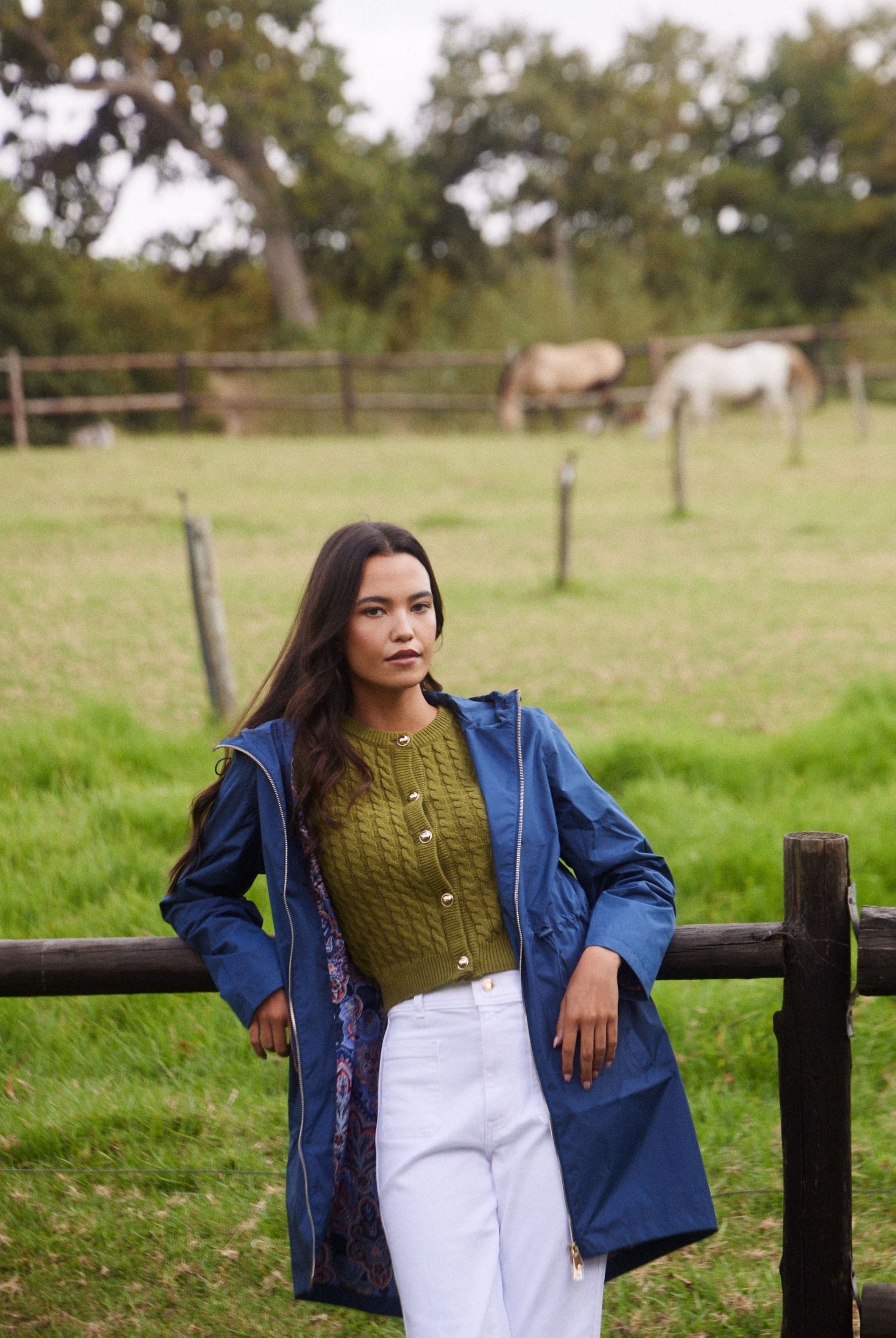
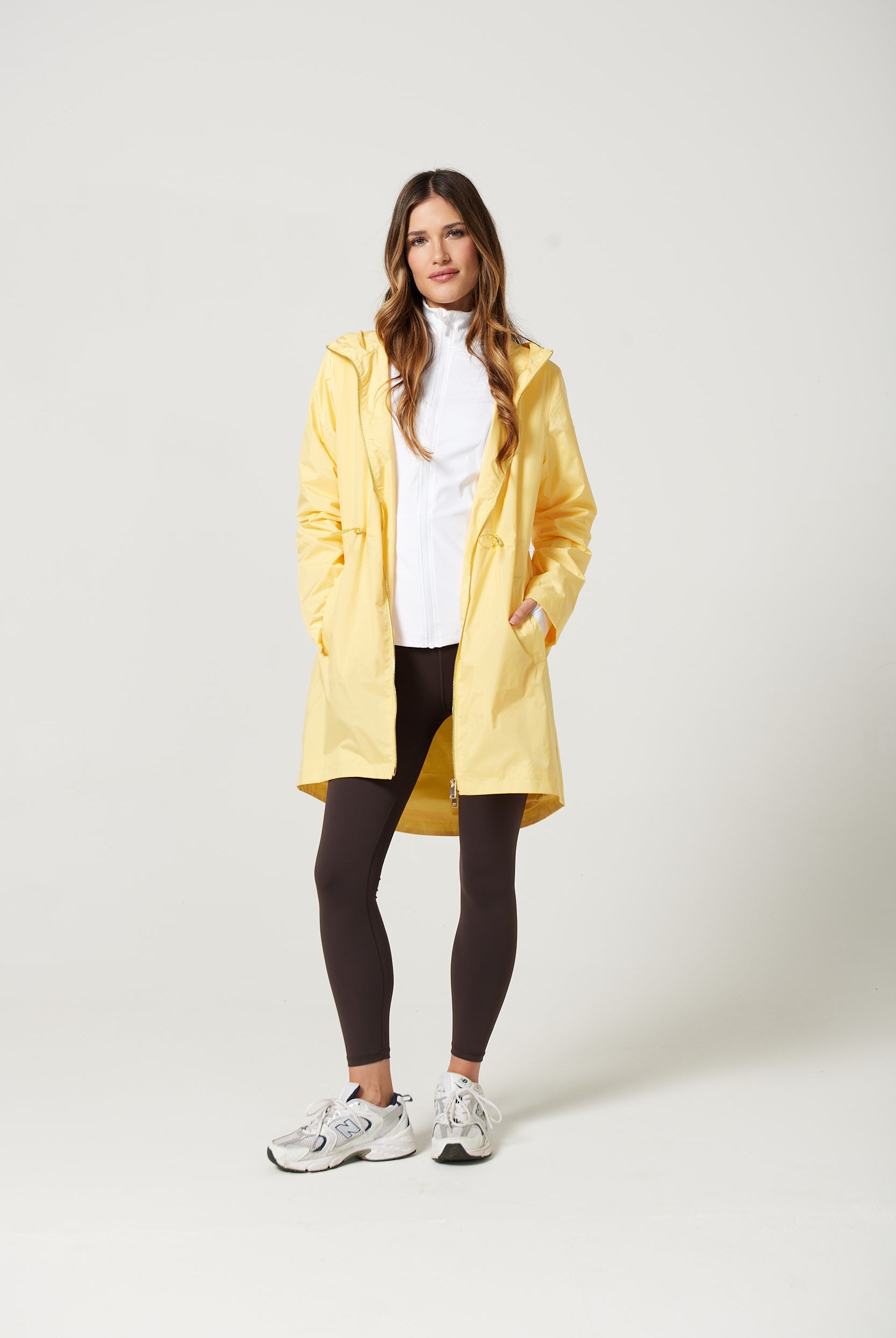
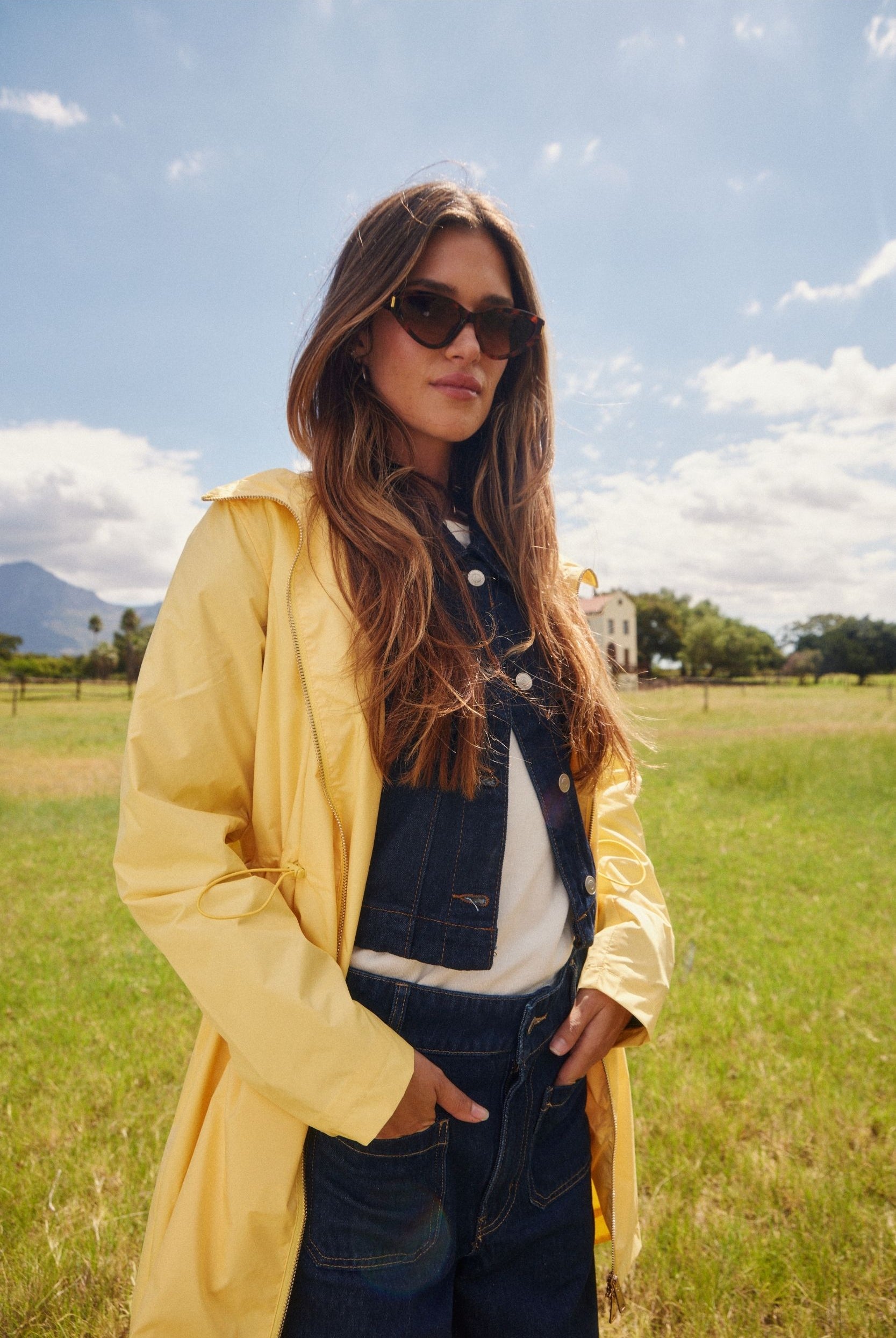
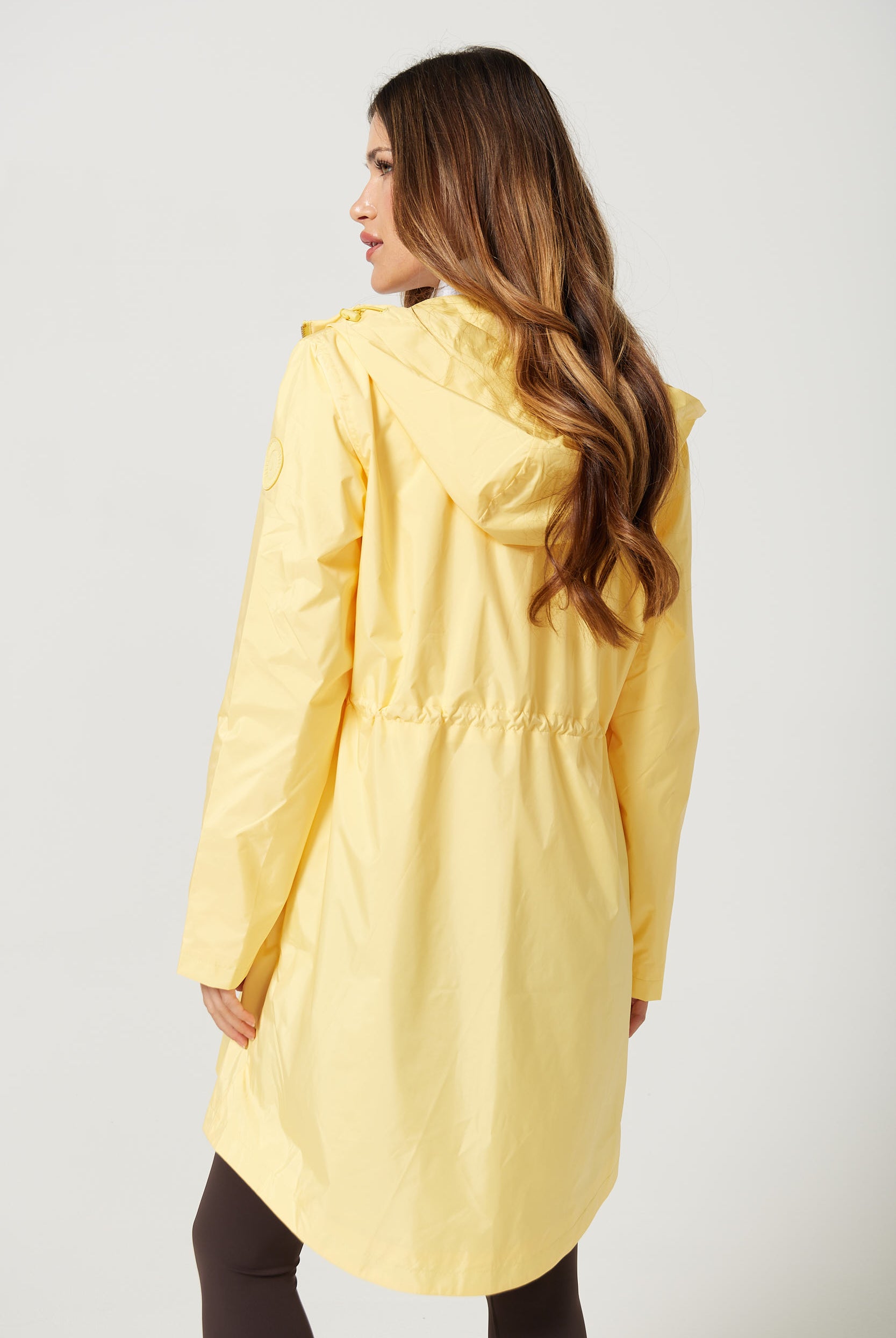
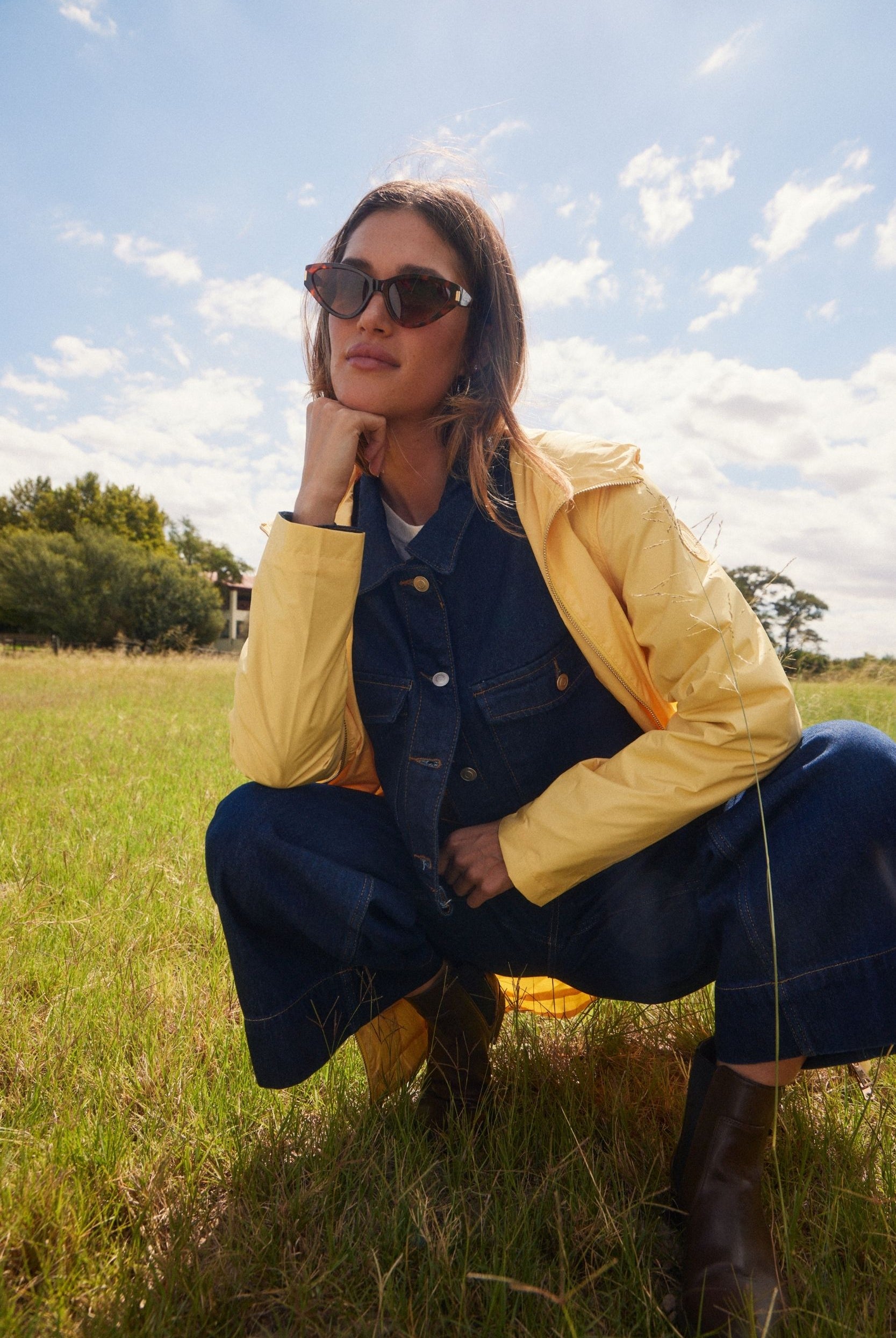
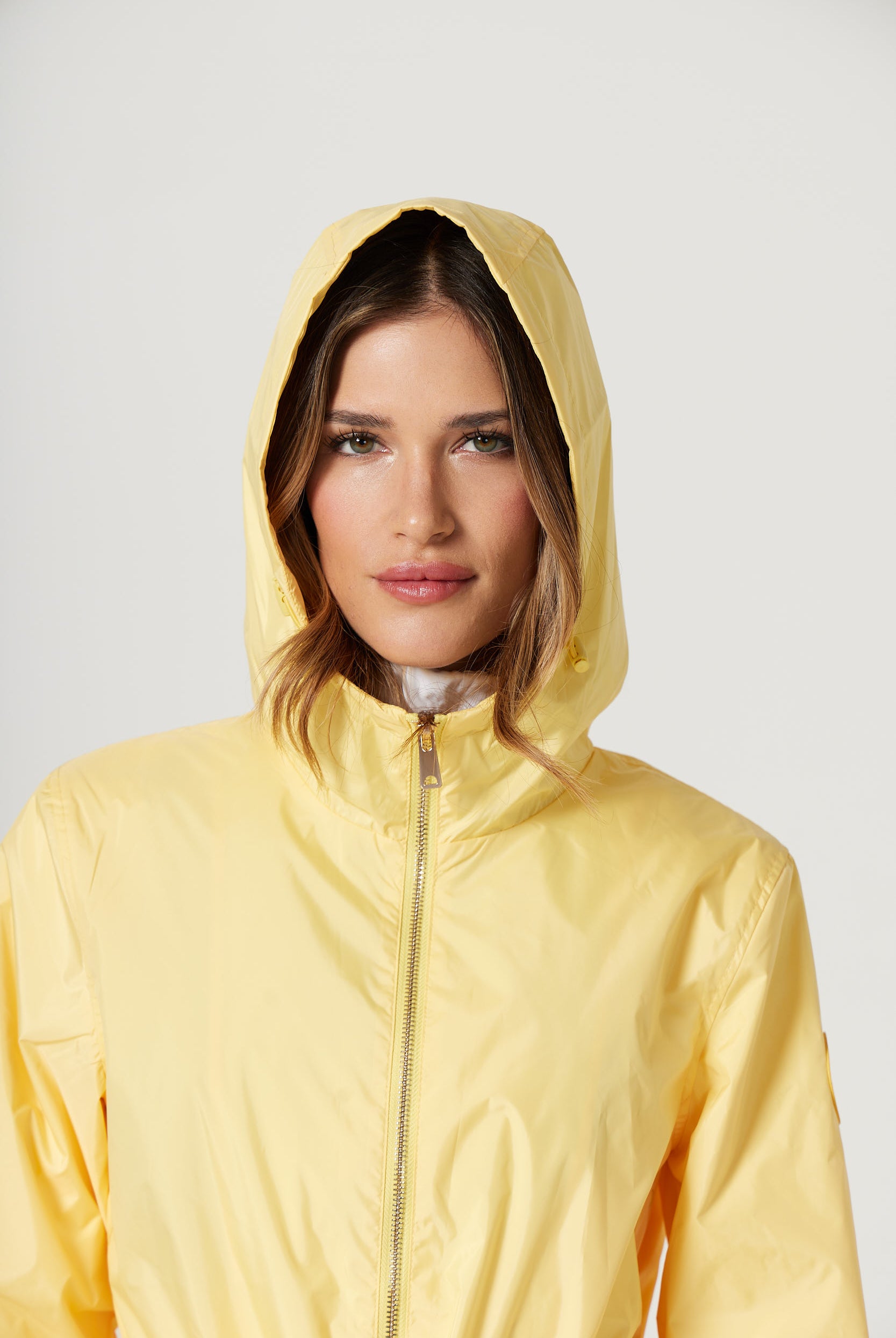
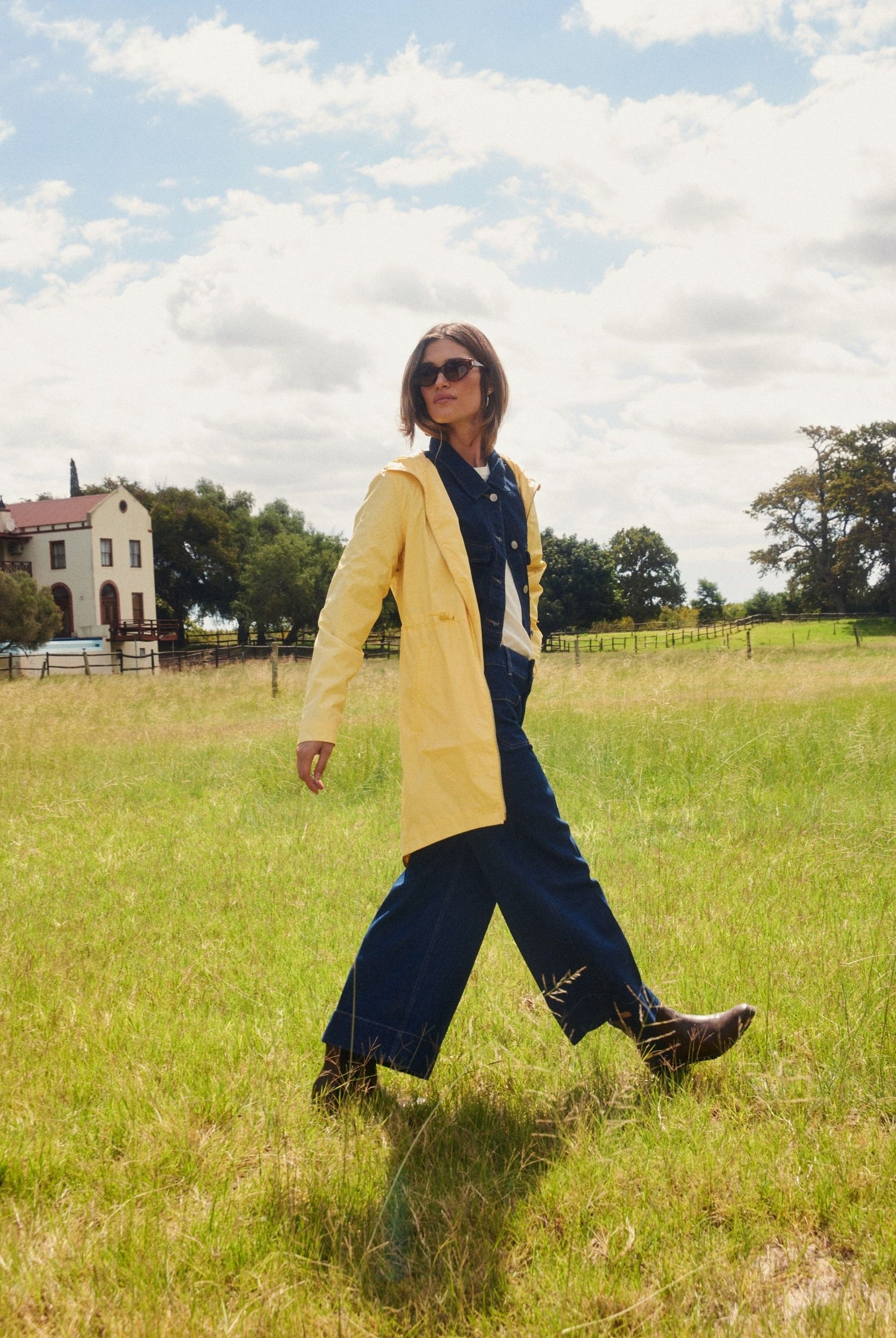
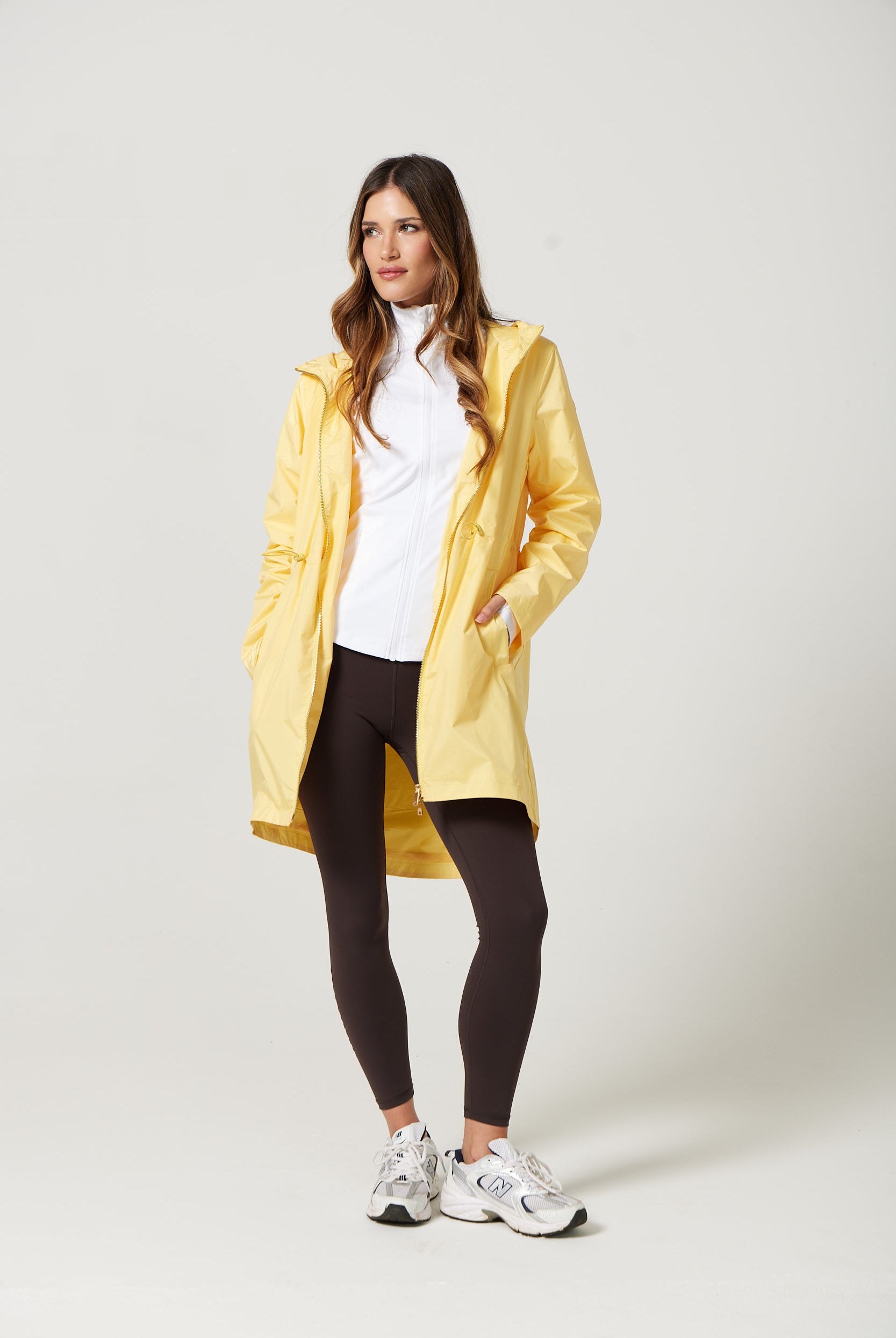
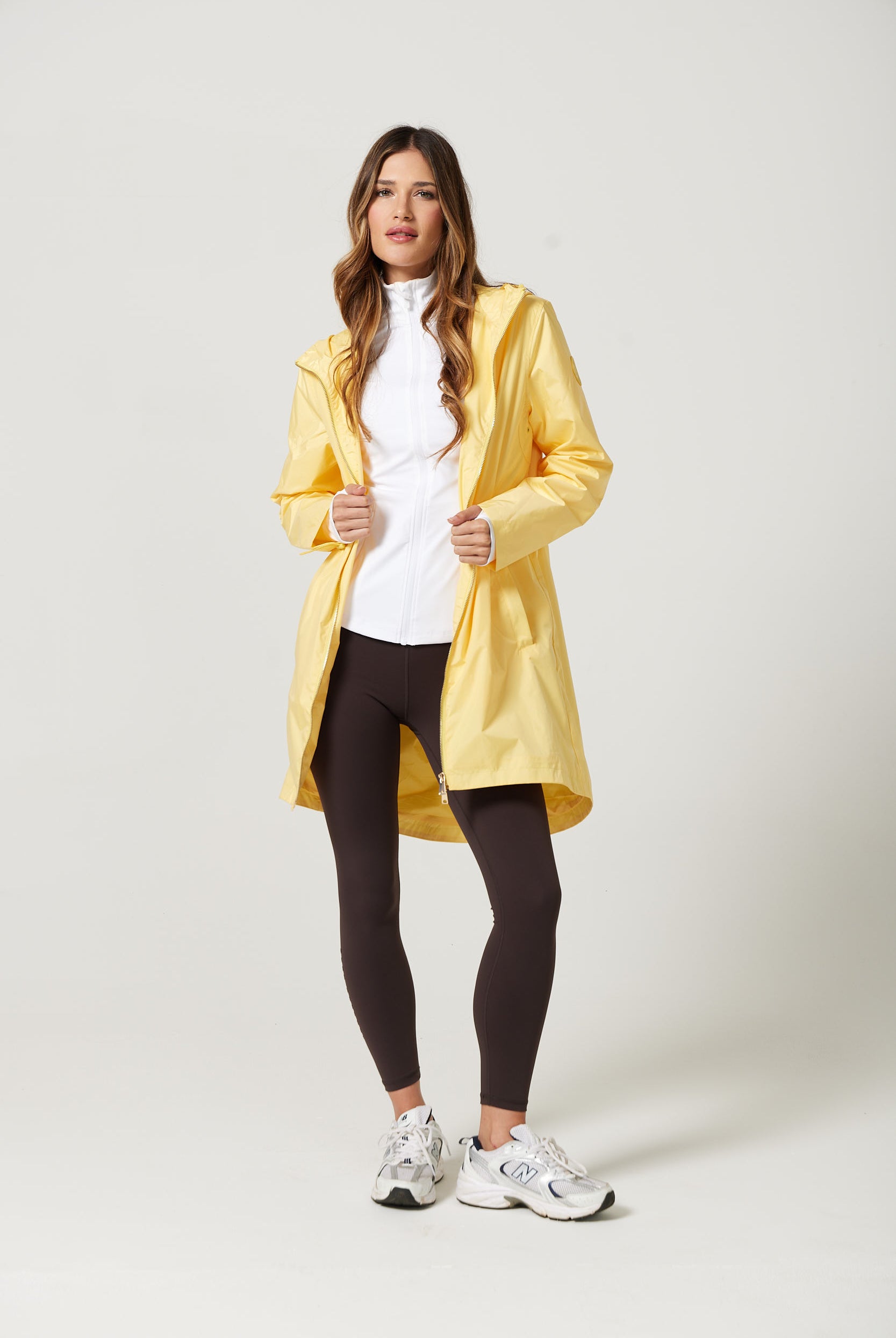
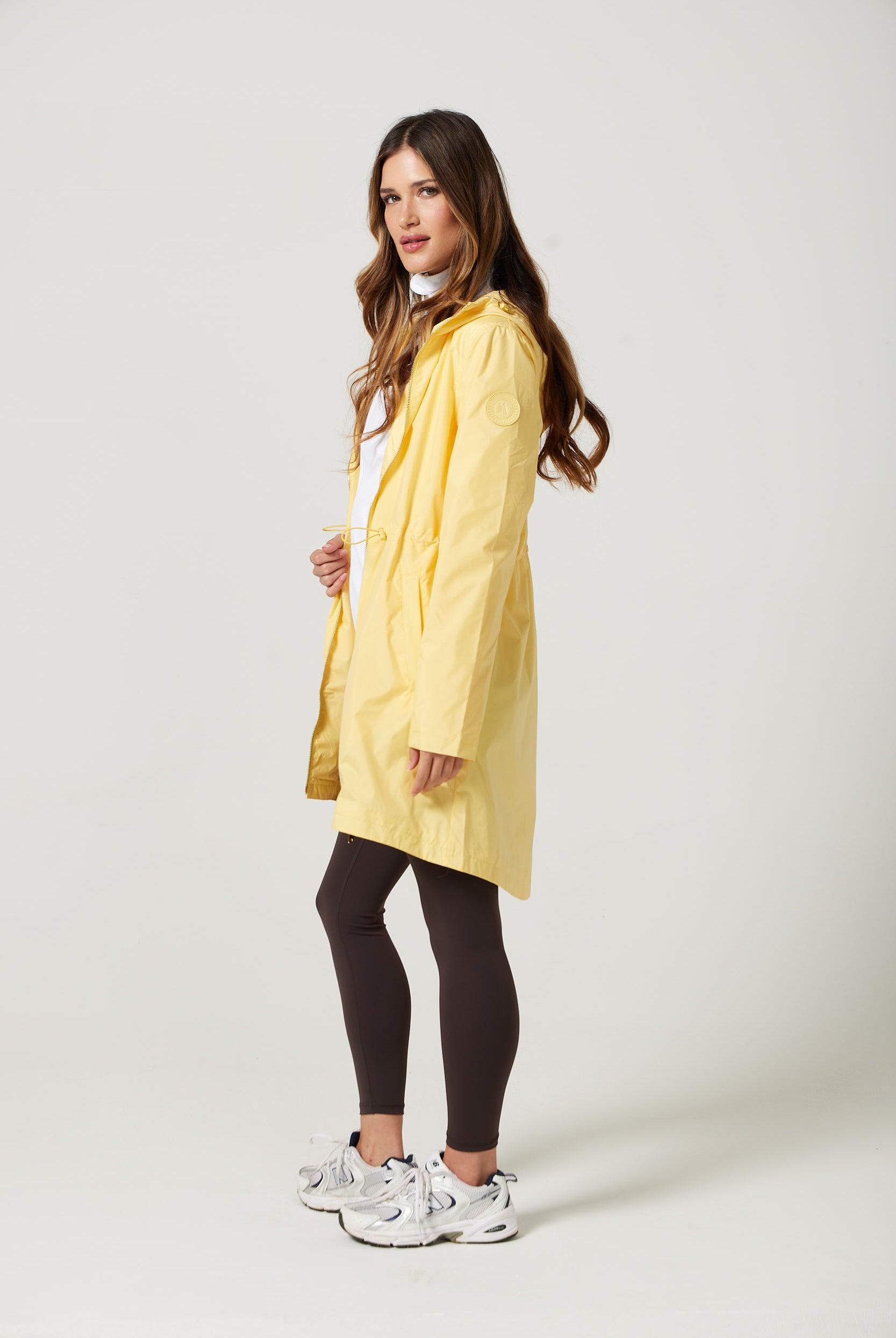
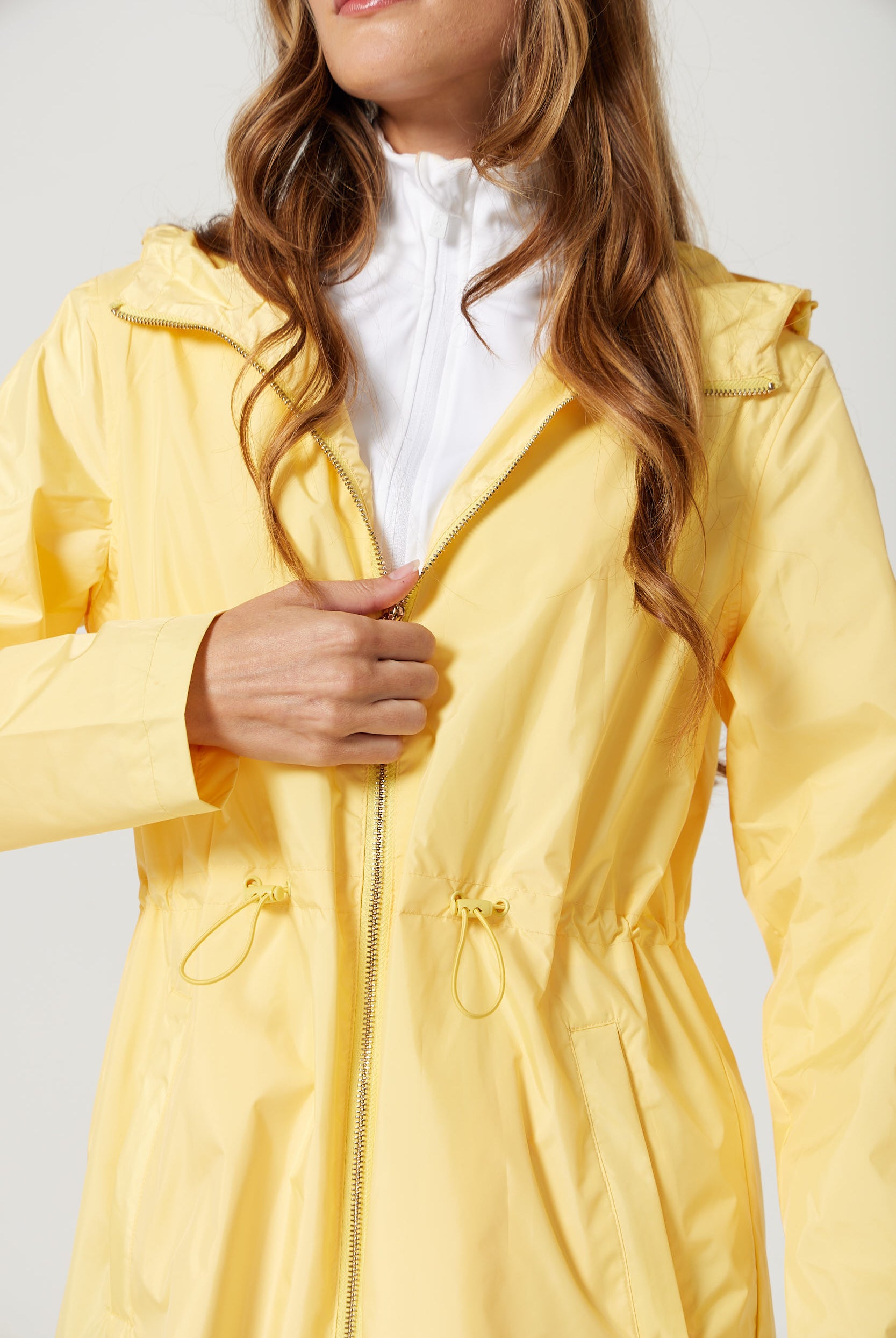
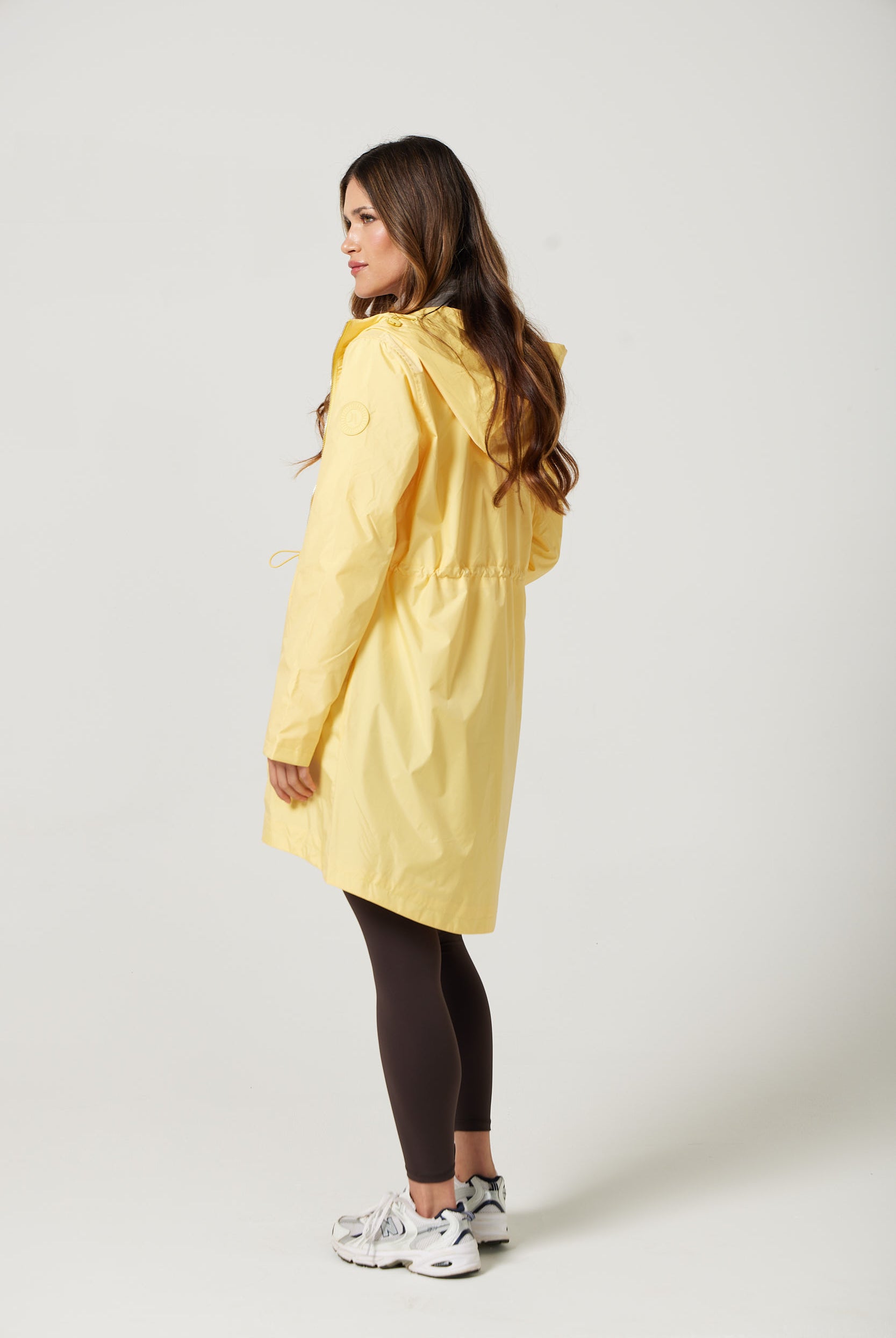
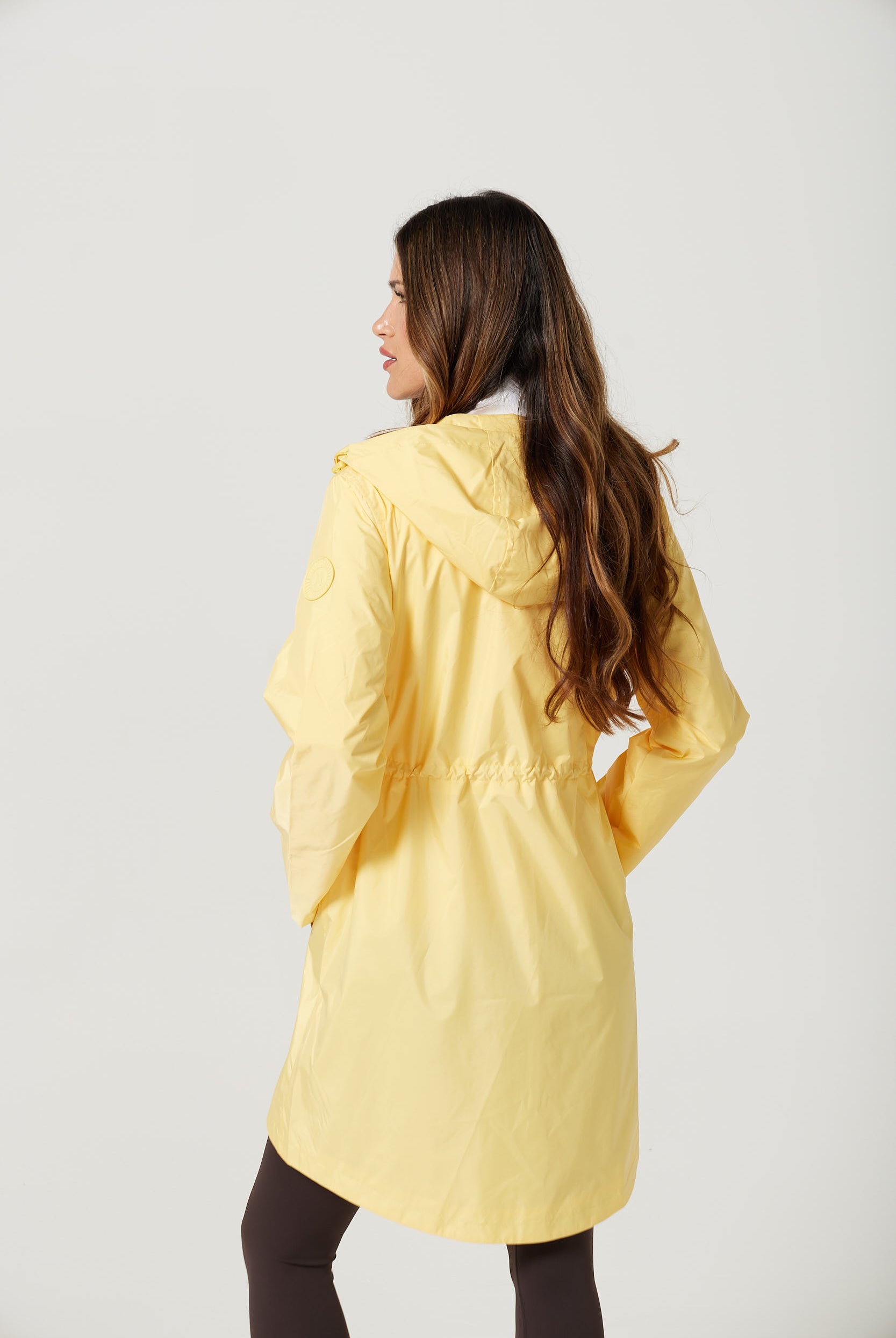
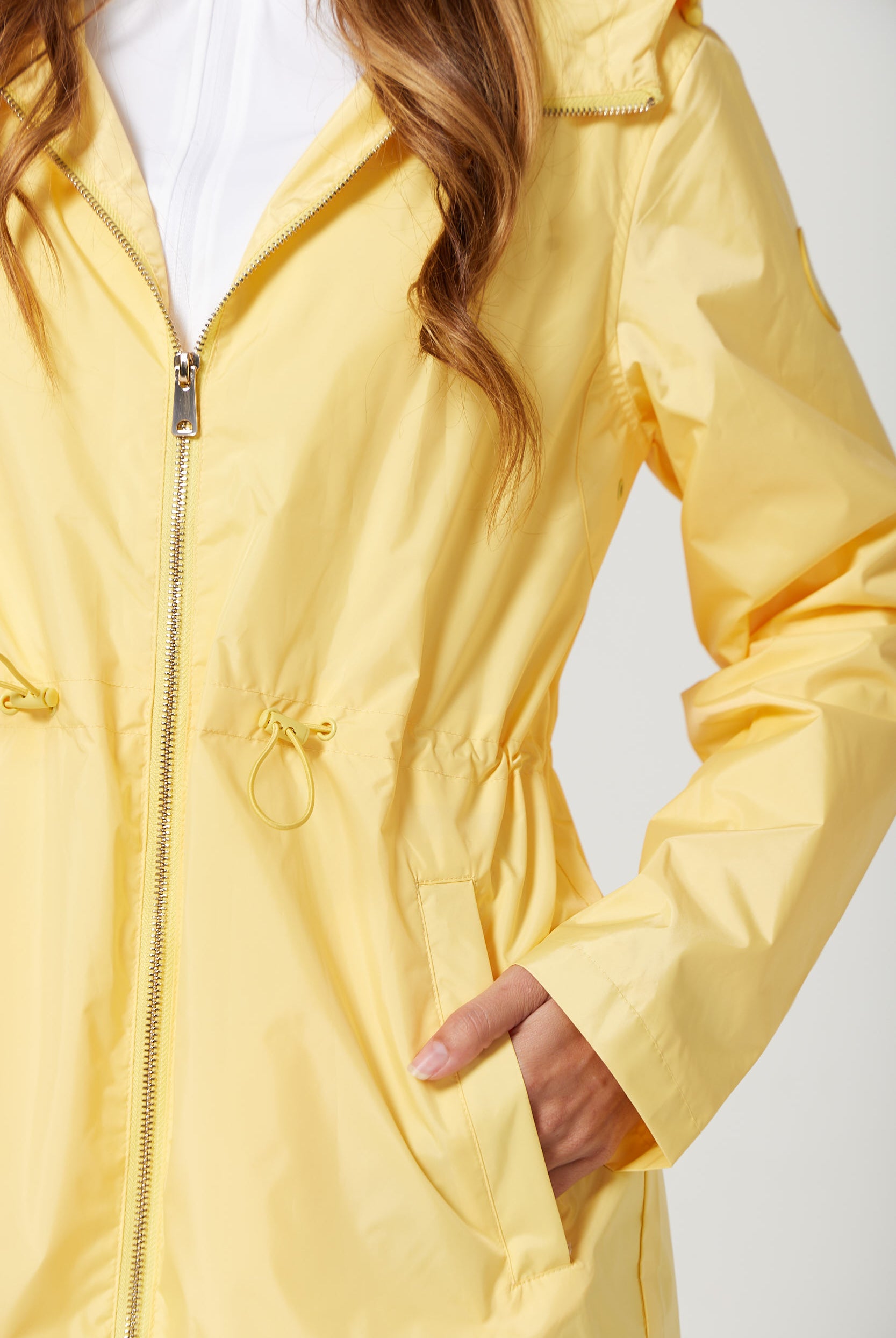
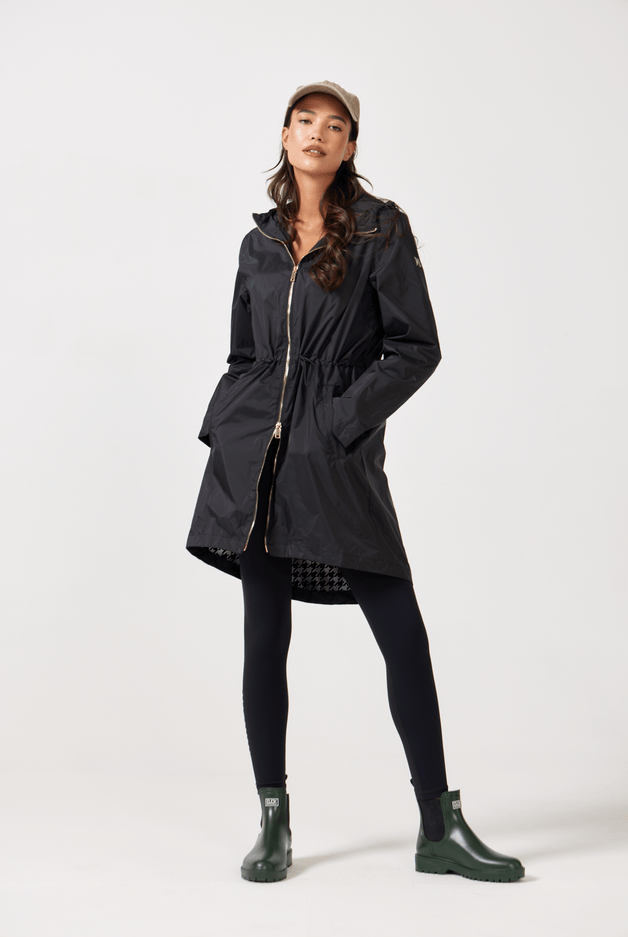
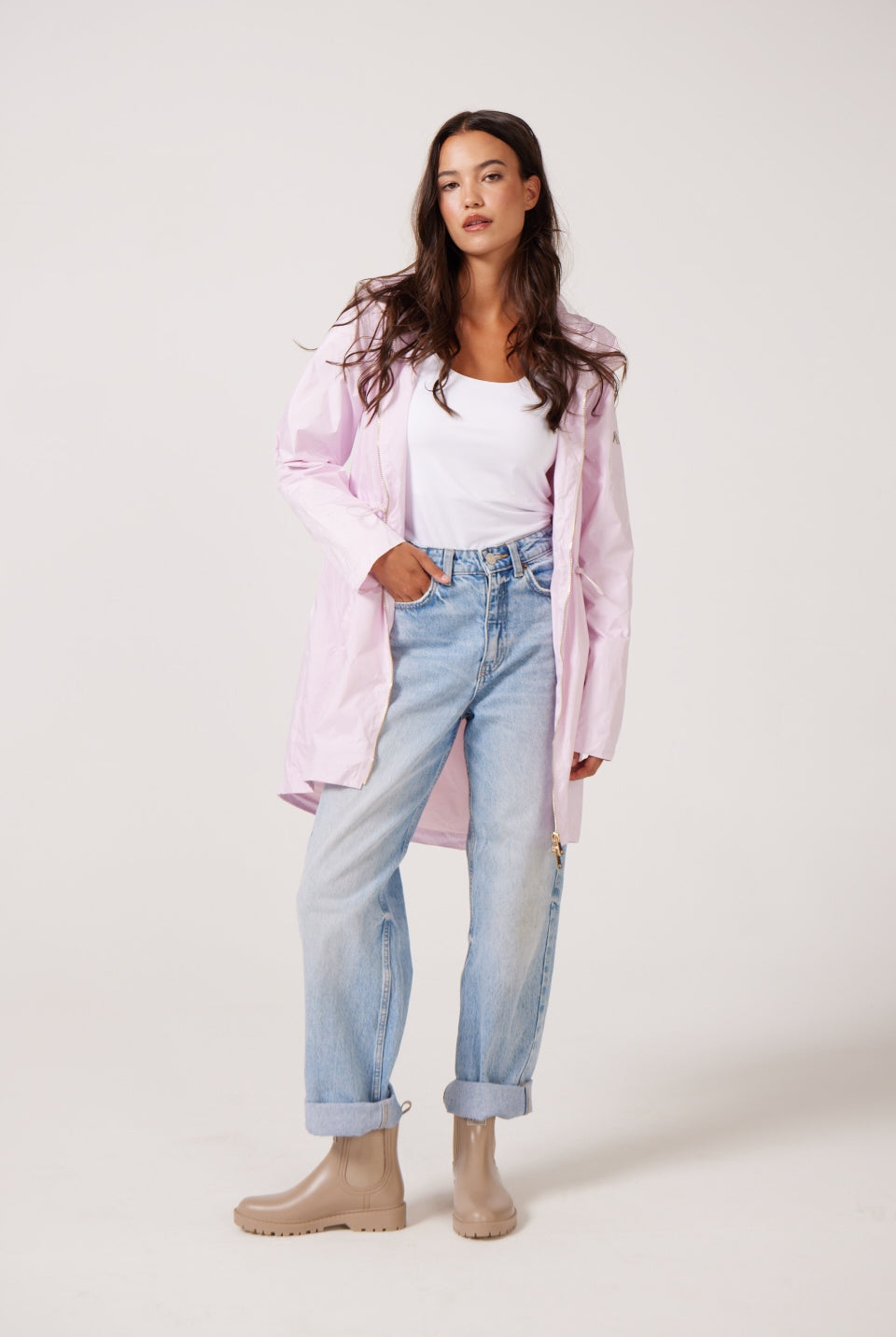
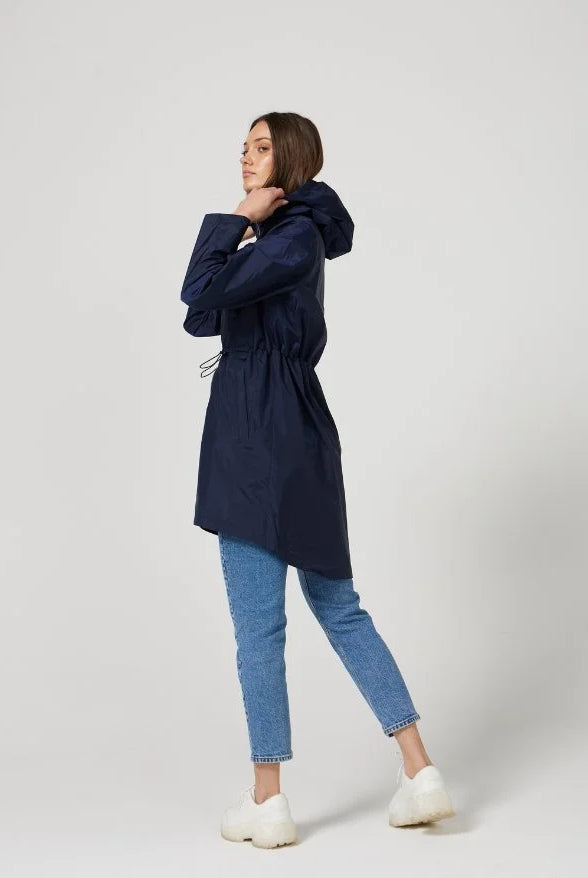
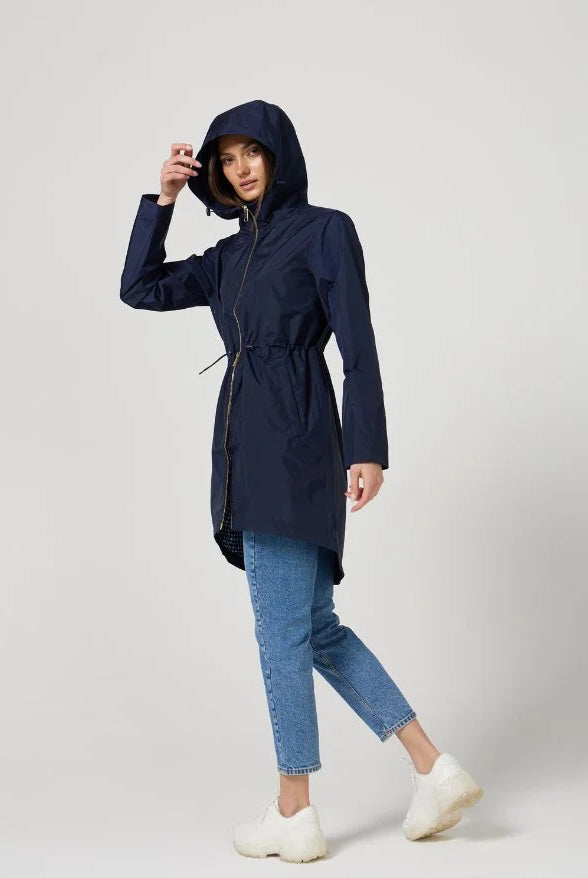
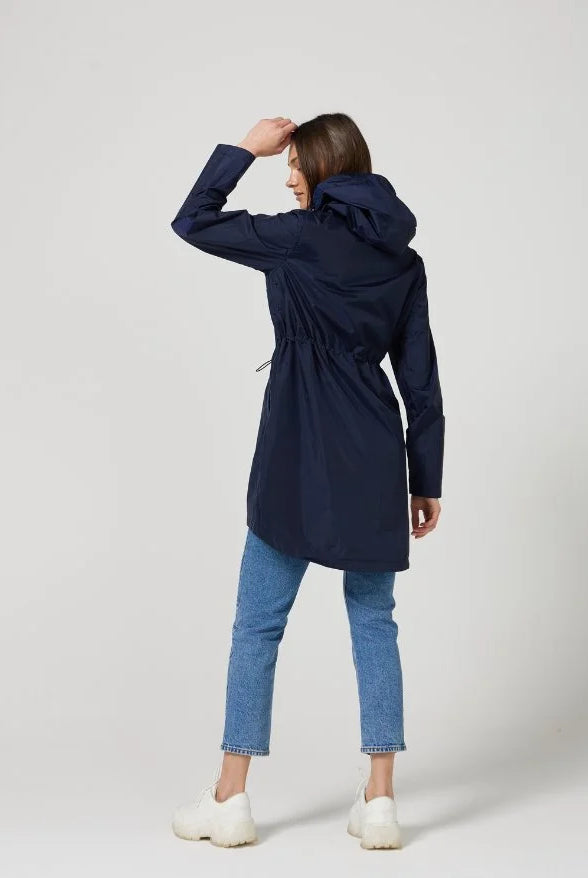
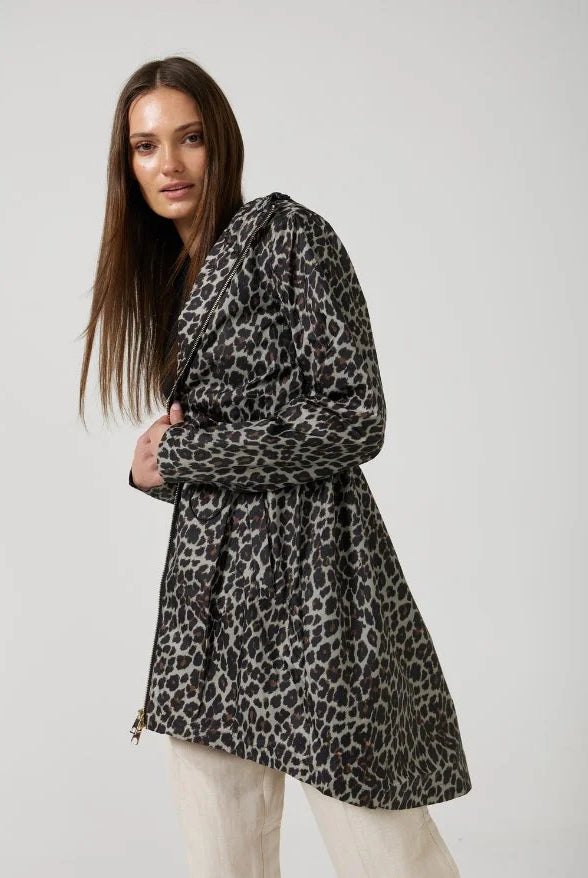
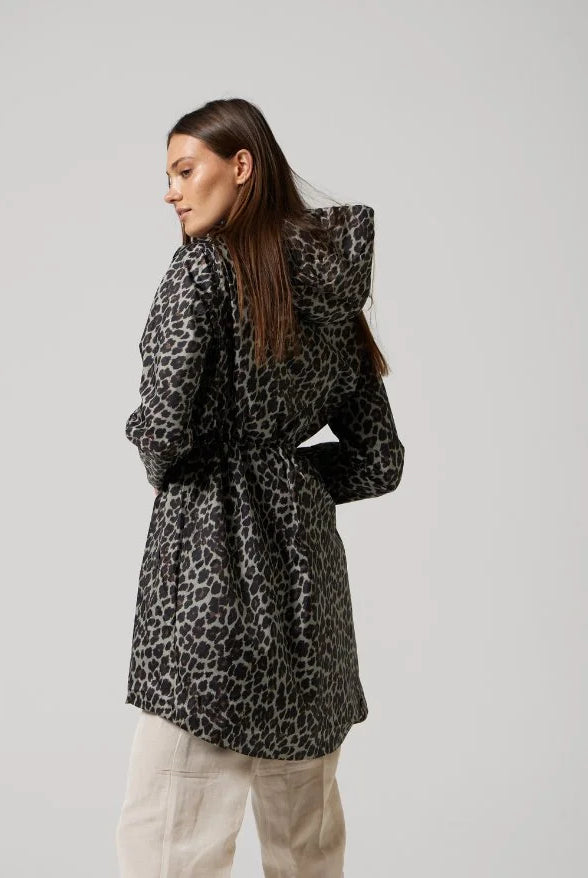
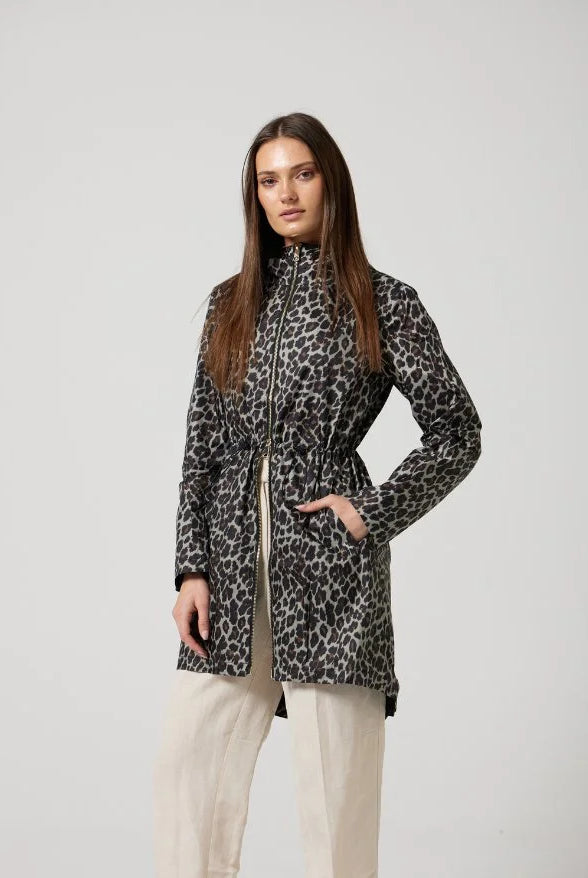
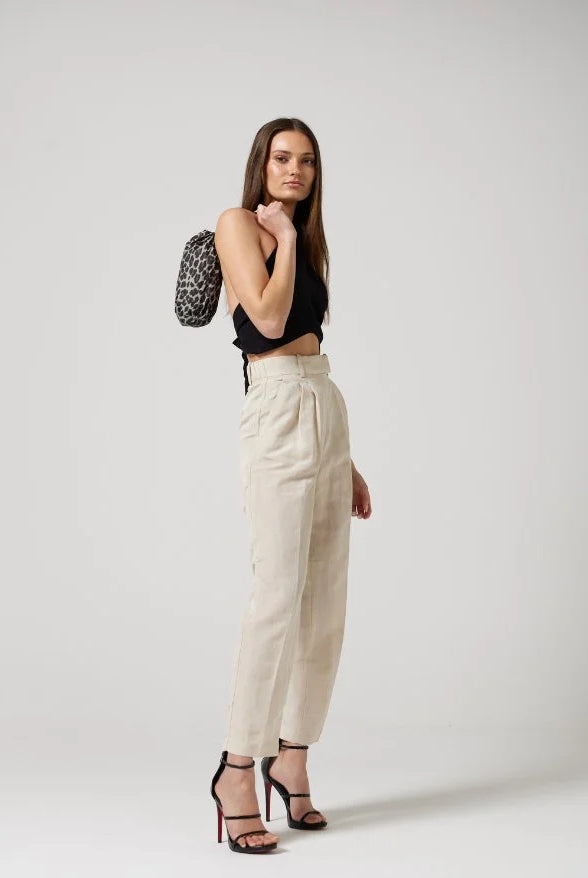
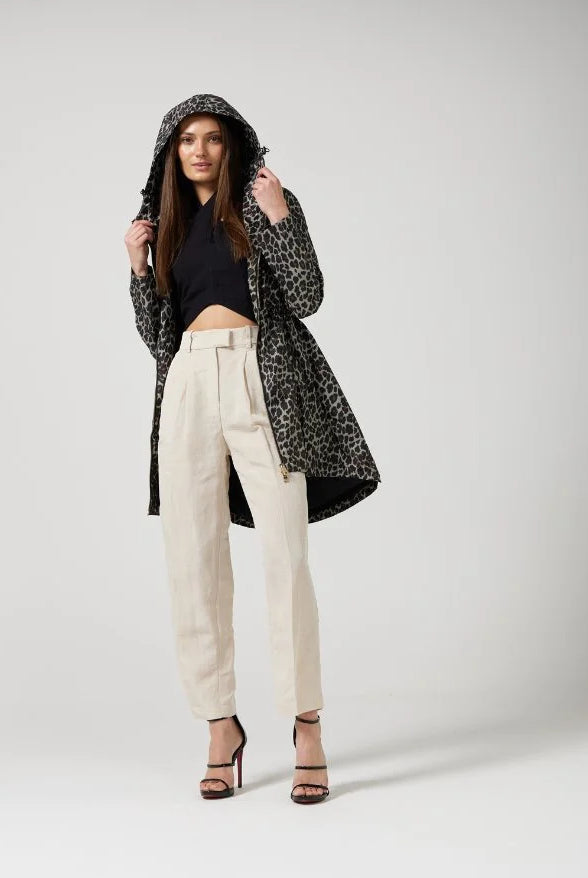
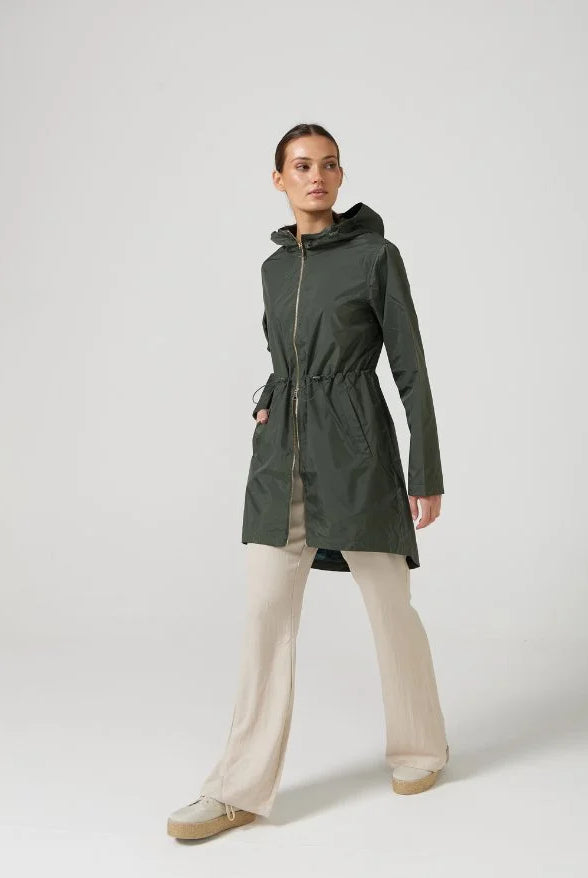
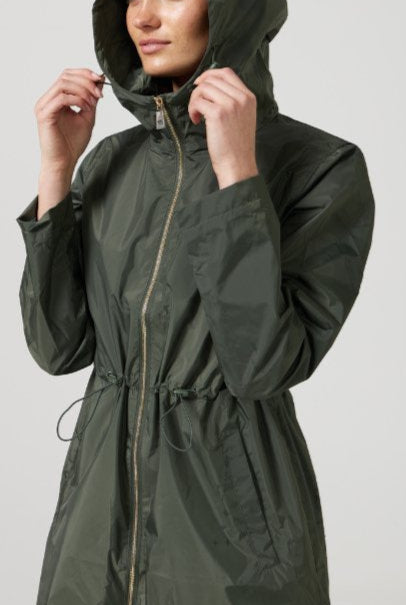
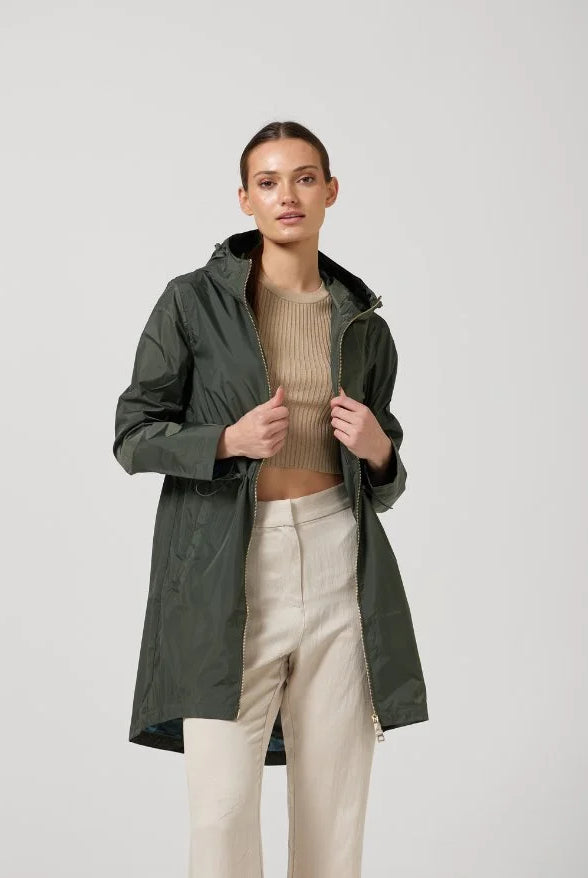
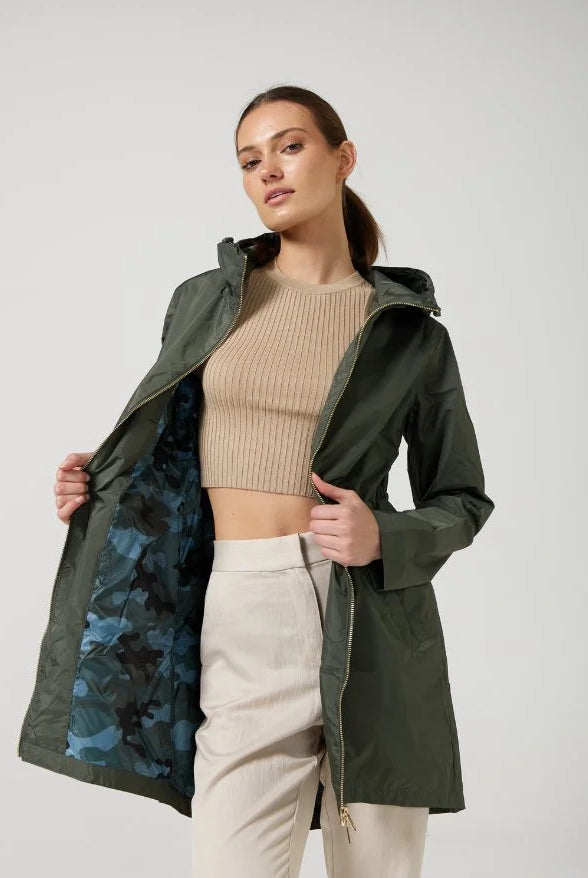
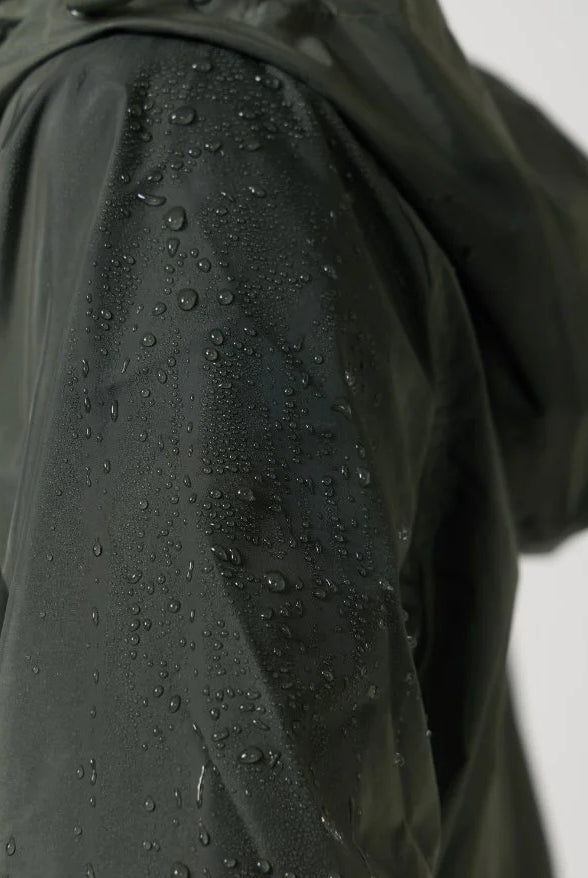
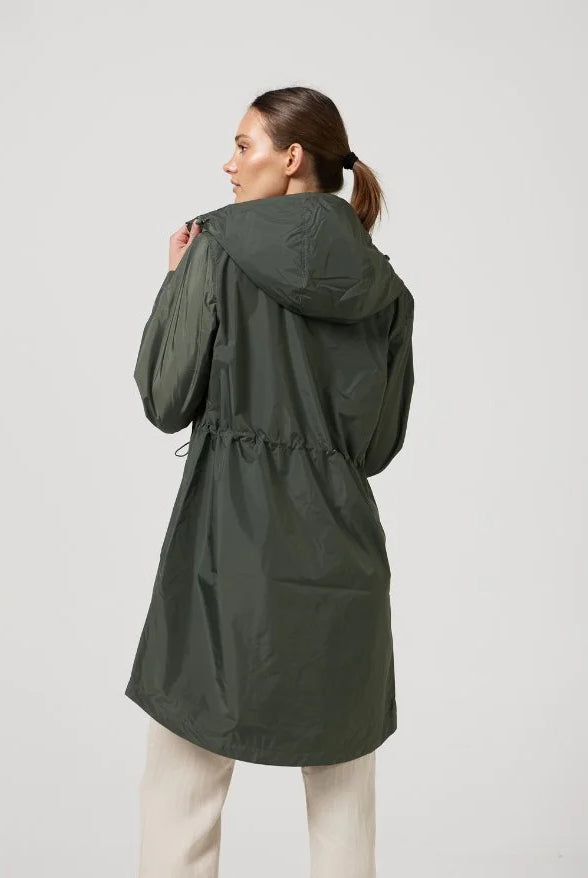
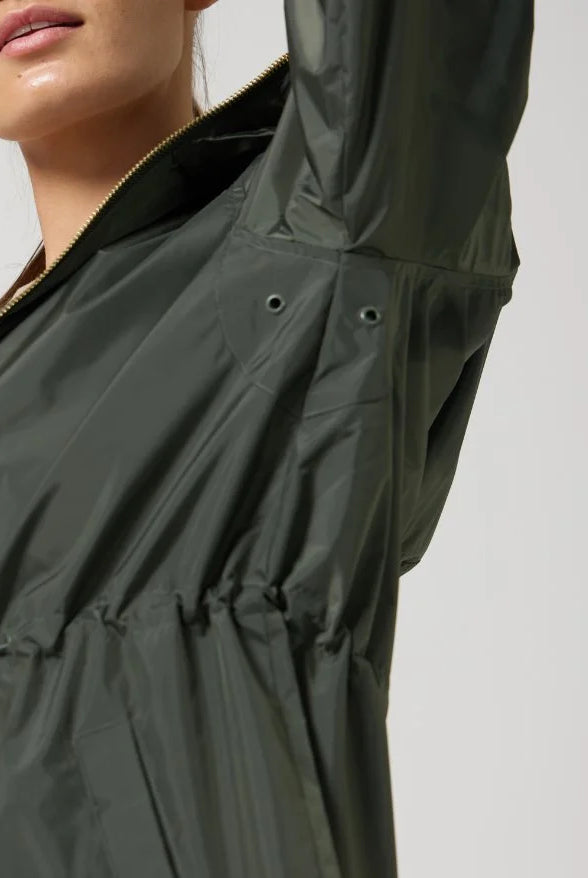
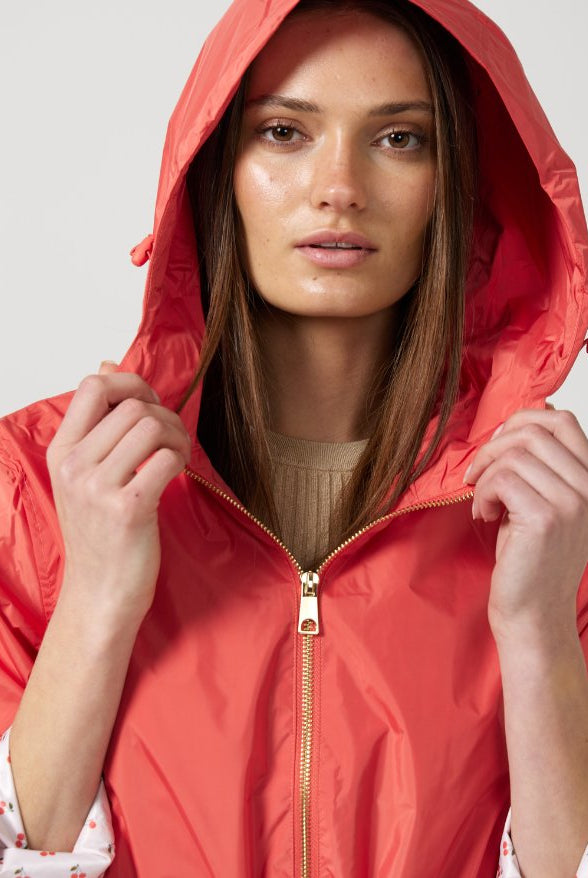
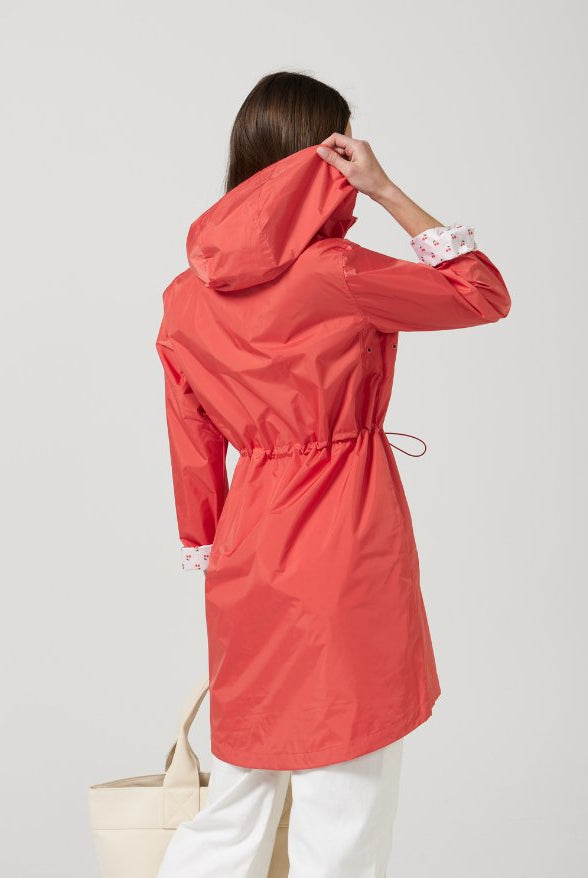
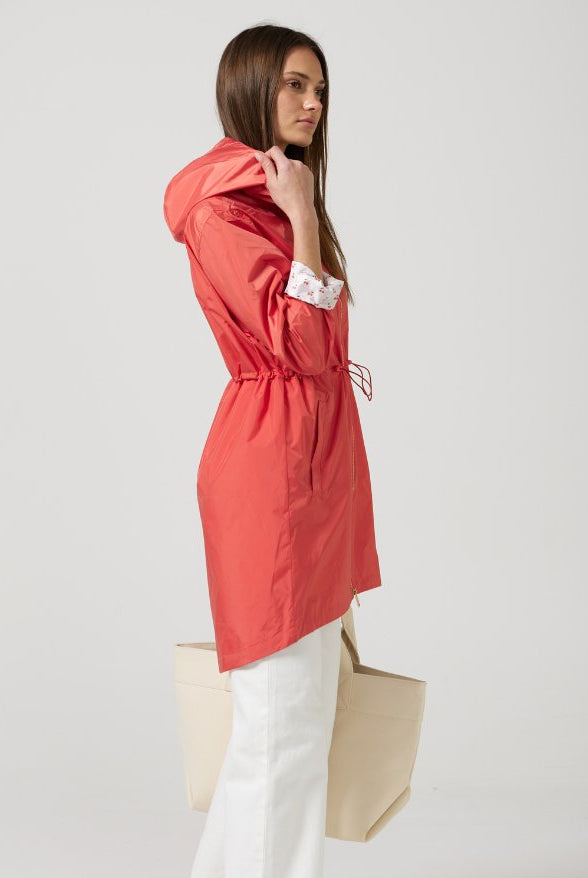
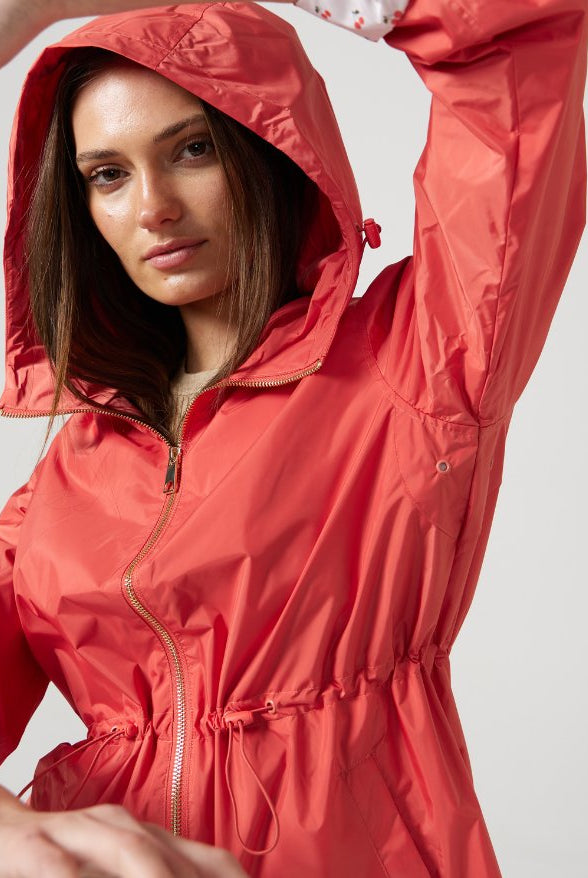
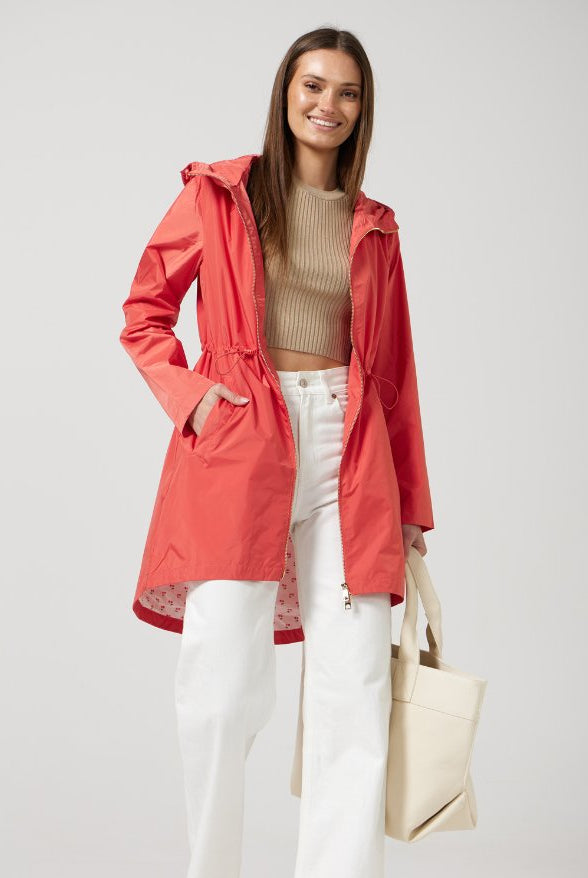
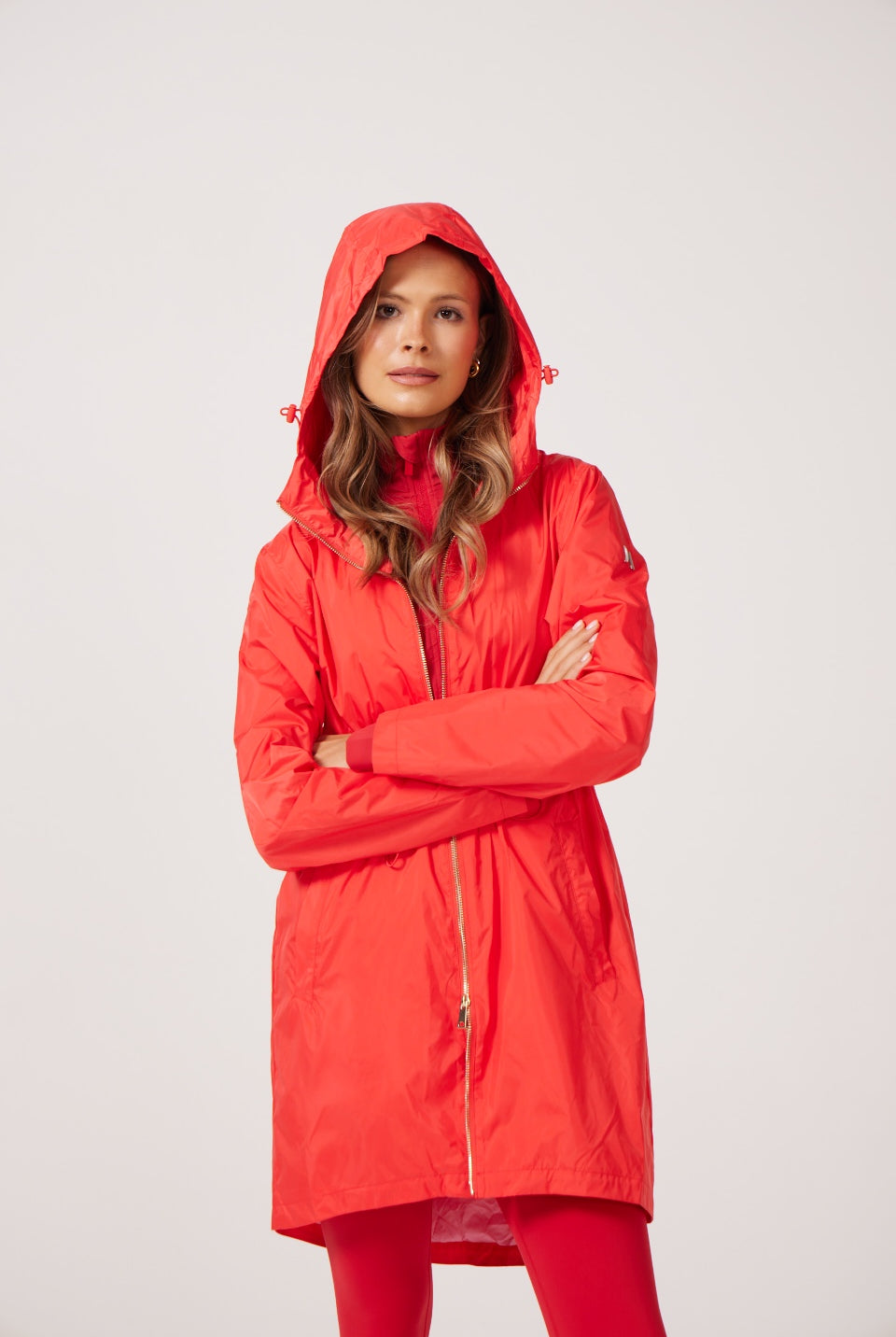
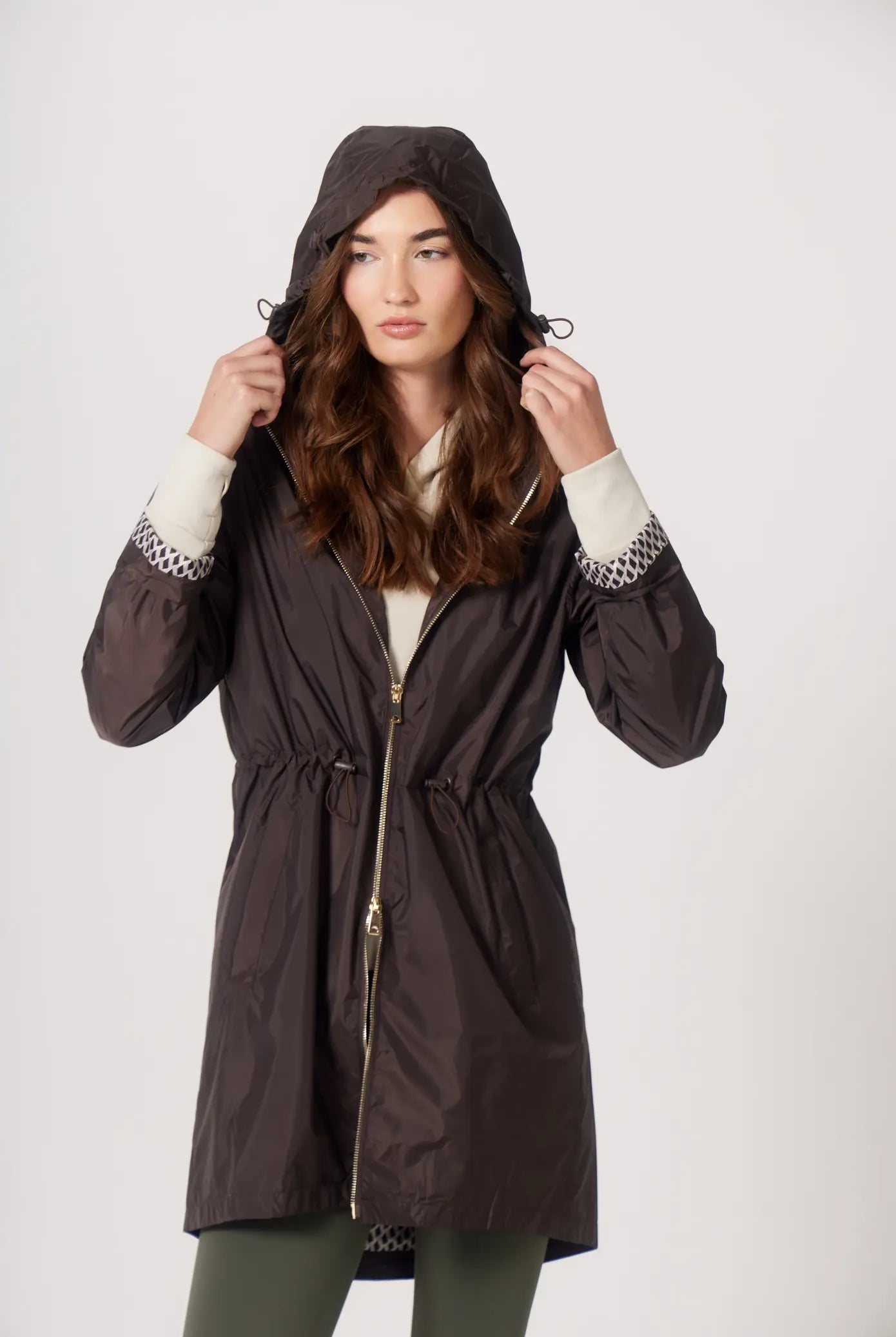
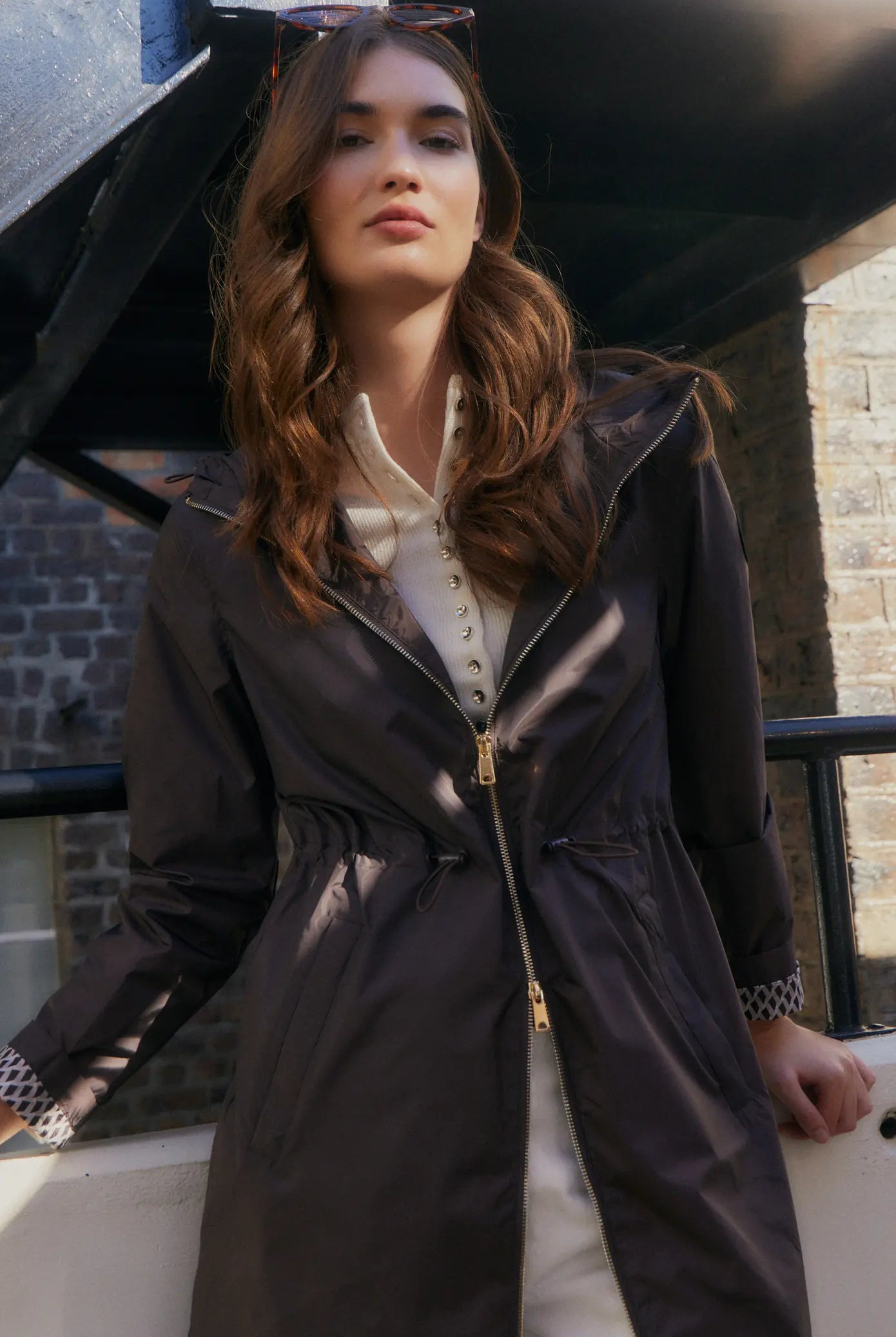
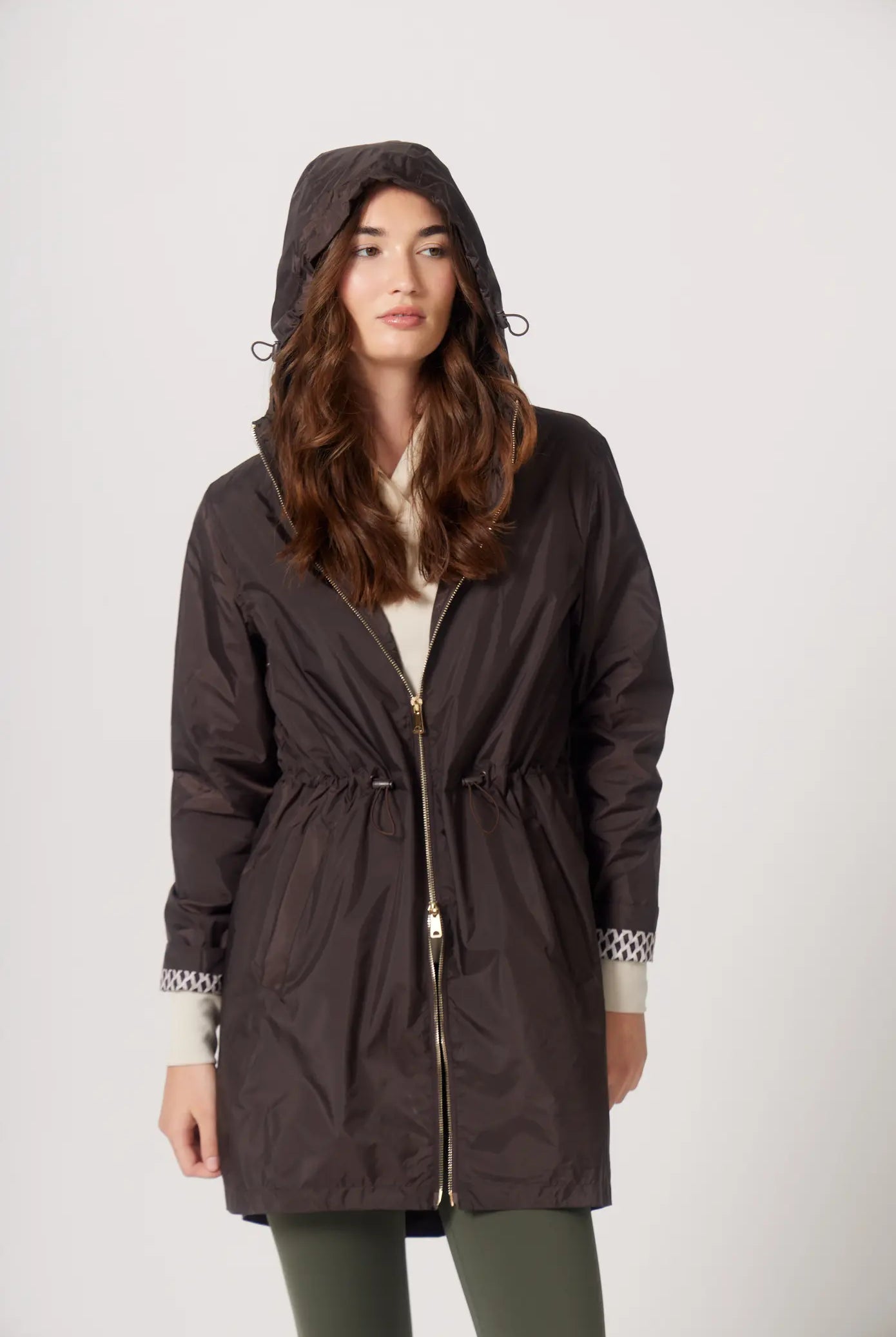
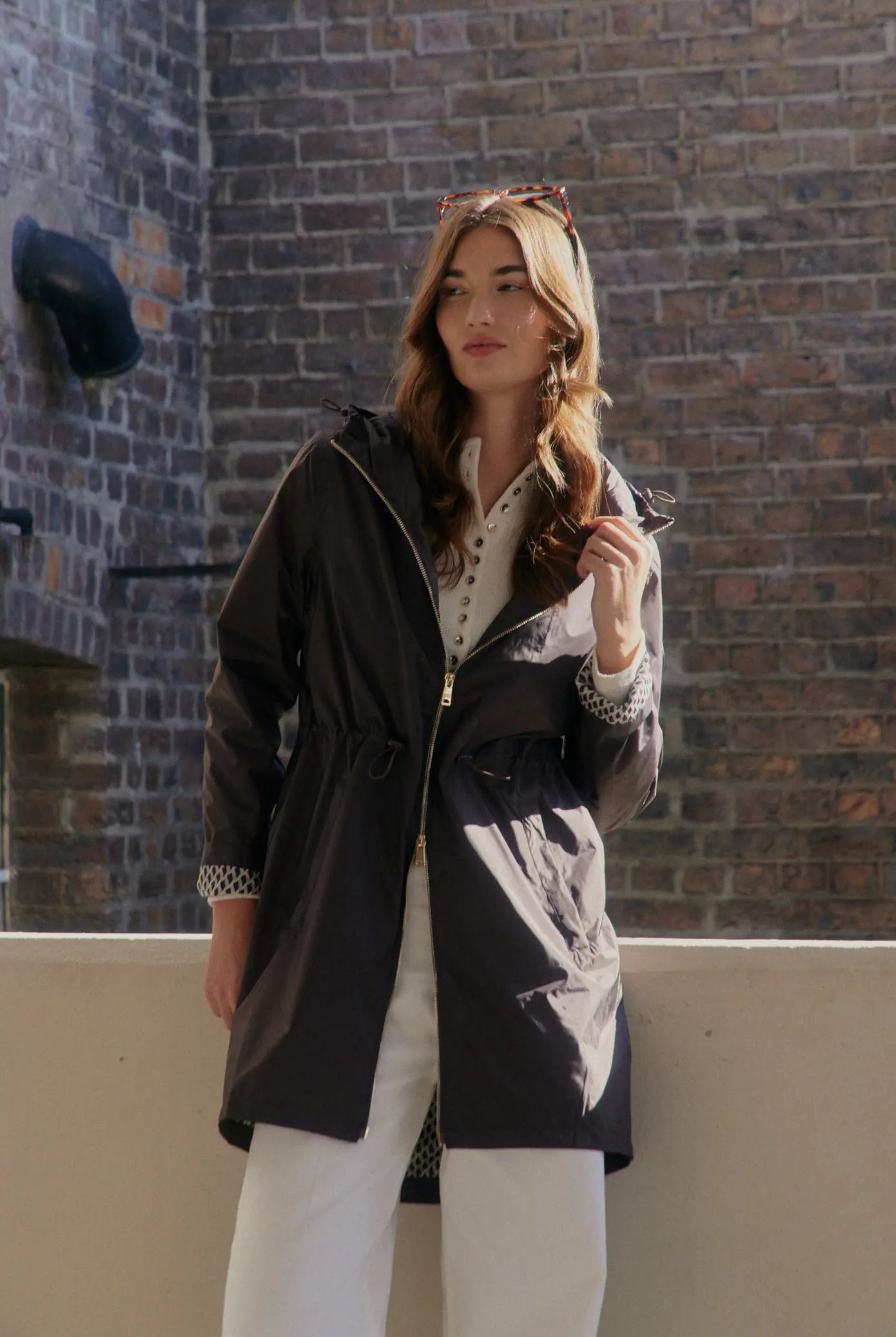
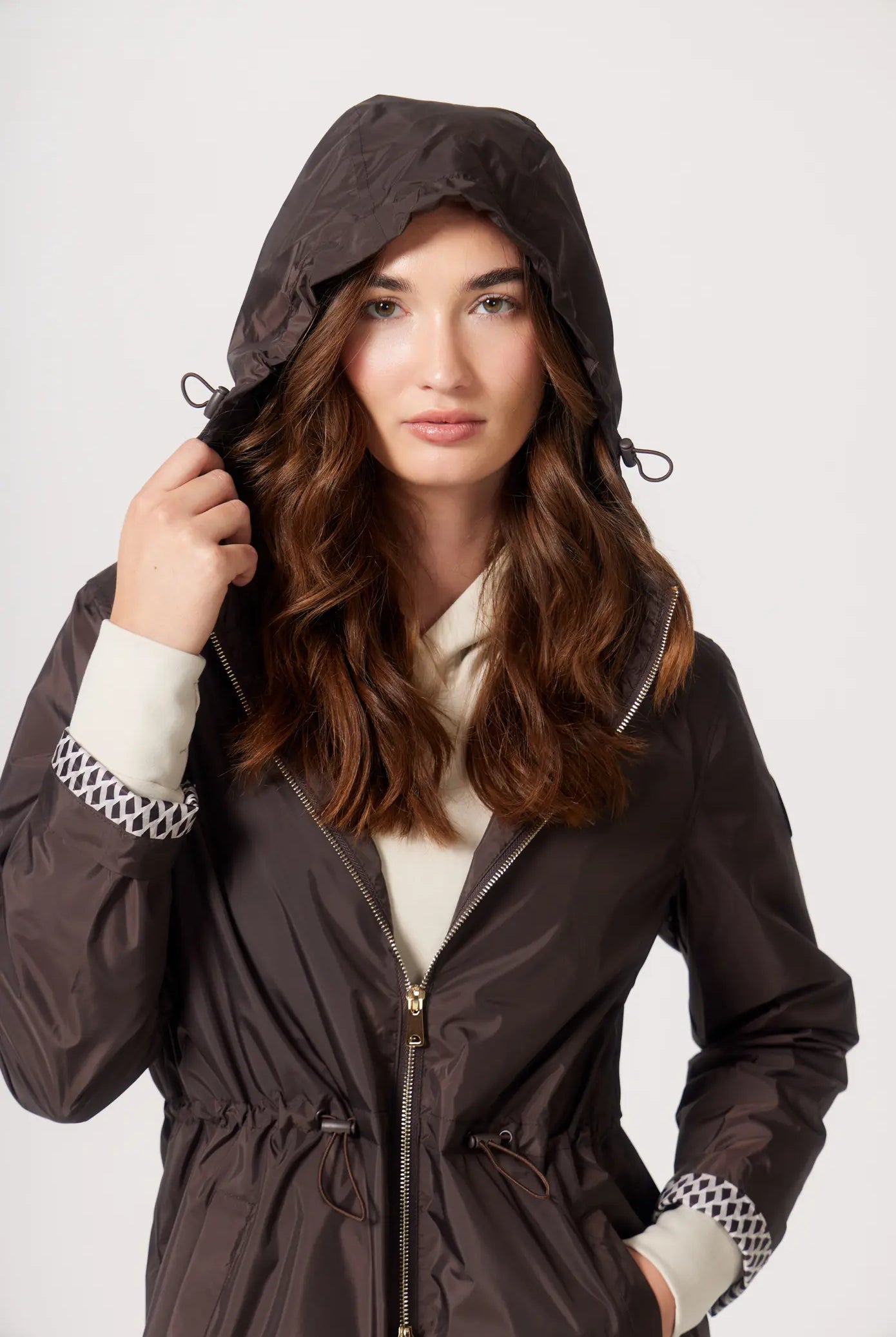
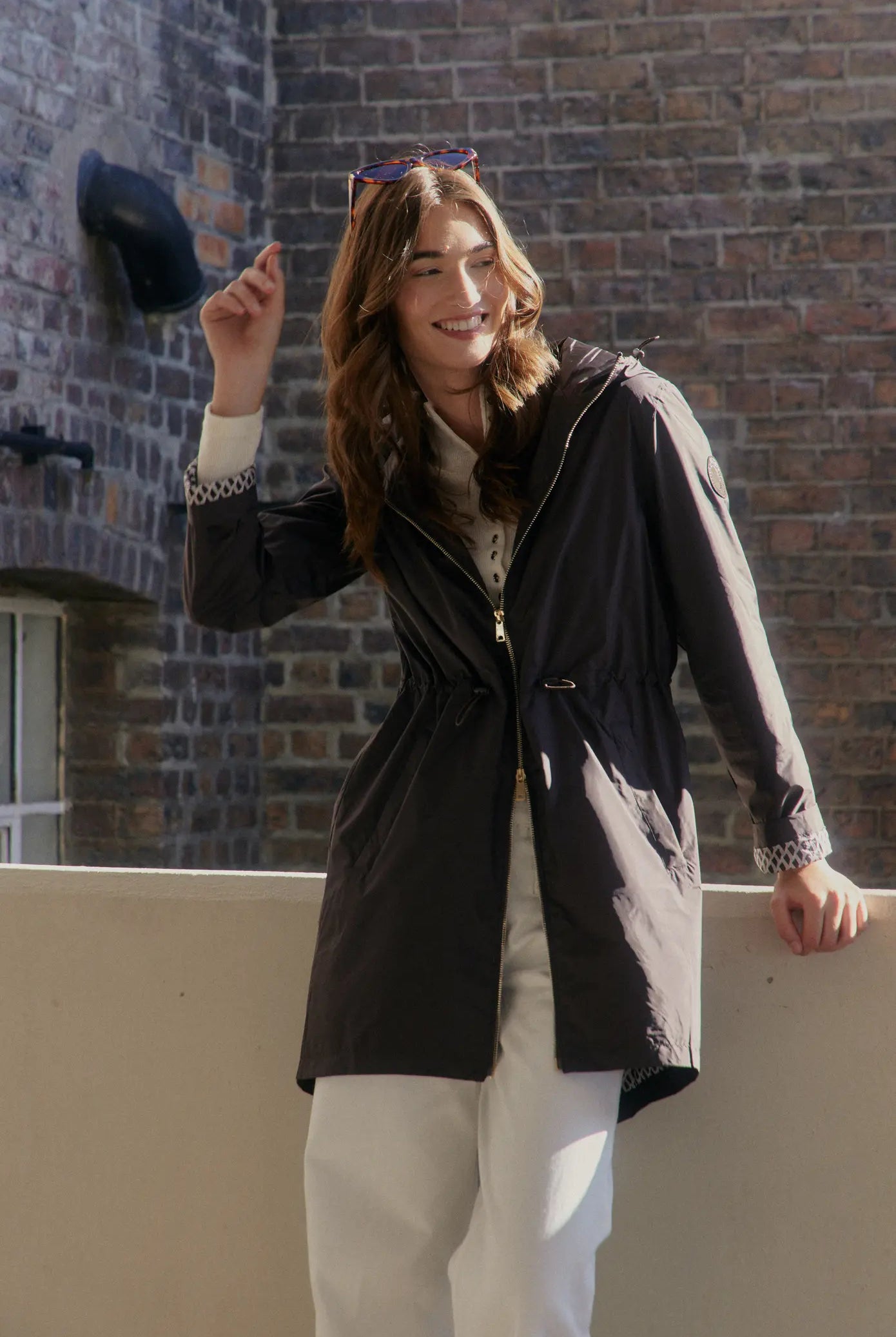
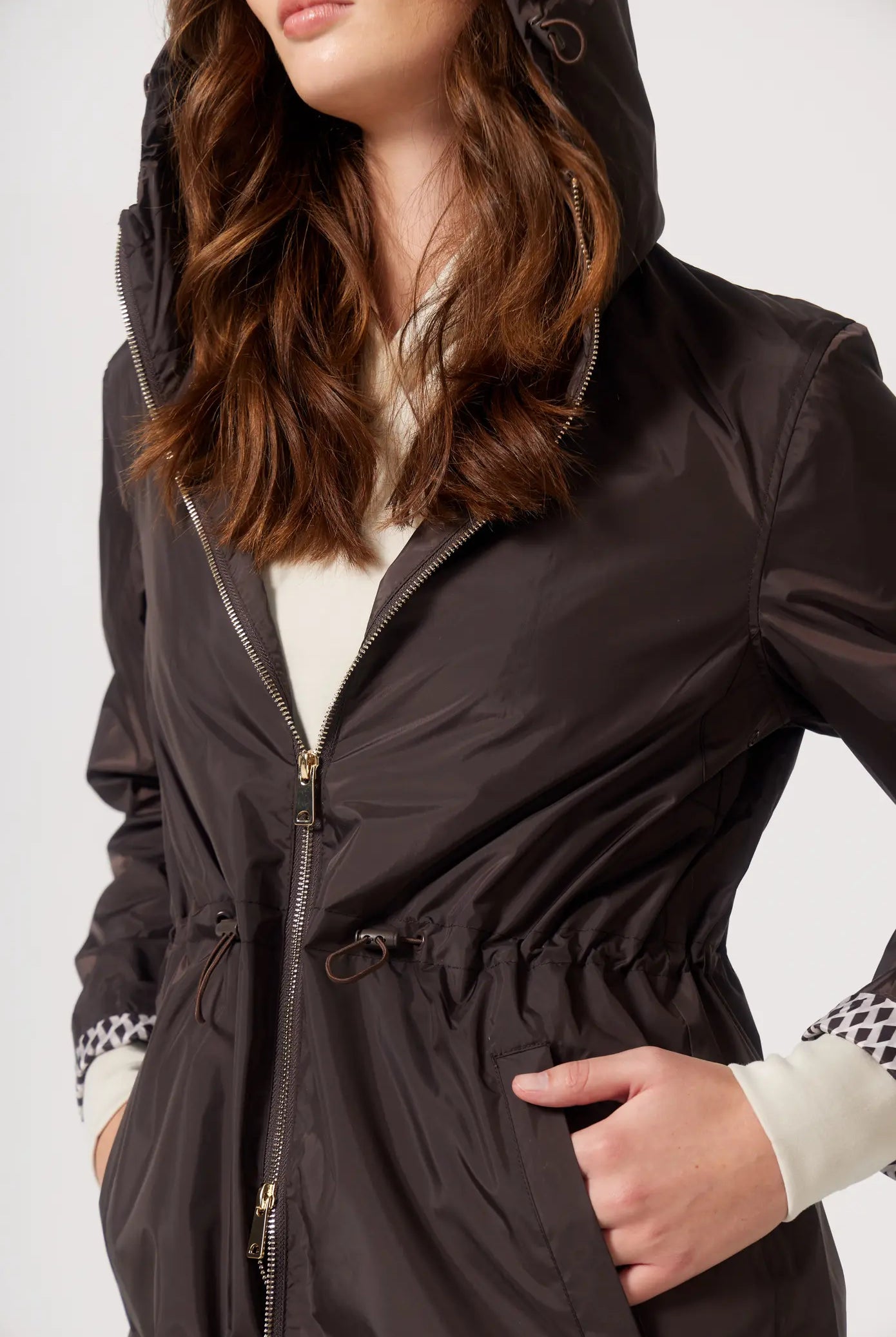
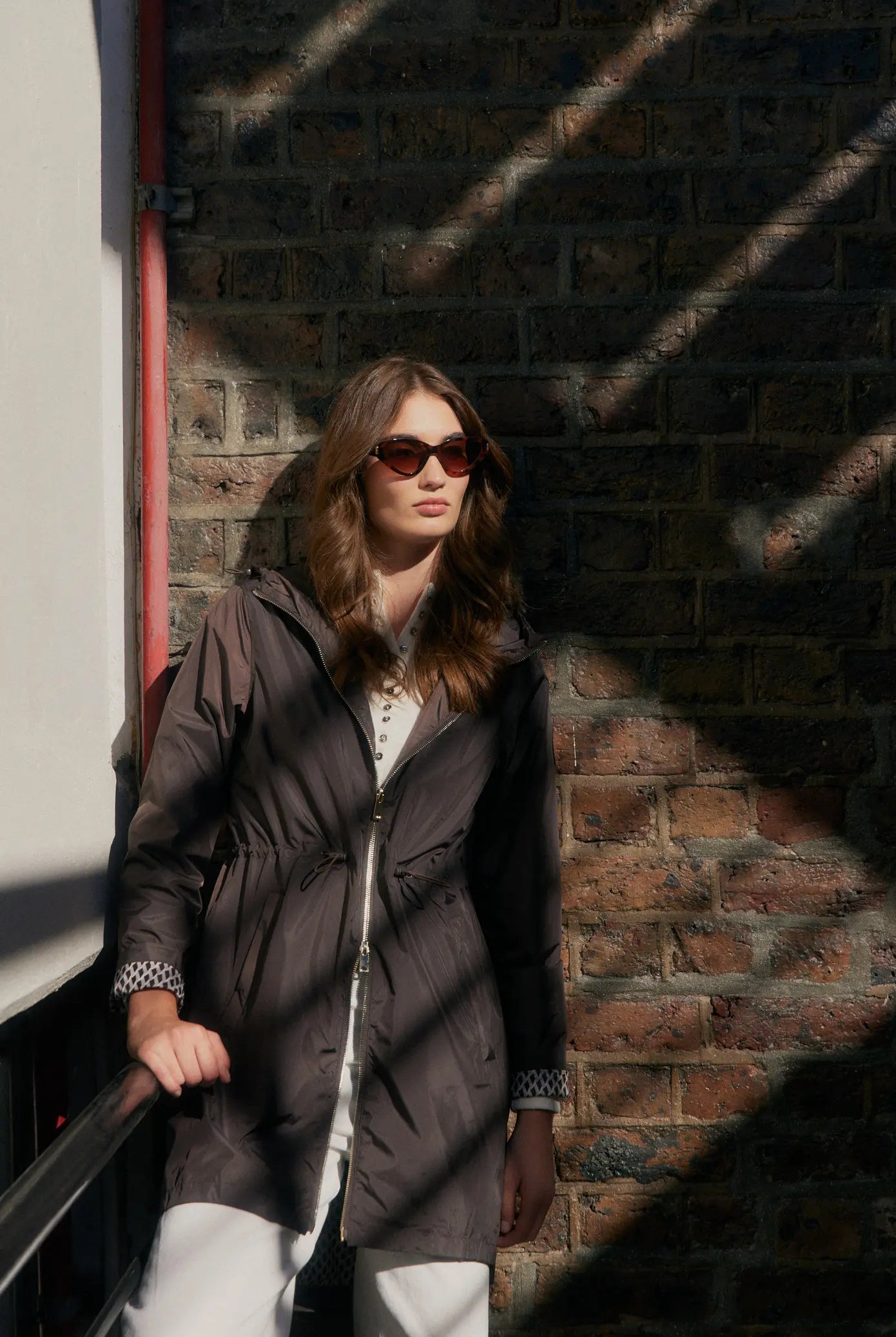
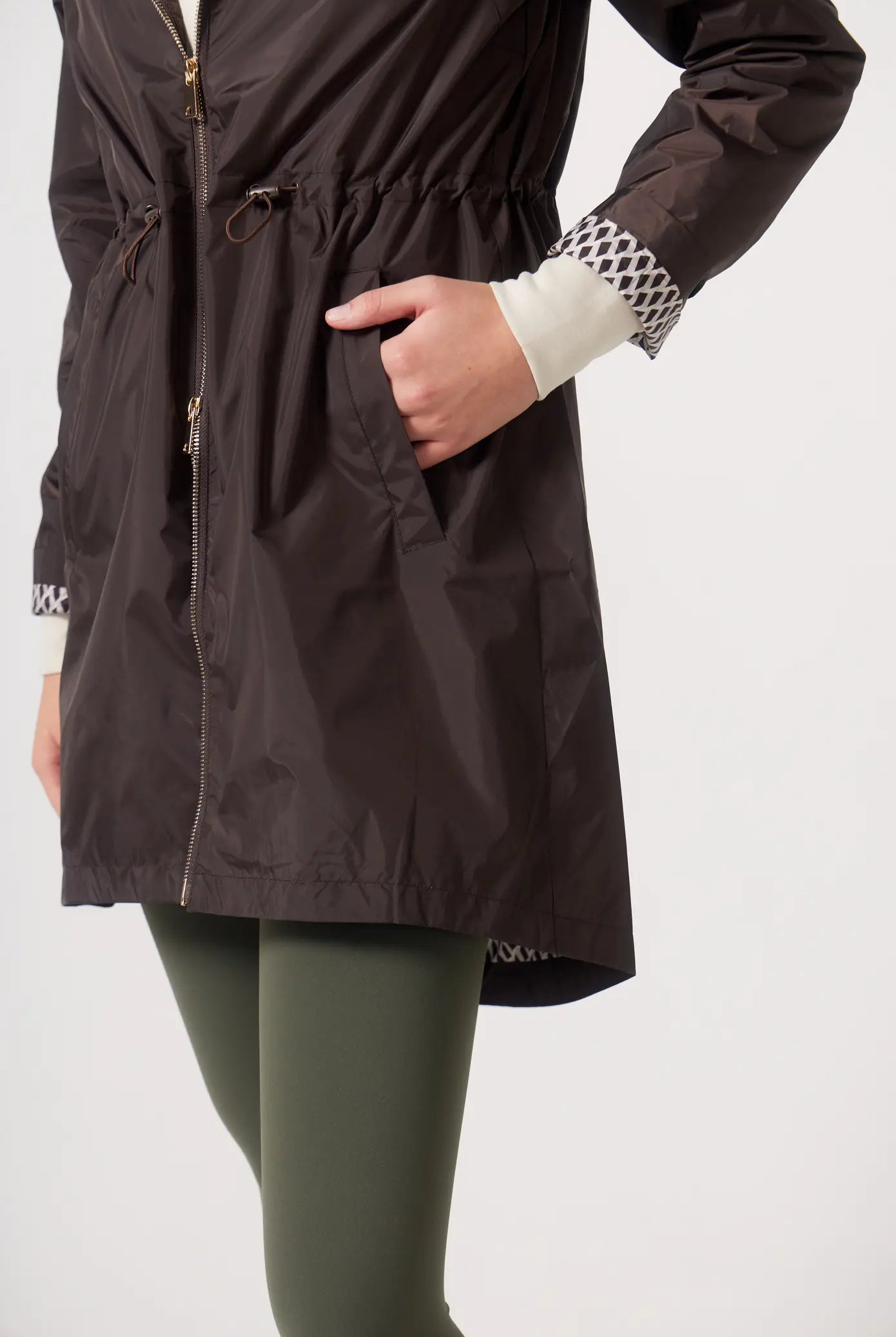
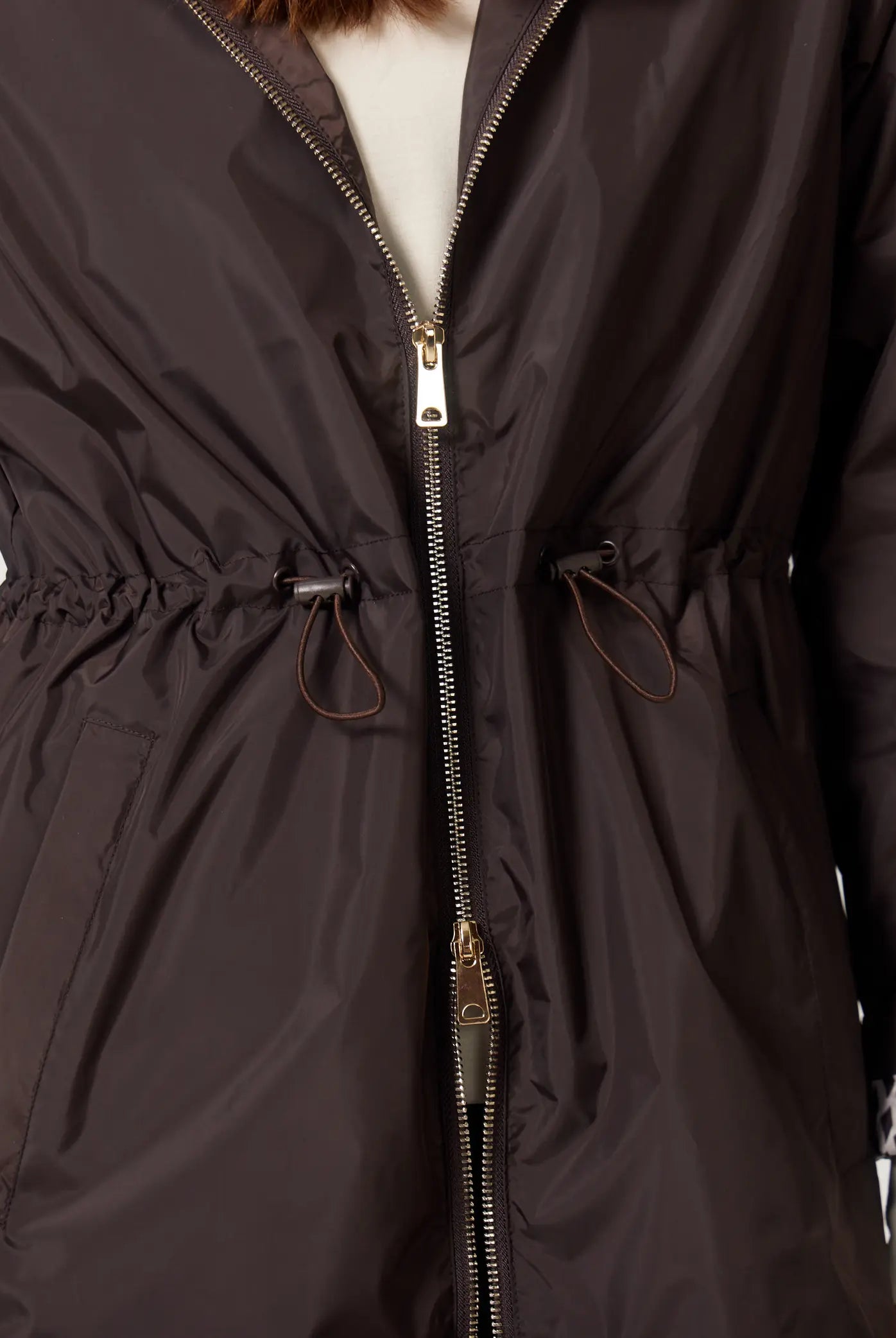
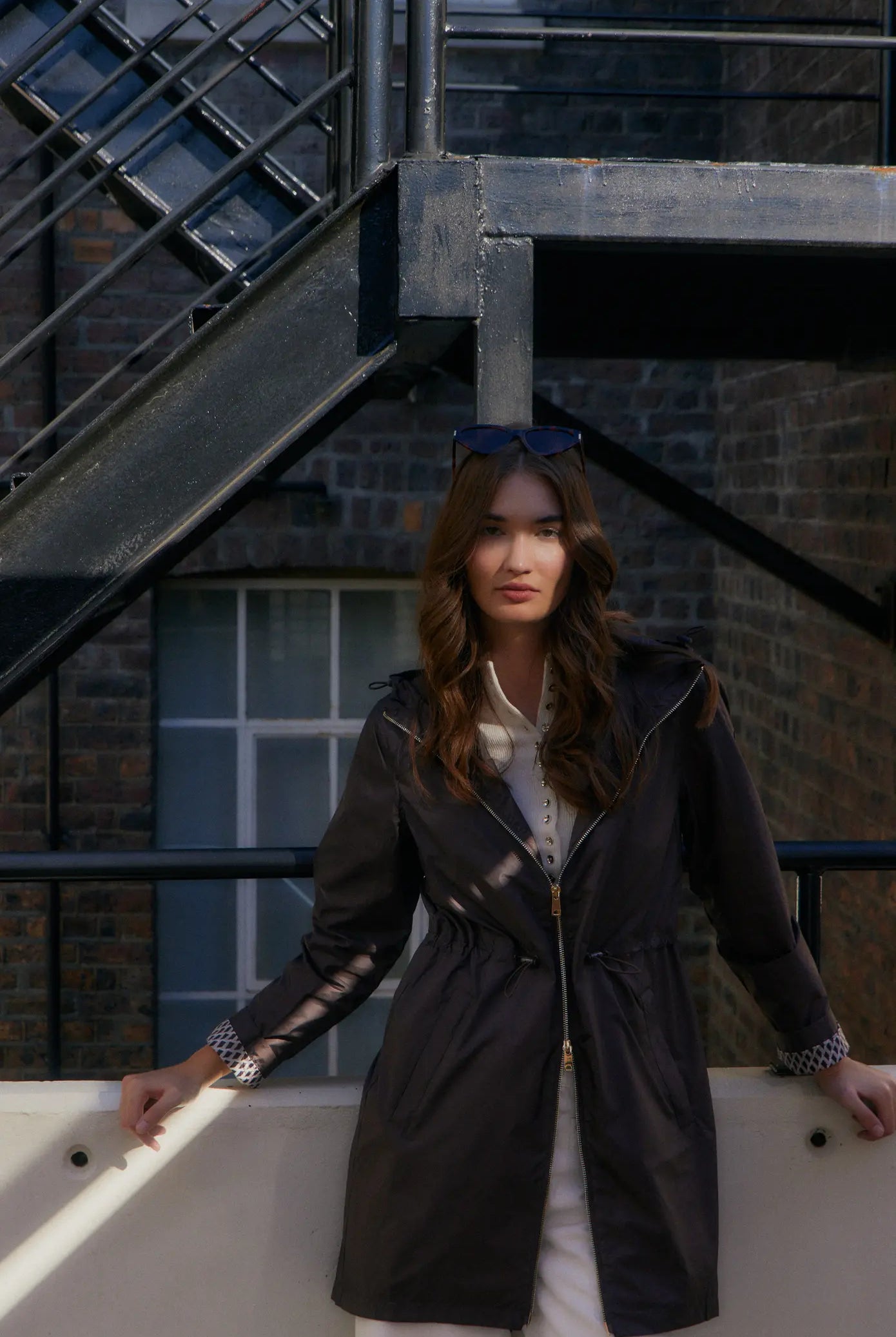
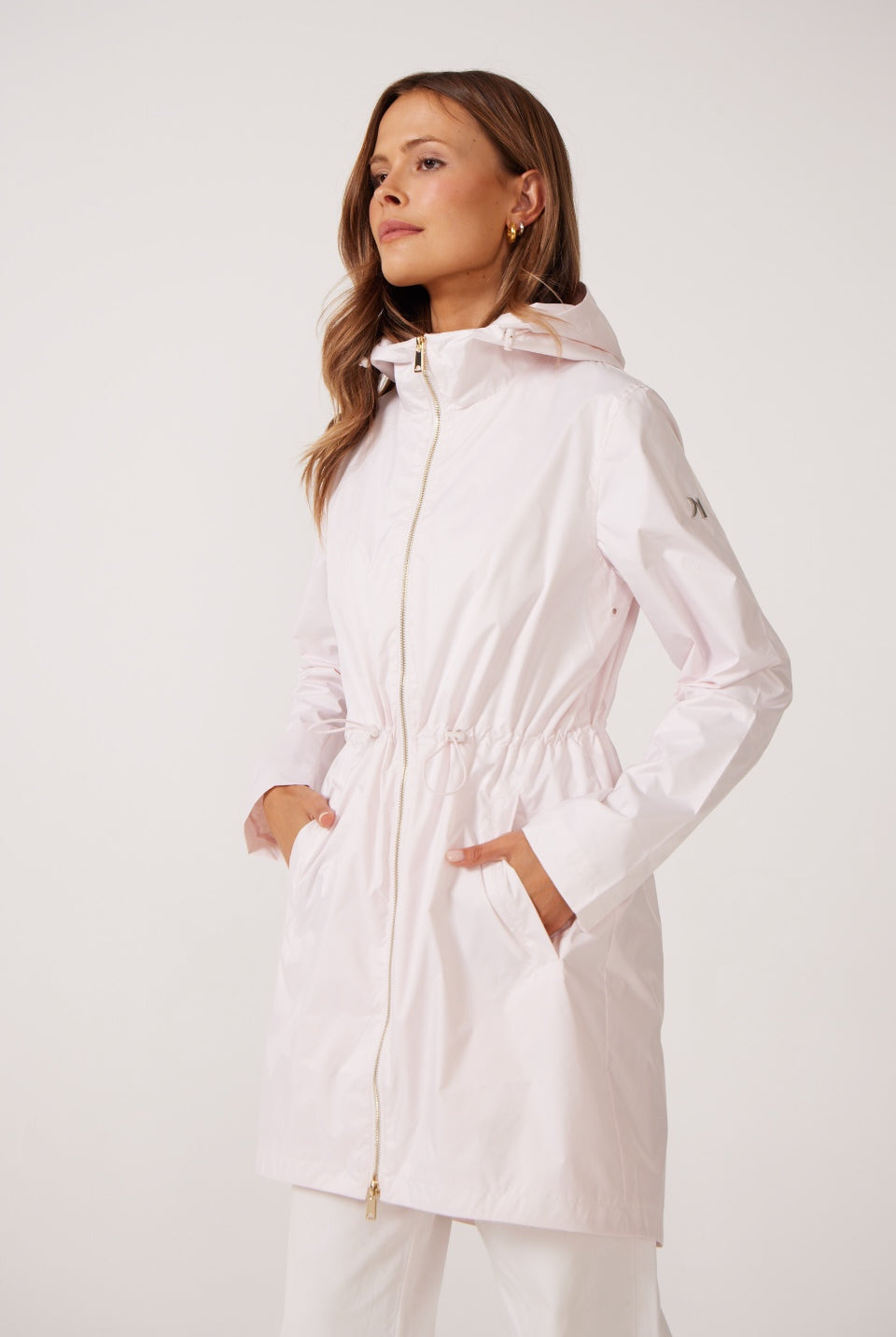
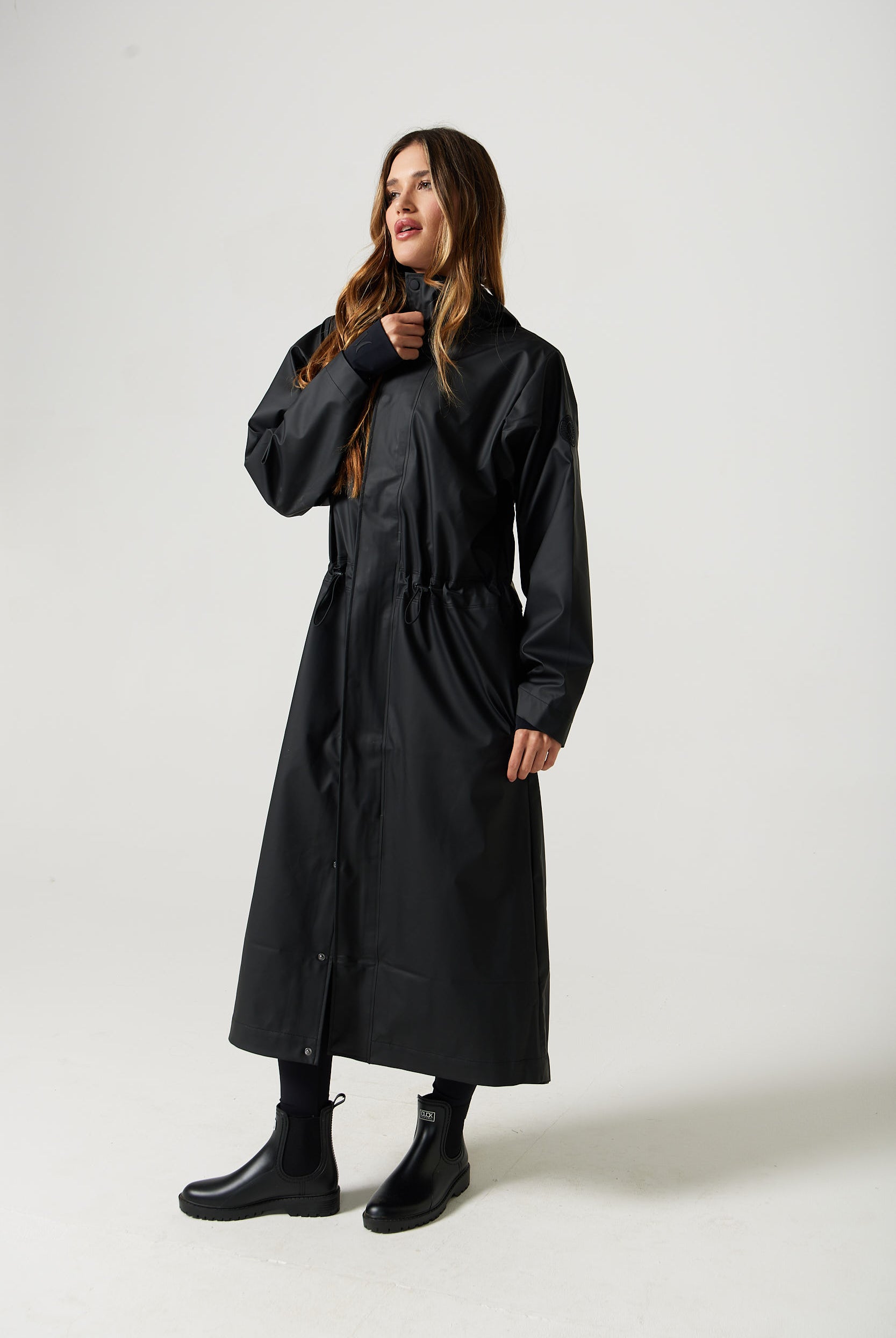
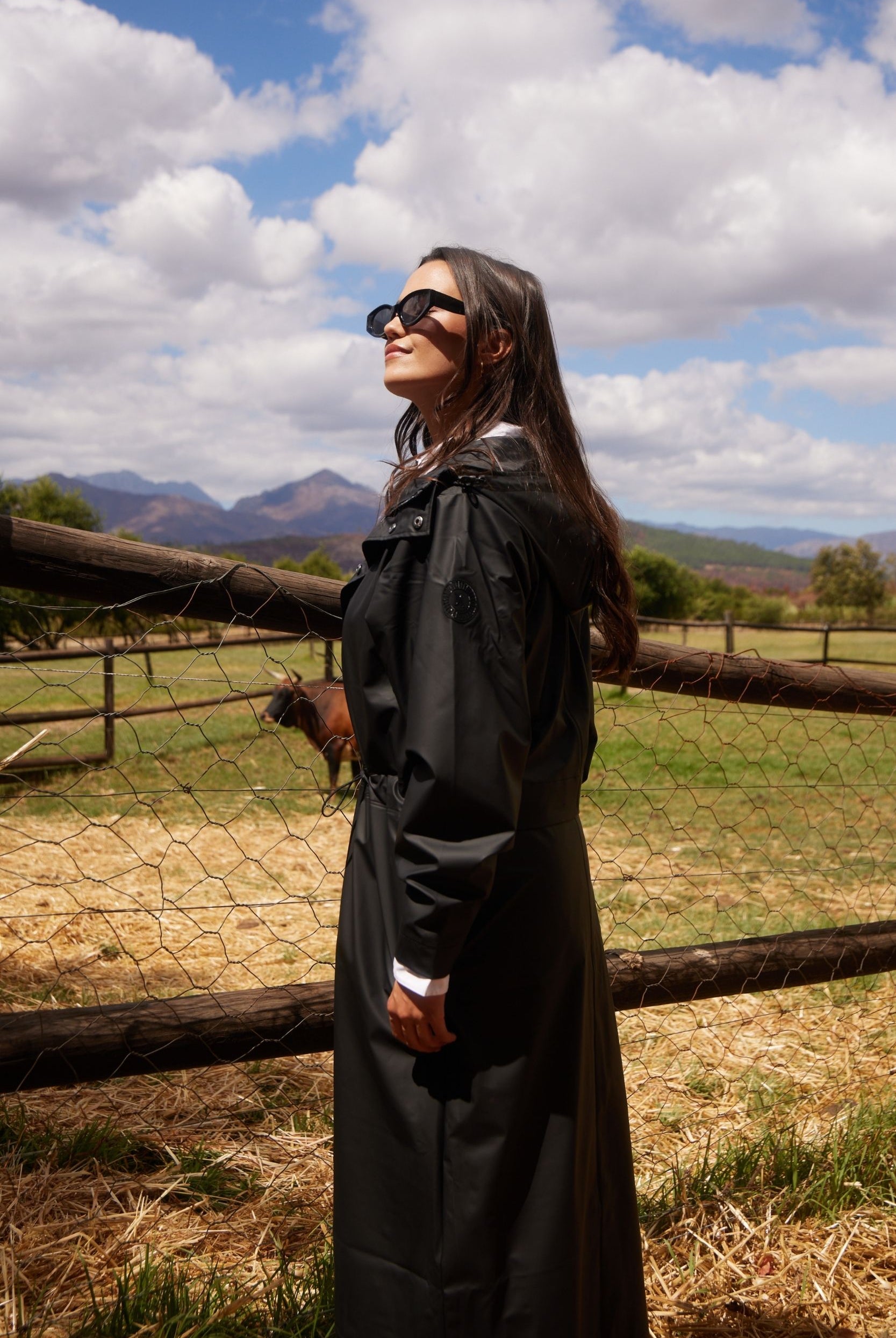
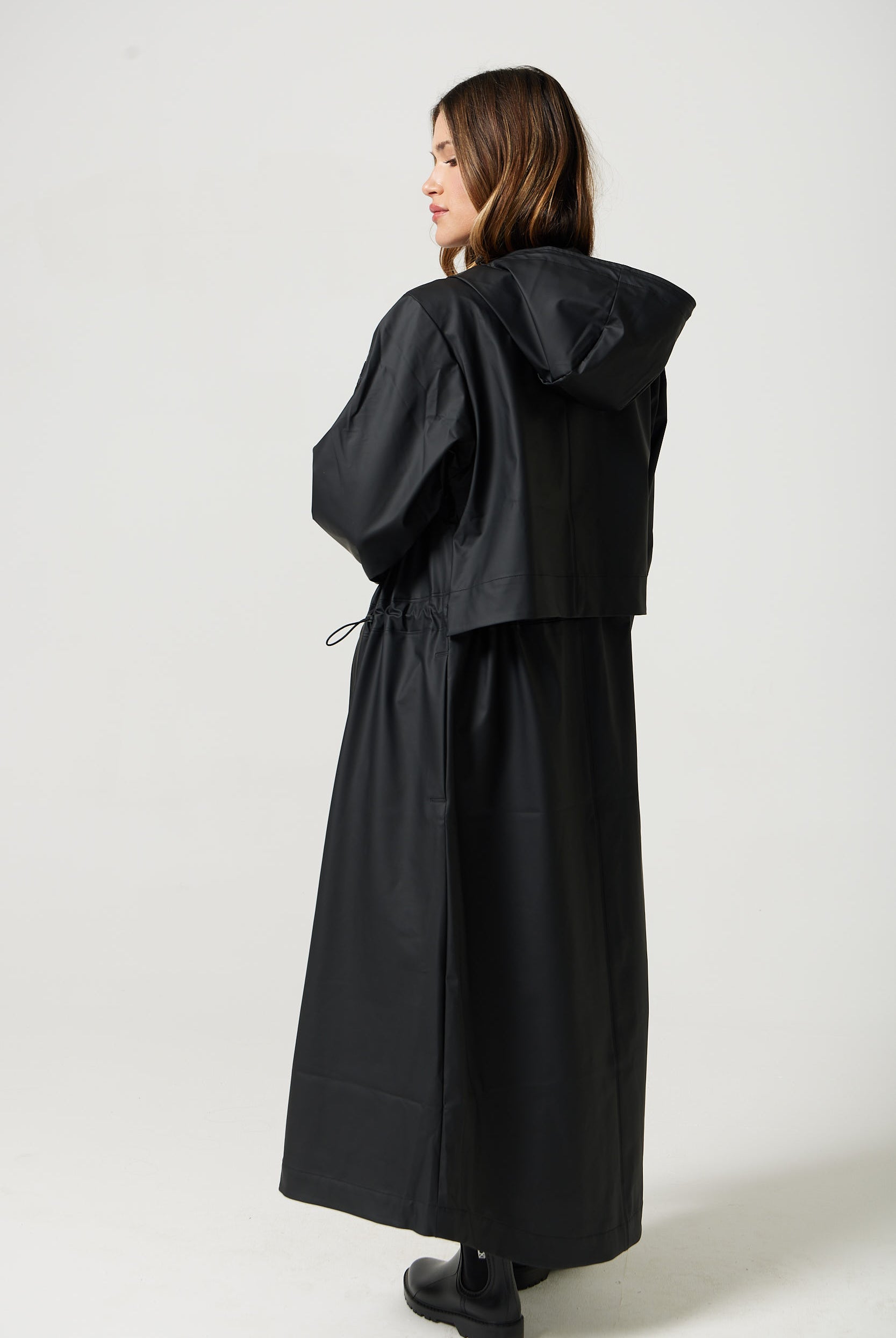
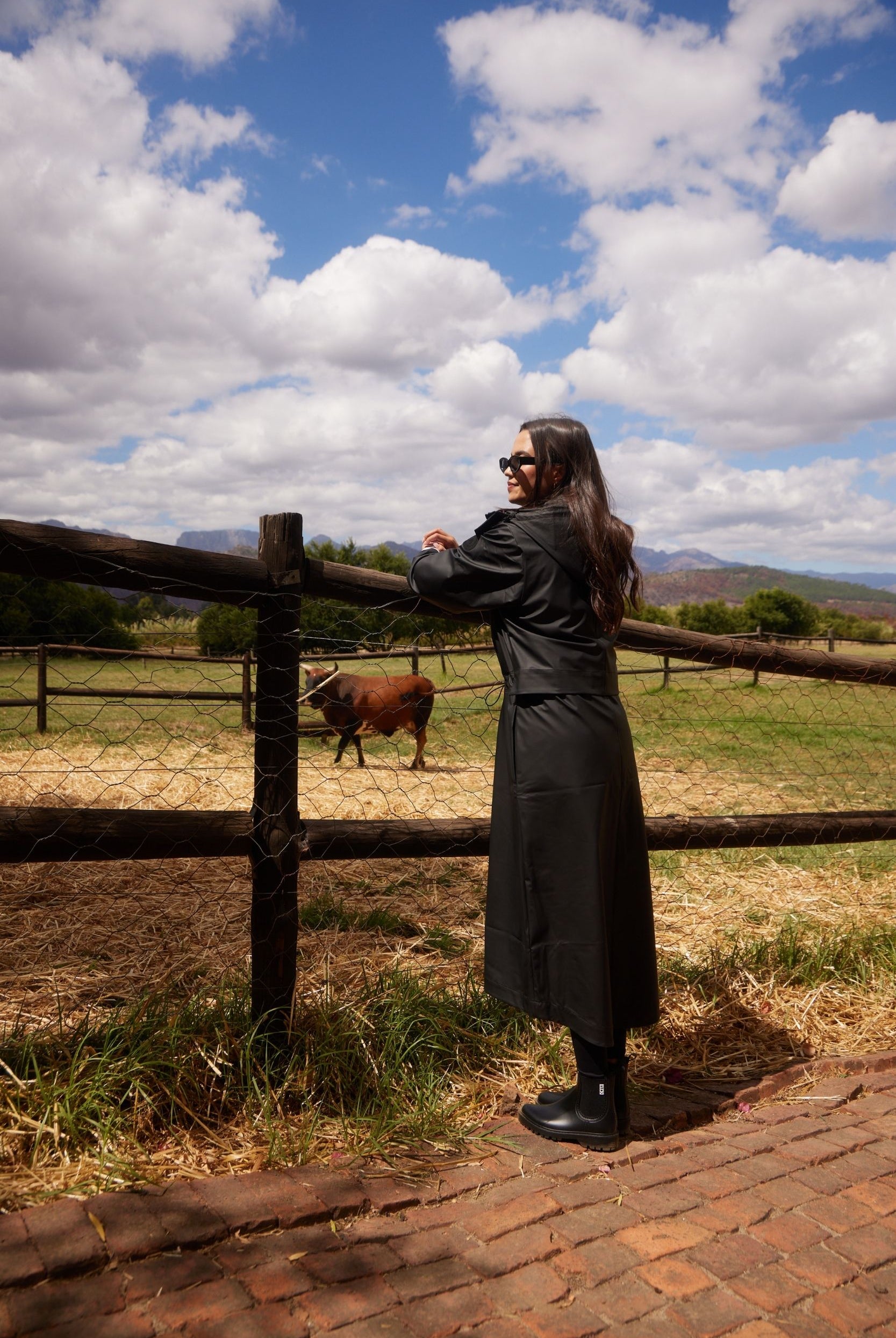
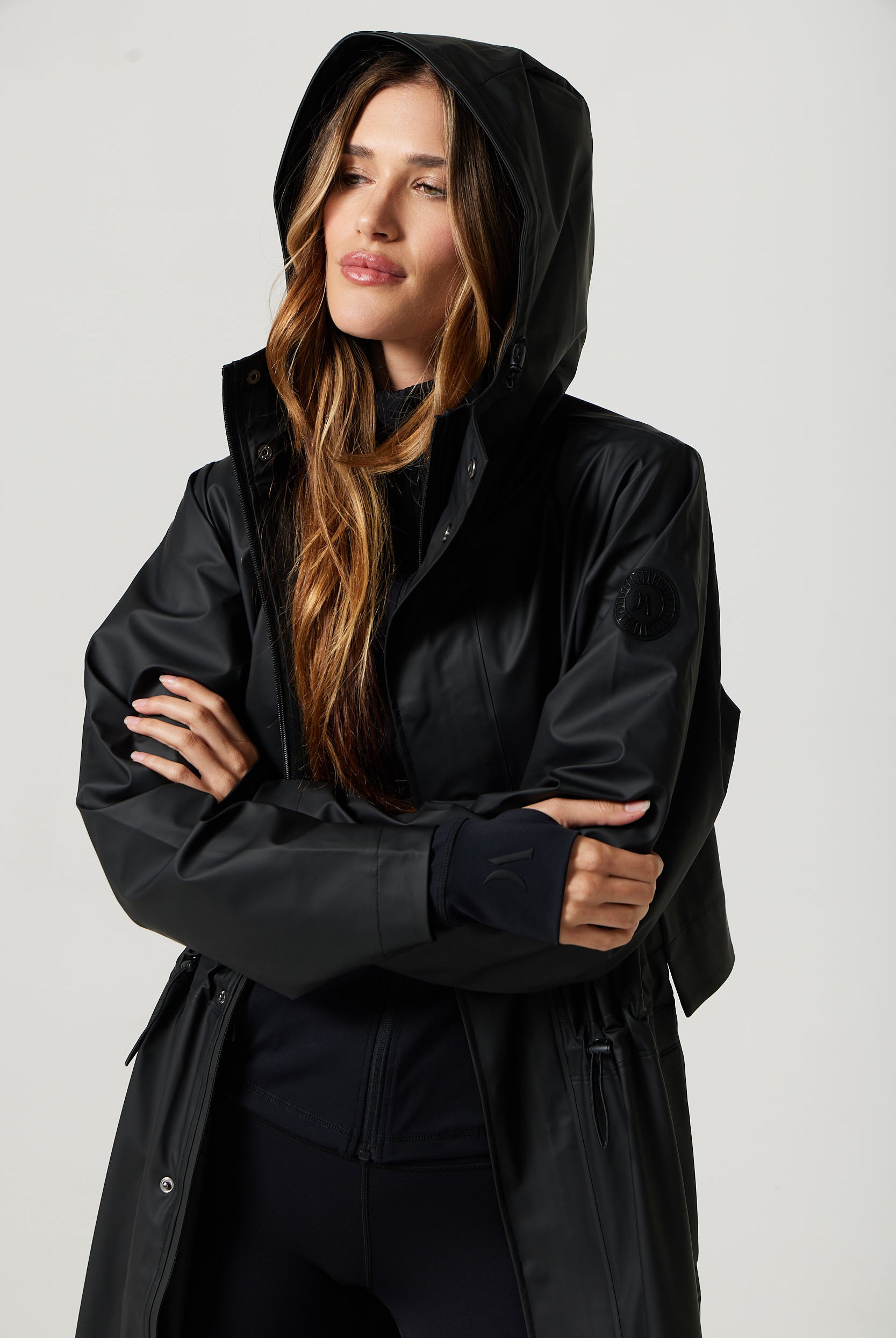
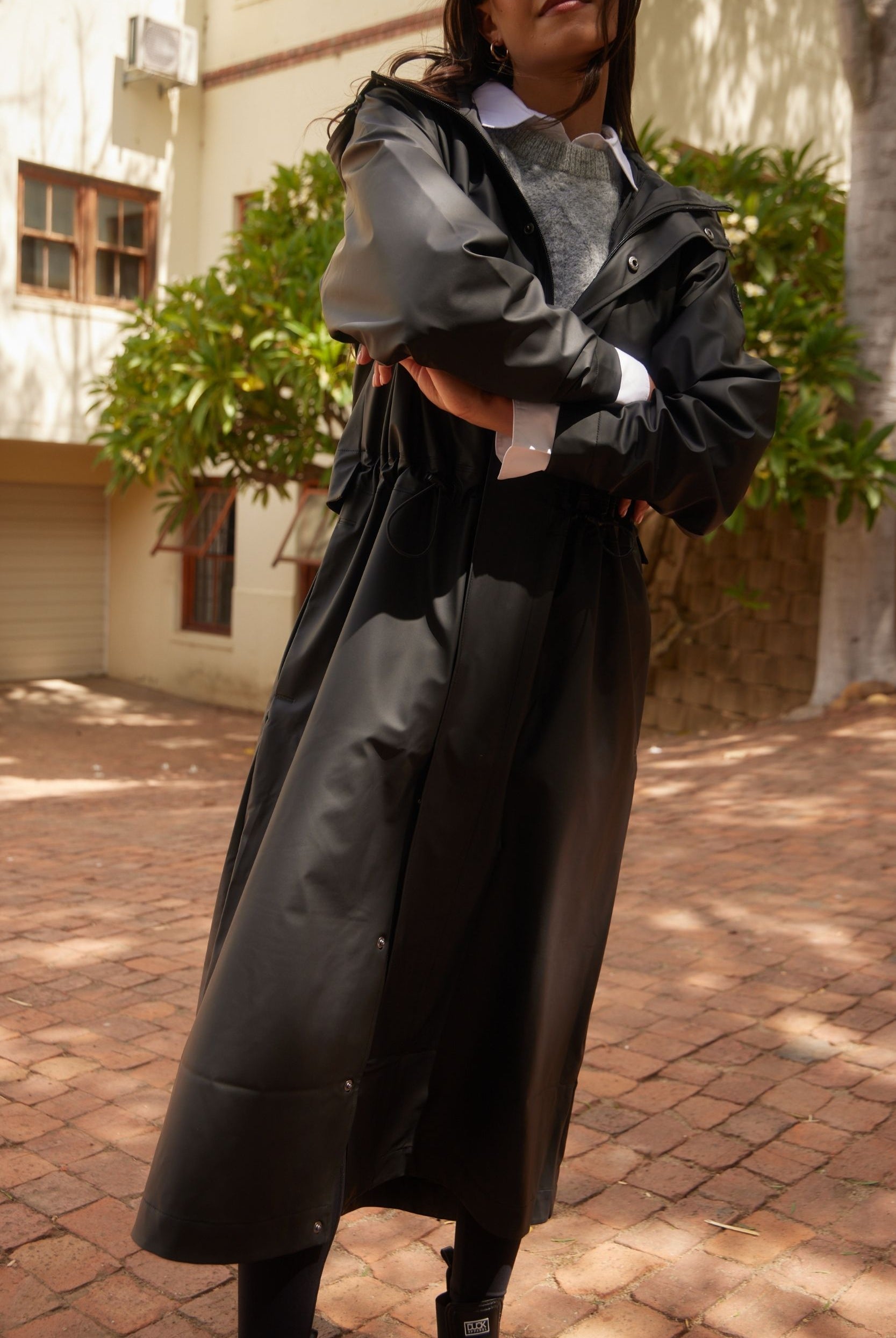
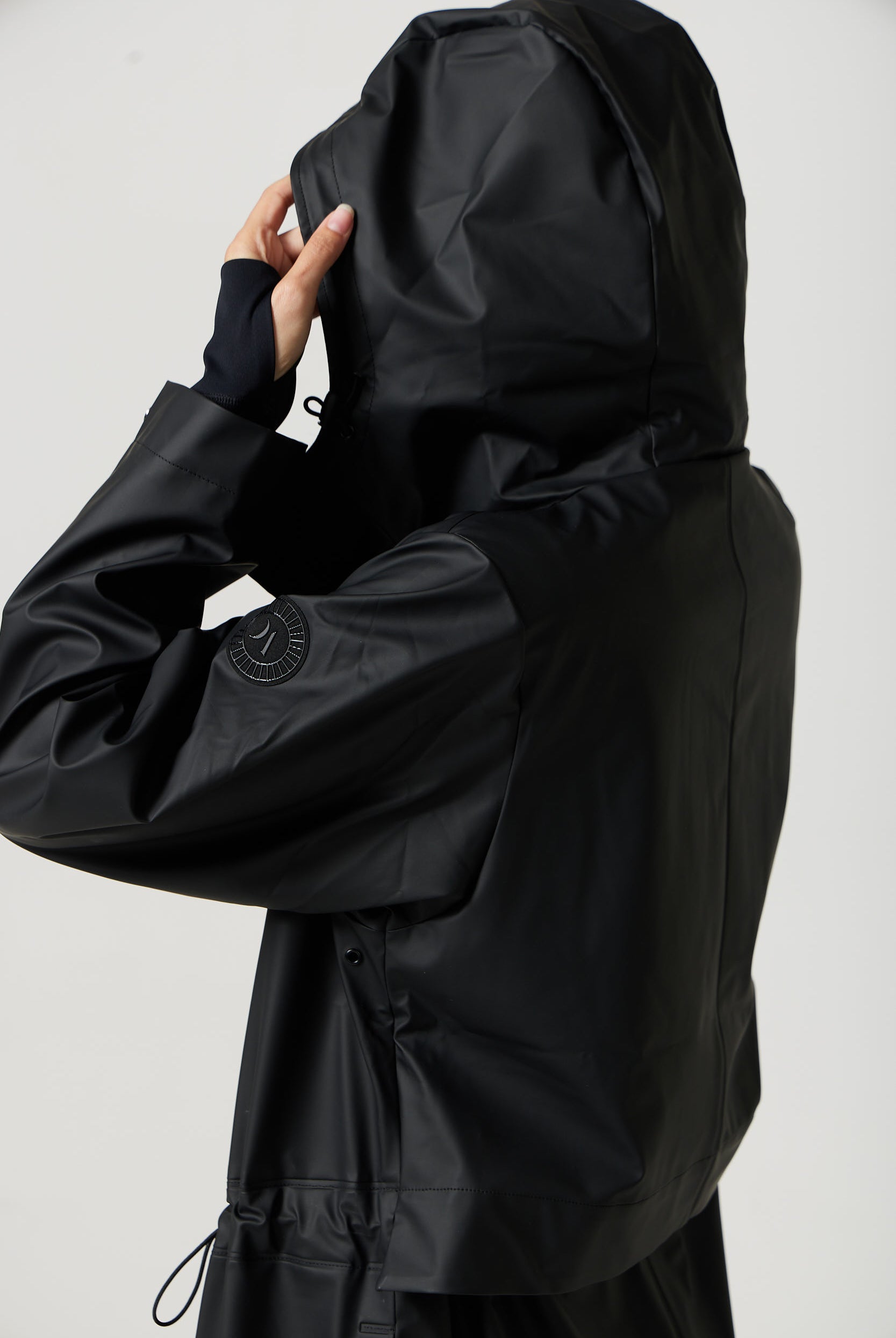
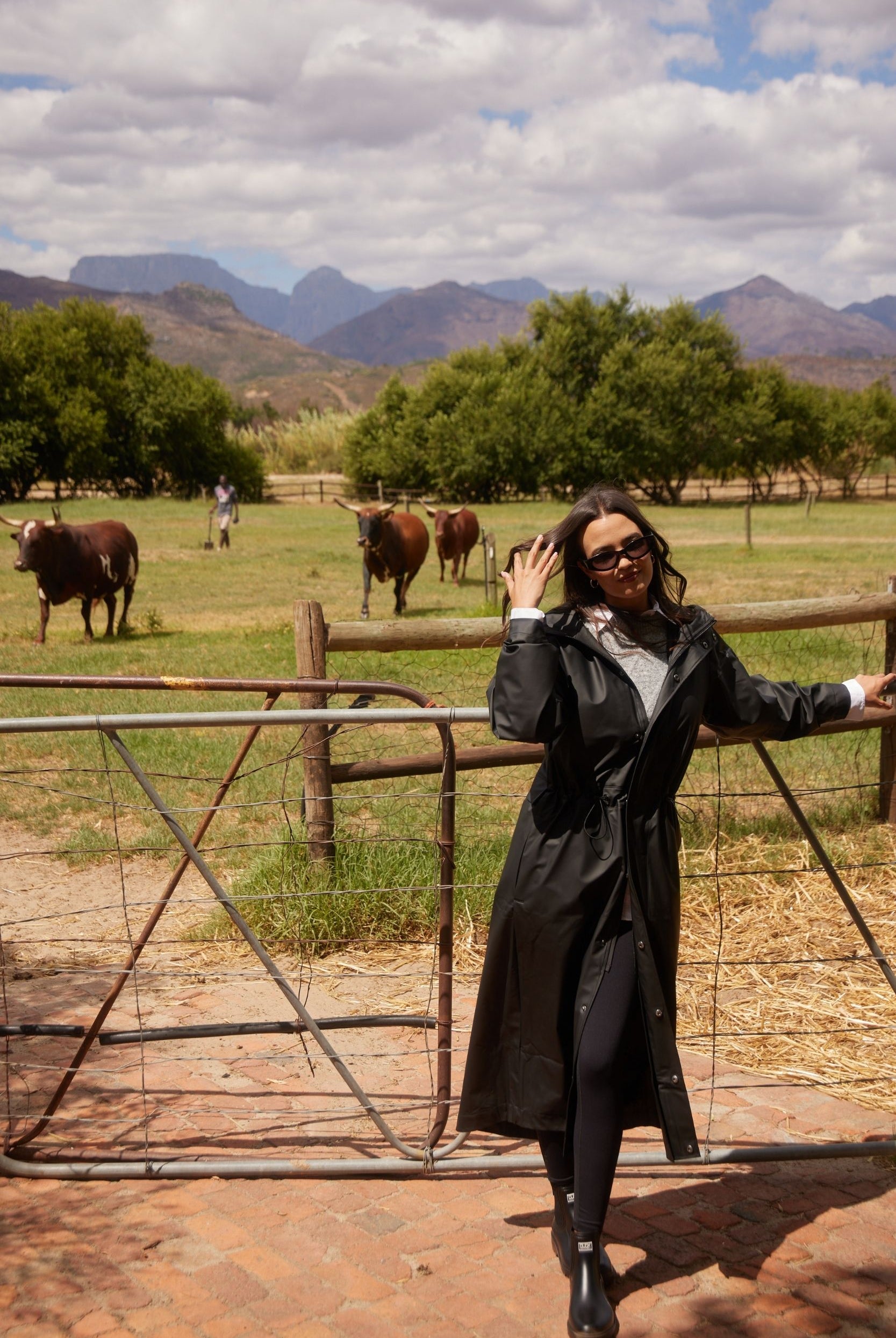
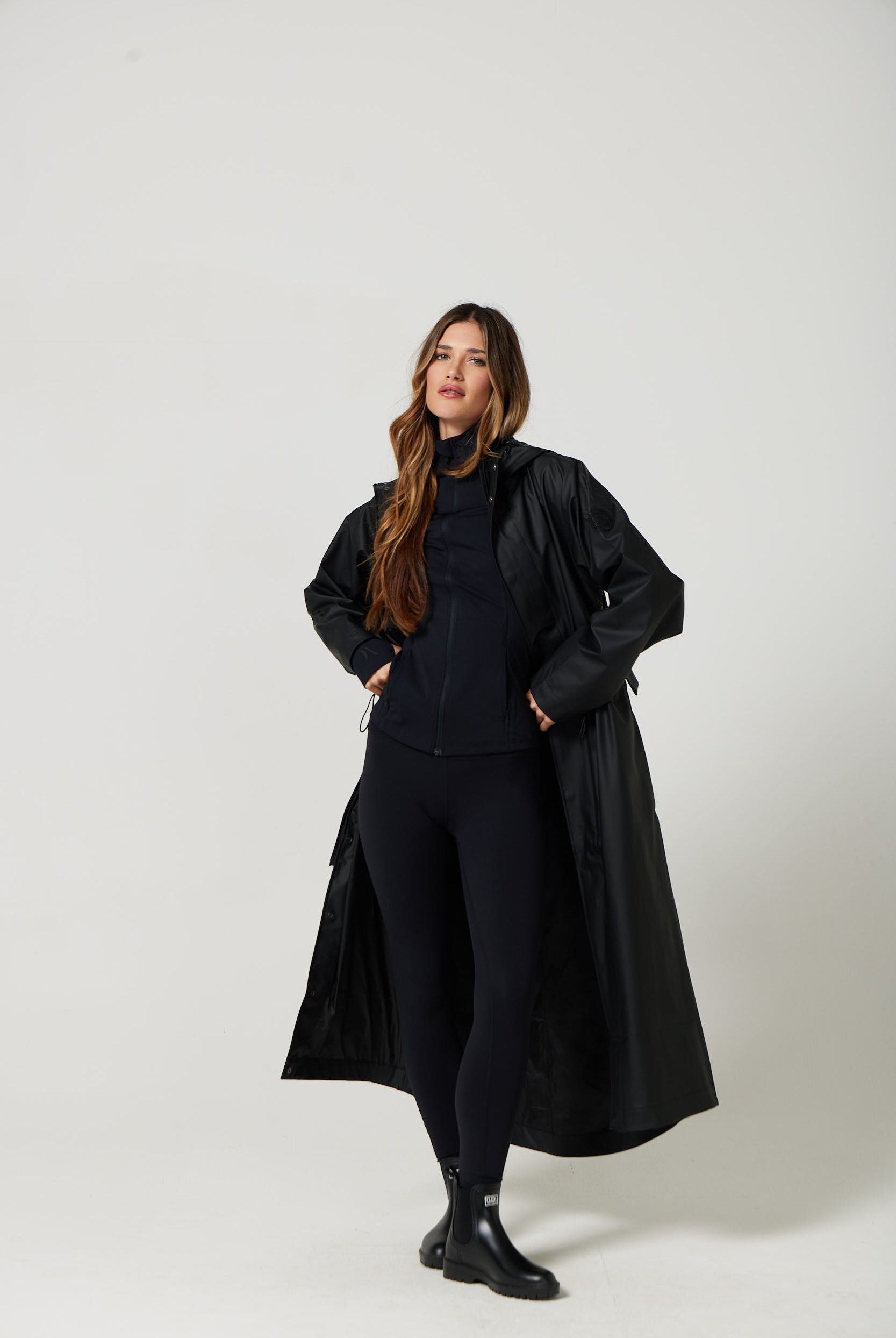
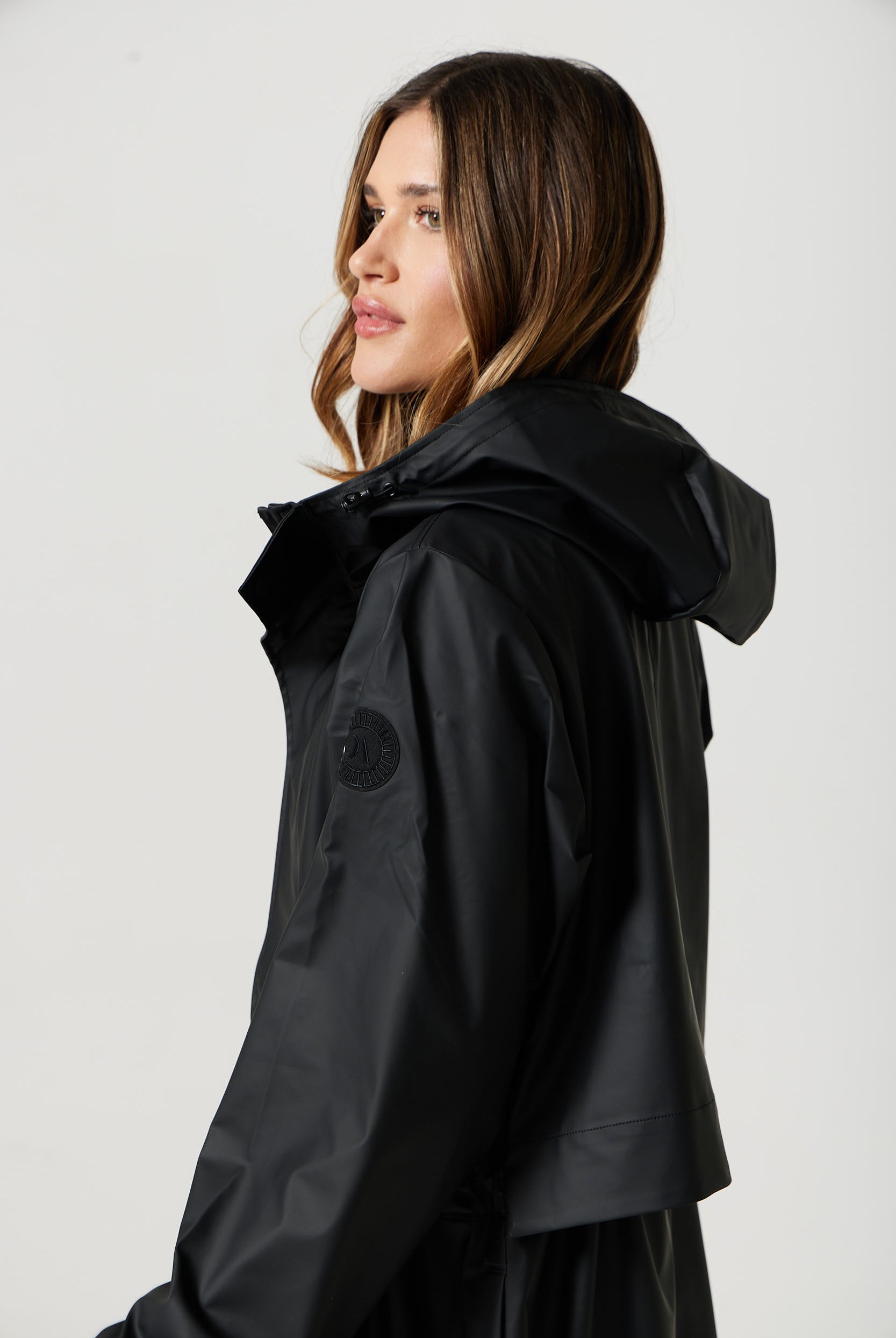
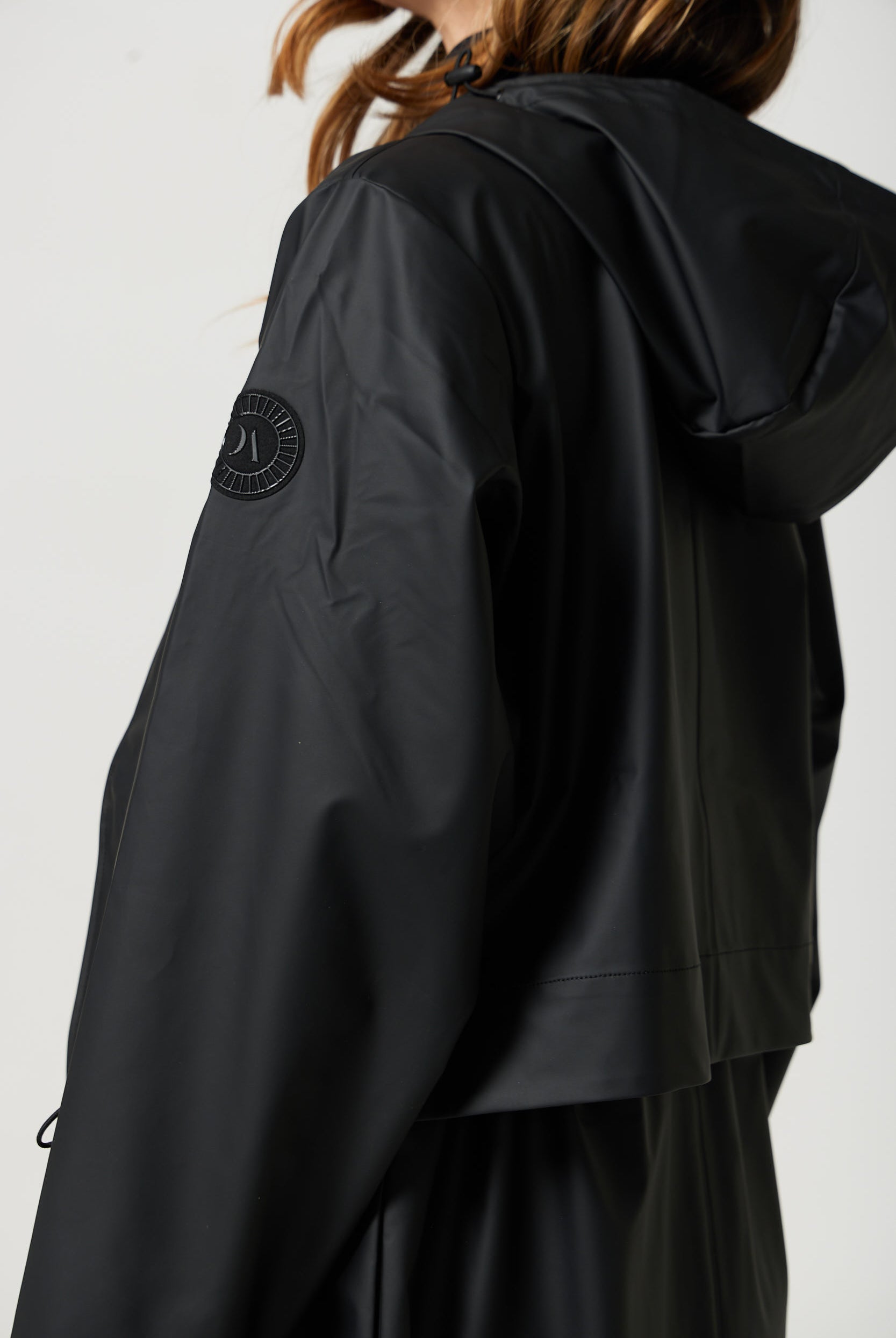
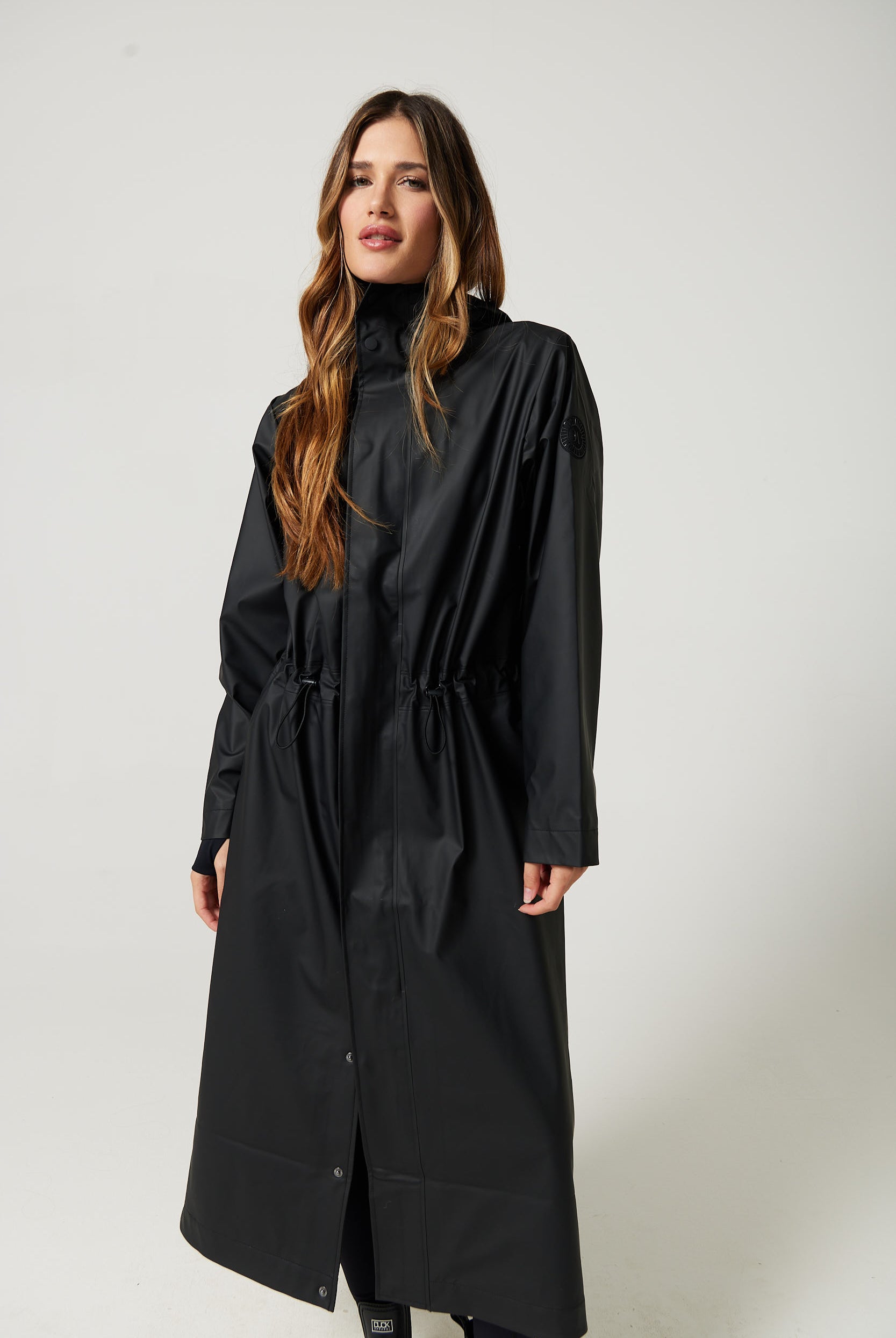
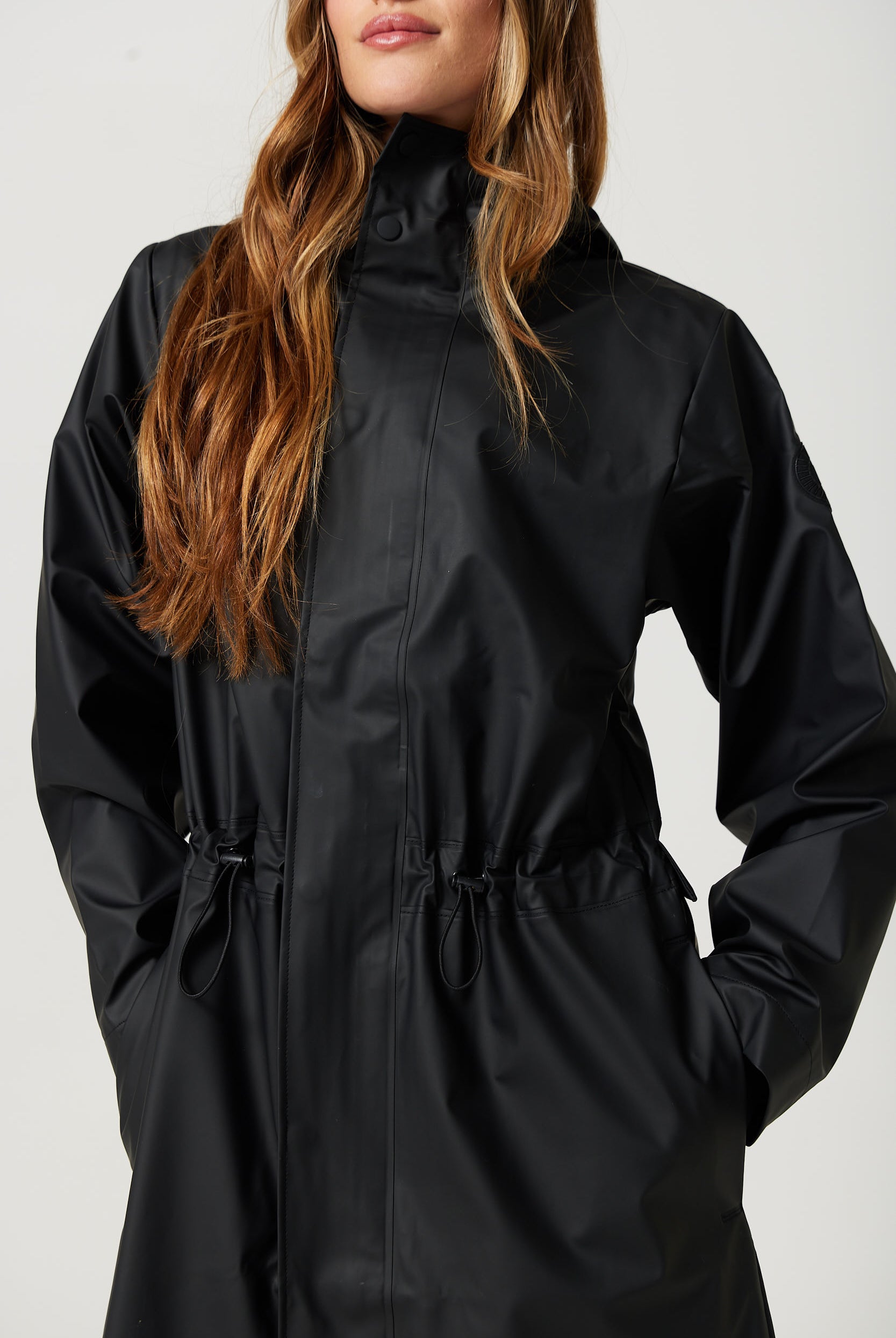
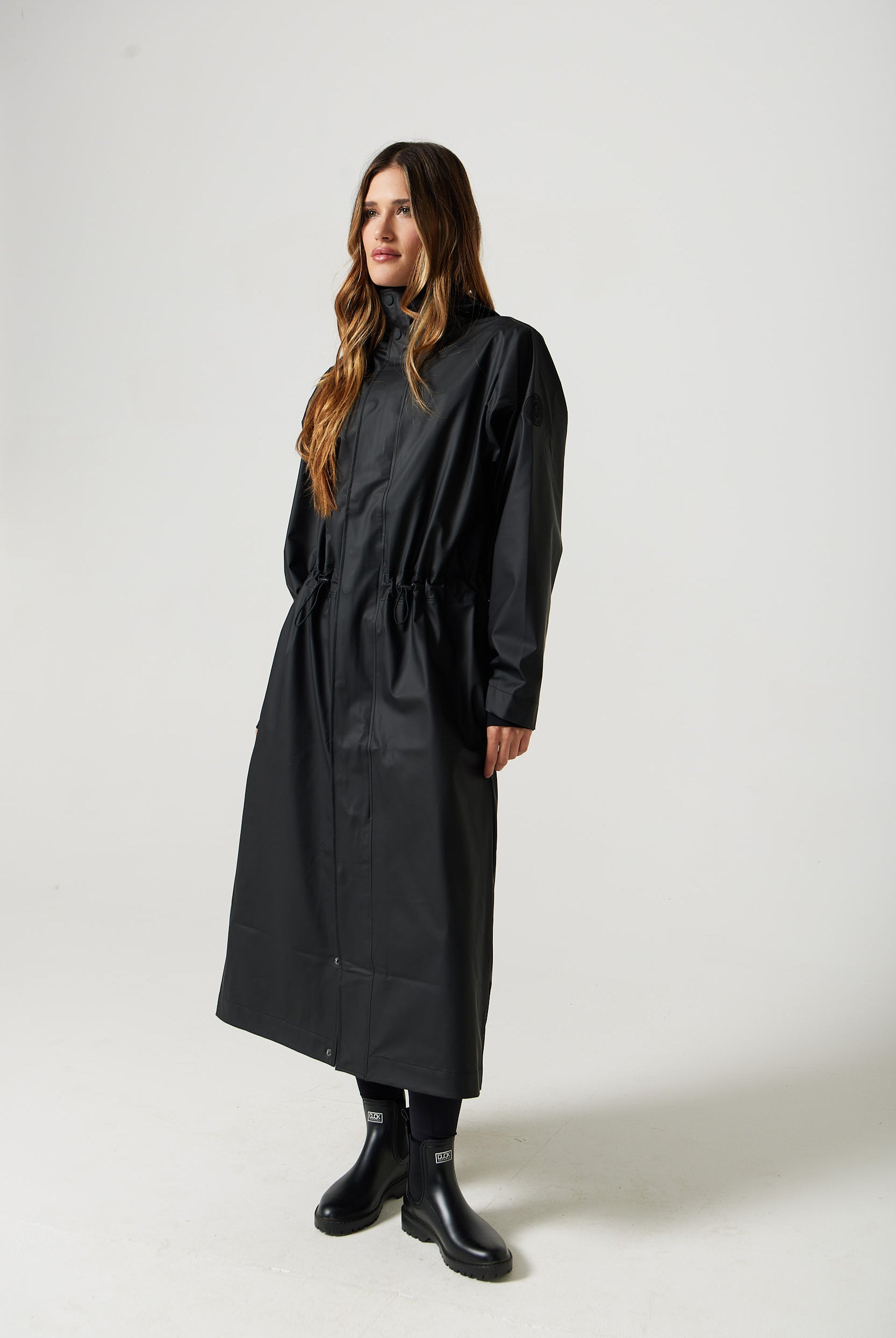
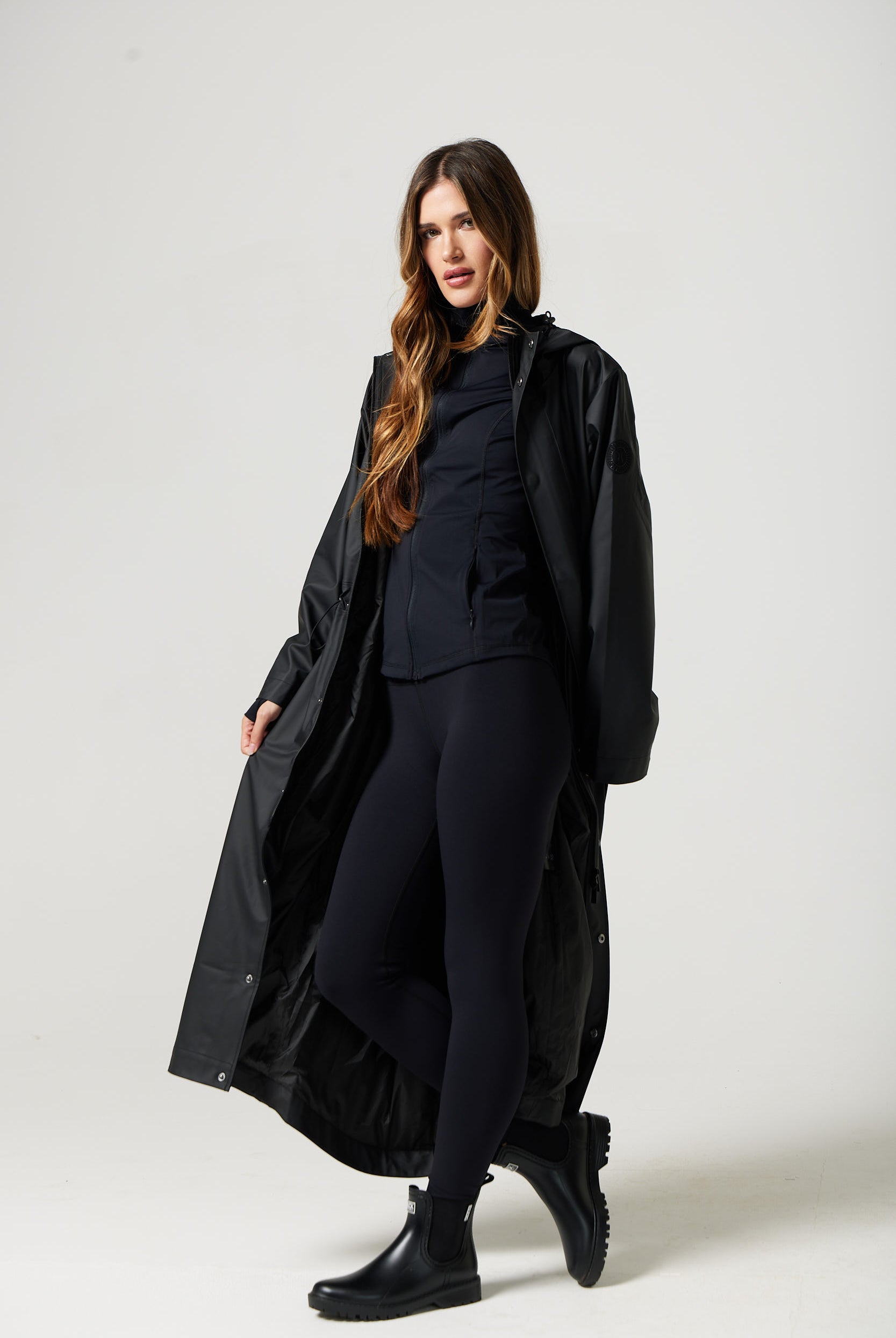
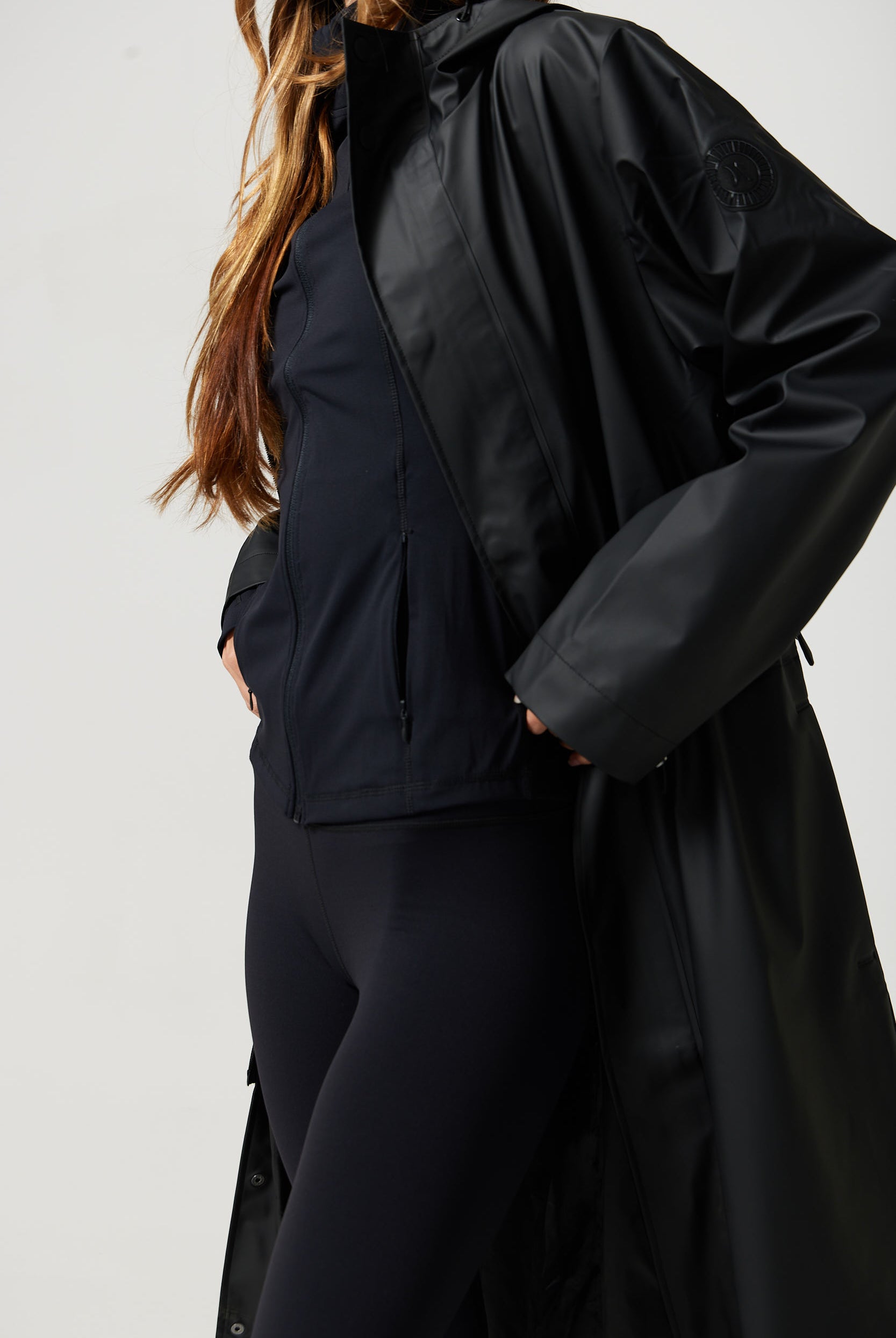
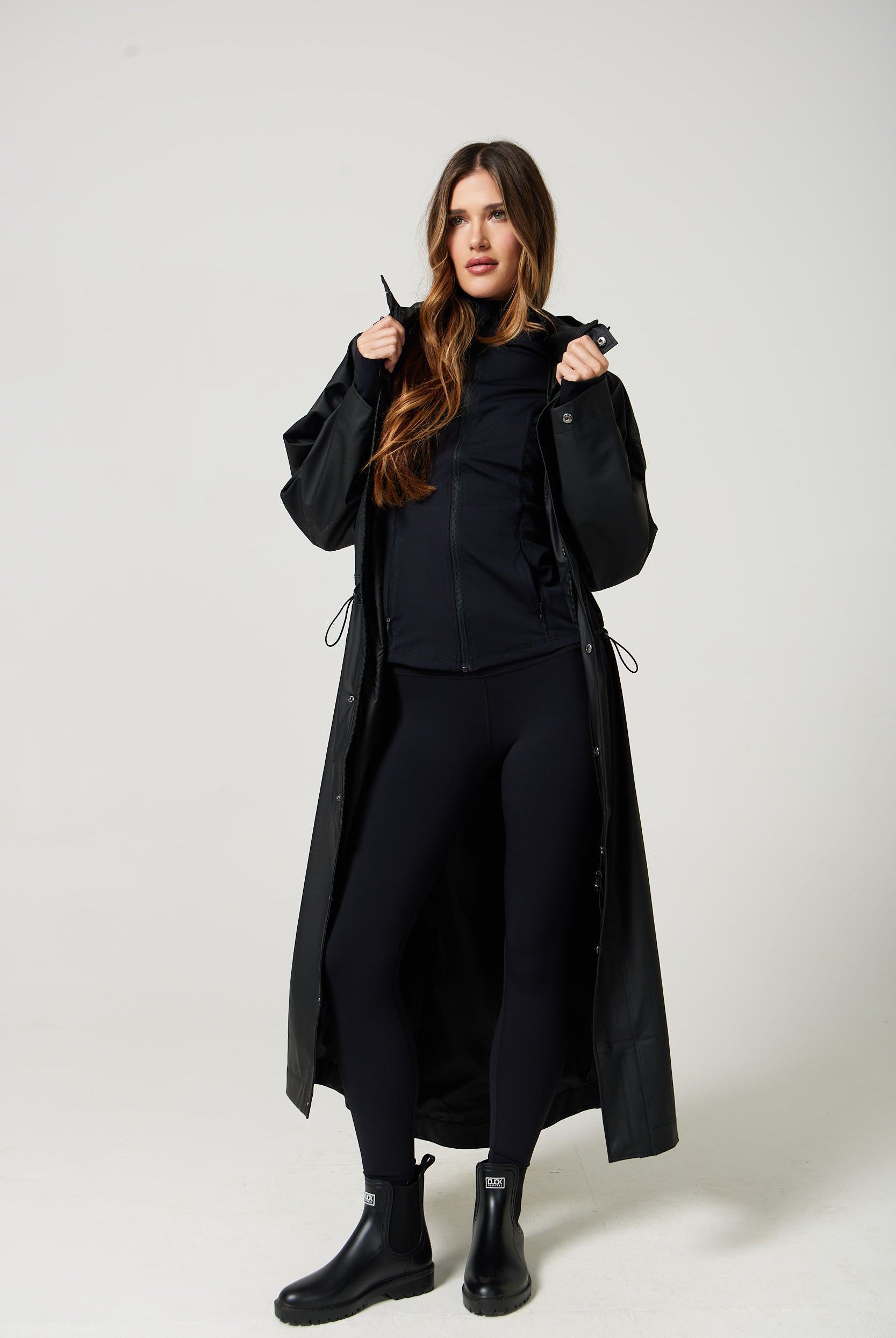
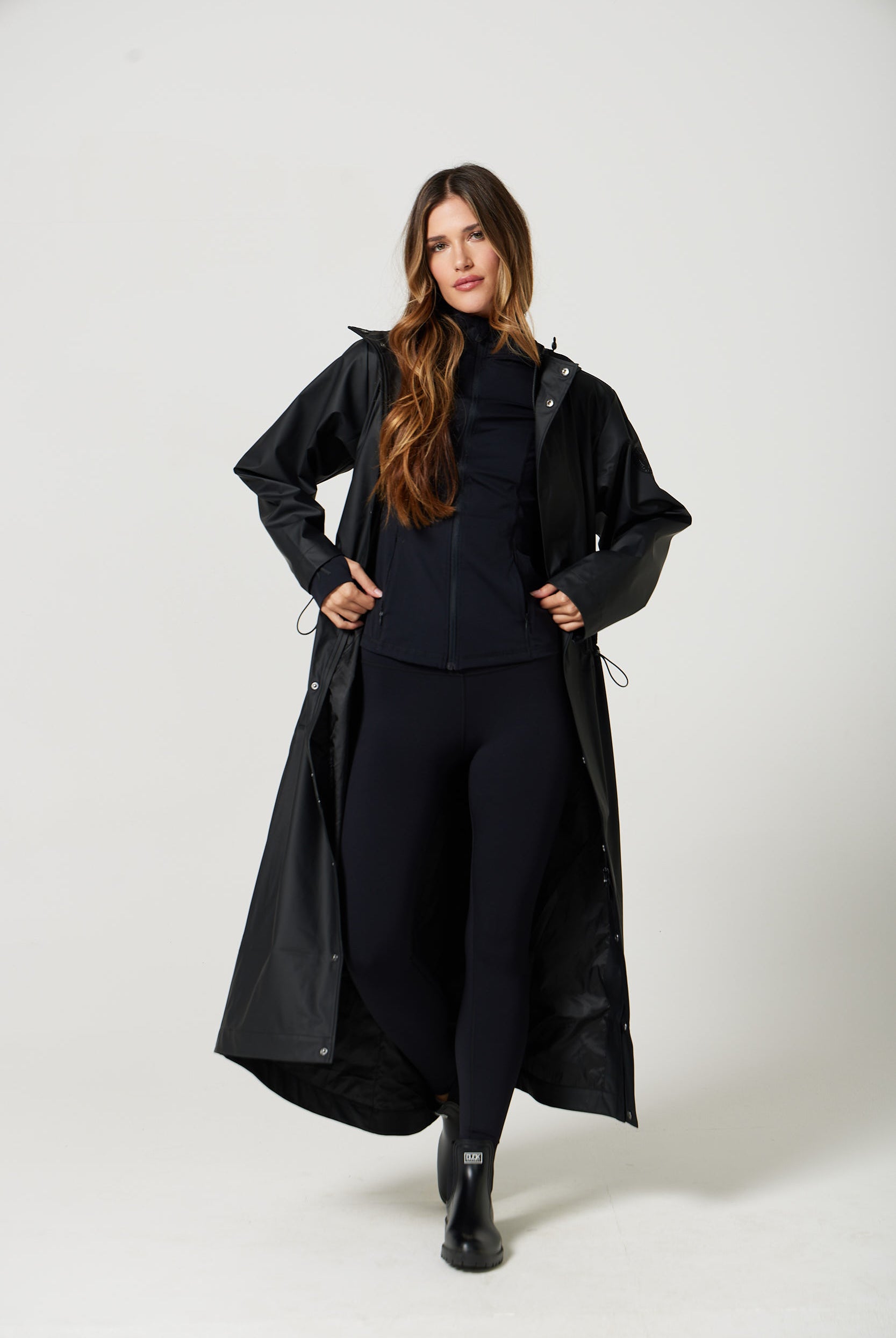
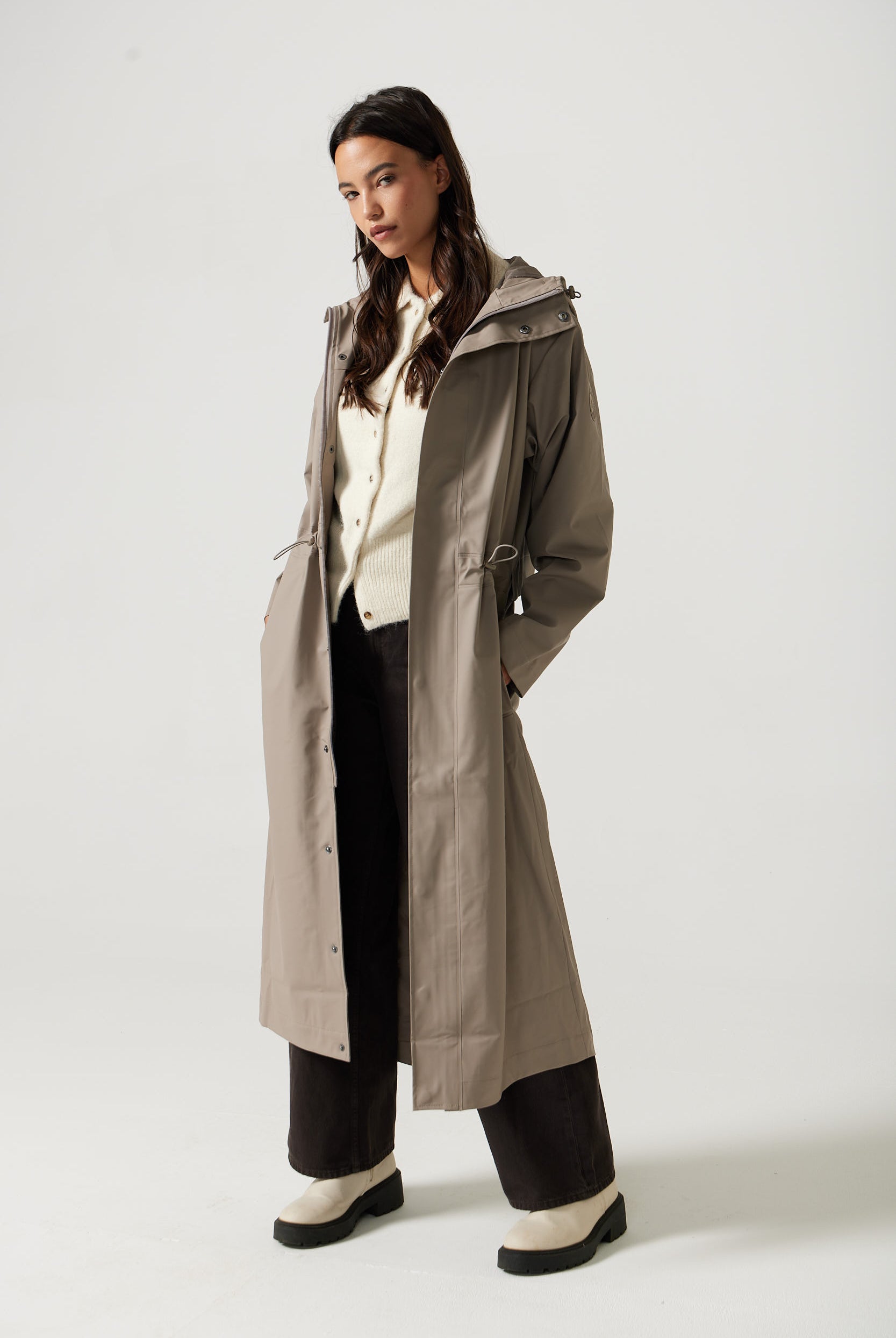
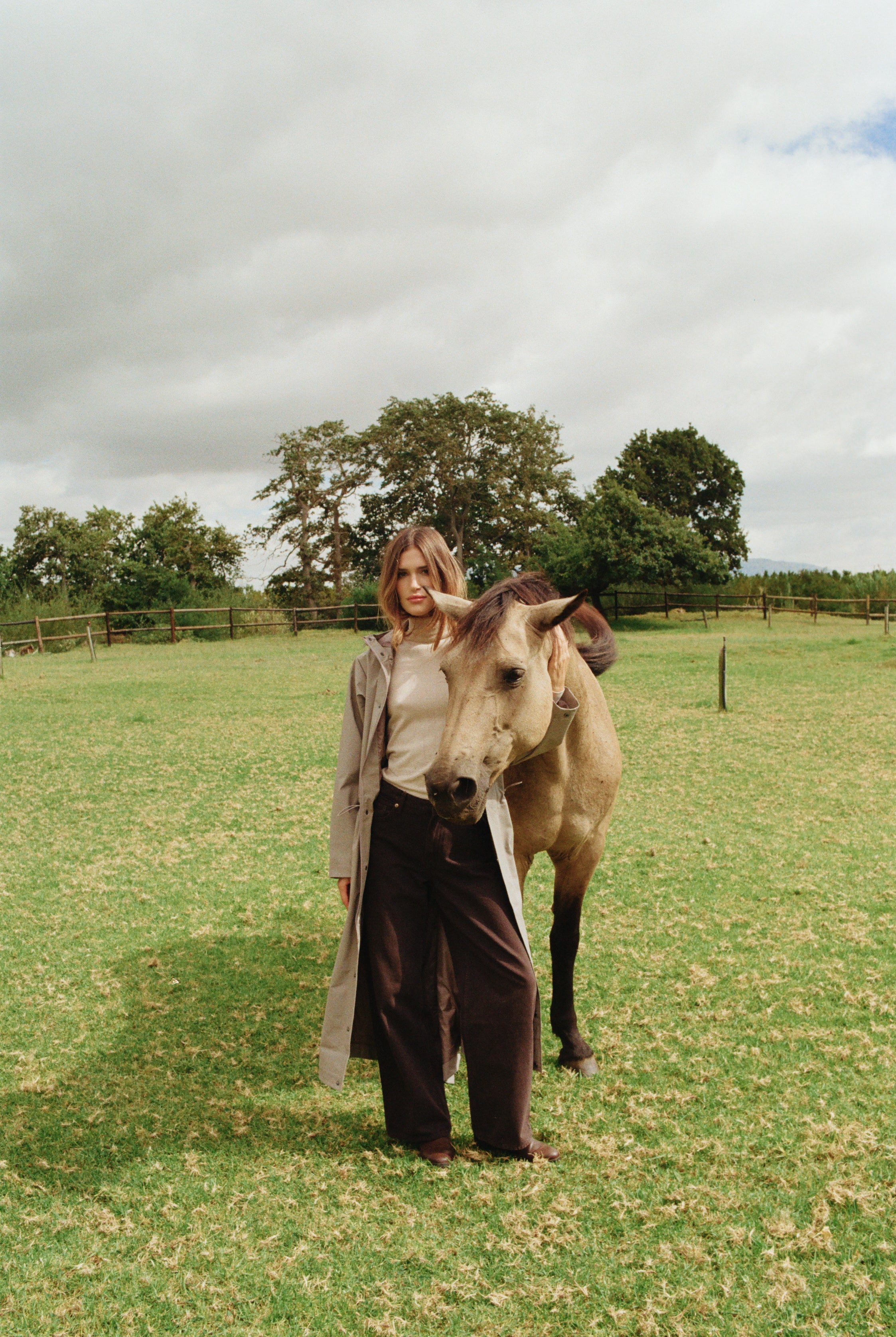
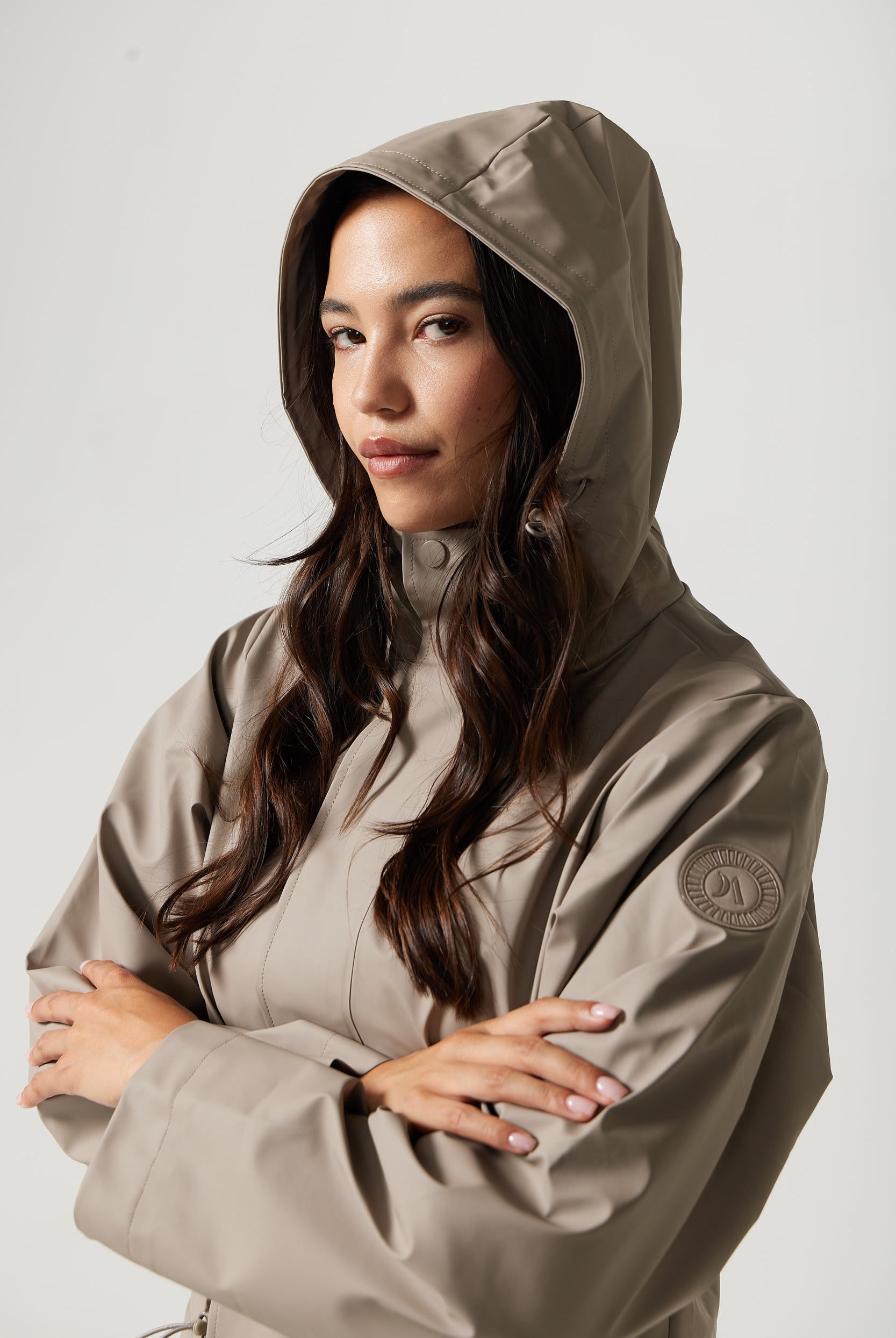
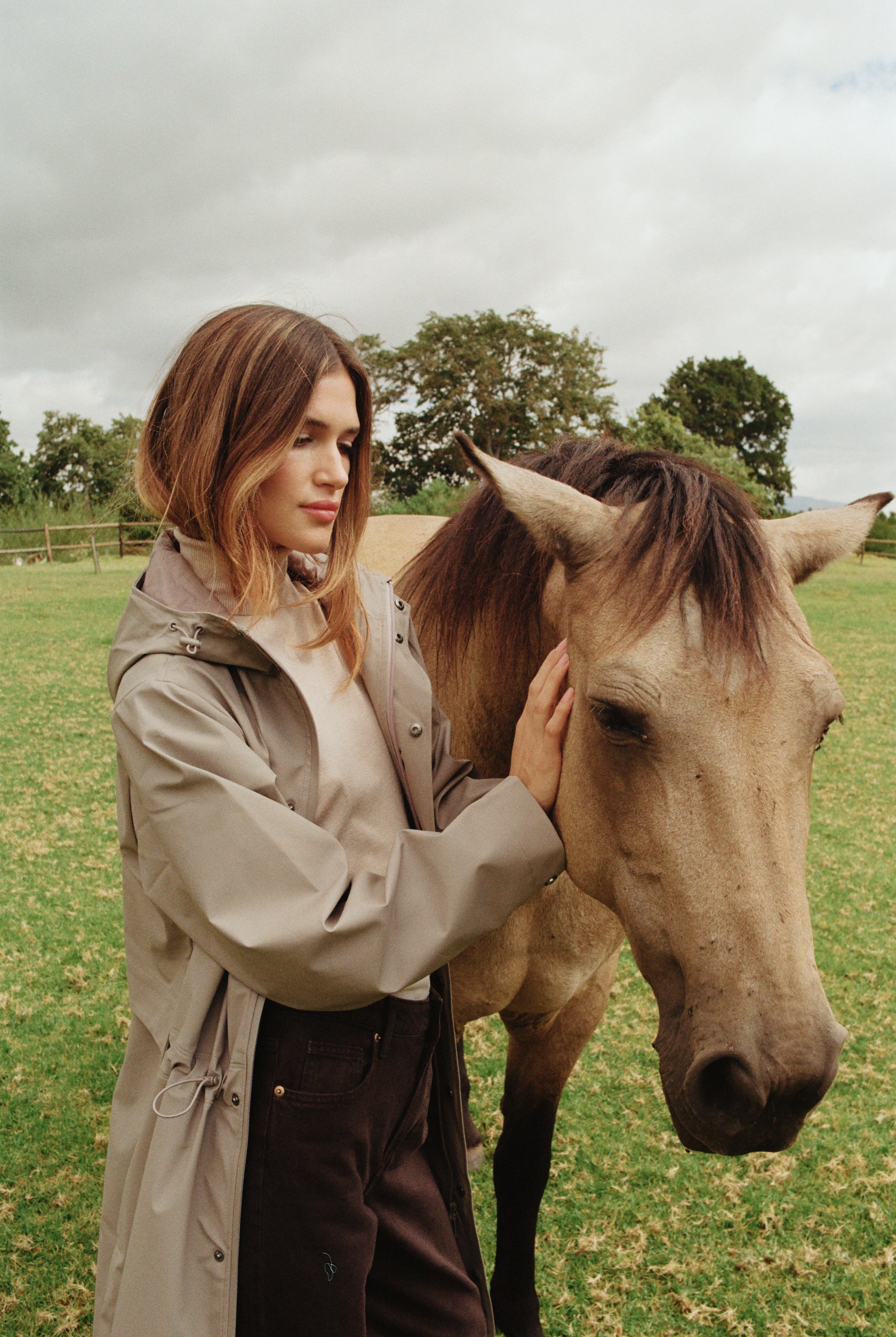
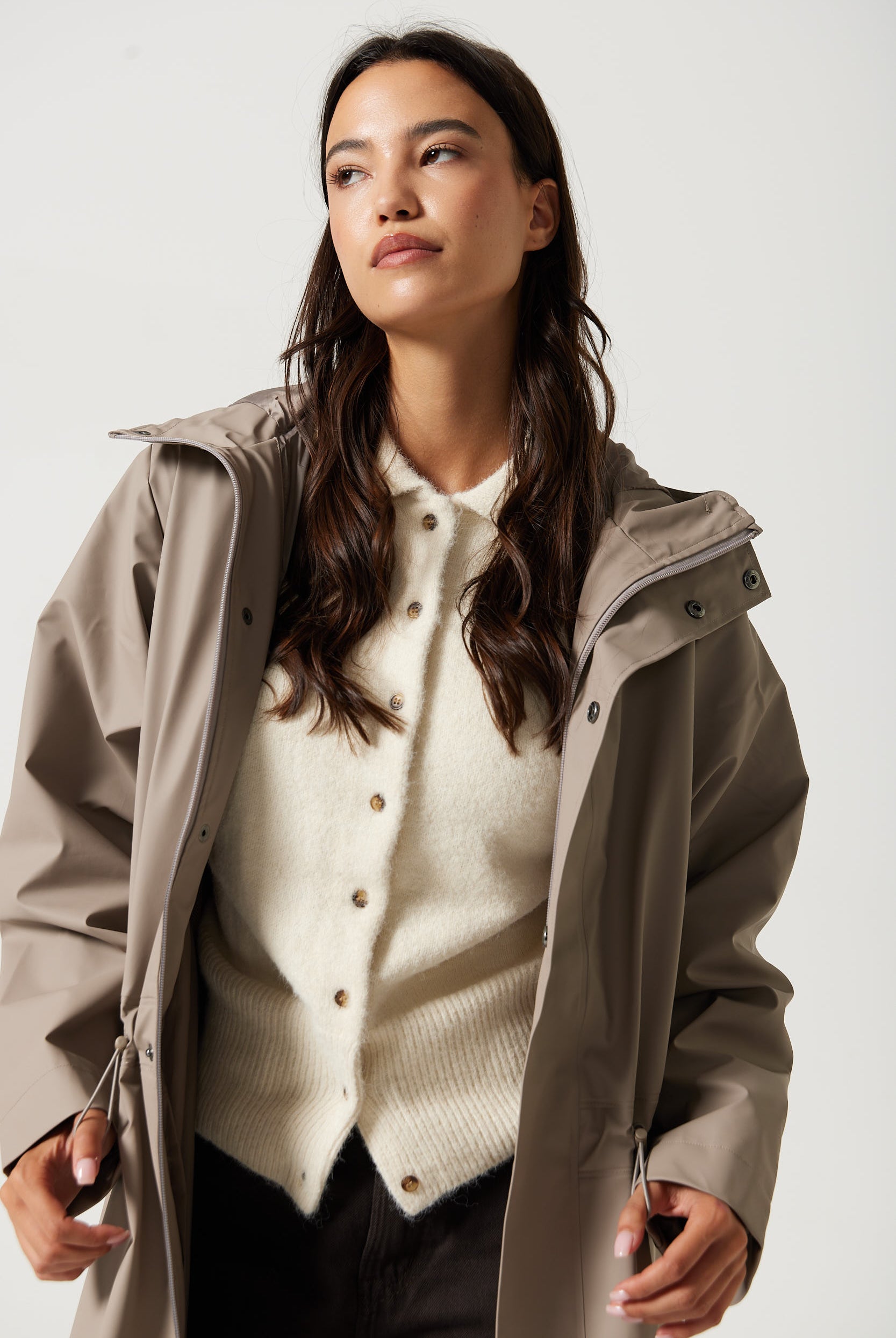
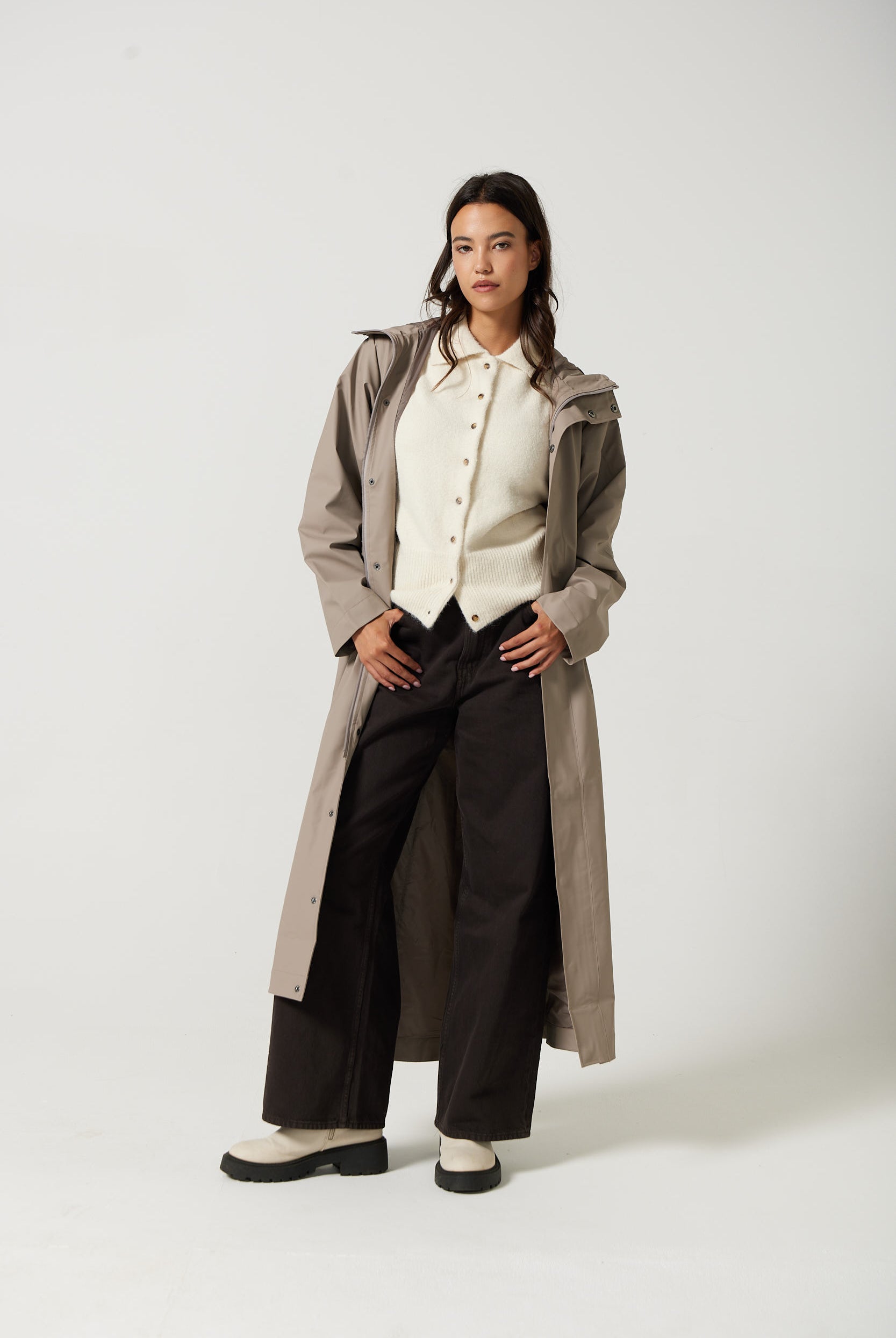
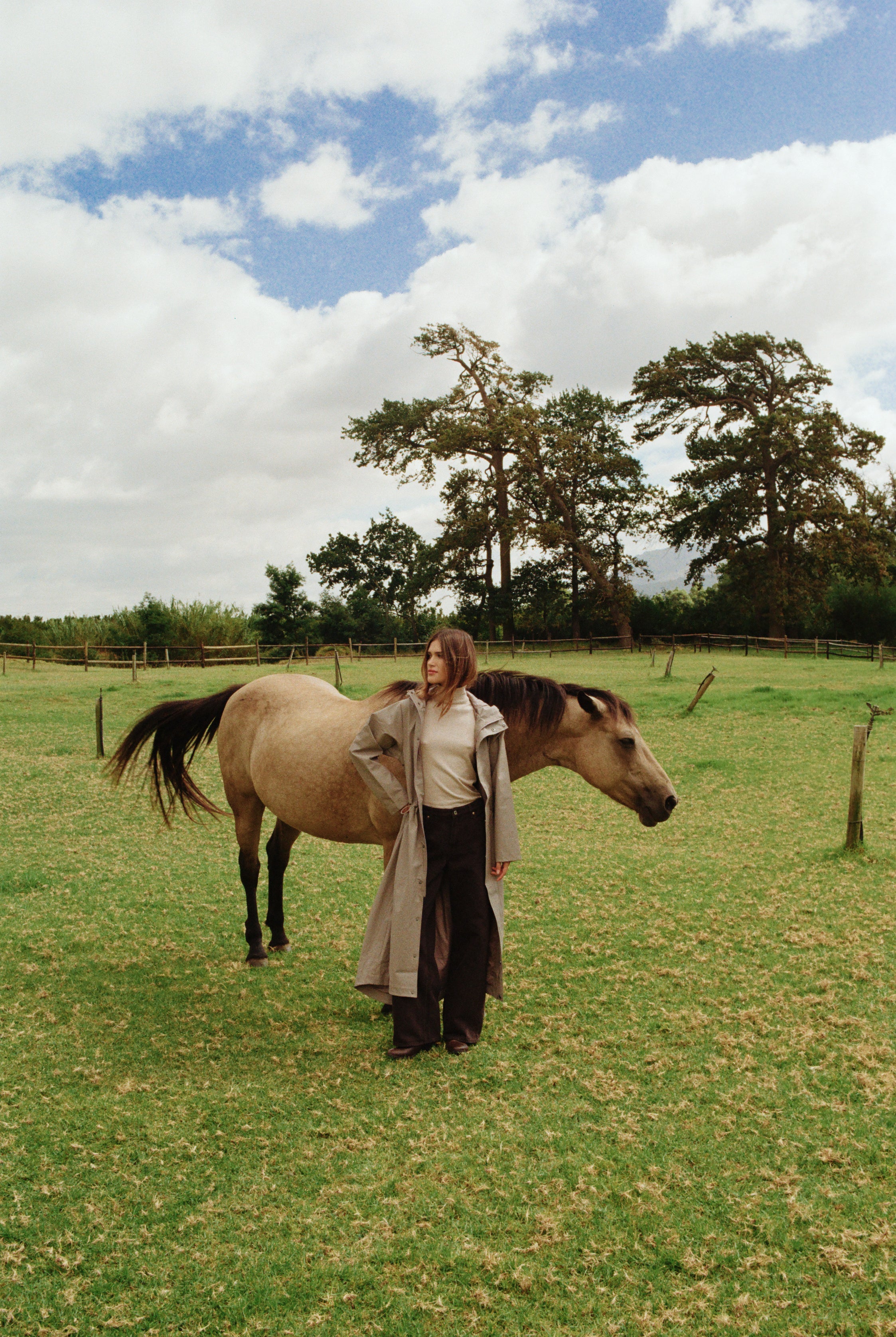
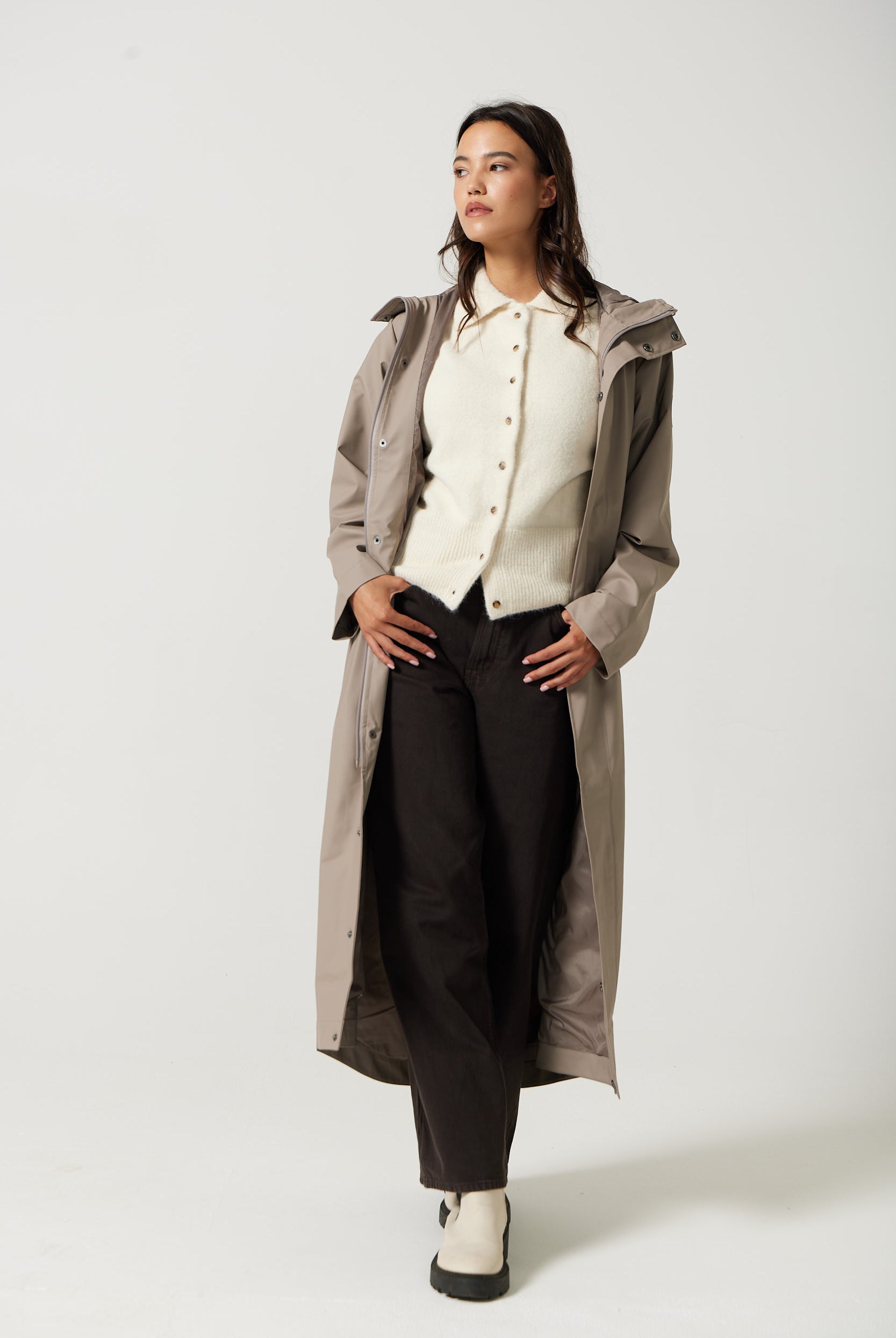
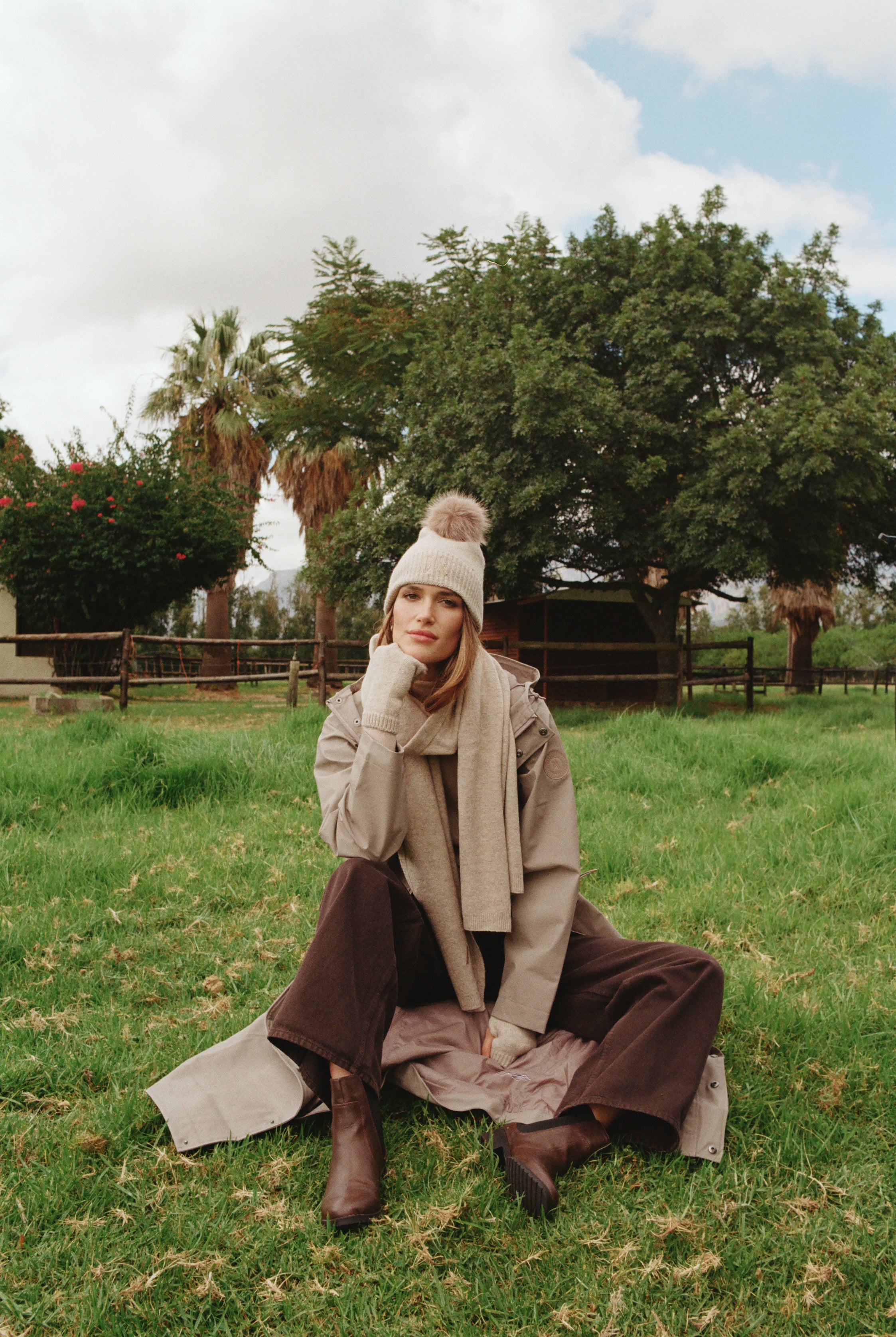
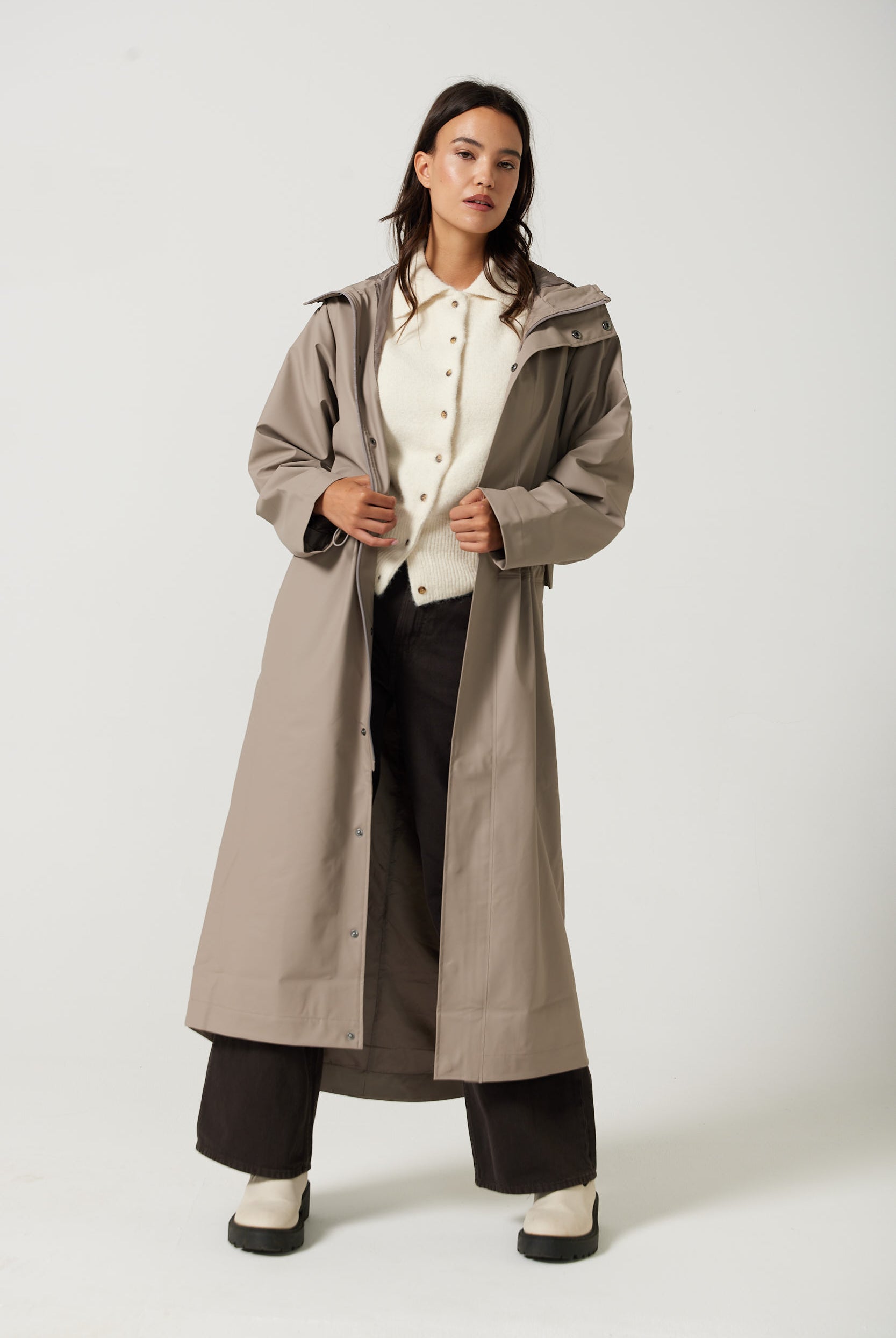
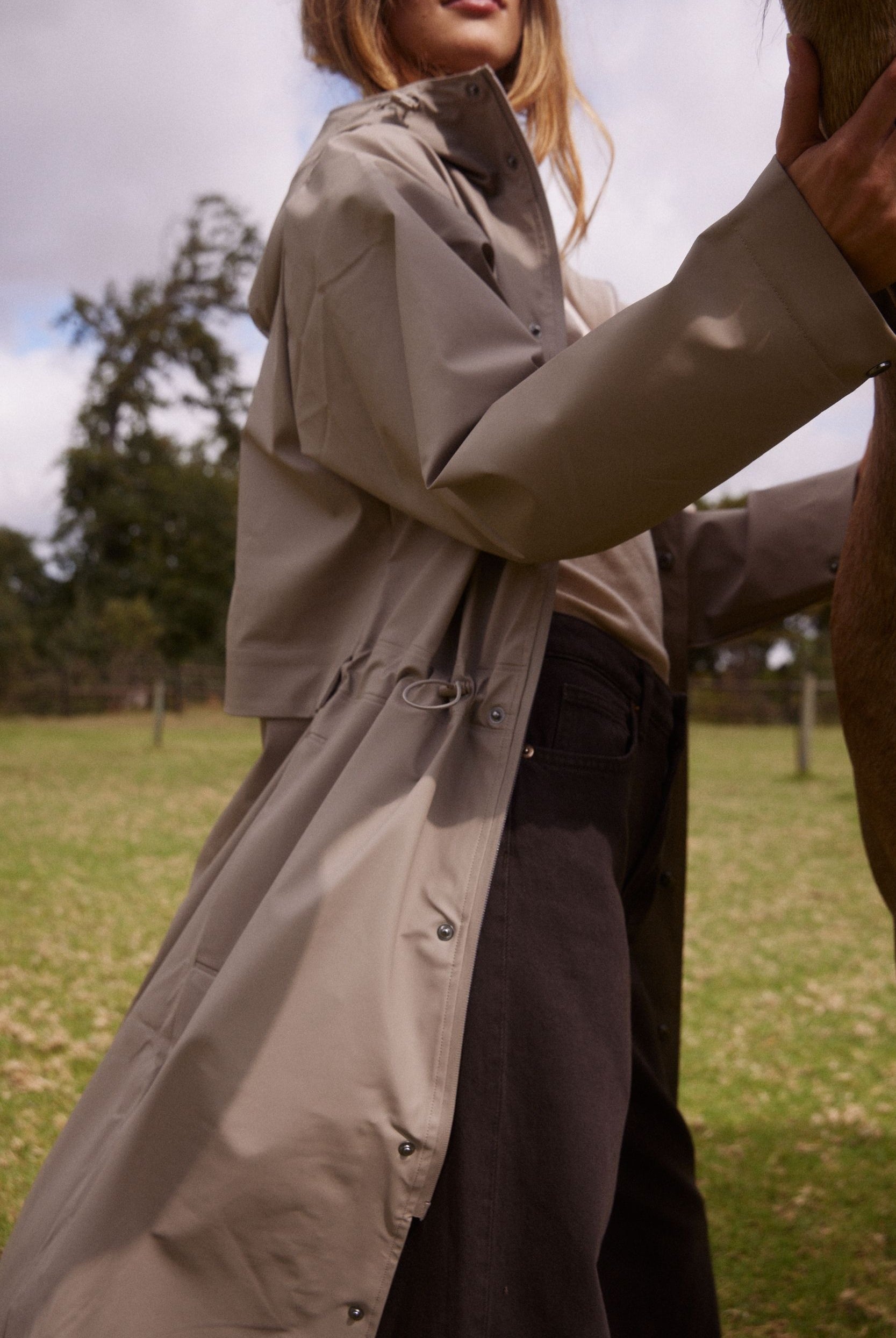
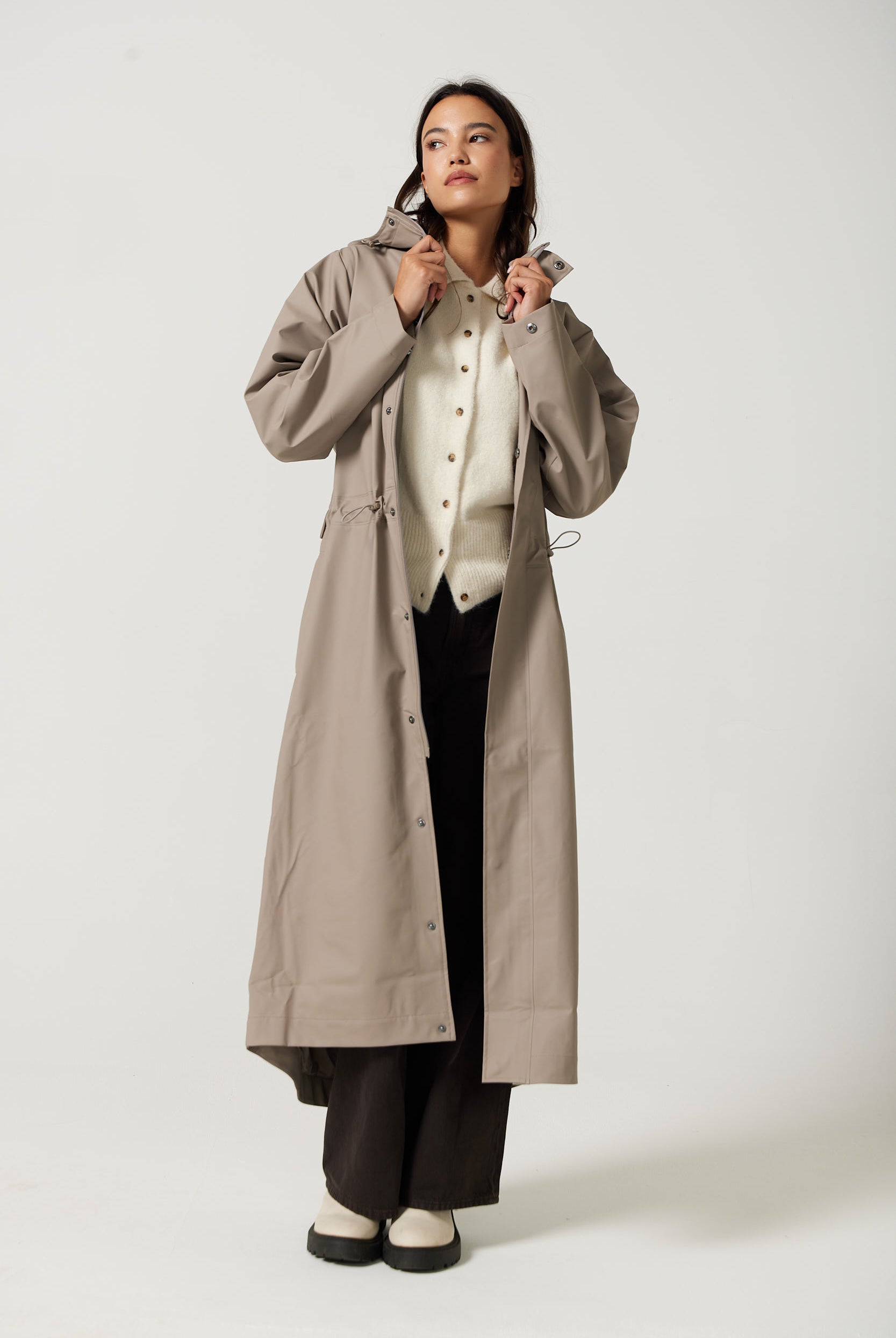
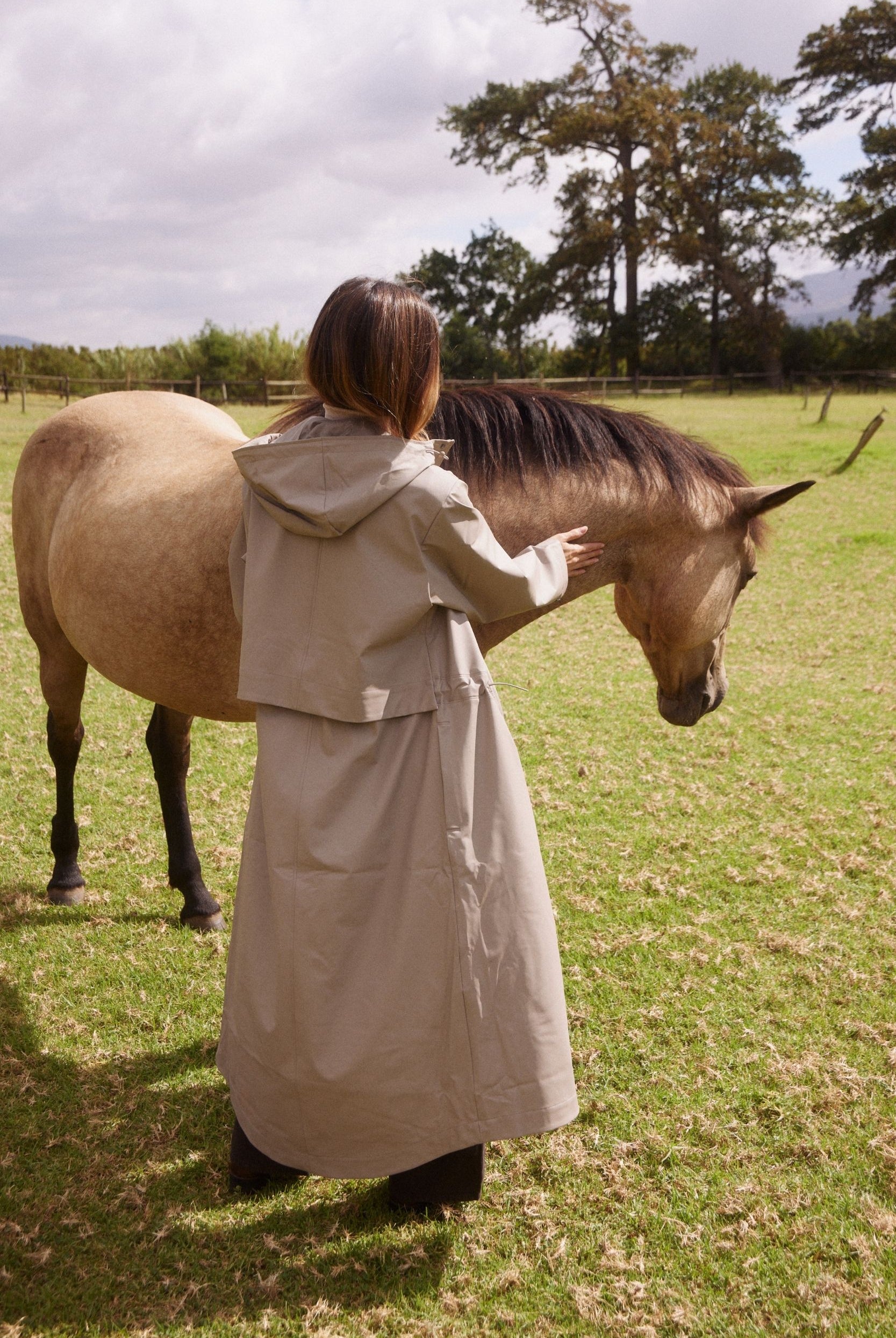
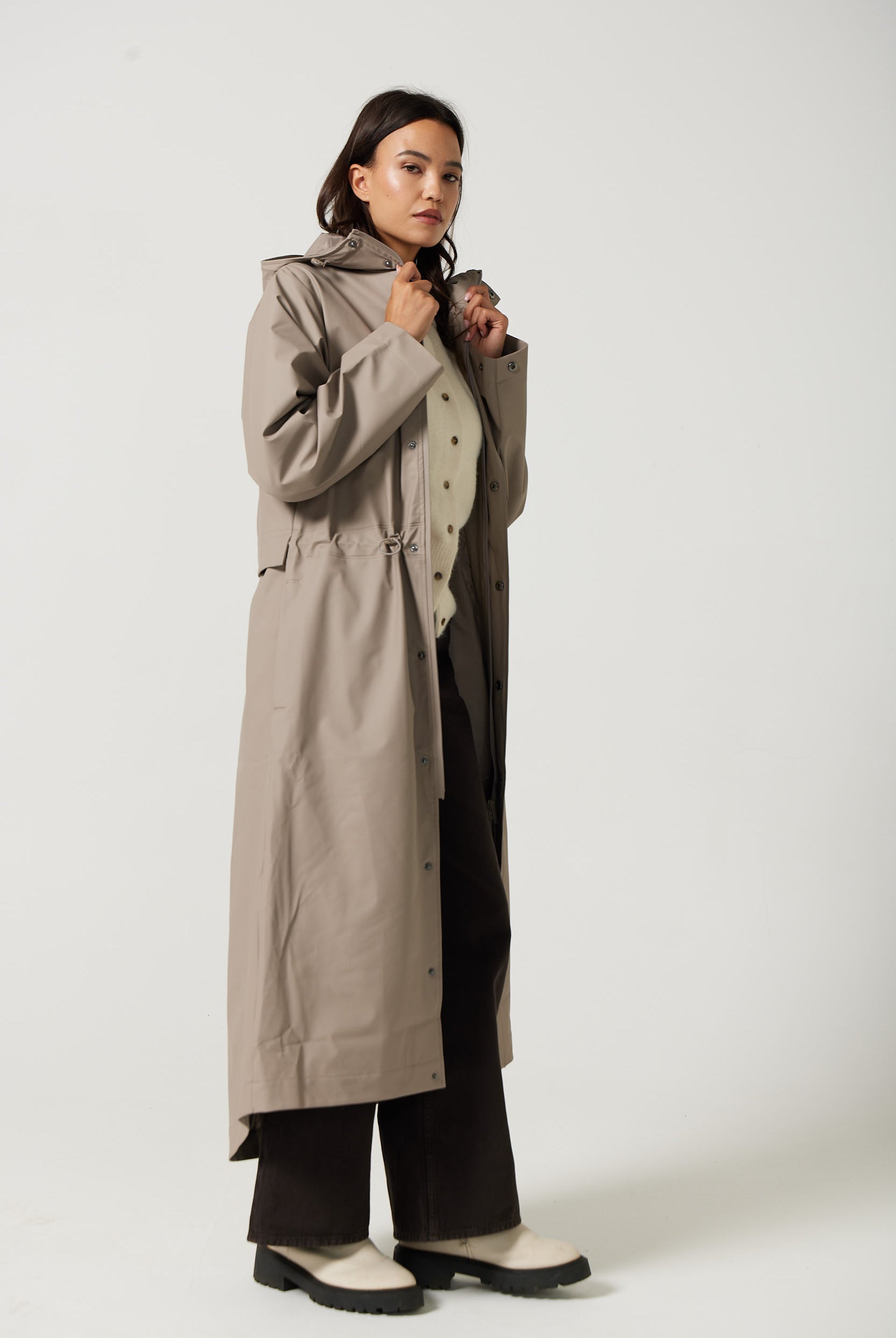
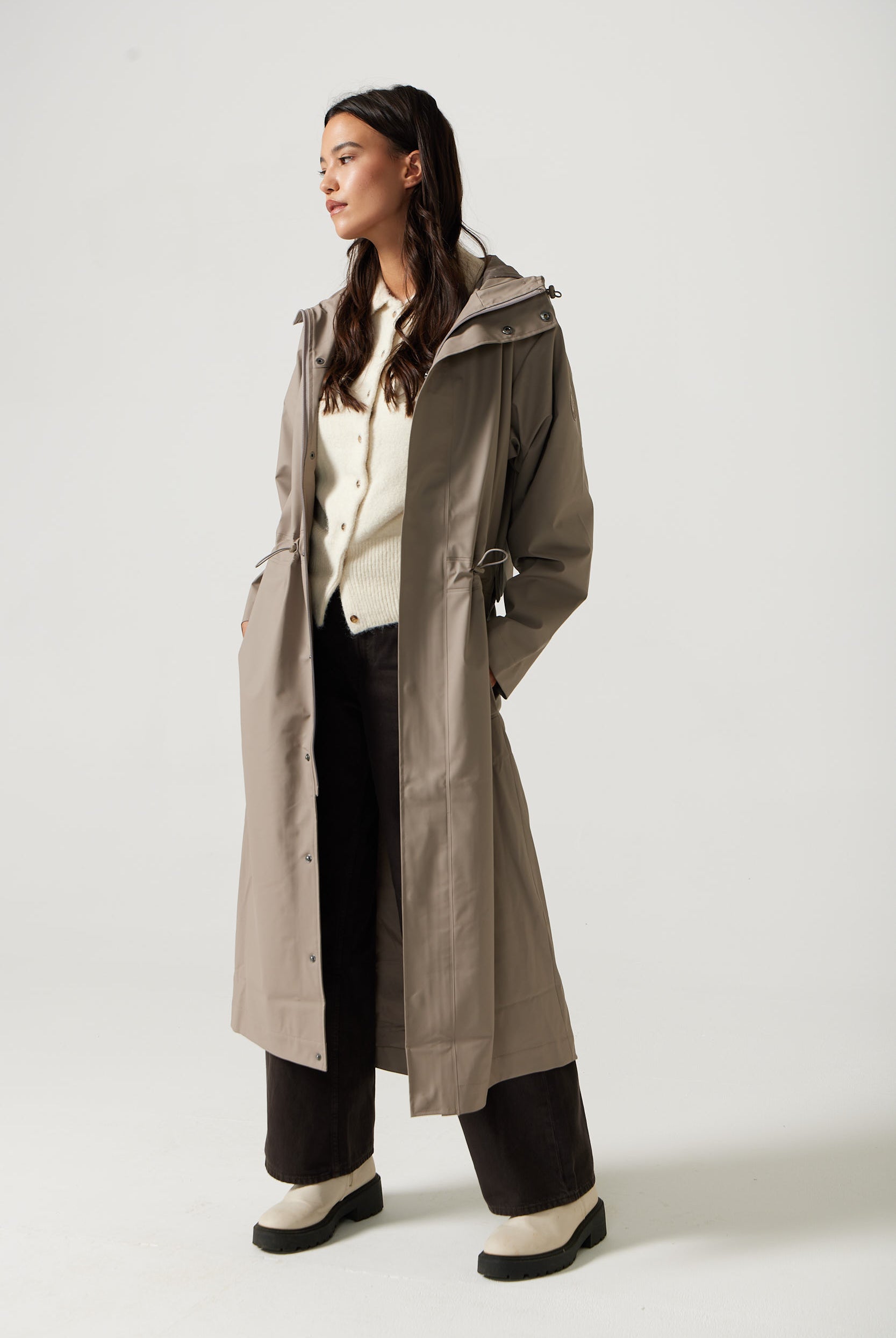
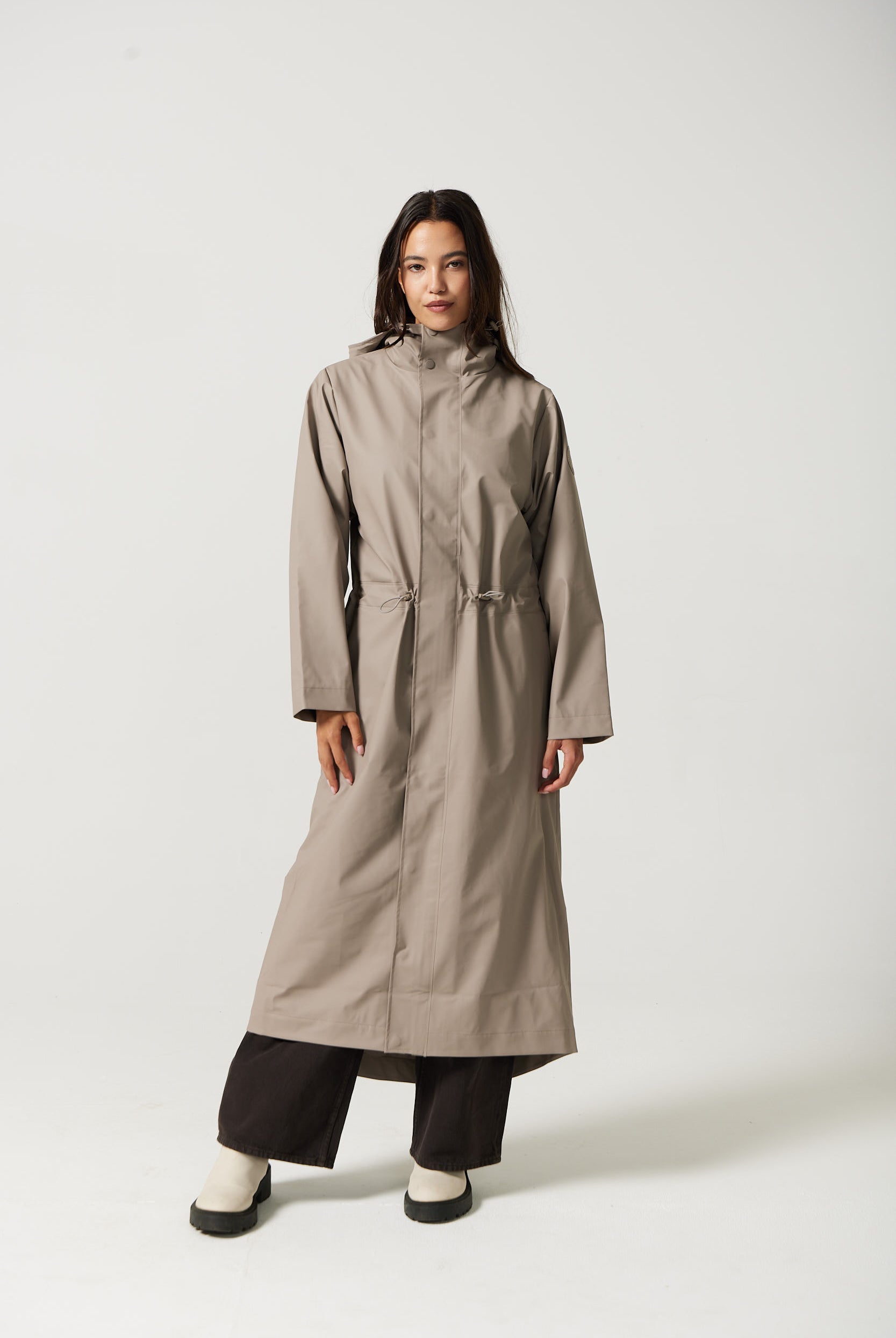
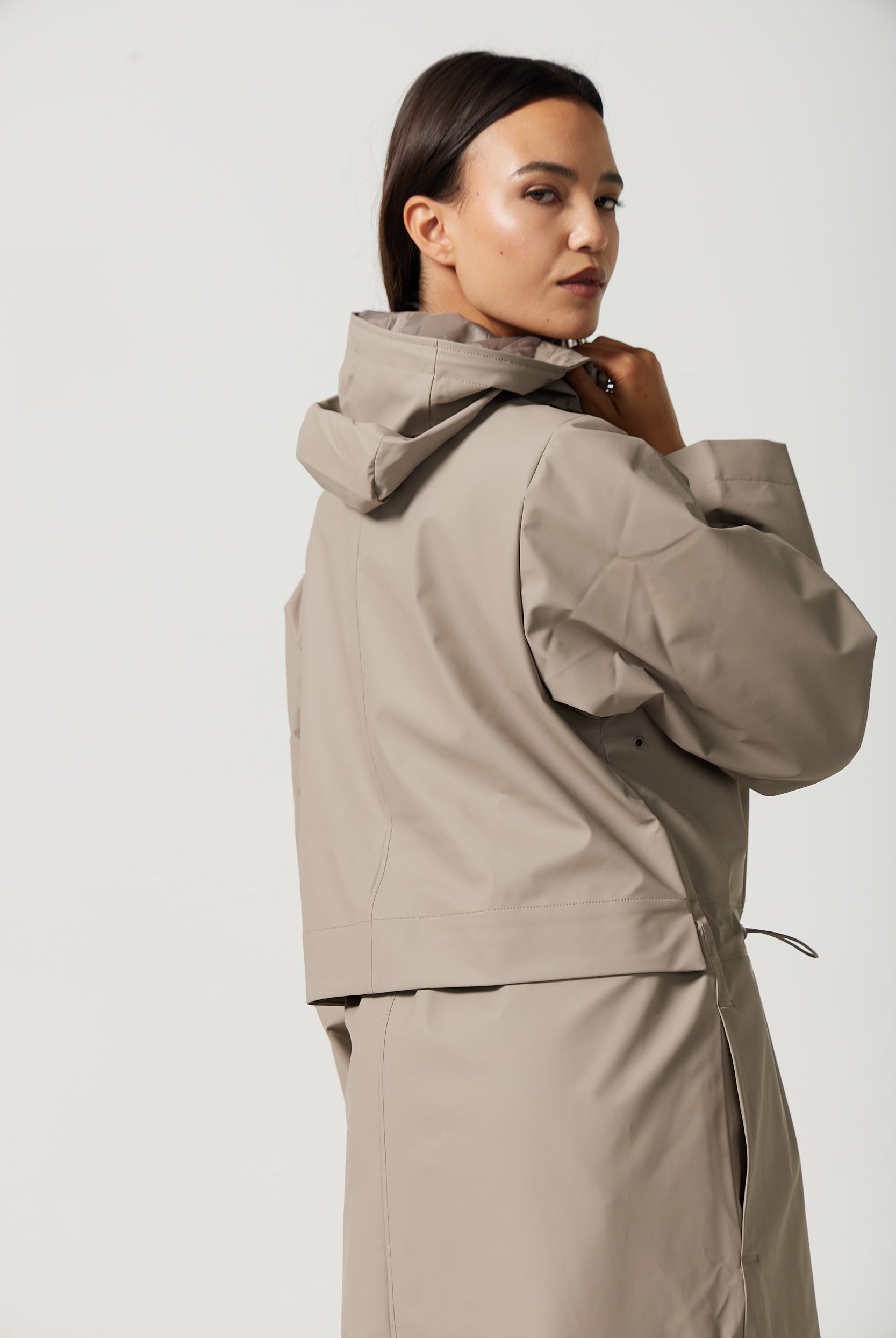
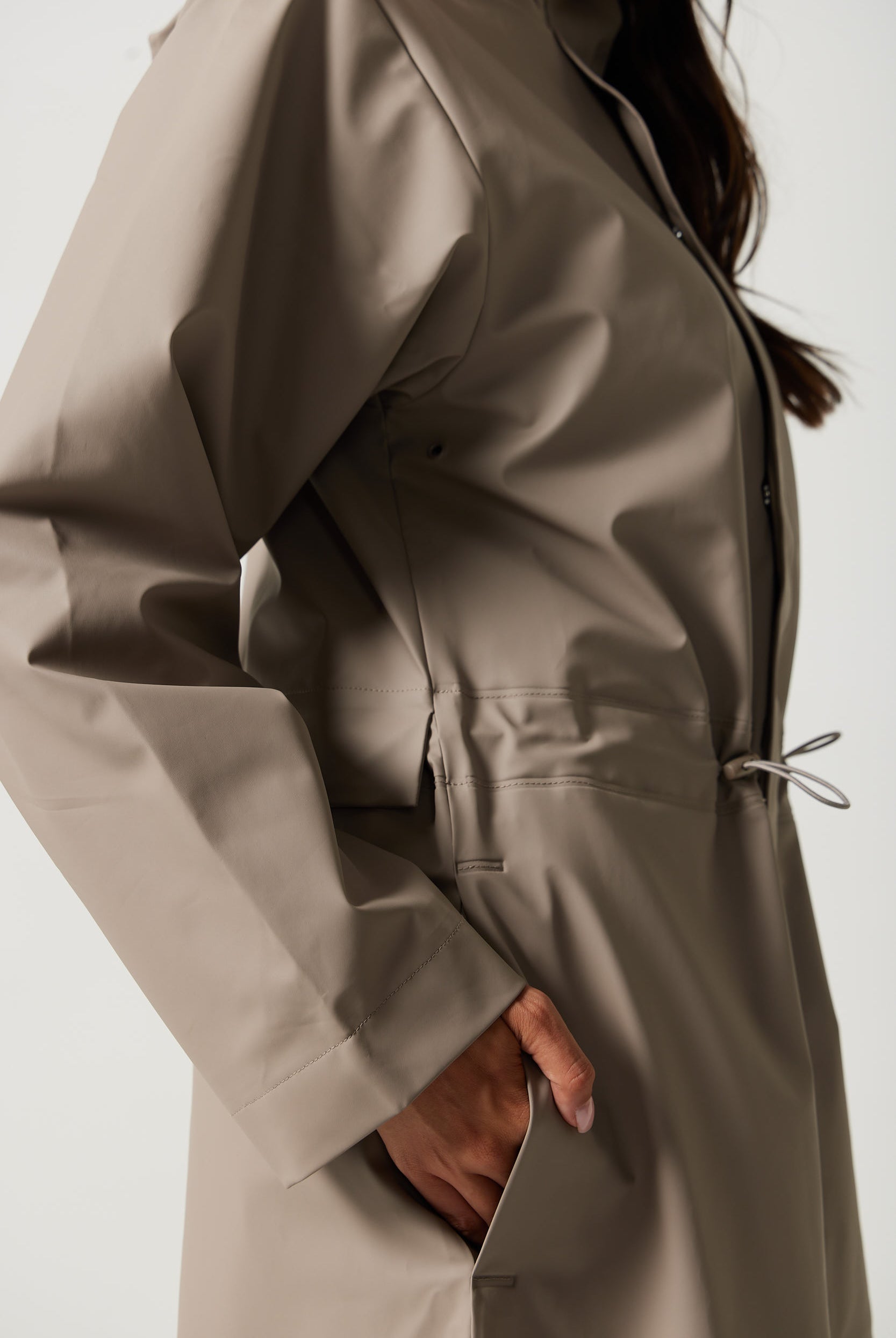
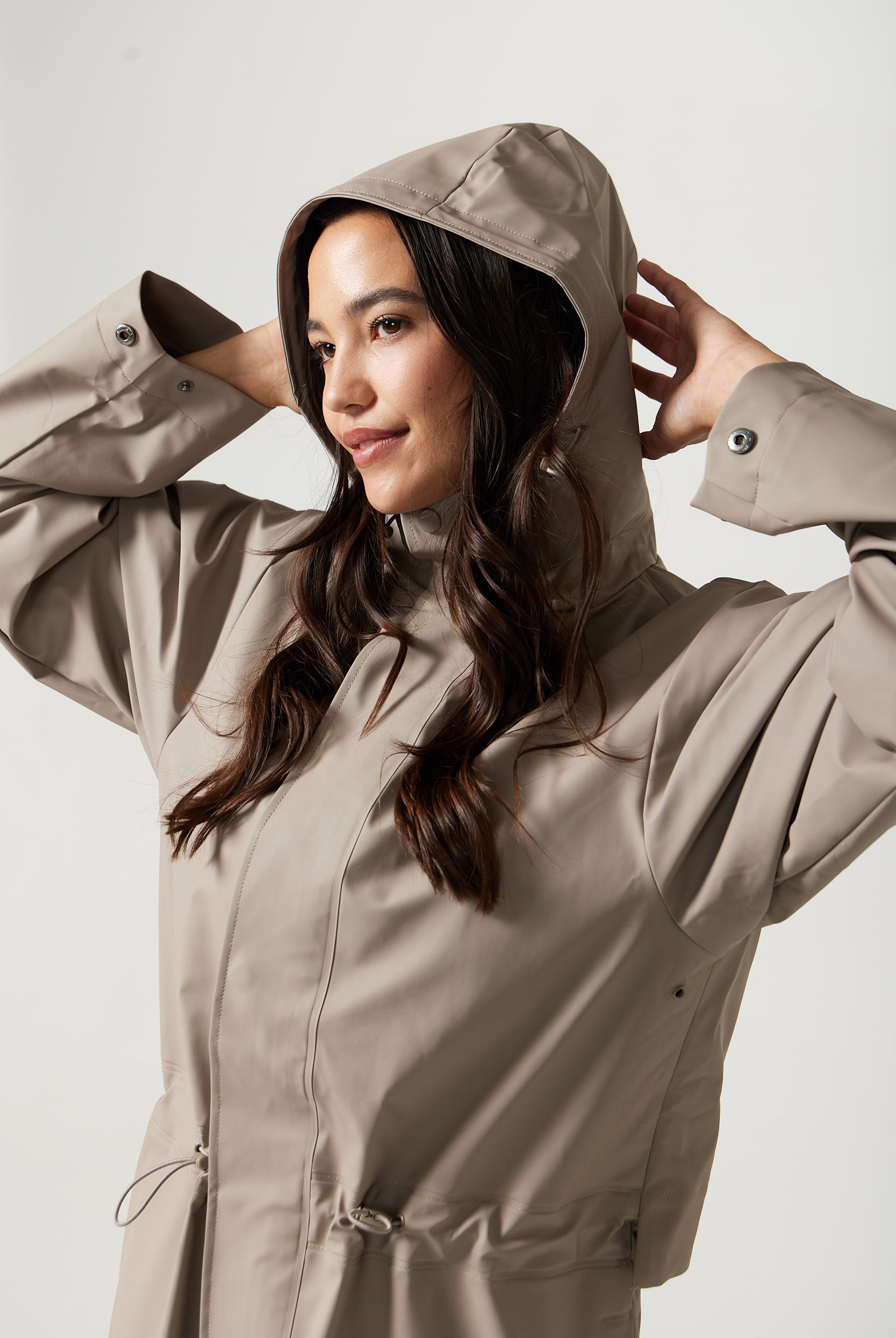
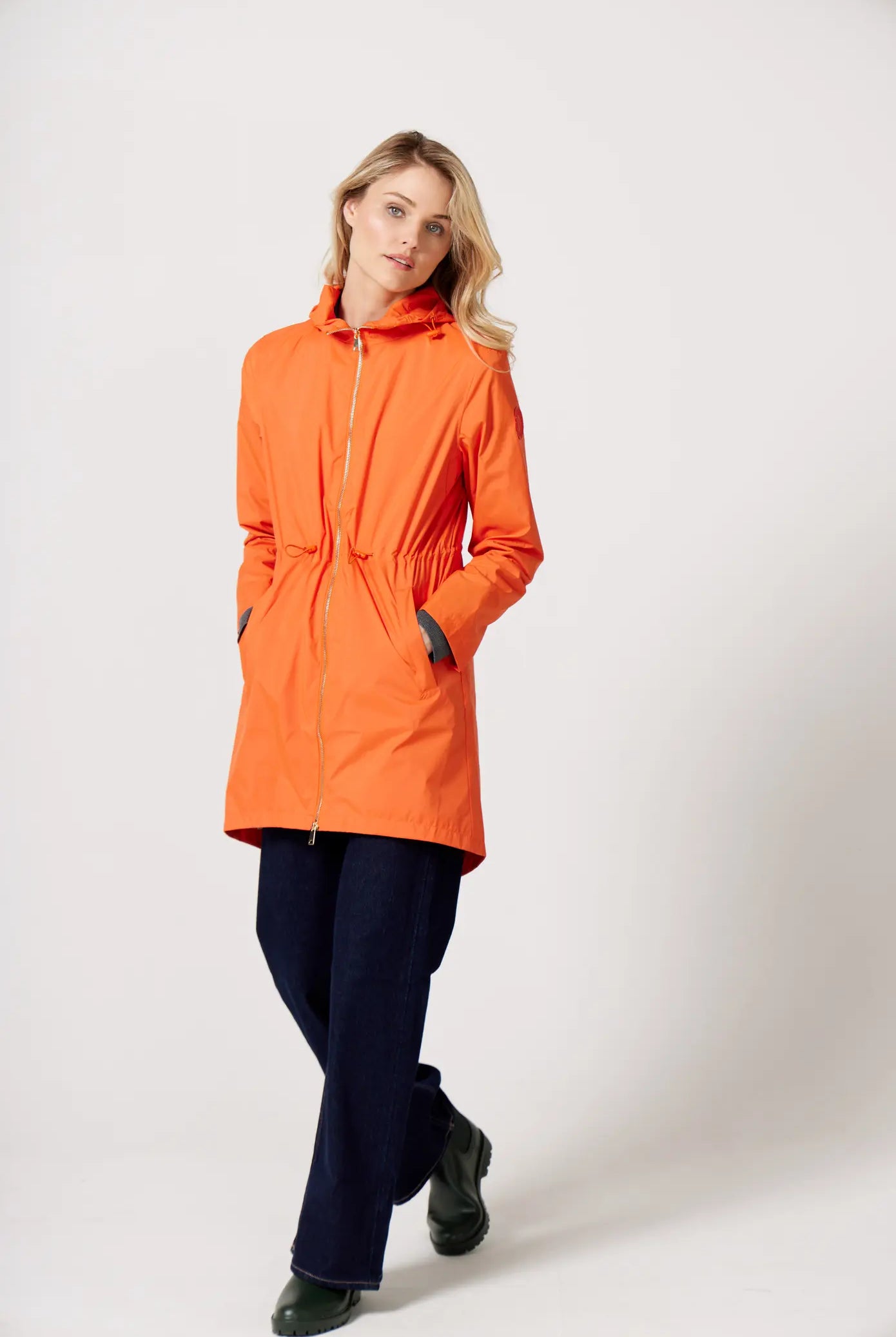
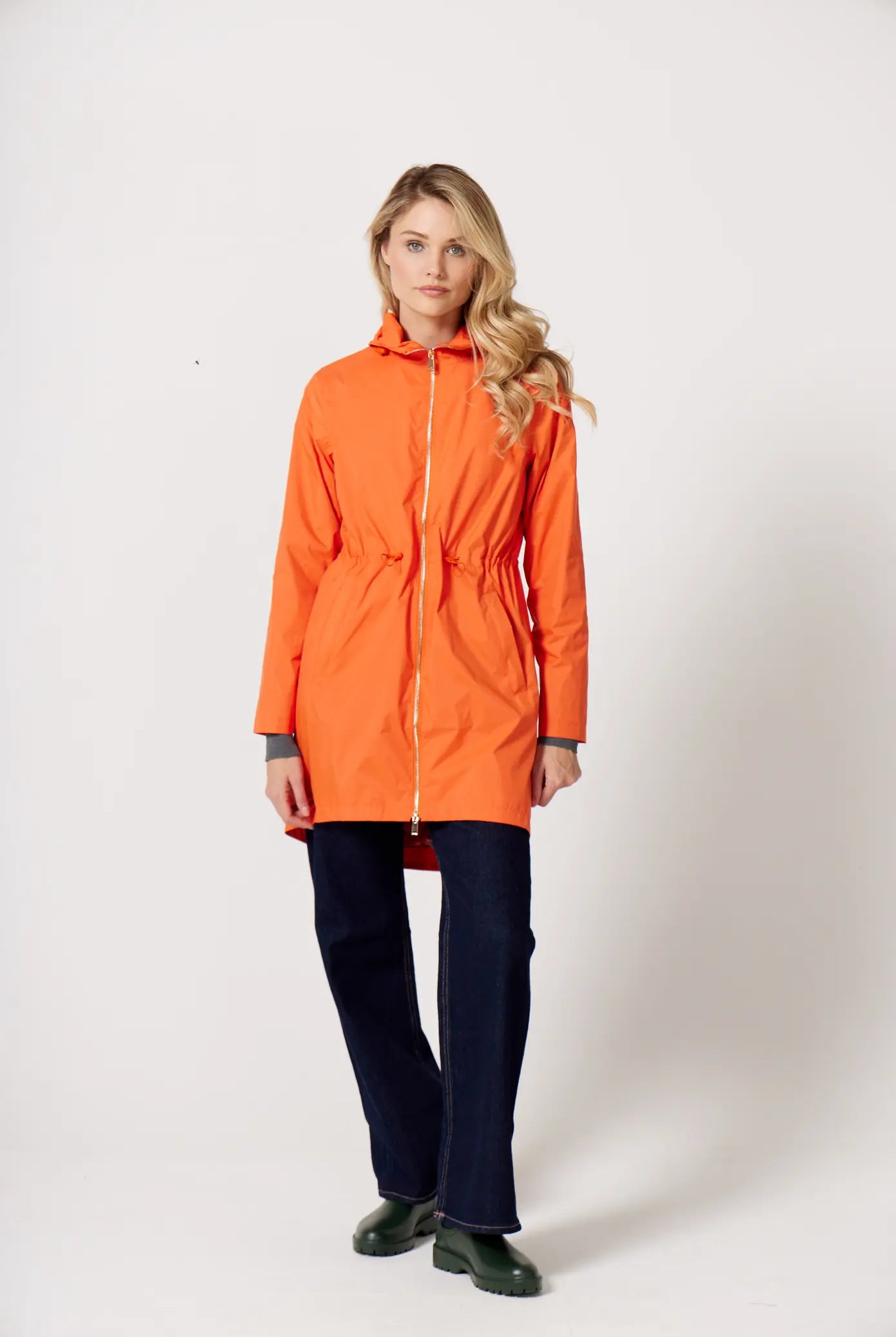
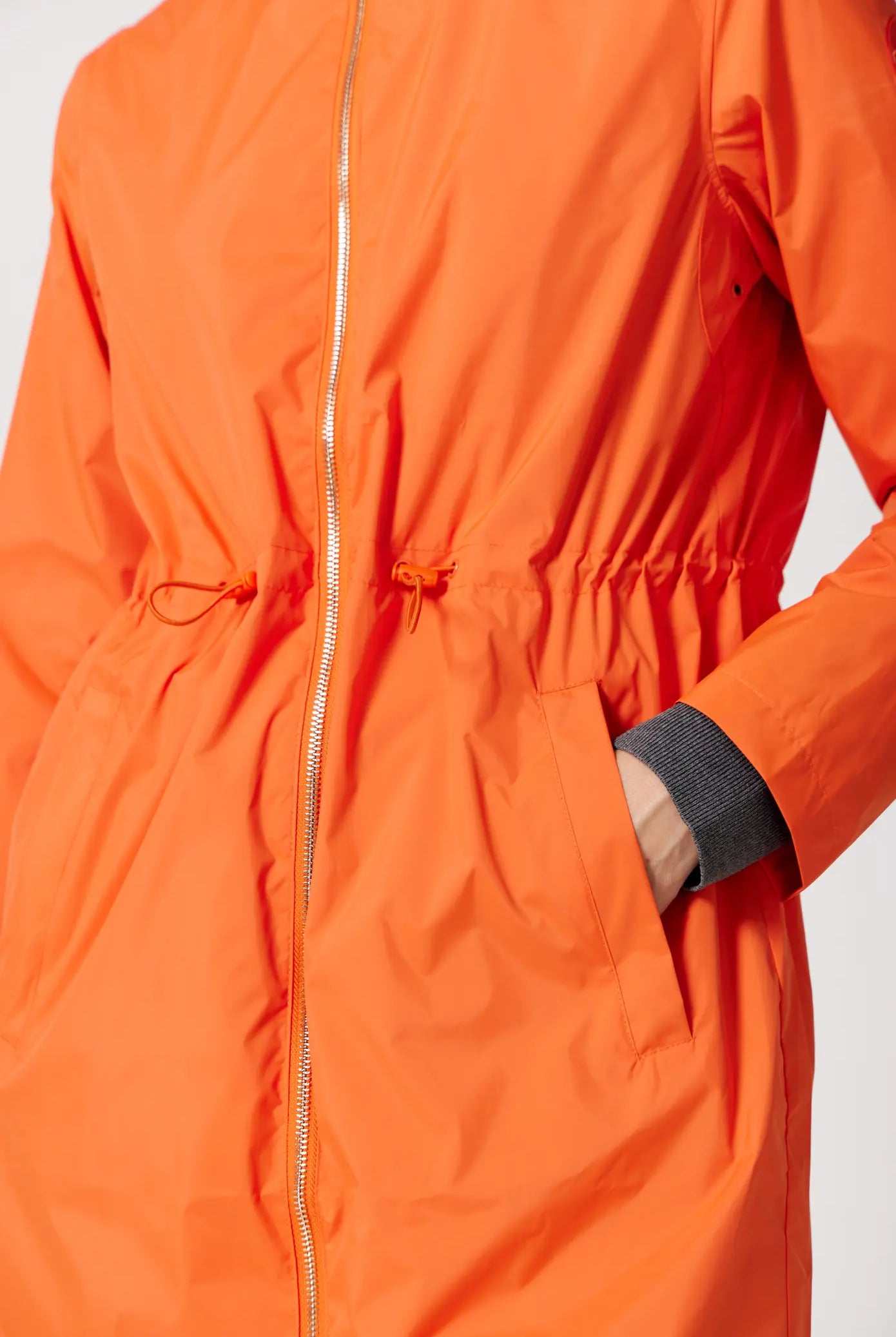
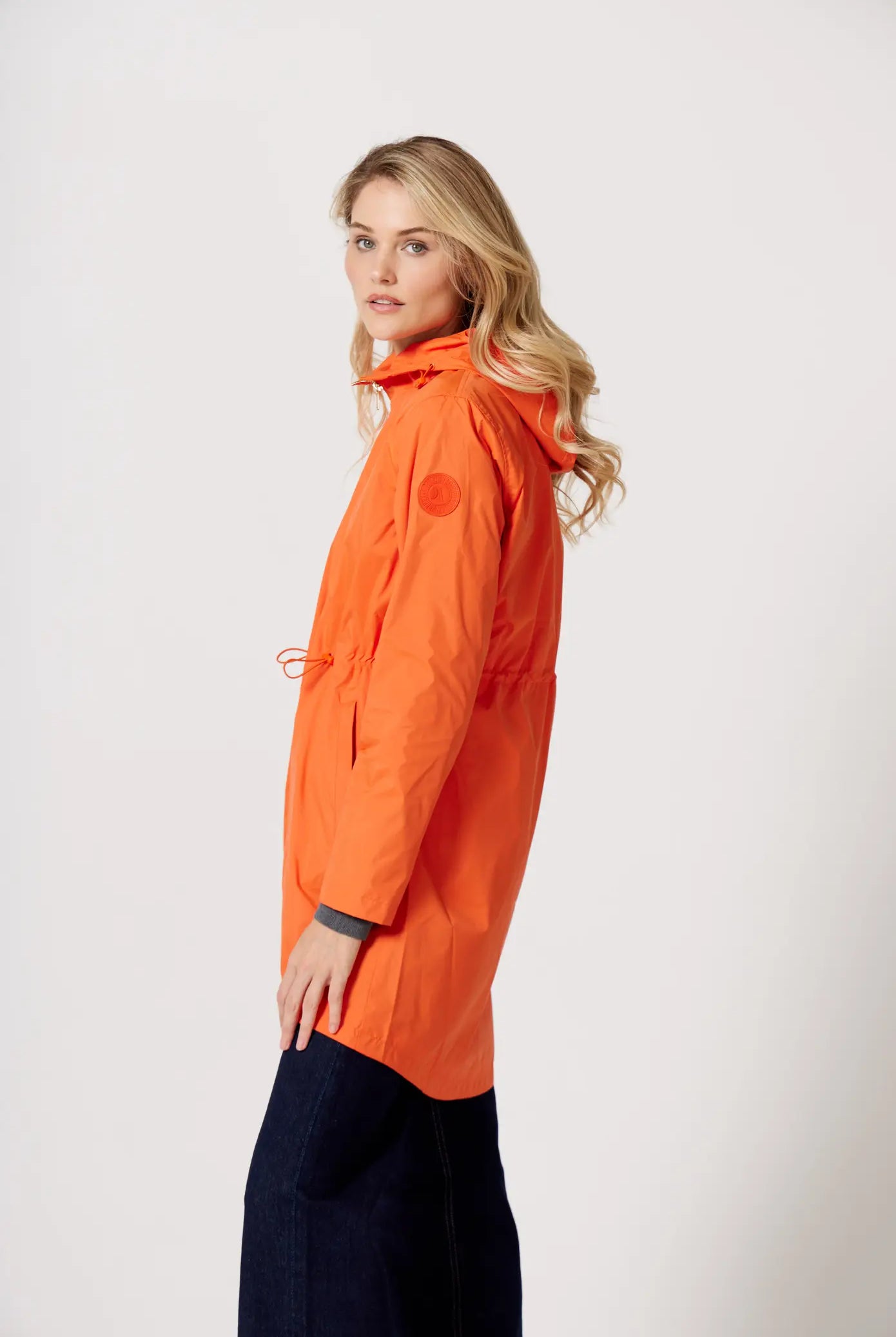
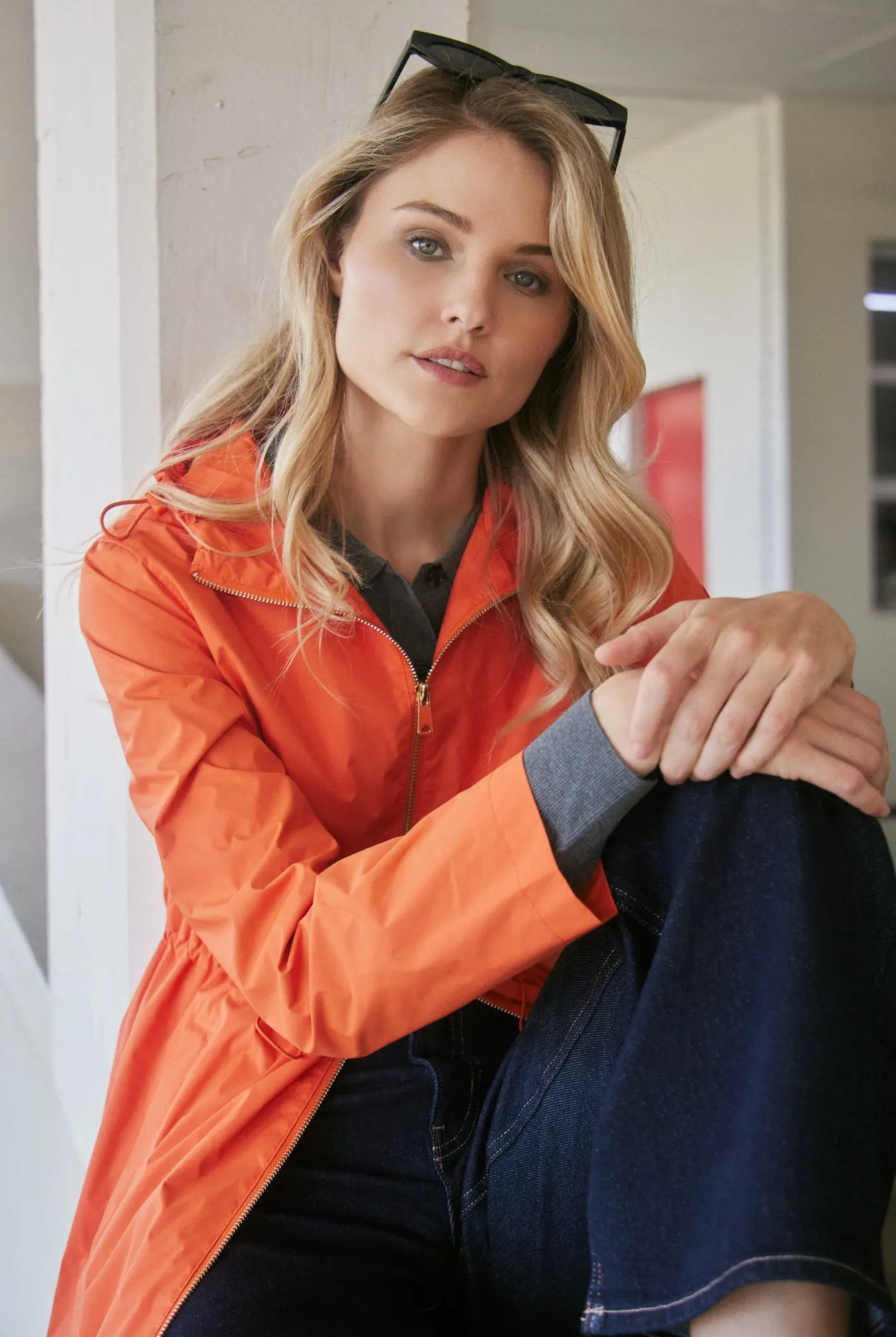
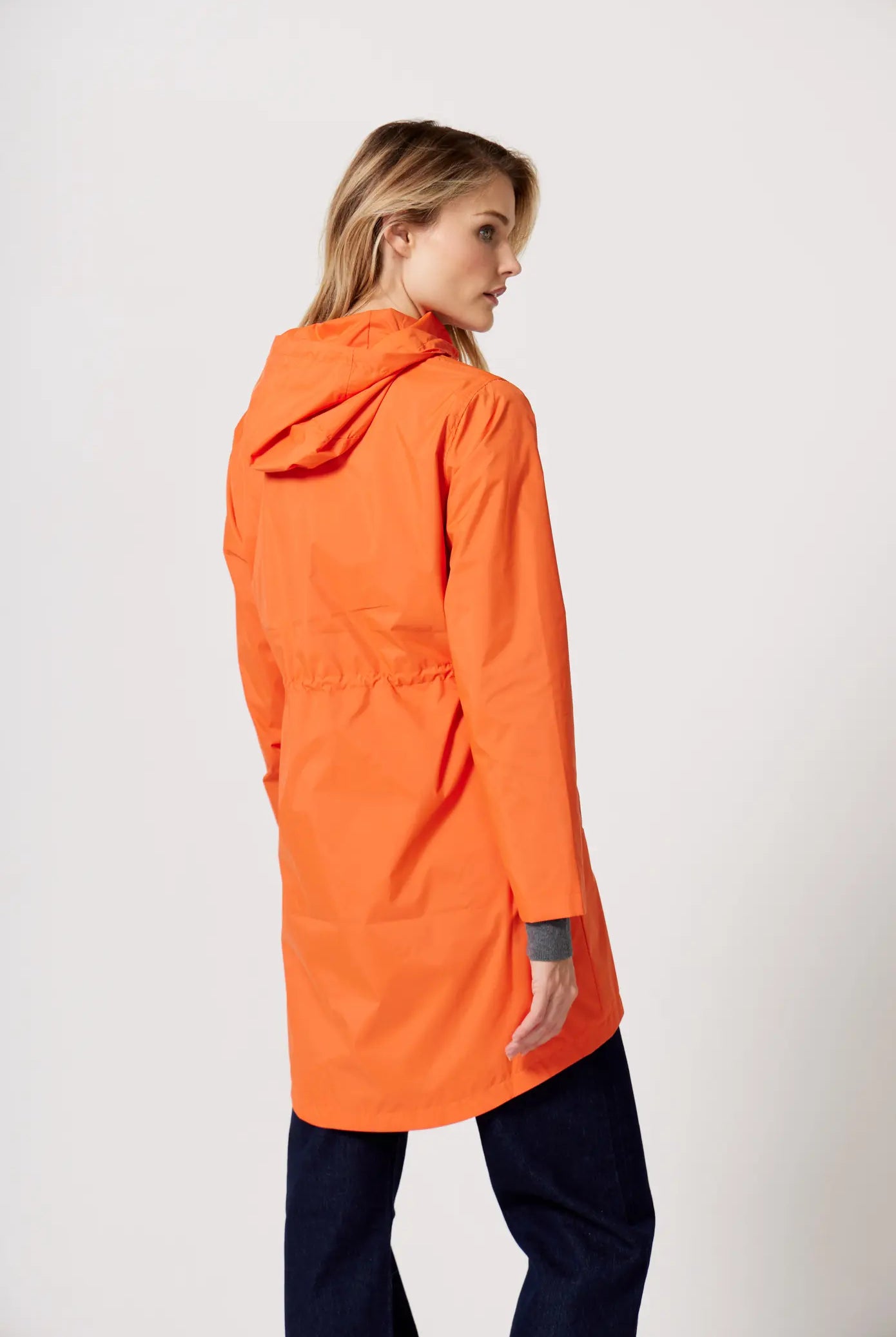
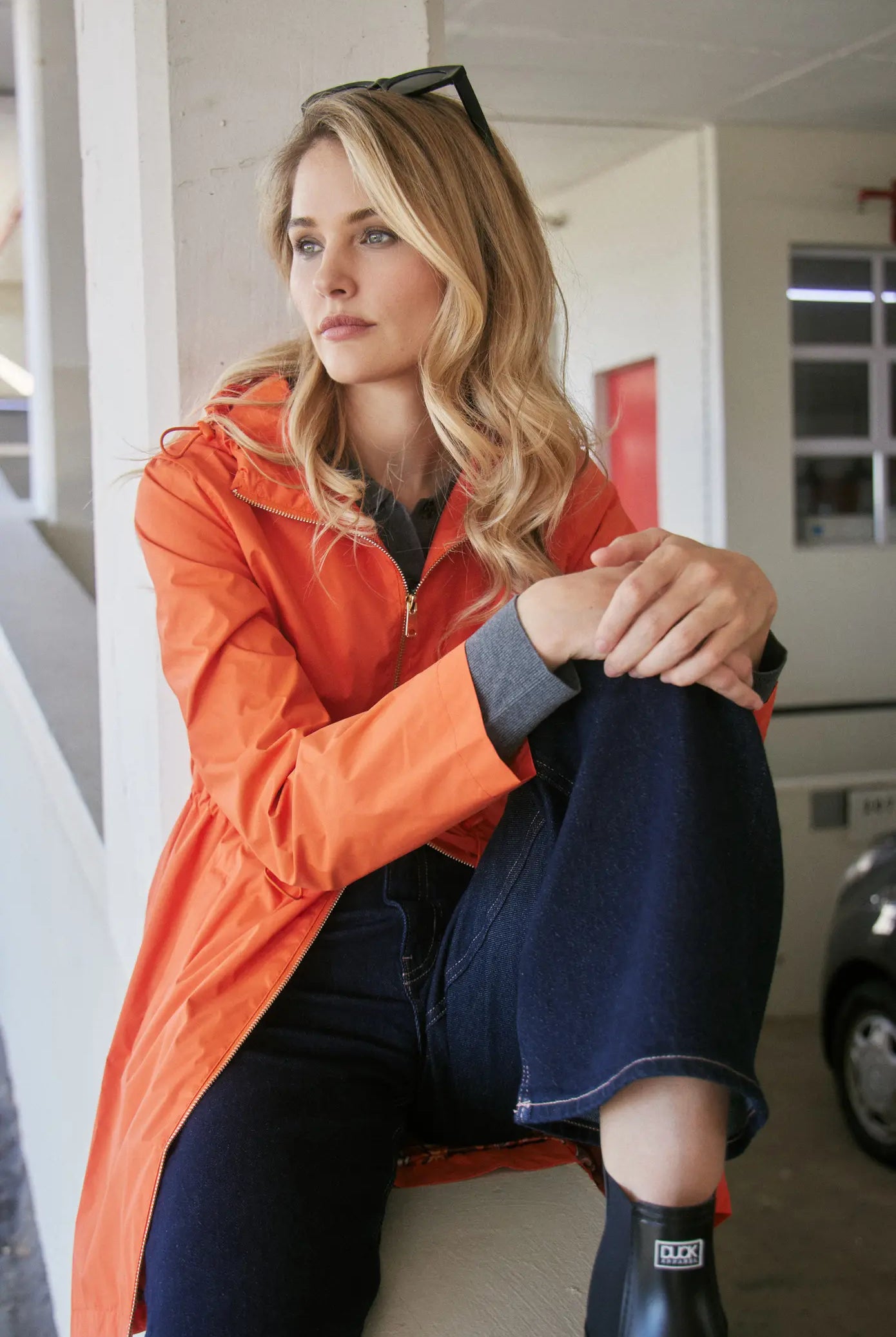
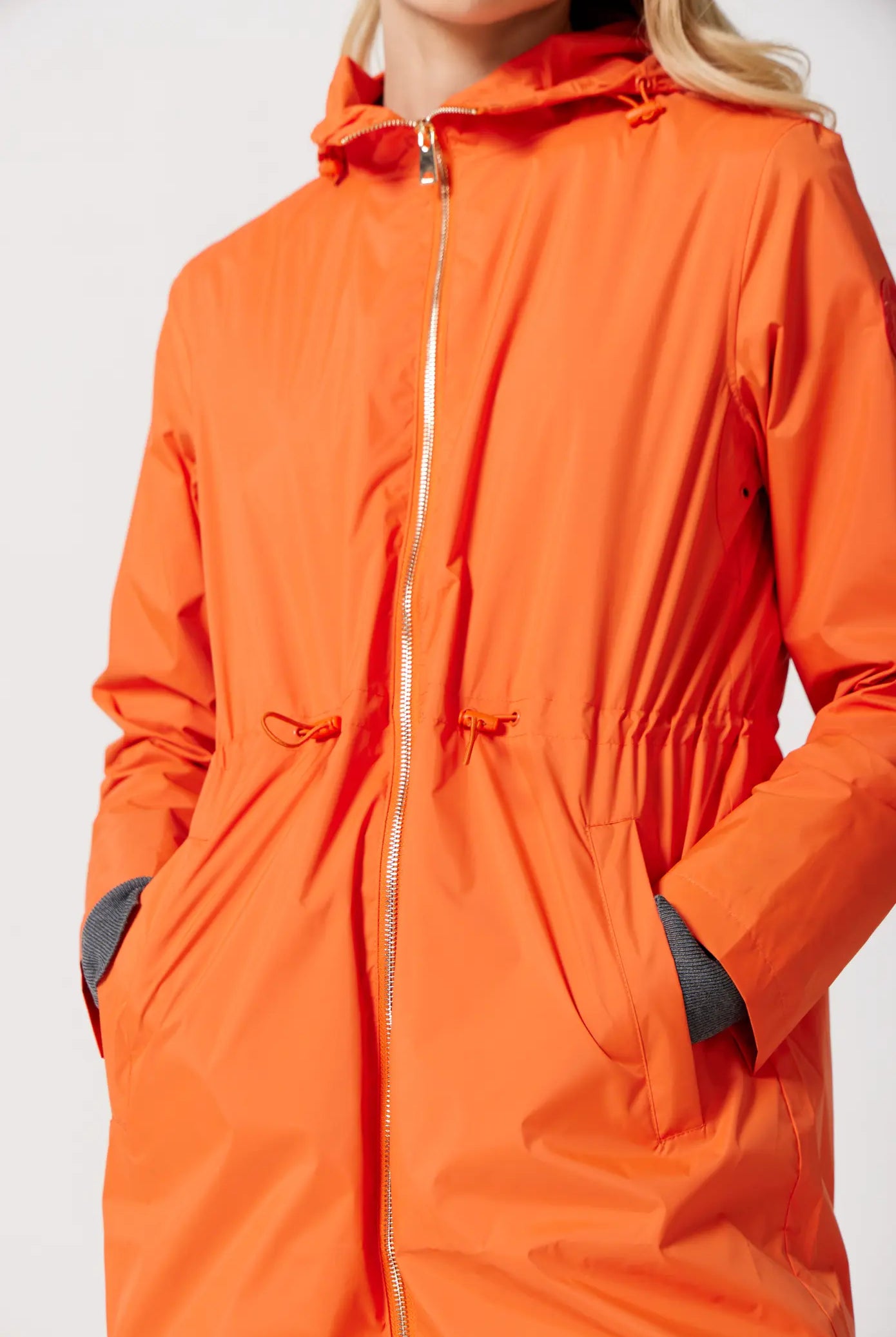
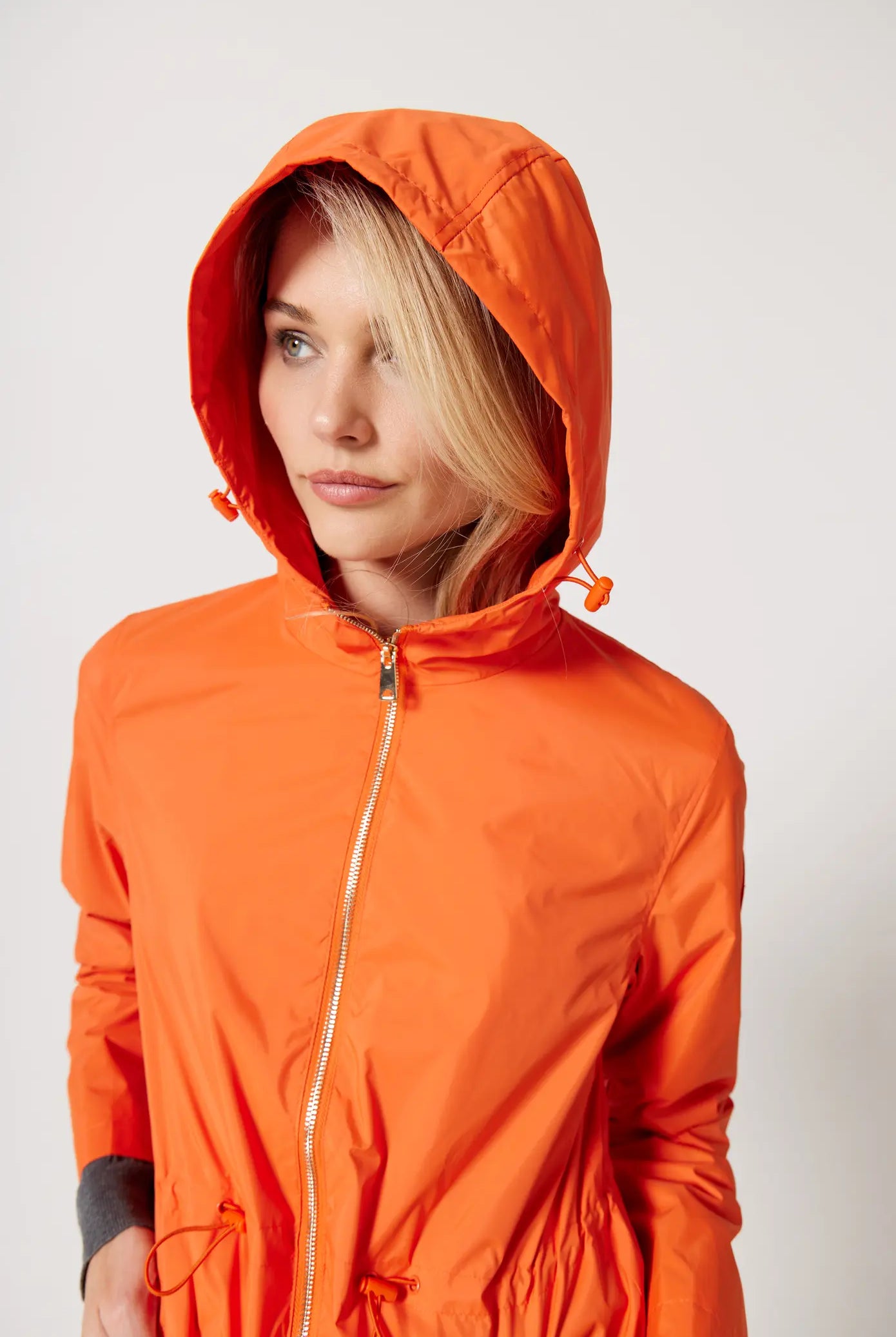
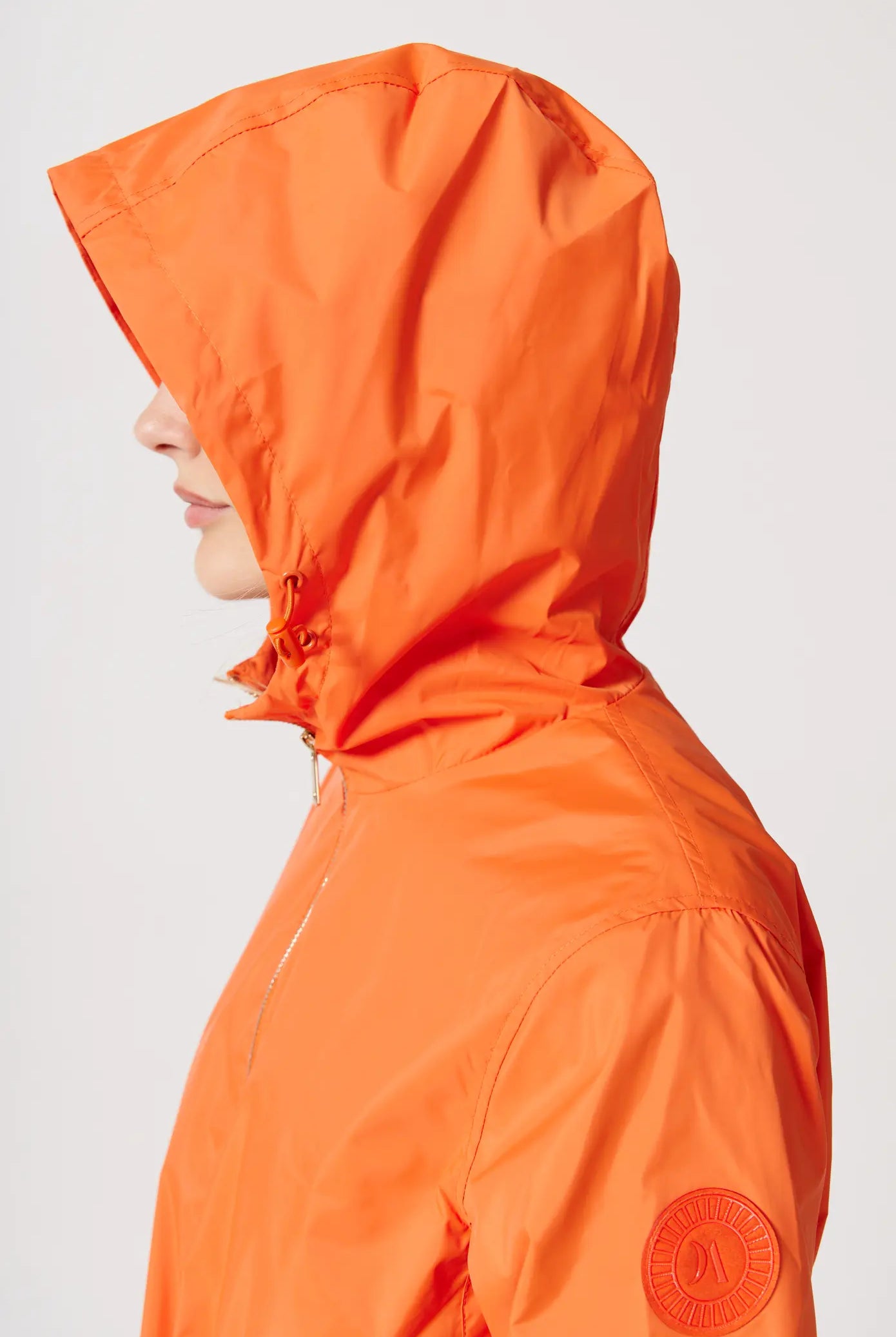
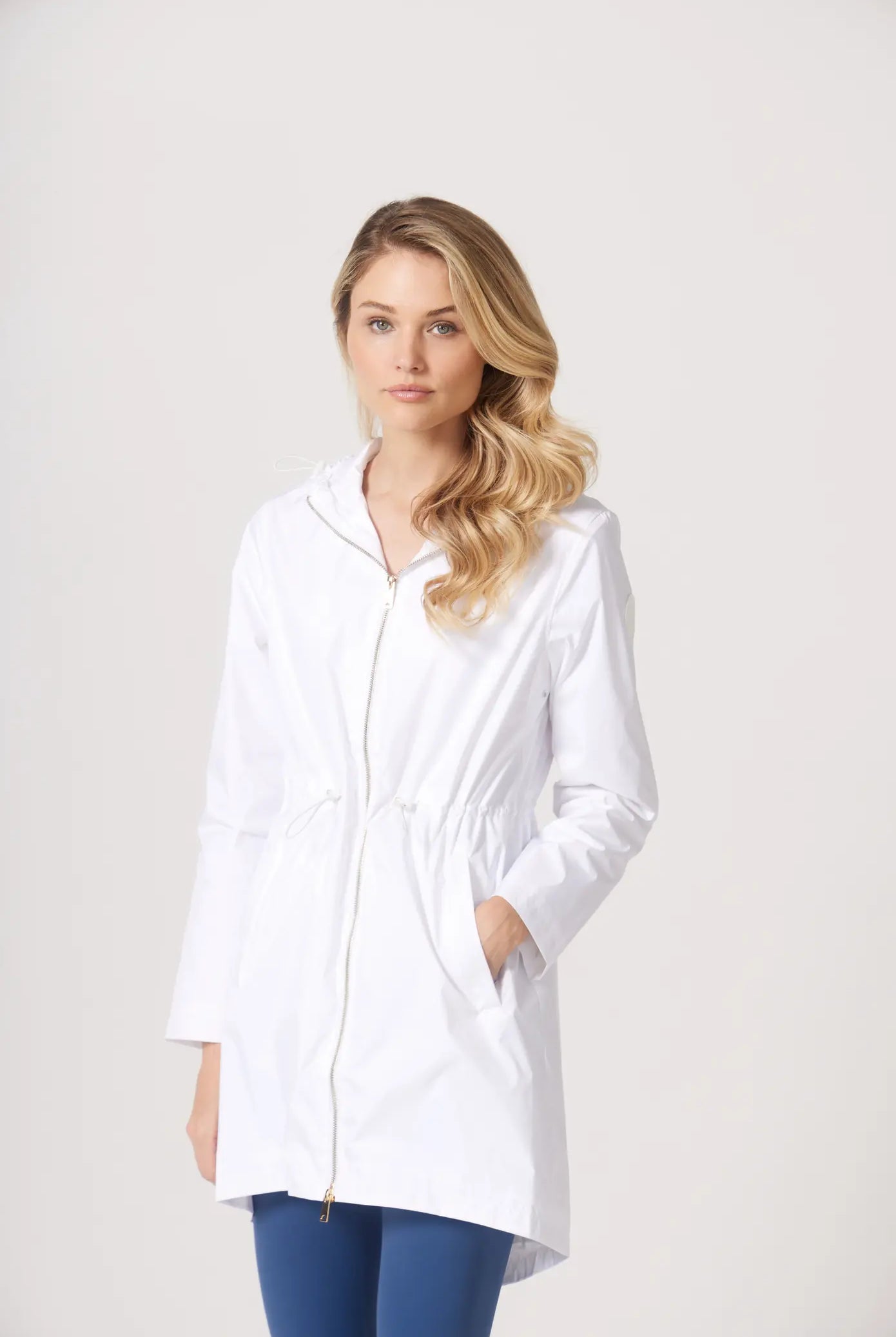
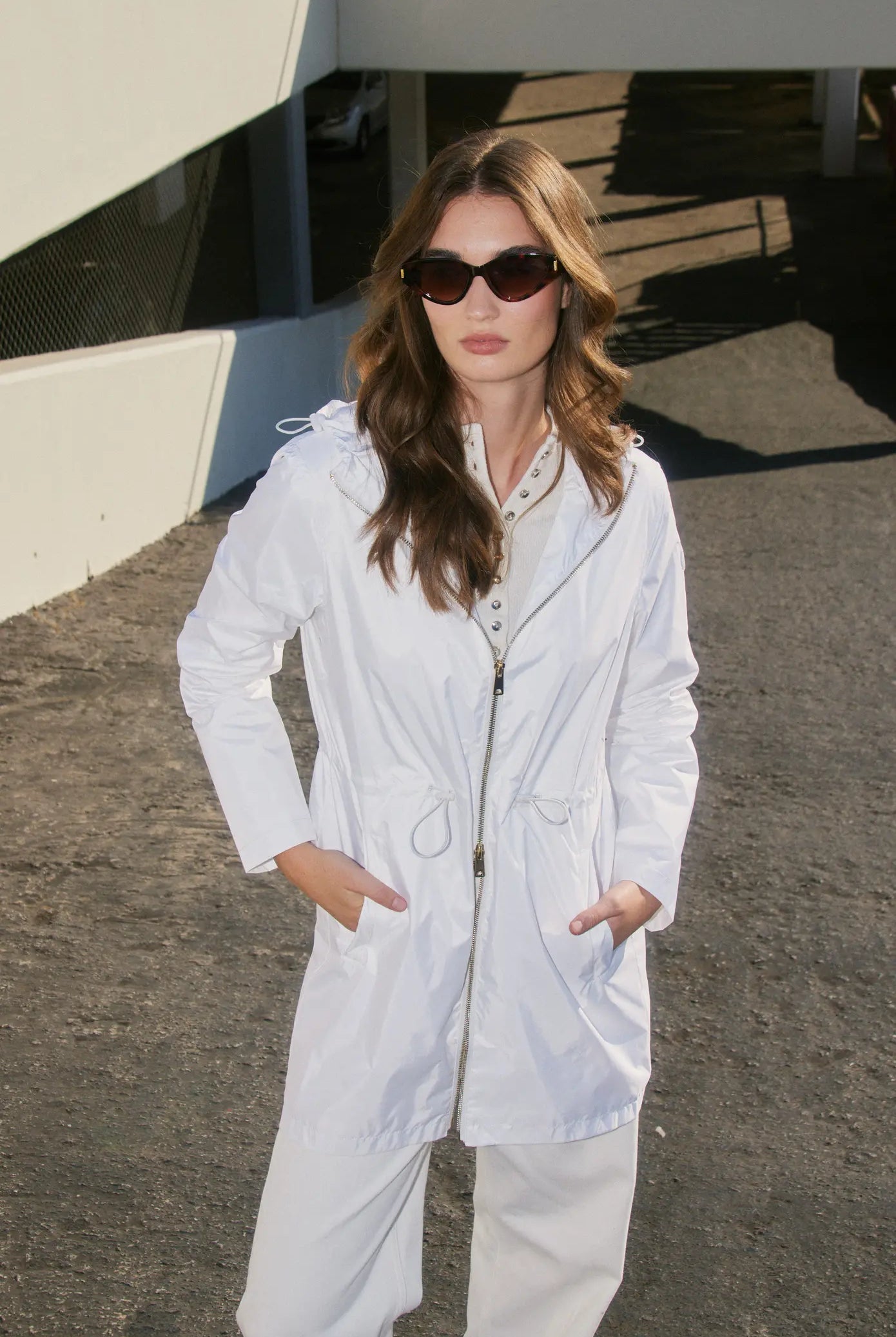
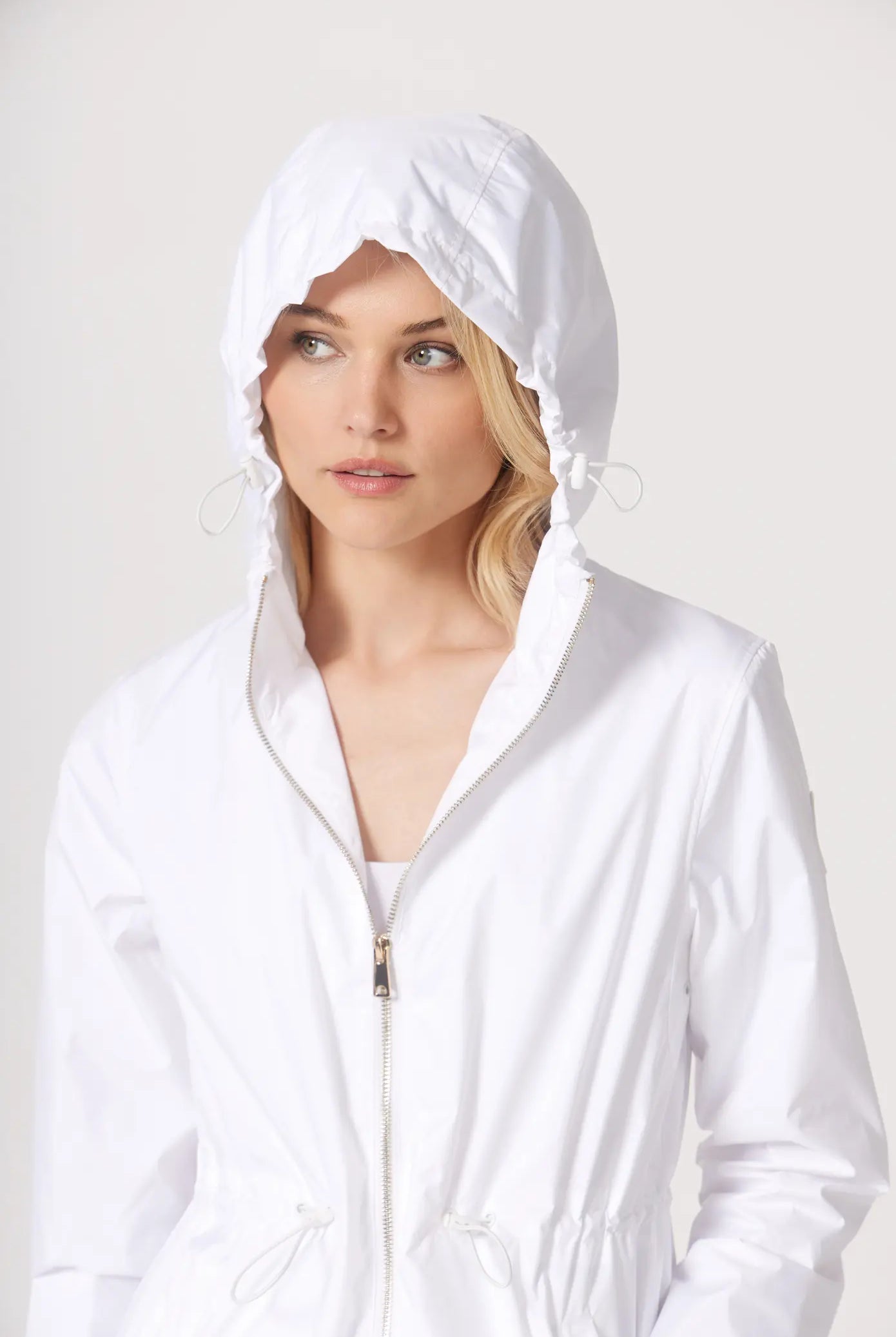
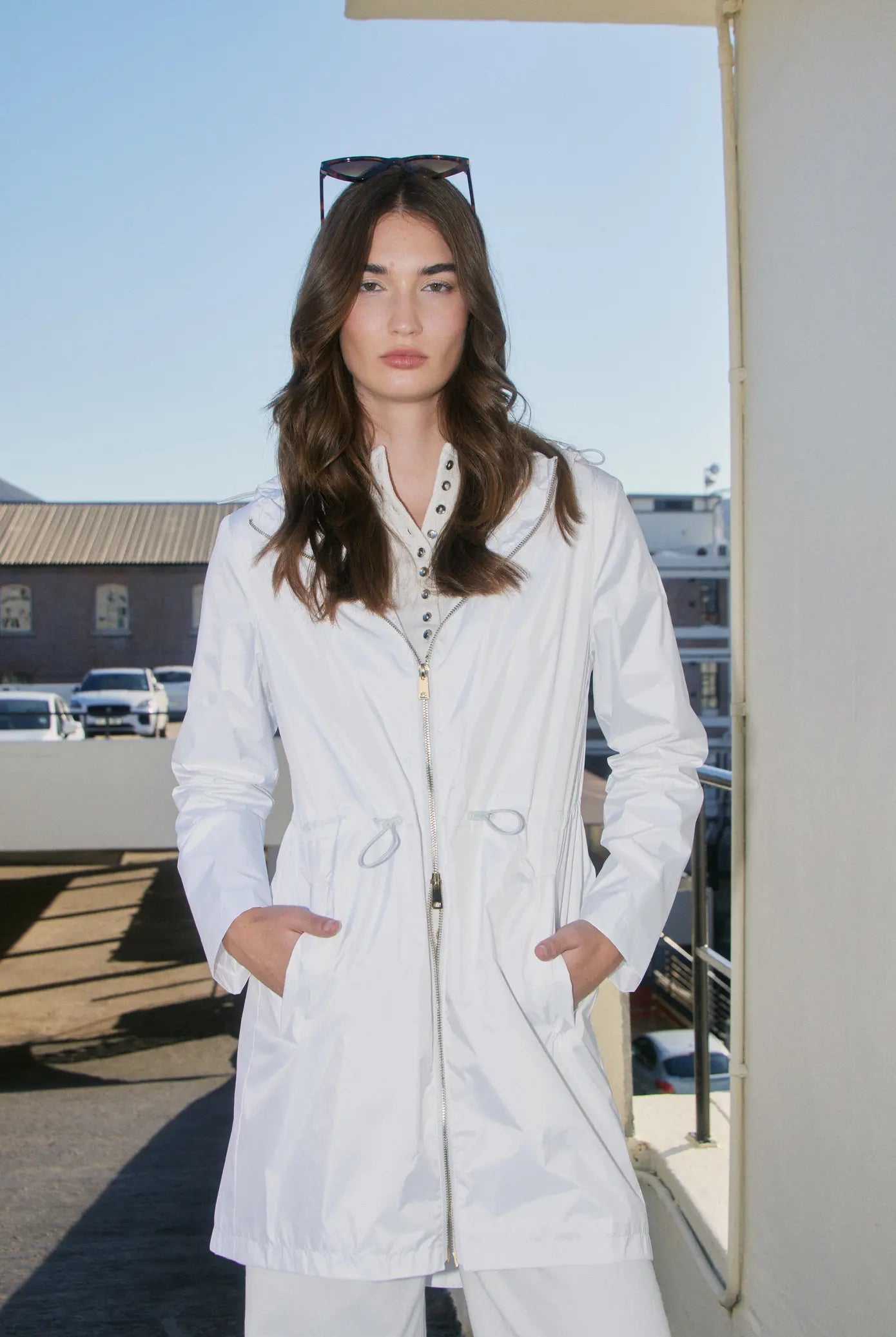
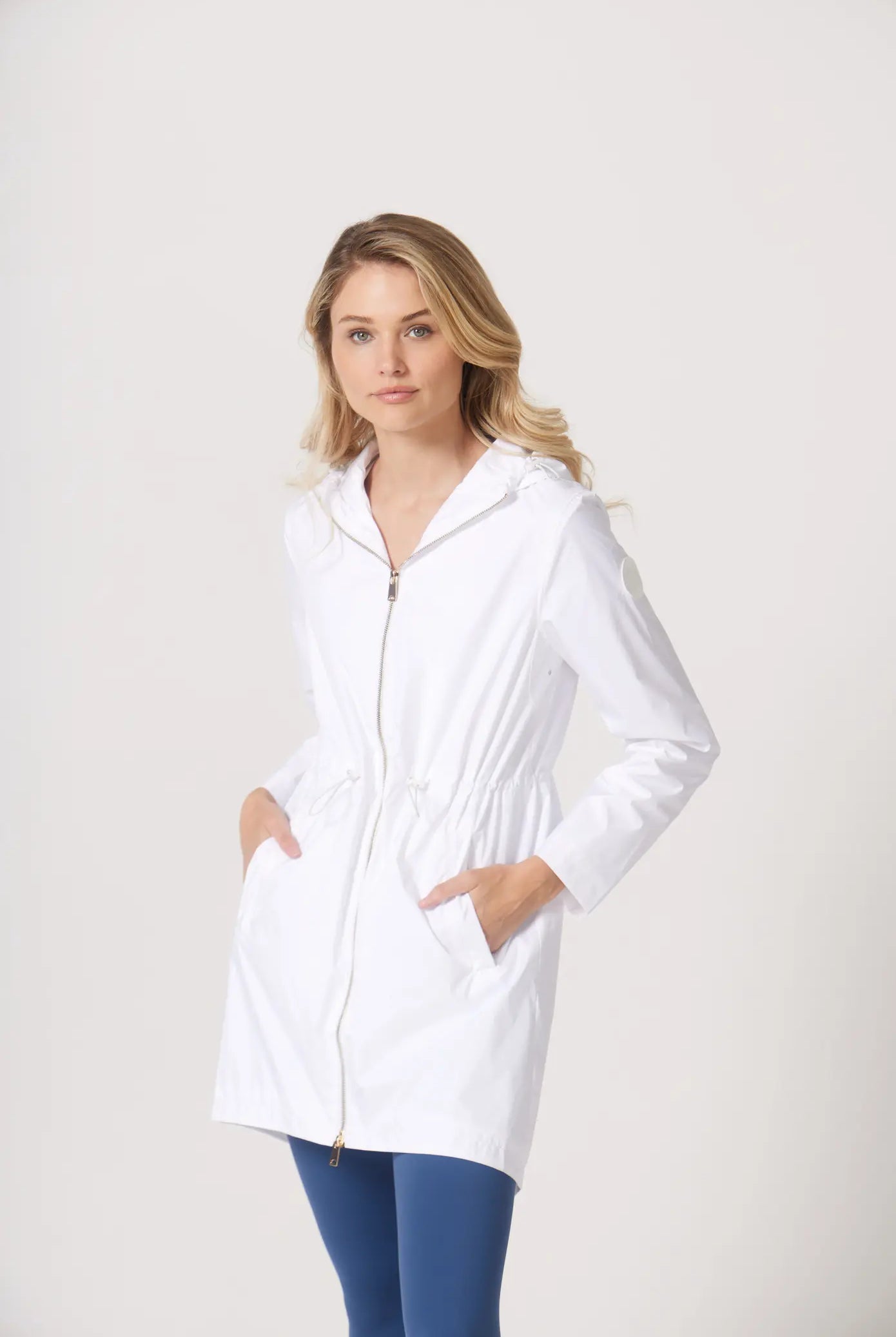
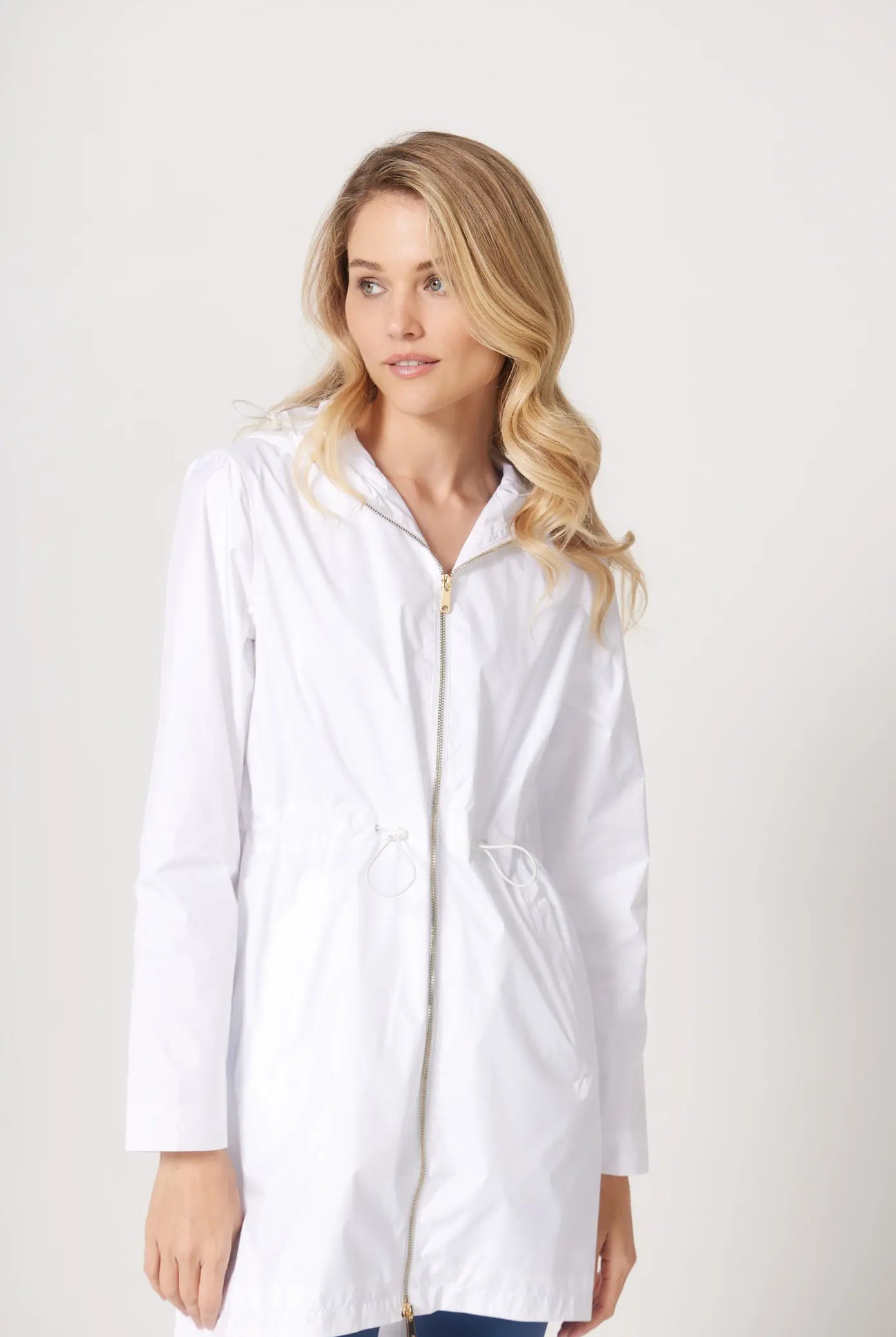
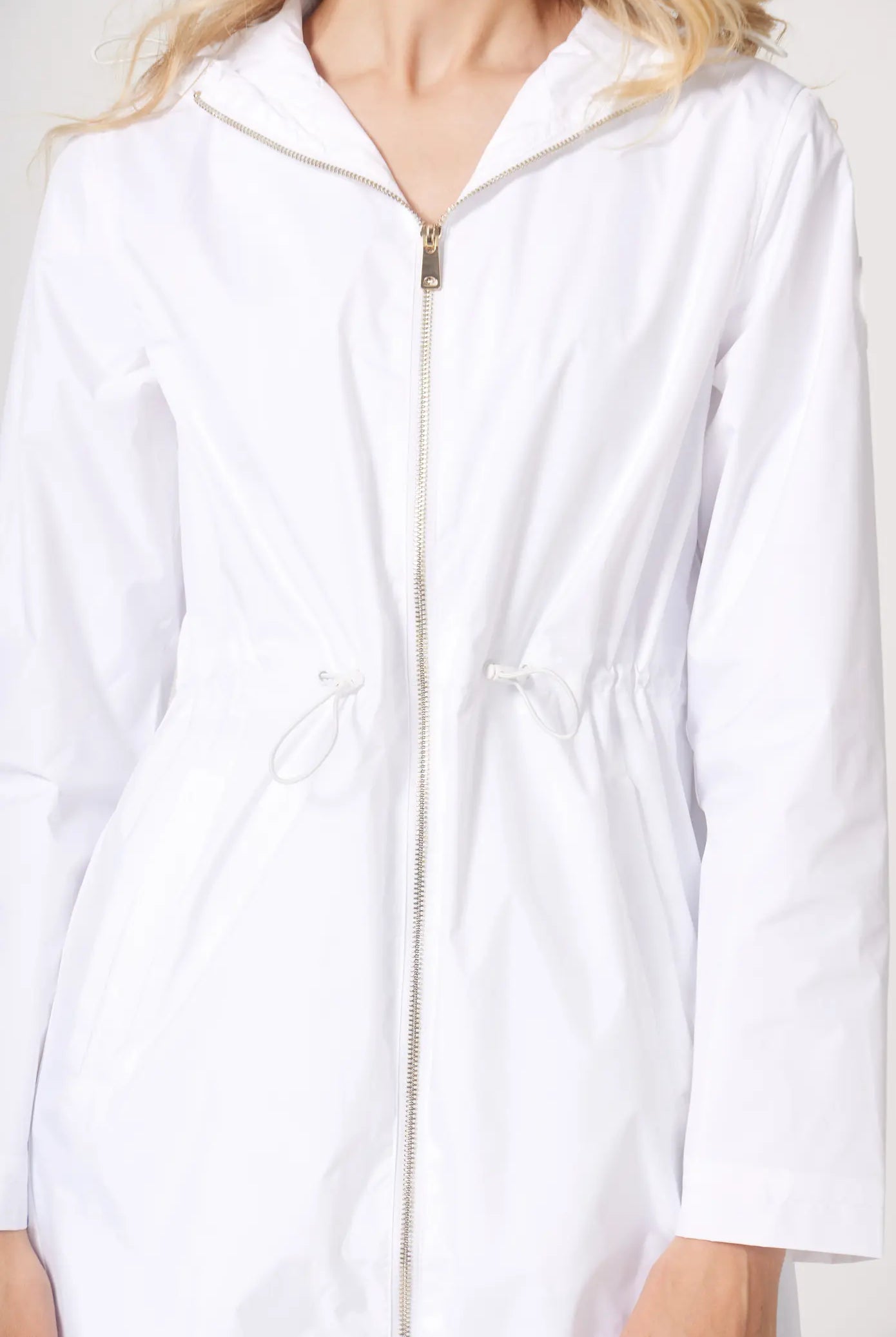
A raincoat is a water resistant outer layer built to shed rain rather than to insulate, so it is the coat to reach for in South Africa when the weather is wet but not truly cold. The Duck Apparel raincoat range covers trench shapes, hooded styles, plain colours and prints, including The Landmark Trench, The Regent Trench, The Cape Leopard, The Snowfall Edit and The Oxford Blue. This page explains how a raincoat differs from an insulated down coat, which style suits which part of the country, and how to decide between a long trench and a shorter shell.

What makes a raincoat different from a down jacket?

A raincoat is built around a shell that keeps water out, while a down jacket is built around a filling that traps warm air. That single difference decides which one you pull on. Rain at eighteen degrees is a shell problem. Dry cold at four degrees is an insulation problem. Duck Apparel keeps the two ranges apart for exactly that reason, and the heavier insulated pieces sit in the cold climate outerwear range rather than on this page. If you want one coat for a wet Cape Town morning and another for a Drakensberg weekend, you are shopping two categories, not two versions of the same coat.

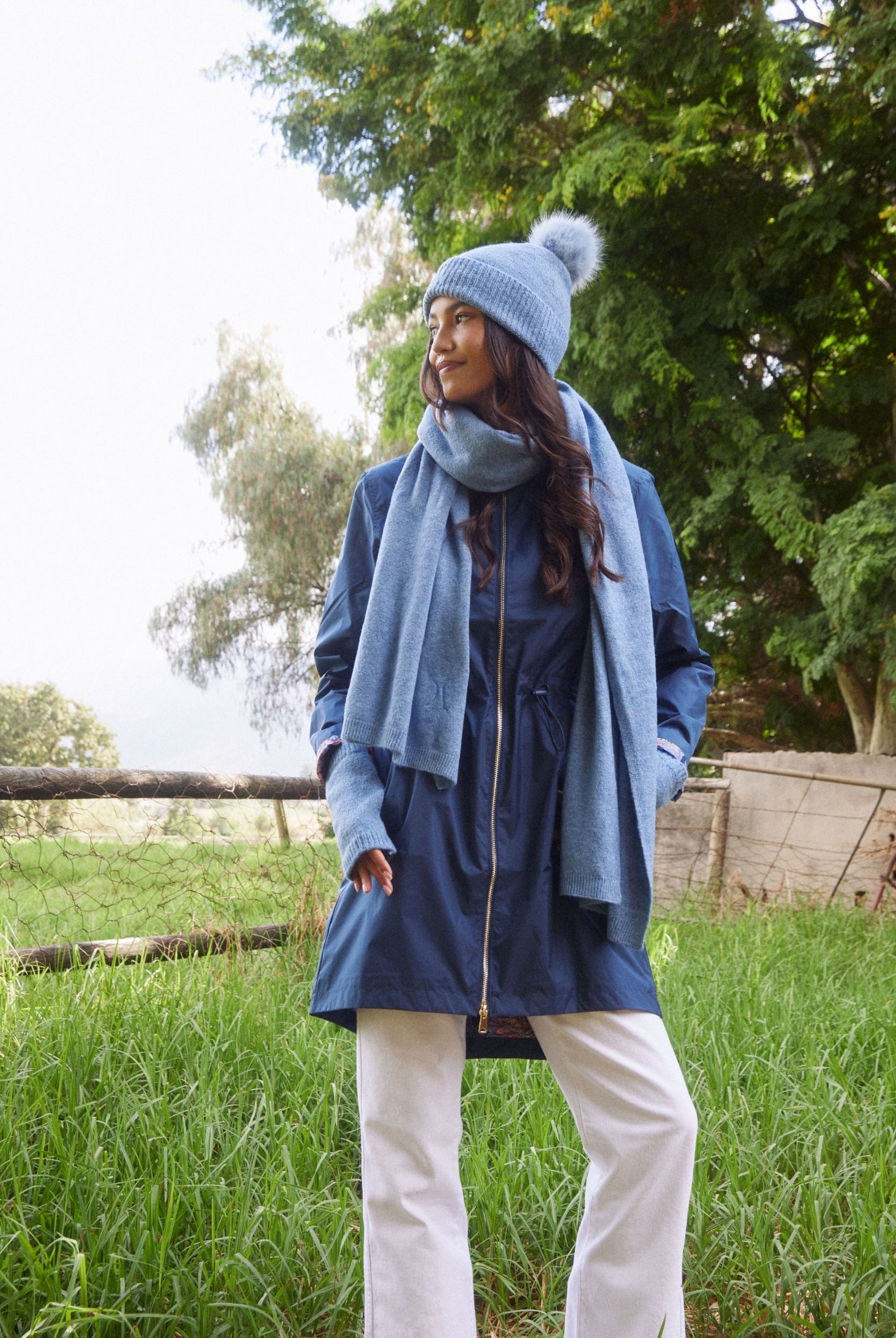
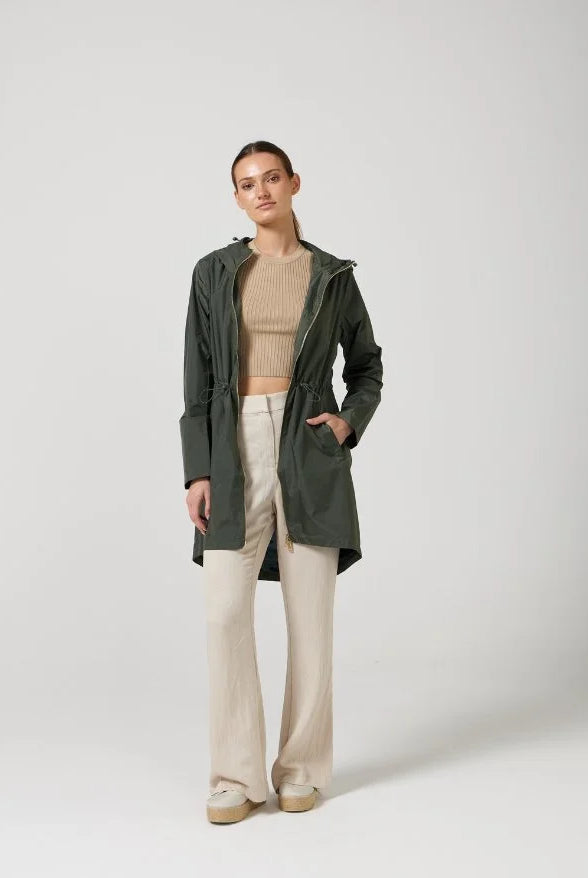
Fit follows the same logic. A raincoat is cut with room to move and to take a jumper underneath, because the layer beneath it does the warming. Quieter styles such as The Juniper, The Oxford Blue, The Highland Midnight and The Truffle Haze sit easily over work clothes. Brighter pieces including The Limoncello Edition, The Coral Spritz and Lipstick Crush No. 5 read as everyday wear rather than technical kit.

Which raincoat suits which part of South Africa?

Rain in South Africa is regional, so the right coat depends on where you live. The Western Cape takes most of its rain in winter, roughly June to August, which is why a longer trench such as The Landmark Trench or The Regent Trench earns its keep in Cape Town and along the Garden Route. Inland on the Highveld the pattern reverses, and rain arrives as summer afternoon storms from about October to March, which favours a lighter hooded style you can fold into a bag. In humid coastal KwaZulu Natal, staying comfortable matters as much as staying dry. For short, sharp showers rather than steady rain, the light rain and shower jackets are the easier pick.


How do you choose between the styles?

Start with how long you are actually outside, because ten minutes between a car and a door is a different problem from an hour on the side of a sports field, and only the second one needs full coverage from hood to hem. Then settle on length. A trench covers the thighs and keeps rain off your legs, while a hip length shell is quicker to pull on and easier to pack. Finally choose colour by use. Deeper tones such as The Highland Midnight, The Cairo Sands and The Wild Whisper hide splash marks better than pale shades like Rosewater Mist, Sugar Spice No.1 and The Whipped Release. Anyone dressing for consistently wet conditions can compare the wider wet weather outerwear range before deciding.
Frequently Asked Questions

Should I choose a trench or a shorter raincoat?

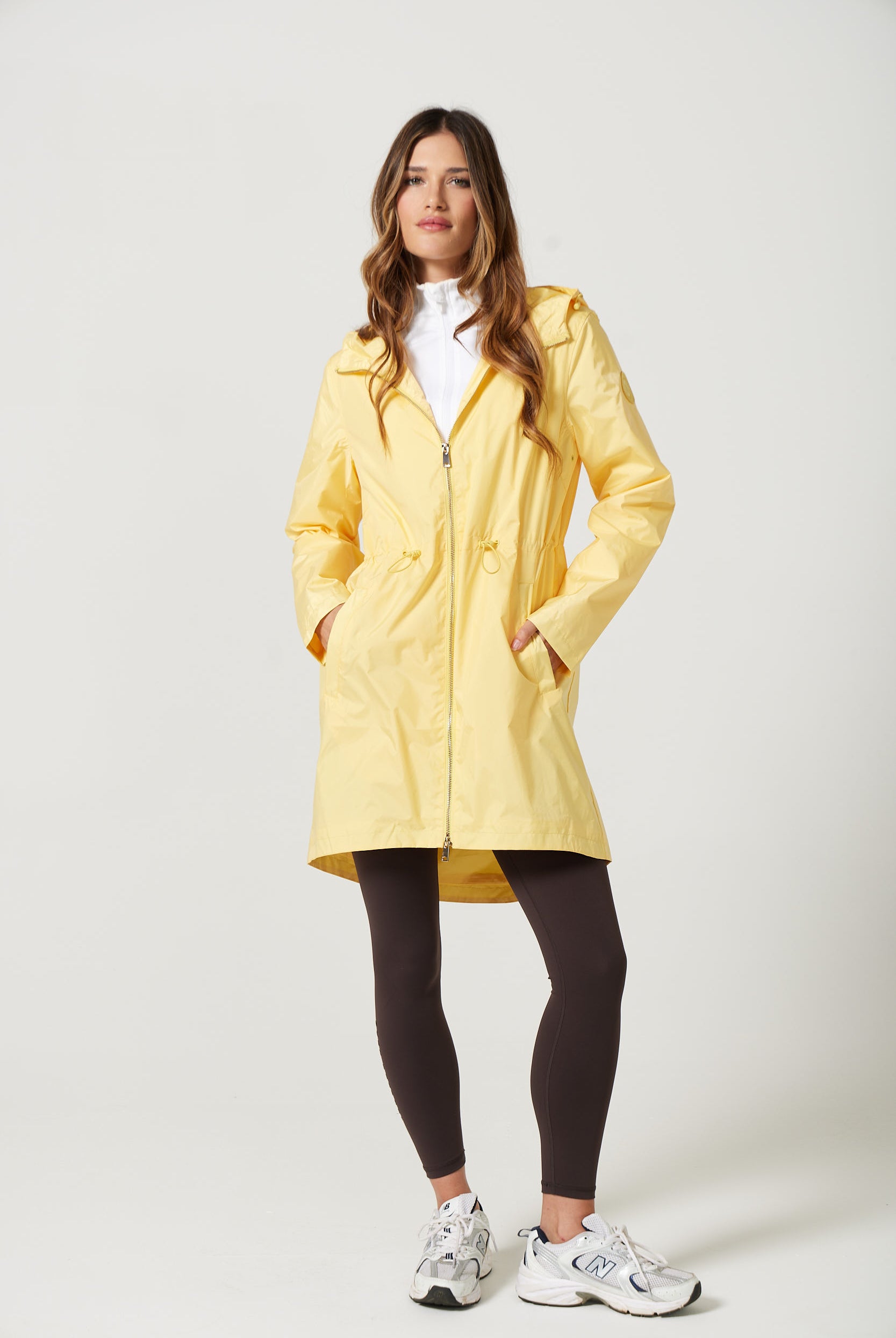
Choose a trench if you spend long stretches outdoors and want your legs covered, and choose a shorter raincoat if you want something quick to pull on and easy to pack. The Landmark Trench and The Regent Trench are the longer options in the Duck Apparel range. Shorter styles suit driving, cycling and days when the rain comes and goes.

When is the raincoat season in South Africa?

Raincoat season depends on the region, because South Africa has two opposite rainfall patterns. The Western Cape is wettest in winter, from about June to August. Gauteng, the Free State, Limpopo and most of the interior are wettest in summer, from about October to March, when rain usually falls as afternoon storms.

Can you wear a raincoat over a down jacket?

Yes, wearing a raincoat over a down jacket is a sensible way to handle cold rain, because the shell keeps the insulation dry and the insulation supplies the warmth. If you plan to layer this way, allow enough room in the raincoat so the jacket underneath is not squashed flat. Down works best when it can loft, so a tight outer layer reduces the warmth you get.

What size raincoat should I choose?

Choose a raincoat size that leaves room for the layers you expect to wear underneath it, rather than a close fit against a shirt. If you usually wear a jumper or knit through winter, try the coat over that layer before deciding. Sleeves should still cover the wrists when you reach forward.

How should a raincoat be cared for?

Follow the care label sewn into the garment, because washing and drying instructions vary by fabric and construction. As a general habit, hang a wet raincoat to dry fully before storing it rather than folding it away damp. Zips and hoods last longer when the coat is dried open rather than compressed.